Free study guide · no paywall
War and PeaceStudy Guide
by Leo Tolstoy (1869)
Five families, two wars, and an argument about who actually steers history: mapped across 361 chapters and six lessons.

Start here
Plot, characters & chapter jump
361 chapter summaries · 9 key figures · discussion questions · quotes · free
Plot summary
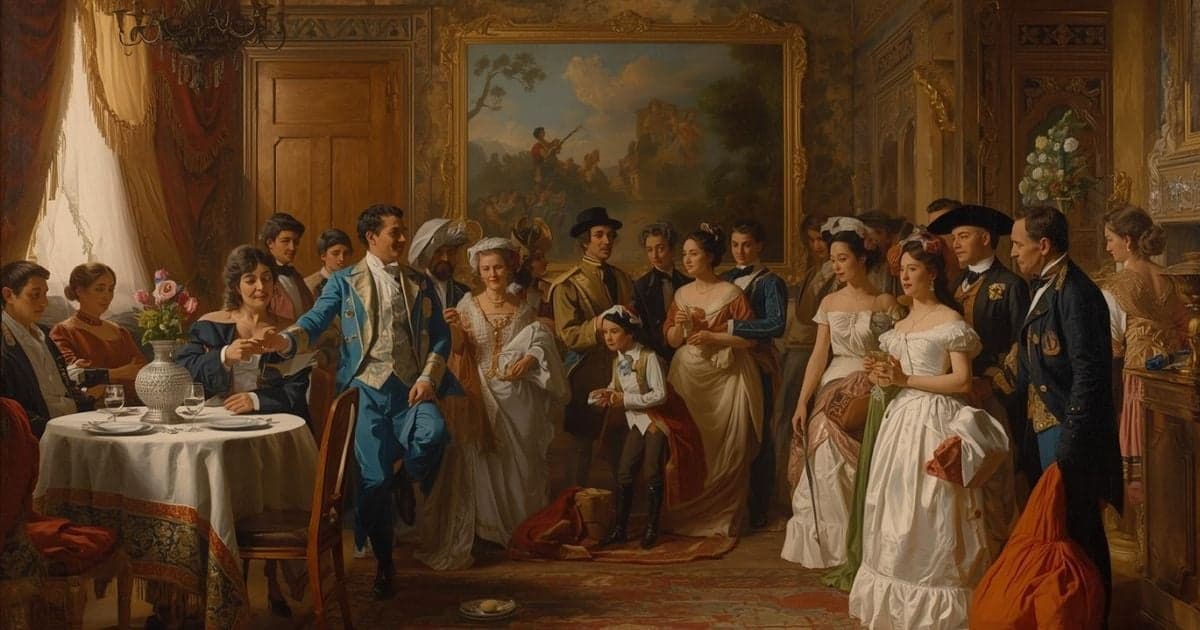
Anna Pavlovna Scherer opens her Petersburg salon in 1805 arguing about Napoleon while Pierre Bezukhov, freshly rich and already out of place, refuses to let the debate stay settled. Prince Andrei is wounded at Austerlitz and finds the sky above the battlefield larger than the war beneath it; Natasha Rostova dances, nearly elopes with Anatole Kuragin, and later nurses Andrei as he dies. Napoleon invades in 1812, Moscow burns, and Pierre is taken prisoner, where a peasant named Platon Karataev teaches him more than any salon or Masonic lodge managed to. Years later Pierre and Natasha build a quiet domestic life while Tolstoy closes the book arguing that no great man steered any of it.
Key characters
Jump to chapter
What readers search for
Common questions about War and Peace
Do Pierre and Natasha end up together in War and Peace?
Yes, but not as a reward for the plot they were each running separately. Natasha nearly elopes with Anatole, then nurses the dying Andrei; Pierre survives French captivity and an empty marriage to Hélène before either of them is free to choose the other. Tolstoy skips the wedding and gives you the marriage instead: two people speaking in domestic shorthand while history, somewhere, keeps moving without their permission.
Building Authentic RelationshipsWhat happens to Prince Andrei in War and Peace?
He is struck down at Austerlitz early in the novel and watches a high, indifferent sky shrink Napoleon to a passing fly. He recovers, loses his wife Lise the day he returns home, courts Natasha, then breaks the engagement under his father's pressure and Anatole's interference. Wounded again at Borodino, he is found and nursed by Natasha, and dies with pride finally holding nothing back.
Facing MortalityWhat is War and Peace actually about?
On the surface, five Russian families living through Napoleon's 1812 invasion. Underneath, an argument about whether history is steered by great men or accumulated out of millions of small, unrecorded choices. Pierre searches a salon, an inheritance, and a Masonic lodge for a system large enough to hold his life, and Tolstoy keeps showing him that the system is not coming, while meaning arrives anyway, usually from the person beside him.
Finding Meaning in ChaosWhy does War and Peace end with an essay about history?
The Second Epilogue is not a digression from the story; it is the argument the story was building toward. Tolstoy sets the plot aside to take apart the idea that Napoleon or Kutuzov personally caused what happened in 1812, arguing instead that command looks decisive only after the fact, once millions of ordinary decisions have already made the outcome. Skip it and you keep the marriages and lose the reason he wrote the book.
Understanding Free Will vs FateWho is Platon Karataev in War and Peace?
A peasant soldier Pierre meets as a fellow prisoner after Moscow falls. Karataev owns almost nothing, shares food without keeping score, and offers a folk story as if that were a complete philosophy rather than a lecture. He never argues a position; he simply is one. For Pierre, who has spent the whole novel hunting a system large enough to explain his life, Karataev is the first proof that meaning does not require one.
Embracing SimplicityFast track
Short on time? Start here
You do not have to read all 361 chapters in one sprint. These 6 beats hold the book's argument together.
Full coverage
Everything in this study guide
The same surfaces readers expect from a traditional study guide — plot, characters, themes, quotes, and homework help — grouped across 5 parts, with audio and the source text on every chapter. Free, no paywall.
Plot overview
Summary, context, and why the book still matters
361 chapter summaries
Every chapter with audio narration
9 key figures
Who drives the plot and what each one does
6 lessons
Themes traced to scenes, not generic labels
15+ important quotes
Verified lines with chapter links and analysis
Discussion questions
Five per chapter, with suggested answers for class and essays
Original text
Author's words beside every summary
This is not a plot cheat sheet. Wide Reads walks War and Peace as a 361-chapter argument about whether history is steered by great men or accumulated out of millions of small, unrecorded choices. Use the Book-by-Book path below to keep your bearings across five aristocratic families and two wars, follow the six lesson deep dives when a theme hooks you, and open individual chapters for summaries, quotes, and audio.
For plot and theme questions about War and Peace, see Common Questions on the book page.
How to use this guide
How to Read This Book with Wide Reads
Start with the pressure
Read Books One through Three for Anna Pavlovna's salon, Pierre's inheritance, and Austerlitz, where the sky shrinks Napoleon to a fly. You need the peacetime pressures in place before the 1812 invasion gives them a battlefield.
Follow the argument
Books Four through Eleven carry the peacetime plots, marriages, debts, Pierre's Masonic detour, into the 1812 invasion and Borodino. Books Twelve through Fifteen are the wreck: Moscow burns, Pierre is taken prisoner, and the retreat ends an empire.
Let the lessons carry you
When a chapter raises a question you cannot shake, such as whether Napoleon actually commanded anything, or why Pierre's fortune did not fix him, jump to the matching lesson page, then return to the chapter list. Do not skip the Second Epilogue. It is the argument, not an appendix.
Plot & context
Book Overview
Anna Pavlovna Scherer opens her Petersburg salon by asking whether anyone still believes Bonaparte is a man and not the Antichrist, and Pierre Bezukhov, large, illegitimate, and already in the wrong coat, answers as if the question were still allowed. Tolstoy published the novel in 1869, after six years of family papers, histories, and his own Crimean service. The argument is that the emperor everyone is arguing about will not be the one who decides what happens to them.
Pierre Bezukhov is the awkward outsider who inherits one of the largest fortunes in Russia and still cannot find a reason to get up. Prince Andrei Bolkonsky is the brilliant officer who wants glory so he can escape a marriage that already feels finished, then discovers that the sky over Austerlitz does not care who he wanted to become. Natasha Rostova is the girl who fills a ballroom without trying, then nearly wrecks her life for a man who treats seduction as sport. Nikolai Rostov spends money and courage with the same open hand, then has to learn a farm. Princess Mary endures a tyrannical father and still keeps a conscience. Hélène and Anatole Kuragin use charm as a tool. Old Prince Bolkonsky drills his household like a regiment. Kutuzov wins by refusing to look like a genius. Napoleon believes a city can be commanded the way a dinner is served. The only opponent who never leaves the page is history itself, moving through drawing rooms and oatfields with the same indifference.
Andrei lies wounded at Austerlitz and the high sky shrinks Napoleon to a buzzing fly. Pierre is maneuvered into marrying Hélène because the match is useful, then joins the Freemasons hoping a ritual will organize his life. Natasha dances with Andrei at her first grand ball, then almost elopes with Anatole while the trusted adults look the other way. At Borodino, Pierre wanders among men who are about to die, and Andrei's regiment waits in an oatfield under fire without firing a shot. Moscow empties and burns. Pierre is taken prisoner and meets Platon Karataev, who shares food and a folk tale as if that were a philosophy. Natasha tends the dying Andrei. Years later Pierre and Natasha speak in domestic shorthand, and Tolstoy closes with an essay arguing that no great man steered any of it.
Tolstoy wrote the book between 1863 and 1869, drawing on family papers, histories, and his own service in the Crimean War, and he never treats the invasion as a backdrop, or the salons as comic relief, or Napoleon's genius as a fact. A marriage proposal and a cavalry charge belong to the same moral universe. The ending is not luck. Pierre's peace is not a prize for suffering. It is the slower work of a man who stopped asking history to explain him and started attending to the person beside him.
Read the full summary on the book page →
Why this book now
People still arrive at this book when a headline hands one leader, one founder, or one general the whole credit for an outcome that thousands of unnoticed decisions actually produced. Tolstoy does not argue that individuals are powerless. He argues that the story of a single steering hand gets written after the fact, by people who need the outcome to have had an author. This guide keeps that argument tied to a salon, a battlefield, and a marriage, not left as a thesis.
About Leo Tolstoy
Leo Tolstoy (1828-1910) was born Lev Nikolayevich Tolstoy at Yasnaya Polyana, a family estate south of Tula. He left Kazan University without finishing, gambled, joined the army, and served at Sevastopol. Those years gave him a habit of watching men under pressure without decorating them. He married Sophia Behrs in 1862, ran the estate, taught peasant children, and spent six years turning family archives and the Napoleonic invasion into War and Peace. He originally conceived the book as a novel about the Decembrists of 1825, then walked backward until 1805 became the opening and 1812 the centre. The result is not a conventional historical novel. It is an argument that private life and public catastrophe belong to the same moral universe: a marriage proposal and a cavalry charge, a salon joke and a city on fire. The Second Epilogue, often skipped, is essential to the project. He claims history is not moved by great men but by the accumulated actions of countless ordinary people. In later life he turned against property, the Orthodox Church, and his own fame. He was excommunicated in 1901 and died in 1910 at the railway station in Astapovo, after leaving home. The late prophet is famous. The novelist who wrote War and Peace is the one who still will not let a reader treat an emperor as the author of an age.
Themes with proof
Lessons from War and Peace
Six lesson deep dives — themes with chapter proof, not theme labels alone. Start with the two featured lessons, then explore the full set.
Finding Meaning in Chaos
Follow Pierre from the salon and the inheritance through Borodino to Karataev's prison circle, and see purpose arrive when the systems fail.
A life can feel empty before it looks empty. If the official conversation does not touch what actually troubles you, the problem…
Deep dives
Chapter-by-chapter breakdowns
Building Authentic Relationships
Watch Natasha's first dance, Anatole's playbook, and the epilogue marriage that includes reproach.
All this had to be and could not be otherwise.
Facing Mortality
Stay with Andrei under the Austerlitz sky, then at Yaroslavl, when pride finally has no work left.
How was it I did not see that lofty sky before? And how happy I am to have found it at last!
Character guide
Key Figures
Who drives the plot, what each one wants, and why they matter to the argument of the book.
Pierre Bezukhov
Illegitimate heir to one of Russia's largest fortunes, hunting a system, a salon, a marriage, a Masonic lodge, a war, large enough to finally make sense of his life.
Prince Andrei Bolkonsky
Brilliant, contemptuous officer who wants glory to escape a marriage that already feels finished, then learns at Austerlitz how small that ambition was.
Natasha Rostova
Fills a ballroom without trying, nearly elopes with Anatole, then nurses the dying Andrei and later rebuilds a life with Pierre.
Nikolai Rostov
Spends money and courage with the same open hand, gambles away part of the family fortune, and has to learn to run an estate.
Princess Mary Bolkonskaya
Endures a tyrannical father at Bald Hills and keeps a conscience the rest of the cast keeps testing.
Hélène and Anatole Kuragin
Siblings who treat charm as a tool: Hélène marries Pierre for status, Anatole nearly ruins Natasha for sport.
Platon Karataev
Peasant soldier Pierre meets in French captivity, who shares food and a folk tale as if that were a complete philosophy.
Kutuzov
Russian commander who wins by refusing to look like a genius, letting the army, the season, and the retreat do what no single plan could.
Napoleon
Believes a city can be commanded the way a dinner is served, and is already failing while Moscow burns around him.
Memorable lines
Key Quotes
Verified passages with chapter links — the lines teachers and essays keep returning to.
“I really believe he is Antichrist”
“Russia alone must save Europe.”
“Each visitor performed the ceremony of greeting this old aunt whom not one of them knew, not one of them wanted to know, and not one of them cared about”
“so Anna Pávlovna moved about her drawing room, approaching now a silent, now a too-noisy group”
“so Anna Pávlovna served up to her guests, first the vicomte and then the abbé, as peculiarly choice morsels”
“Do tell us all about it, Vicomte”
“none seemed to bore him so much as that of his pretty wife”
“Educate this bear for me!”
“Dieu me la donne, gare à qui la touche!”
“was a political necessity”
“I hope to see you again, but I also hope you will change your opinions, my dear Monsieur Pierre”
“Opinions are opinions, but you see what a capital, good-natured fellow I am”
“How is it that we women don’t want anything of the kind, don’t need it?”
“Just for a whim of his own, goodness only knows why, he leaves me and locks me up alone in the country.”
“Never, never marry, my dear fellow!”
Class & essay prep
Discussion Questions
Sample prompts drawn from the chapter guides — each with suggested answers for seminars and written work.
Why does Anna Pavlovna open by calling Napoleon Antichrist instead of simply asking Vasili for news?
From Chapter 1What does Vasili's question about Baron Funke and the Vienna secretary post reveal about why he came?
From Chapter 1Why does Anna Pavlovna insist every guest greet her aunt?
From Chapter 2How does Tolstoy compare Anna Pavlovna to a spinning-mill foreman?
From Chapter 2Why does Anna Pavlovna compare herself to a maître d'hôtel serving choice morsels?
From Chapter 3How does Helene participate in the vicomte's story without listening to it?
From Chapter 3Why does Prince Andrew treat his wife with visible contempt in the salon?
From Chapter 4What does Tolstoy mean by calling influence a capital to be economized?
From Chapter 4Why does Pierre's defense of Napoleon shock the salon?
From Chapter 5How does Prince Andrew try to lower the temperature?
From Chapter 5Why does Pierre take the general's hat and still leave on good terms?
From Chapter 6What does Anna Pavlovna mean by hoping Pierre changes his opinions?
From Chapter 6Why does Lise ask Pierre to judge between her and Andrew on the question of war?
From Chapter 7What does Andrew's frigid question 'What is it you are afraid of, Lise?' reveal about how he hears her?
From Chapter 7Why does Andrew's face show 'nervous agitation such as Pierre had never before seen' when he begins speaking at supper?
From Chapter 8Chapter by chapter
All Chapters
Grouped by 5 sections — the same structure as the book hub.
Books One–Three
Chapters 1–68 · 1805 — Anna Pavlovna's salon, Austerlitz, and the sky that shrinks an emperor
Ch. 1 · The Art of Salon PoliticsAnna Pavlovna's salon
July 1805: Anna Pavlovna Scherer receives Prince Vasili Kuragin in her Petersburg salon and opens with a performance of patriotic fury, calling Napole...
Ch. 2 · The Art of Social Theater
Anna Pavlovna's drawing room fills with Petersburg society playing the same parts: greet the aunt nobody knows or wants, endure her health bulletin, e...
Ch. 3 · The Art of Social Performance
The reception hums in three clusters: men around the abbe, youth around Helene and Princess Lise, gossip around Mortemart and Anna. Anna serves the vi...
Ch. 4 · The Art of Social Leverage
Prince Andrew Bolkonski enters bored before the room is boring: he grimaces at his pretty wife, kisses Anna's hand, announces Kutuzov has made him aid...
Ch. 5 · When Politics Divides the Room
Talk turns to Napoleon's Milan coronation and the comedy of Genoa and Lucca petitioning a throne. Andrew quotes Napoleon's dare: God gave it, beware w...
Ch. 6 · The Awkward Exit and Hidden Motives
Guests thank Anna and drift out. Pierre, stout and absent-minded, takes a general's hat by mistake and cannot manage a graceful exit; his kind smile s...
Ch. 7 · The Strain of War Preparations
Lise joins Pierre and Andrew after the salon mask drops off. She opens with flirtatious French chatter, then latches onto Pierre's question: why does ...
Ch. 8 · The Marriage Warning
Alone after Lise leaves, Andrew and Pierre sit in miserable silence until Andrew sighs them into supper. The dining room still smells of new marriage:...
Ch. 9 · The Dangerous Bet
Past one on a white Petersburg night, Pierre heads home from Andrew's and feels too awake for sleep. He remembers Anatole's card party and the promise...
Ch. 10 · Social Networks and Family Connections
Prince Vasili keeps his salon promise: Boris lands in the Semenov Guards as cornet, though Anna Mikhaylovna fails to win him a spot on Kutuzov's staff...
Ch. 11 · When Children Burst the Adult Facade
The drawing room has gone stale. The countess smiles at her visitor but clearly hopes she will leave. Then thirteen-year-old Natasha bursts in clutchi...
Ch. 12 · Young Hearts on Display
Sonya sits in the Rostov drawing room trying to look interested in adult talk while her eyes keep tracking Nicholas, who is about to join the hussars....
Ch. 13 · First Kiss in the Conservatory
Natasha hides among the conservatory tubs waiting for Boris, thrilled by the new pleasure of watching without being seen. He dusts his uniform, checks...
Ch. 14 · Family Dynamics and Social Maneuvering
The exhausted countess sends Vera away so she can speak privately with Anna Mikhaylovna, her old Petersburg friend. Vera passes the sitting room, sees...
Ch. 15 · Navigating Power and Desperation
Anna Mikhaylovna coaches Boris on the ride over: be affectionate with your godfather, your future depends on him. Boris answers that only humiliation ...
Ch. 16 · The Art of Speaking Your Truth
Pierre arrives in Moscow after the bear-and-policeman scandal, expecting cold shoulders from his father's household. The princesses receive him like a...
Ch. 17 · The Weight of Money and Friendship
Anna Mikhaylovna has driven off with Boris to visit the dying Count Bezukhov, leaving Countess Rostova alone with her friend's humiliation. Upset and ...
Ch. 18 · The Art of Social Performance
The Rostovs await Marya Dmitrievna, le terrible dragon, while the count entertains men in his smoking room with Turkish pipes. Shinshin needles Lieute...
Ch. 19 · War Talk and Dinner Courage
At the men's end of the Rostov table the talk turns hot: a German colonel swears he has seen the war manifesto and quotes the Emperor's peace language...
Ch. 20 · When Family Drama Crashes the Party
After dinner the Rostov house turns to cards and music; Natasha hunts for Sonya and finds her sobbing on the passage chest, the girls' secret place fo...
Ch. 21 · Vultures Circle the Dying Count
While the Rostovs still dance, Count Bezukhov suffers a sixth stroke; doctors say recovery is impossible, last rites begin, undertakers wait beyond th...
Ch. 22 · The Power of Guided Authority
Pierre dozes in the carriage with Anna Mikhaylovna and wakes at Count Bezukhov's house by the back door, where tradesmen scatter from the courtyard an...
Ch. 23 · A Father's Final Moments
Pierre enters the icon-lit chamber where Count Bezukhov sits in an invalid chair, wax taper in his hand, priests chanting while Catiche stares at the ...
Ch. 24 · The Deathbed Power Struggle
After the rite, Pierre finds Vasili and Catiche whispering under Catherine's portrait; they fall silent when he appears and the princess mutters that ...
Ch. 25 · The Clockwork Prince and His Daughter
At Bald Hills the old Prince Bolkonski runs life like a drill: same minute for meals, geometry lessons that terrify Princess Mary, and visitors who wa...
Ch. 26 · Family Rituals and War Plans
Andrew and pregnant Lise arrive at Bald Hills while Tikhon guards the old prince's nap and the clavichord repeats one Dussek passage. Andrew checks hi...
Ch. 27 · Dinner Table Power Dynamics
Performative equality is still hierarchy when someone else sets the table. Prince Bolkonski seats his architect Michael Ivanovich beside the family to...
Ch. 28 · The Weight of Farewell
Departure turns a house into a series of doors you may never pass through again. Prince Andrew packs with obsessive order, then hides his tender mood ...
Ch. 29 · The Inspection That Backfired
Book Two opens with bureaucracy wearing parade polish. Near Braunau a Russian regiment scrubs buttons all night after a twenty-mile march because offi...
Ch. 30 · The General's Inspection
Kutuzov arrives in a Viennese carriage with an Austrian general at his side, and the regimental commander performs devotion so hard it becomes comedy....
Ch. 31 · When Bad News Arrives
After the review Kutuzov meets an Austrian general in private and makes courtesy sound like a blade. He says he would gladly hand command to a more sk...
Ch. 32 · The Stolen Purse and Honor's Price
October 11: while headquarters buzzes over Mack's defeat, the Pavlograd hussars still live like cadets on holiday. Rostov rides back grinning from for...
Ch. 33 · Honor vs Pride in Military Life
That evening the squadron officers crowd Denisov's quarters because Rostov publicly accused an officer of theft and the colonel called him a liar in r...
Ch. 34 · War Games and Nervous Energy
Kutuzov retreats toward Vienna, burning bridges; on October 23 Russian guns guard the Enns crossing while columns pour through Enns in warm autumn rai...
Ch. 35 · Chaos on the Bridge
Enemy shots already cross the Enns bridge while Prince Nesvitski, on foot, is jammed against the railings and can only smile as carts, infantry, and g...
Ch. 36 · Under Fire for the First Time
Only Denisov's hussars remain facing the French hill while the army crosses; Tolstoy writes the invisible line between living and dead, and cannonball...
Ch. 37 · Victory's Hollow Taste
After Krems the Russian army still retreats, but Kutuzov crosses the Danube, beats Mortier, and wins trophies for the first time in weeks. Prince Andr...
Ch. 38 · Reality Check from a Friend
Prince Andrew rests with Bilíbin, the witty diplomat who turns every crisis into an epigram. Andrew describes Krems and his reception; Bilíbin answers...
Ch. 39 · The Diplomatic Game
Next morning Andrew dresses for court and enters Bilíbin's study where young diplomats form les nôtres, a circle of gossip, women, and wit. They brief...
Ch. 40 · When Opportunity Knocks During Crisis
At the levee Emperor Francis only nods; later he asks Andrew checklist questions about times, miles, and Schmidt's death without listening to answers....
Ch. 41 · When Systems Collapse Around You
That night Andrew leaves Brünn for the army, fearing capture on the road to Krems. He joins the clogged retreat: wagons, stragglers, looting, mud, and...
Ch. 42 · The Art of Strategic Deception
On November 1 Kutuzov learns his forty thousand men face Napoleon’s hundred and fifty thousand with every route a trap: stay at Krems like Mack at Ulm...
Ch. 43 · The Calm Before the Storm
Between three and four o’clock Prince Andrew reaches Bagration at Grunth; the truce still holds, rumors of peace mix with rumors of battle, and no one...
Ch. 44 · The View from the Battery
Andrew finishes his circuit at Túshin’s battery on the high ground, sketches the Russian line and French at Schön Grabern, and imagines reserves, flan...
Ch. 45 · The Battle Begins
French movement and Russian reply open the battle; Andrew sees columns shift, gallops to Bagration, and thinks it has begun with a thrill he reads on ...
Ch. 46 · When the Smoke Clears
Bagration rides into smoke on the right flank, meets wounded men, confused troops, and a colonel who cannot say whether his regiment was broken or rep...
Ch. 47 · When Leadership Fails in Crisis
At Schön Grabern the retreat almost holds until the left flank collapses. Bagration sends Zherkóv with orders to pull back, but the messenger loses hi...
Ch. 48 · When Panic Meets Courage
Russian infantry spill from the wood in disorder until one cry, Cut off!, infects the ranks with panic. The general races into fire not from heroism b...
Ch. 49 · In the Darkness After Battle
Darkness follows the guns: Túshin retreats silent and near tears, staff officers scold him though Zherkóv never reached the battery, and wounded men c...
Ch. 50 · The Art of Social Manipulation
Book Three opens on Prince Vasíli, who never plans schemes in words yet always moves toward richer, useful people. He parks Pierre in his house, signs...
Ch. 51 · The Inevitable Engagement
Prince Vasíli must settle Pierre before touring estates and arranging Anatole's match. Pierre has circled Hélène for six weeks, knows the marriage may...
Ch. 52 · When Suitors Come Calling
Prince Vasíli writes that he and Anatole will visit Bald Hills on the way to the army. The little princess blurts that suitors are coming; old Prince ...
Ch. 53 · The Marriage Market Opens
Princess Mary enters the drawing room heavy-footed while Vasíli and Anatole wait. She kisses hands, then looks up and is struck by Anatole's beauty; h...
Ch. 54 · When Truth Shatters Illusions
Everyone but Anatole sleeps badly. Mary trembles at the thought of marriage and asks her maid to stay; Bourienne paces the conservatory; the little pr...
Ch. 55 · News from the Front
Midwinter brings Nicholas's first letter in months. Count Rostóv reads it behind a closed door, sobbing and laughing: wounded, promoted, alive. Anna M...
Ch. 56 · Old Friends, Different Paths
Near Olmütz, Nicholas rides to the Guards camp broke, muddy, and proud of his St. George cross. Boris and Berg sit clean over chess; Boris has letters...
Ch. 57 · The Power of Shared Purpose
Eighty thousand allied troops form before Olmütz as the Russian and Austrian emperors review Kutúzov's army and fresh arrivals from Russia. Every sold...
Ch. 58 · Playing the Unwritten Rules
The day after the review Boris rides to Olmütz in his best uniform to use Prince Andrew's friendship for an adjutancy. Rostóv may scorn cringing; Bori...
Ch. 59 · The Emperor's Eyes
Rostóv's squadron stays in reserve while others fight; his dread and dreams of glory feel wasted as wounded men and French captives pass and officers ...
Ch. 60 · The Clock Begins to Tick
Alexander, shaken by dead and wounded, eats little and sleeps badly at Wischau. Savary arrives under a flag of truce; the Emperor refuses a personal m...
Ch. 61 · The War Council's Deadly Dance
Weyrother drives exhausted to Kutúzov's castle and reads German dispositions while Kutúzov sleeps through the council. Langeron mutters a geography le...
Ch. 62 · Night Watch and Napoleon's Fire
Rostóv rides picket duty in fog, fighting sleep while his mind loops between the Emperor, Denísov, and Natásha. He fantasizes that Alexander might not...
Ch. 63 · Battle in the Fog
Before dawn the left flank marches in fog, burning sheds and following Austrian guides while columns drift without seeing the enemy. Soldiers cheer at...
Ch. 64 · When Authority Meets Reality
At eight o'clock Kutúzov leads Milorádovich's column to Pratzen; Prince Andrew expects his Toulon, planning contingencies while musketry sounds below....
Ch. 65 · The Sky Above the BattleAndrei wounded at Austerlitz
Kutúzov halts where roads part; fog lifts enough to show the French were not a mile and a half away but close. Someone shouts that all is lost and the...
Ch. 66 · Chaos in the Fog of War
On Bagratión's quiet flank at nine, Dolgorúkov wants action; Bagratión sends Rostóv to ask Kutúzov, knowing the ride is nearly hopeless yet Rostóv may...
Ch. 67 · When Leaders Disappear and Soldiers Must Choose
Rostóv rides through a lost battle looking for Kutúzov and the Emperor and finds only fleeing crowds, false rumors, and officers who cannot name who c...
Ch. 68 · The Sky Above Napoleon
On the Pratzen Heights Prince Andrew lies wounded beside the fallen flagstaff, moaning like a child until evening stills him. He wakes to pain and a s...
Books Four–Eight
Chapters 69–167 · 1806–1811 — Peacetime marriages, debts, and Pierre's search for a system to hold his life
Ch. 69 · Nicholas Returns Home to Love
In 1806 Nicholas Rostóv comes home on leave, racing through Moscow while Denísov sleeps off wine in the sleigh. The house feels cold until the family ...
Ch. 70 · Coming Home Changed
Moscow welcomes Nicholas as hero, dancer, and eligible match while he trains a trotter, wears pointed boots, and drifts from Sónya though she loves hi...
Ch. 71 · The Hero's Uncomfortable Welcome
On 3 March the English Club hums with elders and young officers; Pierre, sad and rich, wanders between generations while Denísov, Rostóv, and Dólokhov...
Ch. 72 · When Suspicion Becomes Certainty
At the English Club dinner Pierre sits opposite Dólokhov and Rostóv, eating and drinking while an anonymous letter and his cousin's hints about Hélène...
Ch. 73 · The Duel's Aftermath
Denísov calls the count; Pierre fires early in the mist and wounds Dólokhov, who insists on his right to shoot back. Pierre stands with pitying helple...
Ch. 74 · The Terrible Truth Revealed
After the duel Pierre cannot sleep in his dead father's room. Memories parade: false I love you at Prince Vasíli's, honeymoon shame, Hélène's cold wit...
Ch. 75 · When Bad News Arrives
Two months after Austerlitz Bald Hills still has no body and no prisoner listing for Prince Andrew; gazettes praise a brilliant retreat while the old ...
Ch. 76 · Birth and Arrival
On 19 March Lise feels ill after breakfast; sorrow haunts the house though she does not know why. Mary sends for midwife Mary Bogdánovna; Lise begs to...
Ch. 77 · Birth, Death, and the Weight of Guilt
The little princess lies in labor, smiling through pain until Andrew enters and kisses her forehead, calling her my darling for the first time. Her ey...
Ch. 78 · When Mothers Make Excuses for Bad Men
Rostóv's duel role is hushed up; instead of demotion he becomes a Moscow adjutant and spends summer near Dólokhov, recovering. Fédya's mother and Mary...
Ch. 79 · Love, Duty, and Difficult Choices
On the third day after Christmas Nicholas dines at home before rejoining his regiment; love hangs thick in the Rostóv house while Dólokhov and Denísov...
Ch. 80 · Dancing Into Love at the Ball
Iogel's pupil balls in Bezúkhov's house are Moscow's happiest winter dances: no hostess, only ticket-collecting Iogel and rows of girls in first long ...
Ch. 81 · The Gamble That Changes Everything
Two days after the ball Rostóv avoids Dólokhov until a note invites him to a farewell supper at the English Hotel, where Dólokhov banks between candle...
Ch. 82 · When Luck Runs Out
An hour and a half in, the room watches Rostóv, not their own cards. His column of losses passes twenty thousand while Dólokhov follows every stake an...
Ch. 83 · When Music Cuts Through Shame
Saying tomorrow to Dólokhov was manageable; walking into the Rostóv house to confess and borrow money he had no right to request after his word of hon...
Ch. 84 · The Weight of Confession
Natásha's barcarolle still rings when Nicholas goes downstairs; his father returns from the club cheerful, and Nicholas nearly sobs at a simple how wa...
Ch. 85 · The Stripped Screw of Existence
After his wife's interview Pierre leaves for Petersburg, then stalls at Torzhók with no horses. On a leather sofa he ignores tea and portmanteaus; sin...
Ch. 86 · A Stranger Offers Salvation
The stranger names Bezúkhov, cites Moscow misfortune without curiosity, and offers help. Pierre flushes, sits, admits unhappiness, and asks if the man...
Ch. 87 · Pierre's Initiation into the Brotherhood
In Petersburg Pierre hides his arrival, reads Thomas à Kempis, and clings to the brotherly love Bazdéev promised. Willarski arrives like Dólokhov's se...
Ch. 88 · Pierre's Masonic Initiation
Willarski returns, Pierre agrees again, and with one slipper and a sword at his bare chest he is led through knockings, allegories, and titles: Seeker...
Ch. 89 · Pierre Finds His Voice
The day after initiation Pierre studies the Masonic Square and dreams of improving his serfs in the south while rumor says he should leave Petersburg ...
Ch. 90 · The Art of Social Survival
Society hushes the duel yet blames Pierre alone as jealous and rage-prone; Hélène returns to Petersburg as the dignified sufferer and Vasíli mutters h...
Ch. 91 · The Art of Social Performance
Prince Hippolyte seizes the room with Le Roi de Prusse, laughs, and stalls until Mortemart forces the Vienna joke: we are wrong to fight pour le Roi d...
Ch. 92 · When Crisis Reveals Character
War nears Russia; the old prince throws himself into recruitment with cruel pedantry while Andrew avoids active service and lives at Bogucharovo. Mary...
Ch. 93 · Letters from the Front Lines
Andrew reads Bilibin's long French letter from headquarters: Prussia collapses, commanders feud, armies burn bridges to dodge seniority, soldiers loot...
Ch. 94 · Good Intentions Meet Hard Reality
After Masonic initiation Pierre reaches Kiev with written plans to lighten serf labor, build schools and hospitals, and eventually free his people. St...
Ch. 95 · When Old Friends Become Strangers
Pierre visits Bogucharovo and finds Andrew thinner, dull-eyed, building a homestead while deflecting talk of plans. Pierre hides his Masonic enthusias...
Ch. 96 · The Ferry Crossing Conversation
Driving to Bald Hills Pierre broods, then charges into talk about life, destiny, and Freemasonry as equality and brotherhood freed from church and sta...
Ch. 97 · Faith, Doubt, and Family Tensions
At dusk Andrew and Pierre reach Bald Hills and watch Mary's God's folk scatter, mistaking the carriage for the old prince who forbids such guests. And...
Ch. 98 · Finding Your People
Pelagéya, appeased, tells of nights among Kiev catacombs where peace felt brighter than daylight; Pierre listens seriously while Andrew leaves the God...
Ch. 99 · Finding Home in Structure
Returning from leave Rostóv feels the regiment as home: Deméntyev, picket ropes, Lavrúshka's shout, Denísov's embrace bring tears like family. Duty, r...
Ch. 100 · When Good Intentions Go Wrong
In a dugout Rostóv rests after orderly duty while Denísov rages that soldiers still eat forbidden Máshka root; Lavrúshka mentions supply wagons nearby...
Ch. 101 · The Hospital Visit
After Friedland and an armistice Rostóv gets leave to find Denísov in a ruined Prussian hospital town reeking of rot and typhus. A cigar-smoking doct...
Ch. 102 · Pride vs. Pragmatism in Crisis
Rostóv leaves the soldiers' ward for the officers' rooms and meets one-armed Túshin, who leads him to Denísov amid laughter that still feels obscene a...
Ch. 103 · When Old Friends Become Strangers
Rostóv carries Denísov's cause to Tilsit while Borís earns his place at the historic Niemen meeting by calling Napoleon Emperor when a general tests h...
Ch. 104 · When Power Says No
June 27 at Tilsit is the worst day for Denísov's petition: peace preliminaries, exchanged decorations, and a Guards banquet while Rostóv dodges Boris ...
Ch. 105 · When Leaders Meet: Power and Doubt
Rostóv watches Napoleon and Alexander meet between Preobrazhénsk and French Guards battalions; Napoleon awards Lazarev the Legion of Honor while Rostó...
Ch. 106 · Real Life Goes On
By 1809 Napoleon and Alexander are so intimate that Russian troops cross to fight Austria beside former enemy Bonaparte while court gossips muse on ma...
Ch. 107 · The Oak That Refused to Bloom
For two years Andrew has lived in the country while Pierre's shifting estate plans fail; Andrew quietly frees serfs, commutes labor, and brings a midw...
Ch. 108 · The Girl in the Yellow Dress
Andrew visits Count Rostóv at Otrádnoe on Ryazán business, depressed and preoccupied as hot green woods close around the avenue. A slim girl in yello...
Ch. 109 · The Oak Tree's Second Chance
Andrew leaves Otrádnoe without waiting for the ladies and returns in early June to the birch forest where the grim oak once agreed with his despair. ...
Ch. 110 · Bureaucratic Power Games
In August 1809 Andrew reaches Petersburg as Speránski drives reforms and Arakchéev holds the military; the Emperor, injured, sees only Speránski while...
Ch. 111 · The Power Player's Game
While waiting for committee news Andrew networks in Petersburg, feeling the same battle-eve tension he once knew, sensing a vast civil struggle led by...
Ch. 112 · The Seductive Power of Brilliant People
In Petersburg Andrew's country-born clarity gets buried under appointments: he schedules four or five calls a night, talks successfully, and repeats t...
Ch. 113 · When Organizations Lose Their Way
The chapter steps back to 1808: Pierre leads Petersburg Freemasonry, funds temples and a poorhouse, yet still drinks and chases bachelor dissipations ...
Ch. 114 · The Weight of Forgiveness
After the lodge rejects him Pierre lies three days on his sofa; Hélène's letter, a Masonic brother, and his mother-in-law press reunion while depressi...
Ch. 115 · The Performance of Intelligence
High society splits into circles; Hélène dominates the French diplomatic set after Erfurt, where Napoleon called her a superb animal and ambassadors n...
Ch. 116 · Pierre's Spiritual Diary Entries
Pierre's diary tracks November days: committee work, moderate meals, lodge copying, and nightly prayers to conquer anger, lust, and worldliness while ...
Ch. 117 · The Business of Marriage
Rostóv debts keep rising despite Nicholas's modest service, so the old count comes to Petersburg for a post and to give the girls a season while Berg,...
Ch. 118 · When Old Promises Collide with New Ambitions
Natásha is sixteen in 1809, the year she and Borís once counted toward on their fingers, yet he has avoided the Rostóvs since 1805 while she publicly ...
Ch. 119 · Mother-Daughter Midnight Confessions
The countess, praying in cap and dressing jacket, is interrupted by Natásha, who leaps onto the bed and asks, seriously, whether Borís is nice. Their...
Ch. 120 · Getting Ready for the Grand Ball
On New Year's Eve 1809 the English Quay mansion fills with police, plumes, and whispers about emperors and ministers while a third of guests are alrea...
Ch. 121 · Natasha's First Ball
Natásha has not thought ahead until the carriage ride, when splendor feels unreal against damp dark; stepping over the red baize and climbing flower-l...
Ch. 122 · The Dance That Changes Everything
At the Emperor's ball Natásha stands with her mother and Sónya while partners fill the floor; the polonaise turns festive music into something like gr...
Ch. 123 · The Magic of Being Fully Present
After Andrew's waltz, Borís and others flock to Natásha; flushed and happy, she passes extra partners to Sónya and dances all evening, blind to embass...
Ch. 124 · When Heroes Disappoint
Next morning Andrew briefly thinks the little Rostóva charming and un-Petersburg-like, then tries to work and cannot; Bítski arrives breathless with n...
Ch. 125 · When Love Awakens the Soul
Andrew calls at the Rostóvs', finds Natásha prettier in a house dress, accepts the count's cordial hospitality, and revises his harsh judgment: they s...
Ch. 126 · The Art of Social Climbing
Colonel Berg, pomaded like the Emperor, asks Pierre to tea after Hélène refused; he explains his select party, conscientious spending, and Pierre prom...
Ch. 127 · Love Transforms Everything
Pierre plays boston facing Natásha, who looks plain and gently indifferent after the ball until Prince Andrew enters and she flares alive again while ...
Ch. 128 · Love Declared and Witnessed
Prince Andrew spends the day at the Rostóvs openly courting Natásha while the countess watches sadly, Sónya hovers, and Natásha panics whenever they a...
Ch. 129 · The Price of Love's Approval
Prince Andrew asks his father's consent and meets calm talk that is really wrath: the match lacks rank and wealth, Andrew's health is poor, little Nic...
Ch. 130 · Love's Quiet Revolution
Andrew refuses a public betrothal and grants Natásha freedom to leave after six months while he keeps formal distance, kisses only her hand, and visit...
Ch. 131 · Letters from the Heart
After Andrew's departure the old prince at Bald Hills grows crueler, aiming ridicule at Princess Mary's faith and her love for little Nicholas while s...
Ch. 132 · When Love Meets Duty's Wall
Princess Mary receives Andrew's letter from Switzerland announcing his engagement to Natásha Rostóva, full of rapture and asking her to deliver a sepa...
Ch. 133 · The Comfort of Avoidance
Tolstoy opens Book Seven with Nicholas Rostóv enjoying compulsory military idleness until letters from home warn that Rostóv affairs are collapsing an...
Ch. 134 · When Good Intentions Meet Reality
Serious Nicholas tries to master Rostóv business on his third day home, marches to Mítenka's lodge demanding accounts he understands less than the ste...
Ch. 135 · The Hunter's Call
Autumn frost sets the Otrádnoe woods for wolf hunting; Nicholas's hounds are rested for a September sixteenth expedition while he wakes on the fifteen...
Ch. 136 · The Wolf Hunt Begins
The old count, merry and handing Nicholas full control of the hunt, joins a party of a hundred thirty dogs and twenty horsemen moving in disciplined s...
Ch. 137 · The Perfect Hunt
Nicholas waits at his post while the hunt surges and falters in the copse, reading every cry of hounds and huntsmen until hope and despair trade place...
Ch. 138 · The Hunt and Hidden Rivalries
After the count leaves, the hunt pushes on; a fox breaks cover, rival borzois tangle, and Rostov's huntsman fights Ilágin's man over prey their dogs h...
Ch. 139 · Uncle's Musical Evening
Evening finds the party far from Otradnoe; Ilágin leaves, and Uncle hosts Nicholas, Natasha, and sleepy Petya in his village, where serfs stare at the...
Ch. 140 · The Weight of Family Expectations
Count Rostov's affairs tighten like a net he will not cut: he quits the marshal post yet keeps hunters, card losses, and a house full of dependents wh...
Ch. 141 · The Restless Heart Waits
Christmas week at Otradnoe is bright frost without festivity; after dinner the house sinks into dullness while Natasha wanders restless, unable to sit...
Ch. 142 · Memories, Dreams, and Winter Magic
In the sitting room Natasha asks Nicholas whether he ever feels that everything good is past, and he answers with the same sudden sadness he knew in t...
Ch. 143 · Masks Off, Hearts Revealed
The Rostov mummers burst into the Melyukovs' house; Pelagéya Danílovna cannot recognize her own daughters in the disguises and delights in the chaos o...
Ch. 144 · Love Confessions and Mirror Magic
Natasha arranges the sleighs so Sonya rides home with Nicholas; he drives slowly, asking again and again whether she is well, resolved never to leave ...
Ch. 145 · When Love Meets Money
After the holidays Nicholas tells his mother he will marry Sonya; she says he may wed whom he pleases but they will not bless a dowerless match, then ...
Ch. 146 · Pierre's Comfortable Cage
When Andrew's engagement and Joseph Alexeevich's death reach Pierre together, his inner life collapses; Petersburg becomes a skeleton of house, wife, ...
Ch. 147 · The Burden of Caregiving
Prince Bolkonski and Mary move to Moscow, where visitors see two hours of powdered dignity and never the other twenty-two hours of private strain behi...
Ch. 148 · The French Doctor's Expulsion
On St. Nicholas' Day the prince hunts faults all morning; Mary waits like a loaded gun until Metivier forces the guard and is expelled as a French spy...
Ch. 149 · When Loneliness Makes Us Desperate
Mary sits through dinner deaf to politics, wondering if everyone saw her father's hostility, unaware of Boris Drubetskoy's polished attentions at the ...
Ch. 150 · The Art of Strategic Romance
Boris, failing in Petersburg, wavers between two rich heiresses Mary and Julie, awkward with Mary's honesty and comfortable in Julie's melancholy salo...
Ch. 151 · The Wise Woman's Guidance
Count Rostov brings Natasha and Sonya to Moscow for trousseau, estate sale, and presenting Natasha to old Prince Bolkonski while Prince Andrew is expe...
Ch. 152 · When First Impressions Go Wrong
Count Rostov takes Natasha to old Prince Bolkonski's house on Marya Dmitrievna's advice, afraid of another reprimand while Natasha arrives in her best...
Ch. 153 · The Theater of Social Performance
That evening Marya Dmitrievna sends the Rostovs to the opera; Natasha does not want to go but dresses beautifully and, seeing herself in the mirror, a...
Ch. 154 · The Seductive Power of Performance
Natasha, fresh from the country and still serious, sees the opera's cardboard trees and painted lovers as grotesque and cannot share the audience's de...
Ch. 155 · The Moment Everything Changes
During the entr'acte Helene introduces Anatole beside Natasha; he seems naive and cheerful, not formidable, and talks easily while his eyes rest on he...
Ch. 156 · The Charming Predator's Playbook
Anatole lives in Moscow on his father's terms after wasting fortunes in Petersburg, hiding a secret Polish marriage while flirting at balls and prefer...
Ch. 157 · The Weight of Waiting
The day after the opera the Rostovs stay home while Marya Dmitrievna and the count whisper about the old prince; Natasha waits for Prince Andrew, send...
Ch. 158 · Dangerous Attraction at Hélène's Salon
Count Rostov takes the girls to Helene's salon, keeps them in sight among libertines and French guests, and plans to leave after Mademoiselle George's...
Ch. 159 · The Heart Divided
Morning bustle and dressmakers mask Natasha's panic; Marya Dmitrievna reports the old prince shouted, advises going home to Otradnoe to wait, and hand...
Ch. 160 · When Love Becomes Obsession
Sonya finds Anatole's letter beside sleeping Natasha, reads it, and confronts her; Natasha declares love, calls herself Anatole's slave, and threatens...
Ch. 161 · The Point of No Return
At Dolokhov's, witnesses wait while Dolokhov counts money for passports, priests, post horses, and Kamenka relays; Natasha is to meet Anatole at ten o...
Ch. 162 · The Elopement Trap
Anatole dresses for the porch in fur and sable, delivers a theatrical farewell toast to Makarin and Balaga, then insists on ritual delays before the t...
Ch. 163 · The Morning After Shame
Marya Dmitrievna extracts Sonya's confession, intercepts Natasha's note, locks Natasha in, and sets the porter and footman to admit the abductors but ...
Ch. 164 · When the Truth Comes Out
Pierre returns to Moscow still trying to avoid Natasha, envies Anatole's careless sleigh ride, and is summoned by Marya Dmitrievna on urgent business ...
Ch. 165 · Pierre Confronts Anatole
Pierre drives through Moscow hunting Anatole, his heart racing, while the Club hums with gossip about Kuragin's abduction of Rostova and men who have ...
Ch. 166 · The Cold Aftermath of Betrayal
Pierre reports that Anatole is banished and finds the Rostov house in crisis: Natasha poisoned herself with arsenic after learning the marriage truth,...
Ch. 167 · Pierre's Moment of Grace
That evening Pierre delivers letters to the Rostovs; Marya Dmitrievna tells him not to scold Natasha, who has dressed and waits in the drawing room. ...
Books Nine–Eleven
Chapters 168–263 · 1812 — Invasion, Borodino, and history overtaking every private plan
Ch. 168 · The Machinery of History
Book Nine opens as Europe arms through 1811 and millions march east; on 12 June 1812 Western forces cross into Russia and war begins as an event oppos...
Ch. 169 · Napoleon Crosses the Rubicon
Napoleon leaves Dresden after court favors and a tender farewell to Marie Louise, writes brotherly peace to Alexander, yet orders troops east at every...
Ch. 170 · Dancing While the World Burns
Alexander stays in Vilna over a month reviewing troops while no supreme commander unifies the armies and courtiers work mainly to keep him amused and ...
Ch. 171 · The Diplomatic Mission Begins
Before dawn on 14 June Alexander sends Balashov with a tactful letter to Napoleon and separate oral orders to say peace is impossible while a single a...
Ch. 172 · Power's Cruel Servants
Tolstoy compares Davout to Arakcheev: precise, cruel servants who show devotion only through harshness, as inevitable as wolves in the organism of sta...
Ch. 173 · Napoleon's Power Performance Unravels
Balashov passes Napoleon's glittering court into the study where Alexander once dispatched him; Napoleon enters brisk, cologne and uniform, indifferen...
Ch. 174 · Napoleon's Dangerous Charm Offensive
After the morning outburst Balashov expects avoidance, but Duroc invites him to dine; Napoleon is cheerful as if nothing happened, certain he cannot e...
Ch. 175 · The Weight of Unfinished Business
After Moscow Pierre warns him, Andrew hunts Anatole in Petersburg, but Anatole flees to Moldavia; Andrew joins Kutuzov's staff in Turkey instead of a ...
Ch. 176 · Nine Parties at War Headquarters
At Drissa in June Andrew finds Barclay coldly distant; Kuragin is gone to Petersburg, and Andrew studies the camp while headquarters swarms with court...
Ch. 177 · The Dangerous Expert
Prince Andrew arrives at Bennigsen's quarters to meet the Emperor and finds Pfuel's Drissa camp already under doubt after Michaud calls the fortified ...
Ch. 178 · The Illusion of Military Genius
Paulucci tells the Emperor the Drissa adviser belongs in an asylum or on the gallows; Alexander greets Andrew warmly and sends him to wait while gener...
Ch. 179 · When Duty Calls Louder Than Love
Before the campaign opens, Rostov learns Natasha is ill and her engagement to Prince Andrew is broken; his parents beg him to leave the service, but h...
Ch. 180 · Finding Joy in Simple Moments
Rain drives Rostov and Ilyin to a tavern where officers crowd around Mary Hendrikhovna, the doctor's wife, drying clothes behind her petticoat curtain...
Ch. 181 · Mastering Fear Through Mental Discipline
Near three in the morning the regiment is ordered to Ostrovna; Rostov leaves the laughing tavern, glances at the doctor's wife asleep in the cart, and...
Ch. 182 · The Weight of Victory
Rostov spots French dragoons chasing Uhlans and tells Captain Sevastyanych they could crush them. Without waiting for orders, he gallops to the head o...
Ch. 183 · The Theater of Healing
Hearing of Natasha's illness, the countess brings the household to Moscow. Scandal over the broken engagement fades behind the crisis: Natasha cannot ...
Ch. 184 · Finding God in the Darkness
Natasha is calmer but not happier. She avoids pleasure, cannot laugh or sing without tears, and feels a sentinel forbidding joy. Only Petya and Pierre...
Ch. 185 · Prayer in a Time of Crisis
July rumors flood Moscow: Napoleon has a million men, Smolensk may have fallen, the Emperor may abandon the army. Pierre promises the Rostovs the mani...
Ch. 186 · Finding Purpose Through Love and Prophecy
Since Natasha's grateful look and the comet, Pierre's old torment of life's vanity quiets. Her image replaces the questions Why and Wherefore; corrupt...
Ch. 187 · Unspoken Love and Patriotic Fervor
Sunday dinner at the Rostovs: Pierre arrives early, hears Natasha singing again in lilac silk, and delights in her recovered spirits. She asks if sing...
Ch. 188 · Pétya's Imperial Encounter
Rejected for the army, Petya weeps alone, then slips out to see the Emperor arrive in Moscow. He dresses like a man, rehearses speeches to gentlemen-i...
Ch. 189 · When the Room Turns Against You
July fifteenth: nobles and merchants fill the Sloboda Palace in strange uniforms. Pierre hopes for a democratic moment like the French States-General,...
Ch. 190 · When Crisis Calls for Sacrifice
Rostopchin strides in: little discussion needed; nobles must supply men while merchants supply money. Magnates quietly resolve ten equipped men per th...
Ch. 191 · The Invisible Hand of History
Book Ten opens with Tolstoy's thesis: Napoleon invaded from vanity, Alexander refused talks from wounded pride, Barclay sought fame, Rostov charged fo...
Ch. 192 · When Denial Meets Reality
After Andrew leaves, the old prince blames Mary for the quarrel and isolates himself a week. He returns hostile, ends relations with Bourienne, and th...
Ch. 193 · A Restless Night of Memory
The old prince pores over his Remarks for the Emperor, weeps, pockets Andrew's letter, and gives Alpatych a two-hour list: gilt notepaper, bolts, a wi...
Ch. 194 · When Orders Collide with Reality
Dessalles sends Alpatych to Smolensk with Mary's letter while the prince denies danger. Alpatych crosses a landscape of troops, reaped oats, and dista...
Ch. 195 · The Weight of Command and Loss
August heat: Andrew's regiment marches through choking dust on the retreat from Smolensk. He is kind to his men, bitter to old acquaintances, and cons...
Ch. 196 · The Art of Political Survival
Tolstoy contrasts Petersburg salon form with battlefield substance. Anna Pavlovna's circle damns Napoleon; Helene's circle still adores the great man ...
Ch. 197 · Napoleon Meets a Russian Peasant
Tolstoy pauses the advance on Moscow to compare war to chess: every move had flaws, yet historians pick one mistake to explain defeat. Napoleon captu...
Ch. 198 · A Daughter's Final Vigil
Mary disobeys her father and stays at Bald Hills as he rallies militia, then suffers his final rage listing every old injustice. Stroke leaves him pa...
Ch. 199 · When Authority Meets Resistance
At Bogucharovo, steppe peasants follow rumors and French leaflets while Princess Mary must evacuate after her father's death. Alpatych orders Dron to...
Ch. 200 · When Grief Meets Crisis
After the funeral Mary locks herself away, guilty for wishing her father's death, refusing Alpatych's departure questions. Bourienne urges staying un...
Ch. 201 · When Good Intentions Meet Resistance
Peasants assemble at the barn; Mary never called a meeting, only ordered grain through Dron. Dunyasha warns of a trick. Mary addresses the crowd, off...
Ch. 202 · The Weight of Unspoken Words
After the barn rejection, Mary sits alone at her window while peasant voices drift from the village below. Grief returns in force: she replays her fa...
Ch. 203 · When Duty Meets Distress
Rostov and Ilyin ride to Bogucharovo for hay, racing horses and joking with Lavrushka, unaware this is Andrew's former estate. They find peasants blo...
Ch. 204 · Authority in Crisis
Ilyin jokes about girls; Rostov, furious, strides to confront rebellious peasants at Bogucharovo. He strikes Karp, demands the Elder, binds ringleade...
Ch. 205 · Old Wisdom Meets New Plans
Andrew waits at headquarters as Kutuzov reviews troops; Denisov arrives, remembers Natasha, and pitches guerrilla war on French supply lines. Kutuzov...
Ch. 206 · Wisdom of Patience and Time
Kutuzov finishes paperwork, charms the priest's wife with bread and salt, then summons Andrew for a private talk. He offers staff; Andrew prefers his...
Ch. 207 · When Danger Approaches, Society Chooses DistractionPierre wanders toward Borodino
After the Emperor leaves Moscow, patriotic fervor fades into parties, fines for French words, and Rostopchin broadsheets read like jokes. At Julie's ...
Ch. 208 · Pierre Faces the Coming Storm
Pierre reads Rostopchin's broadsheets and grasps for the first time that the French will enter Moscow. His cousin begs escape; he plays patience, sel...
Ch. 209 · The Truth Behind Famous Battles
Tolstoy opens his Borodino essay: Shevardino on the twenty-fourth, silence the twenty-fifth, Borodino the twenty-sixth. Both commanders accepted a ba...
Ch. 210 · The Weight of Twenty Thousand
On the twenty-fifth Pierre leaves Mozhaysk, passing wounded carts, singing cavalry, and church bells in sun above a damp cutting. A soldier speaks of...
Ch. 211 · Before the Storm: A Battlefield Blessing
Pierre climbs the knoll near Borodino but cannot see the neat battlefield he imagined, only villages, smoke, and mingled troops. An officer sketches ...
Ch. 212 · Playing All Sides Before Battle
On the Borodino eve, Pierre staggers through headquarters where Boris Drubetskoy plays every faction at once. Boris flatters Kutuzov to Bennigsen, sp...
Ch. 213 · The Fog of War
Pierre rides with Bennigsen across Borodino, passing the unnamed Raevski knoll and endless troops without grasping the plan. Officers strain to spot ...
Ch. 214 · The Cold White Light of Truth
On August 25 Andrew lies in a broken shed, orders done, death now plain as the birches outside. Mortality strips glory, love, and patriotism to crude...
Ch. 215 · The Night Before Battle
Pierre shares tea with Andrew's officers, claiming he understands the army position Andrew mocks. Andrew erupts: Barclay was a skilled servant, not k...
Ch. 216 · The Emperor's Morning Ritual
August 25 at Valuyevo: Napoleon's valets rub, spritz, and dress him while aides report prisoners taken. He orders no prisoners, receives Paris flatte...
Ch. 217 · When Perfect Plans Meet Reality
On August 25 Napoleon inspects Borodino, nods in silence, and dictates ornate dispositions his marshals will worship. Tolstoy lists four grand orders...
Ch. 218 · The Myth of the Great ManThe Battle of Borodino
Tolstoy interrupts the battle to ask whether Napoleon lost because of a cold or because history is not one man's will. If empires hinge on waterproof...
Ch. 219 · The Night Before Battle
After a second inspection Napoleon calls Borodino a chess game, chats Paris trivia with de Beausset, and cannot sleep. At three in the morning he che...
Ch. 220 · The Beauty of Battle
Pierre sleeps at Gorki after seeing Andrew; cannon wake him at dawn and he races to the knoll. The field glows: mist, sun, smoke puffs and booms like...
Ch. 221 · Pierre's Baptism of Fire
Pierre gallops after a general, is shouted at by infantry, and drifts onto the Kolocha bridge without knowing it is the fight. He reaches Raevski's r...
Ch. 222 · When Instinct Takes Over
An explosion throws Pierre down; he runs back to the redoubt and meets a French officer at full speed. Instinct seizes throats before thought; a cann...
Ch. 223 · The Fog of War
Tolstoy widens the lens: Borodino's real fight runs seven thousand feet between the village and Bagration's flèches. Napoleon cannot see through smok...
Ch. 224 · When Victory Turns to Nightmare
Murat's handsome adjutant begs reinforcements; Napoleon refuses, saying noon has not come and his chessboard is unclear. Generals lead masses in and ...
Ch. 225 · The Weight of Command
At Gorki Kutuzov sits exhausted, assenting or dissenting softly while reading faces more than words. He knows no one directs hundreds of thousands in...
Ch. 226 · The Moment Before Everything Changes
Andrew's regiment waits inactive in the oatfield gap, losing men to overhead fire without firing a shot. Men fix straps, plait straw, laugh at a trac...
Ch. 227 · Compassion in the Field Hospital
Prince Andrew wakes in a dressing tent where blood, groans, and three operating tables merge into one horror. A doctor extracts his splintered bone; ...
Ch. 228 · When Power Confronts Its Own Horror
Napoleon rides from Borodino's corpse field with heavy head, dim eyes, and hoarse voice. For a moment he feels human suffering and wants only rest, n...
Ch. 229 · The Hollow Victory at Borodinó
Rain falls on tens of thousands slain across Davydov fields and dressing stations soaked three acres deep. Men on both sides ask for what and whom mu...
Ch. 230 · The Math of History
Book Eleven opens with Tolstoy's method: motion must be studied continuous, not chopped into arbitrary pieces. Achilles and the tortoise, watch hands...
Ch. 231 · The Reality of Command Decisions
Tolstoy compares invasion to a falling body gaining speed toward Moscow until Borodino's collision deflects but does not stop it. Kutuzov believes he...
Ch. 232 · The Weight of Impossible Decisions
Ermolov tells Kutuzov Moscow cannot be held; Kutuzov feels his pulse and says think what you are saying. On Poklonny Hill generals debate a position ...
Ch. 233 · The Burden of Impossible Choices
At Fili in Savostyanov's hut the council waits hours for Bennigsen while Malasha watches from the oven. Bennigsen asks abandon sacred Moscow or fight...
Ch. 234 · When Leaders Panic and People Act
Tolstoy contrasts Kutuzov's retreat decision with Rostopchin's chaotic performance over Moscow's evacuation and burning. Russians left not by broadsh...
Ch. 235 · Hélène's Religious Conversion Strategy
Helene returns to Petersburg caught between a grandee protector and a foreign prince, both wanting exclusive rights. She refuses guilt, claims martyr...
Ch. 236 · The Art of Social Manipulation
Helene decides society must be prepared: she tells each suitor marriage is the only right, then tells Petersburg she loves both and fears grieving eit...
Ch. 237 · Finding Brotherhood in the Darkness
Pierre leaves Raevski, passes wounded crowds, and sits by the Mozhaysk road as guns fade at dusk. Three soldiers share mash with him after asking if ...
Ch. 238 · Pierre's Dream of Unity and Purpose
Pierre dreams battle returns, then sees the soldiers who fed him and prayed as they, separate from Anatole's crowd. A voice speaks of war, simplicity...
Ch. 239 · The Scapegoat's Father
Pierre reaches Moscow and is summoned to Rostopchin, whose anteroom swarms with officials fleeing responsibility. A fresh broadsheet boasts defense t...
Ch. 240 · Pierre's Dangerous Associations
Rostopchin summons Pierre, suspects Masons, and orders him to leave Moscow and shun Klyucharev and similar men. He rages about Vereshchagin the trait...
Ch. 241 · A Mother's Terror and Moscow's Last Days
The Rostovs stay in Moscow till September first though acquaintances flee; the countess fixates on Petya after terror of losing both sons. Petya retu...
Ch. 242 · When Crisis Reveals Character
On August thirty-first the Rostov house is topsy-turvy: packing, carts, and the countess ill with noise. Natasha sits paralyzed with her old ball dre...
Ch. 243 · Crisis Leadership and Unexpected Returns
Madame Schoss reports liquor riots; after dinner the Rostovs pack with frantic energy and contradictory orders. Natasha seizes packing authority, rep...
Ch. 244 · The Cost of Compassion
Moscow's last Sunday rings church bells while crowds and prices show surrender: weapons rise, paper money falls, furniture is given away. Wounded men...
Ch. 245 · The Furniture and the Wounded
Berg arrives on leave, praises antique valor, and asks for a peasant cart to haul a chiffonier for Vera. The count explodes; Natasha learns parents q...
Ch. 246 · Secrets in the Carriage
By two o'clock Rostov carriages stand ready; wounded carts including Andrew's calèche have left the yard. Sonya tells the countess Andrew is dying wi...
Ch. 247 · Pierre's Great Escape
After Rostopchin's interview Pierre wakes in hopeless confusion, peeps at a Frenchman with Helene's letter, and slips out unseen. He rides to Bazdeev...
Ch. 248 · The Empty Victory
Kutuzov's night order sends troops through Moscow; by morning only rear guard remains while Napoleon stands on Poklonny Hill. Golden September light ...
Ch. 249 · The Empty Hive
Tolstoy compares empty Moscow to a queenless hive: surface bustle hides decay, robber bees, and dead brood. Napoleon paces by the Kammer-Kollezski ra...
Ch. 250 · When Authority Breaks Down
Russian troops pass through Moscow all night and day, crushing bridges while wounded and last inhabitants leave. Congestion turns soldiers toward the...
Ch. 251 · Kindness in an Empty House
Deserted Moscow leaves Rostov yard littered with hay; Ignat and Mishka play clavichord before Mavra Kuzminichna scolds them. A young Rostov-looking o...
Ch. 252 · When Authority Fails the People
Drunk factory hands riot at a Varvarka dramshop; a tall lad leads them toward the police after a bloodied smith cries murder. A frieze-coated man rea...
Ch. 253 · When Leaders Lose Control
Tolstoy dissects Rostopchin: he played director of Moscow feeling, yet never believed abandonment in his heart. Kutuzov's midnight note to guide retr...
Ch. 254 · The Scapegoat's Blood
Tolstoy compares calm administrators to men in boats who imagine they move the ship until the storm comes. Rostopchin faces the courtyard mob, promis...
Ch. 255 · When Order Dissolves Into Chaos
Murat enters Moscow at four o'clock; peasants fire from barricaded Kremlin gates and are cleared with cannon. French troops disperse into empty mansi...
Ch. 256 · When Crisis Reveals Who We Really Are
Pierre, sleepless and coarse-fed, fixates on staying in Moscow to kill Napoleon and end Europe's misery. Natasha's splendid praise and his peasant co...
Ch. 257 · When Crisis Reveals True Character
French officers enter Bazdeev's house; Pierre meant to hide but curiosity keeps him at the corridor. Makar Alexeevich fires at Captain Ramballe; Pier...
Ch. 258 · The Disarming Power of Human Connection
Ramballe will not let Pierre leave; wine and food destroy the gloom Pierre needs to kill Napoleon. They talk Borodino, Paris, women, and love; Pierre...
Ch. 259 · Moscow Burns in the Distance
Fugitive Muscovites and retreating troops watch the first September fires from different roads with different feelings. The Rostovs spend the night a...
Ch. 260 · Love Conquers Fear
Count learns Moscow burns; Natasha sits pale under icons, deaf to fire and family since Sonya told her Andrew is wounded nearby. She opens the window...
Ch. 261 · Divine Love in Delirium
Seven days after Borodino Andrew regains consciousness at Mytishchi, asks for the Gospels, and enters fever delirium about divine love. He remembers ...
Ch. 262 · Fire Saves a Soul
Pierre wakes ashamed of Ramballe's wine, takes his dagger, and walks through burning Moscow toward assassination he is already too late to attempt. A...
Ch. 263 · The Price of Standing Up
Pierre returns Katie to the Gruzinski garden but cannot find her parents among refugees and looters. He sees French soldiers robbing an Armenian fami...
Books Twelve–Fifteen
Chapters 264–337 · 1812 — Moscow burns, captivity with Karataev, and the retreat that ends an empire
Ch. 264 · Salon Games While Moscow Burns
Book Twelve opens in Petersburg where salon life continues as if war were phantom reflection. At Anna Pavlovna's Borodino-eve soiree guests gossip He...
Ch. 265 · When News Becomes Truth
Kutuzov's hasty Borodino report brings thanksgiving in the palace church; Petersburg celebrates complete victory and even Napoleon's capture. Next da...
Ch. 266 · The Emperor's Defiant Stand
Nine days after Moscow's abandonment Michaud brings Kutuzov's official news to Alexander on Stone Island. The Emperor weeps, then masters himself and...
Ch. 267 · When Personal Interests Trump History
Tolstoy argues most Russians in 1812 followed private interests, not heroic self-sacrifice; unconscious action alone bears fruit. Nicholas Rostov tak...
Ch. 268 · The Matchmaker's Gambit
At the governor's party Nicholas flirts openly with a blonde official's wife while joking about elopement. The governor's wife introduces Malvintseva...
Ch. 269 · When Love Transforms Everything
Princess Mary reaches Voronezh grieving Russia and Andrew, her peace destroyed when matchmakers praise Nicholas. When he calls she shines with new li...
Ch. 270 · Prayer Answered, Freedom Found
Borodino and Moscow news dull Voronezh for Nicholas; at thanksgiving he comforts Mary about Andrew's Gazette silence. That night he prays honestly to...
Ch. 271 · The Weight of Sacrifice
Sonya's letter freeing Nicholas came after countess pressure and Sonya's bitter turn from habitual sacrifice to passionate claim. At Troitsa she hope...
Ch. 272 · The Machinery of Justice
Pierre's captors first treat him with wary respect, then the new guard sees only prisoner No. 17 in peasant coat. Brought before French judges on inc...
Ch. 273 · The Machine of War
On September eighth Pierre is tidied and led through ruined Moscow to Prince Shcherbatov's house where Marshal Davout sits. Davout calls him a Russia...
Ch. 274 · Witnessing the Unthinkable
Pierre and thirteen prisoners are led to a post and pit in a kitchen garden near the nunnery for execution. Drums beat; convicts, serf, peasant, and ...
Ch. 275 · Meeting Platon Karataev in PrisonKarataev in the prison shed
Pardoned after the execution, Pierre is placed in a shed barracks spiritually collapsed, faces meaningless. Platon Karataev, an Apsheron soldier capt...
Ch. 276 · The Wisdom of Simple Living
For four weeks Pierre shares a shed with twenty-three soldiers; only Karataev stays vivid as Russian kindly roundness. Platon bakes, sews, sings like...
Ch. 277 · The Journey to Truth
Princess Mary leaves Voronezh for Yaroslavl with little Nicholas, energized by duty though grieving her brother. At the Rostovs she meets Sonya, the ...
Ch. 278 · When Love Meets Death's Threshold
Natasha leads Mary into Andrew's room where he lies thin and pale in squirrel-fur dressing gown. His calm aloof gaze estranges him from the living; h...
Ch. 279 · Prince Andrew's Final Awakening
Andrew knows he is dying, feels aloof joyous lightness, and awaits death without former terror. With Natasha knitting he declares love; dreams death ...
Ch. 280 · The Myth of Great Men
Tolstoy argues minds snatch first intelligible cause while true historical causes lie in mass activity and laws. Historians credit genius to the flan...
Ch. 281 · When Momentum Shifts Everything Changes
Tolstoy explains the flank movement: after French advance ceased, the Russian army naturally drifted toward abundant supplies. Even marauders and Pet...
Ch. 282 · When Orders Come From Above
Petersburg sends Kutuzov a campaign plan drawn while Moscow was still Russian, plus spies and staff reshuffles. The Emperor's October letter demands ...
Ch. 283 · When Orders Go Missing
Attack fixed for October fifth; Kutuzov signs Toll's excellent dispositions on the fourth. Ermolov dismisses further arrangements; the orderly search...
Ch. 284 · When Leaders Lose Control
Kutuzov drives to attack columns at dawn dreading a battle he disapproves, listening for firing that never starts. Cavalry watering and infantry eati...
Ch. 285 · When Plans Fall Apart
Troops march secretly at night but most arrive wrong places; only Orlov-Denisov's Cossacks reach assigned forest on time. A Polish sergeant offers to...
Ch. 286 · When Plans Meet Reality
Kutuzov accompanies the frontal column he distrusts, indolently refusing complicated maneuvers while holding troops back. He glances at Ermolov when ...
Ch. 287 · When Genius Meets Its Limits
Tolstoy argues Napoleon's Moscow position was brilliant yet he chose the most foolish ruinous course available. Historians falsely claim faculties we...
Ch. 288 · Napoleon's Grand Illusion of Control
Napoleon issues comprehensive orders on military, diplomatic, legal, administrative, religious, and commercial fronts in occupied Moscow. Sabastiani ...
Ch. 289 · When Leadership Becomes Theater
Tolstoy compares Napoleon's measures to clock hands detached from mechanism swinging without engaging cogwheels. Kremlin mining, diplomacy, municipal...
Ch. 290 · The Nameless Dog and Human Dignity
On October sixth Pierre plays with the nameless blue-gray dog that belongs to nobody and needs no master to be content. Transformed in captivity with...
Ch. 291 · Finding Peace in Prison
Four weeks captive Pierre stays in men's shed though offered officers' quarters, enduring privation gradually and joyfully. Execution memory washed a...
Ch. 292 · The Force That Compels
French evacuation begins October seventh; prisoners await march while sick Sokolov fears being left alone. Pierre recognizes the same mysterious call...
Ch. 293 · The Chaos of Retreat
Prisoners jam hours among endless French baggage trains on Kaluga road, Pierre seeing movement not individuals. Invisible power drives looted carts a...
Ch. 294 · The Unsung Hero Steps Forward
Kutuzov refuses Napoleon's false-dated peace; staff demands action after Dorokhov spots Broussier separated at Forminsk. Modest Dokhturov gets the ha...
Ch. 295 · The Midnight Messenger's Burden
Bolkhovitinov gallops muddy twenty miles to General Staff cottage; orderly pleads not to wake ill Konovnitsyn. Shcherbinin lights candle among fleein...
Ch. 296 · The Patient General's Vindication
Kutuzov lies awake weighing whether Borodino wound was mortal; patience and time are his warriors; apple must ripen. He imagines endless contingencie...
Ch. 297 · The Emperor's Close Call
Kutuzov spends the rest of the campaign holding his army back. The French are already dying on the march; he sees no gain in heroic attacks. Tolstoy a...
Ch. 298 · The Psychology of Retreat
Tolstoy explains how motion requires a near goal. France is too distant for starving soldiers, so Smolensk becomes a daily promised land even though o...
Ch. 299 · When the Rules Don't Apply
Tolstoy opens Book Fourteen with a puzzle: Napoleon wins at Borodino and takes Moscow, yet his six-hundred-thousand-man army vanishes without another ...
Ch. 300 · The Spirit Factor in War
Tolstoy pauses the narrative to explain guerrilla war: scattered groups harass a massed enemy, breaking the rule that concentration always wins. Spain...
Ch. 301 · The Rise of Guerrilla Warfare
Partisan war begins as French stragglers die in forests long before officials approve the method. Denis Davydov regularizes what peasants and Cossacks...
Ch. 302 · Waiting in the Rain
Rain soaks Denisov's guerrilla band as they wait for Dolokhov and Tikhon. Denisov is hungry, irritable, and afraid a staff detachment will steal the c...
Ch. 303 · The Scout Returns
Mist replaces rain as a peasant guide leads Denisov and Petya to an oak at the forest edge. Below, French carts and shouting fill a village five hundr...
Ch. 304 · The Scout's Dark Comedy
Denisov returns to the watchhouse and finds Tikhon approaching with a gap-toothed grin. The scout tells a comic story: he captured a Frenchman at dawn...
Ch. 305 · The Eager Young Hero
Petya, ordered to deliver a message not join the fight, blushes when Denisov asks if he can stay. Seeing French troops and Tikhon's scrape, he renames...
Ch. 306 · When Heroes Clash Over Honor
Dolokhov arrives in plain Guards dress, takes charge, and proposes riding to the French camp in a spare uniform to count the convoy. Petya insists on ...
Ch. 307 · Infiltrating the Enemy Camp
Petya and Dolokhov put on French greatcoats and shakos and ride from Denisov's forest clearing into the enemy camp at night. At the bridge a sentinel ...
Ch. 308 · The Music Only He Can Hear
Petya returns from the spy ride to Denisov's hut and cannot sleep though Denisov begs him to rest before dawn. He recounts the French camp while Denis...
Ch. 309 · The Price of Glory
At predawn Denisov's partisans saddle up in mud and mist. Petya, face glowing from cold water, begs for a commission; Denisov answers with one stern o...
Ch. 310 · The Strength to Keep Going
Pierre marches with shrinking French prisoner columns after Moscow while the army disintegrates. Of three hundred thirty men who left the city fewer t...
Ch. 311 · The Power of Shared Stories
On a muddy October march Pierre looks at his feet and the corpses of men and horses while Karataev's dog runs well fed beside the column. Rain returns...
Ch. 312 · The Sound Behind Us
French convoy and prisoners halt as authority passes. Shouts of command, sleek cavalry, and a marshal's carriage draw everyone into performance: soldi...
Ch. 313 · Liberation and Loss
At Shamshevo the baggage train and prisoners halt; Pierre eats horseflesh, sleeps by the fire, and dreams as he did after Borodino. In the dream life ...
Ch. 314 · The Collapse of Authority
After October frosts the French retreat turns more deadly: men freeze or burn at campfires while fur-clad carriages carry stolen goods. Tolstoy gives ...
Ch. 315 · The Blind Chase Home
Tolstoy compares the retreat and pursuit to blindman's buff: blindfolded players ring a bell until danger nears, then run quietly and often into each ...
Ch. 316 · The Myth of Great Men
Tolstoy interrupts narrative to argue with historians. The French campaign after Moscow was a flight in which the crowd destroyed itself; attributing ...
Ch. 317 · Why Perfect Plans Always Fail
Tolstoy asks why Russian readers feel regret that Napoleon was not captured when three armies surrounded a starving French mob. Historians blame Kutuz...
Ch. 318 · The Territory of Grief
Book Fifteen opens on grief's physiology. After Andrew's death Natasha and Princess Mary treat ordinary life as assault: carriage noise, dinner calls,...
Ch. 319 · When Grief Breaks the Walls Down
Natasha has felt hostile estrangement from her family, dismissing their quiet life as insult to her inner world of Andrew grief. Dunyasha's warning ab...
Ch. 320 · Healing Through Connection
For three weeks Natasha alone restrains her mother from unreasoning despair, sleeping on a lounge, coaxing food and drink, soothing with tender speech...
Ch. 321 · The Cost of Glory
After Vyazma the pursuit continues toward Krasnoe without decisive battle. French flight outruns Russian horses; intelligence fails. Marching twenty-s...
Ch. 322 · True Leadership Against Popular Opinion
Tolstoy defends Kutuzov against official histories that call him a frightened court liar who robbed Russia of complete victory at Krasnoe and the Bere...
Ch. 323 · Victory's Human Face
On November fifth at Krasnoe, after generals argue and counterorders fly, Kutuzov rides to Dobroe past seven thousand French prisoners warming at camp...
Ch. 324 · Making Do When Everything Falls Apart
On November eighth at dusk a regiment that left Tarutino with three thousand men, now nine hundred, halts in a village whose huts hold sick and dead F...
Ch. 325 · Survival of the Strong
At eighteen degrees frost without boots or full rations the army looks strangely cheerful because the weak have been sifted out daily; only the hardie...
Ch. 326 · Enemy Becomes Human
The Fifth Company bivouacs at the forest edge; at midnight two French stragglers emerge from snow: exhausted officer Ramballe and sturdy orderly Morel...
Ch. 327 · The Weight of Victory's End
Tolstoy argues the Berezina crossing became legendary because it was dramatic and visible, not because it destroyed Napoleon's army. The French melted...
Ch. 328 · When Your Time Is Up
The day after receiving the Order of St. George, Kutuzov hosts a ball the Emperor attends. Proprieties are kept, but everyone knows Alexander is done ...
Ch. 329 · Finding Freedom in Letting Go
Pierre does not feel captivity's full cost until after liberation. He reaches Orel, prepares to leave, then falls ill for three months with bilious fe...
Ch. 330 · Pierre's Inner Transformation Revealed
Outwardly Pierre is unchanged: absent-minded, inward, easy to misread. Formerly he puckered his brow seeking distant meaning; now he smiles ironically...
Ch. 331 · Moscow Rebuilds Like a Living Thing
Tolstoy compares Moscow after the French departure to ants rebuilding a ruined heap: motives are mixed, yet something intangible keeps the colony aliv...
Ch. 332 · The Heart Recognizes What the Mind Forgot
Pierre returns to reviving Moscow in late January and stays in an unburned annex. Everyone celebrates victory and presses him with questions about reb...
Ch. 333 · When Grief Needs Witnesses
Princess Mary explains Natasha is staying with her while the Rostovs recover; doctors insisted Natasha come. Pierre speaks of Petya's death the day of...
Ch. 334 · The Healing Power of Honest Conversation
Supper follows the heavy talk with awkward silence until Princess Mary offers vodka and asks Pierre to tell of himself. He jokes about Moscow inventin...
Ch. 335 · Pierre's Heart Finally Awakens
Pierre paces until dawn, jealous of Natasha's past then ashamed, and decides he must marry her. Petersburg plans vanish; even Savelich's packing quest...
Ch. 336 · Pierre's Transformation Through Love
Pierre's courtship mood could not differ more from his shame-filled pursuit of Helene. He replays every word with Natasha joyfully, not cringing. Righ...
Ch. 337 · Love's Awakening and Guilt's Shadow
After Pierre leaves, Natasha's Russian-bath joke about him awakens something irrepressible: life and hope rise and alter her face, walk, and voice. Sh...
Epilogue
Chapters 338–361 · 1813–1820 — Domestic peace and the argument that no great man steered any of it
Ch. 338 · The Impossibility of Perfect Judgment
Seven years after the war the First Epilogue opens. European history seems calm, yet unknown forces keep moving peoples and states. Historians call po...
Ch. 339 · Beyond Chance and Genius
Tolstoy asks why historians invoke chance and genius if great men truly lead humanity toward fixed ends like Russian greatness or European balance. Th...
Ch. 340 · The Making of a Conqueror
Tolstoy defines early nineteenth-century Europe as mass movement west to east, then back. The west needed a huge military group, broken traditions, an...
Ch. 341 · The Puppet Master Revealed
The flood of nations subsides; diplomatists float in eddies imagining they calmed the sea. Another wave rises from Paris: Napoleon returns alone, is r...
Ch. 342 · When the Bills Come Due
Natasha and Pierre marry in 1813, the last happy Rostov event; the old count dies that year and the family scatters. War, Andrew's death, Petya, and g...
Ch. 343 · When Pride Meets Understanding
Princess Mary comes to Moscow, hears Nicholas sacrificed himself for his mother, and visits the Rostovs from duty and love. Nicholas greets her with c...
Ch. 344 · Nicholas Becomes a Master Farmer
Nicholas marries Mary in winter 1813 and moves to Bald Hills with his mother and Sonya. Within four years he pays remaining debts without selling Mary...
Ch. 345 · Breaking the Ring of Violence
Nicholas' hussar temper worries him: he beats a Bogucharovo elder and tells Mary proudly at lunch. She turns red, then weeps silently until he underst...
Ch. 346 · Marriage's Hidden Tensions Surface
Eve of St. Nicholas 1820 at Bald Hills: Natasha and Pierre's family visit; Denisov stays; Pierre is overdue from Petersburg. Nicholas works farm accou...
Ch. 347 · The Changed Woman
By 1820 Natasha is a robust mother of four who barely resembles the slim lively girl of former days. The old fire kindles only when Pierre returns, a ...
Ch. 348 · Pierre Returns Home to Love and Reproach
Natasha urged Pierre to Petersburg for Prince Theodore's society but fixed a return date; he overstayed by a fortnight. She grew alarmed depressed irr...
Ch. 349 · The Household's Many Worlds
At Bald Hills Pierre's return means different things in each household world merging into one whole. Servants rejoice because Nicholas will stop daily...
Ch. 350 · The Comfort of Coming Home
The countess greets Pierre with habitual high time phrases but finishes her patience game before gifts. Presents include a card box Sèvres cup and snu...
Ch. 351 · When Children Listen to Adult Conversations
After good night young Nicholas Bolkonski begs to stay and listens unnoticed while adults discuss government. Denisov mocks Petersburg appointments; N...
Ch. 352 · The Diary and the MarriagePierre and Natasha, years later
After supper Nicholas finds Mary writing a French diary of the children's moral development and reads entries about tantrums, tickets, and pudding pun...
Ch. 353 · The Language of Love and Dreams
Alone Natasha and Pierre speak in illogical overlapping sentences that mean more than argument ever could. She praises Mary yet demands Pierre prefer ...
Ch. 354 · The Problem with History Books
Tolstoy asks what force moves peoples and notes ancients explained history through chosen men and divine ends while modern historians reject God yet s...
Ch. 355 · The Problem with Historical Explanations
Tolstoy asks what force moves nations and tests three historian types. Biographers credit Napoleon or Alexander depending on nationality until contrad...
Ch. 356 · The Forces That Move History
Tolstoy asks what moves a locomotive: a peasant says the devil, another says wheels, a third says smoke. Each stops at a partial cause; only a force c...
Ch. 357 · The Problem of Power
Tolstoy asks what power is if not divine appointment or Hercules strength or moral genius. Jurisprudence says power is collective will transferred to ...
Ch. 358 · The Myth of Great Man Leadership
Nation life is not contained in a few men; transfer of collective will is unverified and explains nothing once revolutions begin. Historians are like ...
Ch. 359 · The Cone of Command
Only divine will spans whole series of events; men act in time through chains of commands each referring to one moment not a whole war. Saying Napoleo...
Ch. 360 · The True Nature of Power
When many act together some expressed opinion will roughly match the outcome and retroactively look like command, as with men hauling a log. The talke...
Ch. 361 · The Paradox of Human Freedom
Tolstoy ends arguing history must face free will: from outside man seems subject to necessity like matter; from inside he knows he is free. Complete f...
Using this guide
Study Guide FAQ
How to use Wide Reads for class, essays, and revision — and how this guide compares to traditional study sites.
Why Wide ReadsWhat makes this different from SparkNotes or CliffsNotes?
Most study guides shrink War and Peace to a family saga interrupted by a war. This guide keeps both halves: 361 chapters mapped Book by Book, six life-lesson deep dives, summary audio for every chapter, and the Second Epilogue treated as the argument the whole novel was building toward, not a chapter to skip. It is free, with no paywall, and links straight back to Tolstoy's text.
Is War and Peace hard to read?
War and Peace is rated advanced difficulty. Our chapter-by-chapter analysis breaks down complex passages, explains historical context, and highlights key themes to make the text more accessible. Each chapter includes summaries, character analysis, and discussion questions to deepen your understanding.
Can I use this study guide for essays and homework?
Yes — use this reading guide alongside War and Peace, not instead of it. Wide Reads exists to show you why the book still matters: lessons, chapter summaries with audio, and life skills you can carry into real life. That context can sharpen essays on themes, characters, and quotes. Always read Leo Tolstoy's original text, though. We are the guide at the trailhead; the classic is still the point.
Begin at the salon
Chapter 1 opens with a question about Napoleon that Pierre refuses to let stay settled. Each chapter adds summaries, quotes, audio, and the Lesson thread that turns 361 chapters into a map for questioning who actually steers an outcome.
Wide Reads is different.
Plot, characters, and themes — plus audio, source text, and patterns you can use after class
Two ways in
Read & listen to the summary
Chapter by chapter, with audio. The meaning arrives because you experienced it — not because someone listed bullet points.
Start with this.
Read the original text
The actual words the author wrote, alongside every summary. Use the guide, then step into the source.
Then step into the source.
Either way, the door opens inward.
— and most of all, Why does this matter?
Continue Exploring
Guides, life skills, and the full library.More ways to read War and Peace: guides, life skills, and the wider library.