Wide Reads
Literature MattersLife IndexEducators
Sign in
Where to Begin
War and Peace - The Fog of War

Leo Tolstoy

War and Peace

The Fog of War

Home›Books›War and Peace›Chapter 223
Previous
223 of 361
Next

Summary

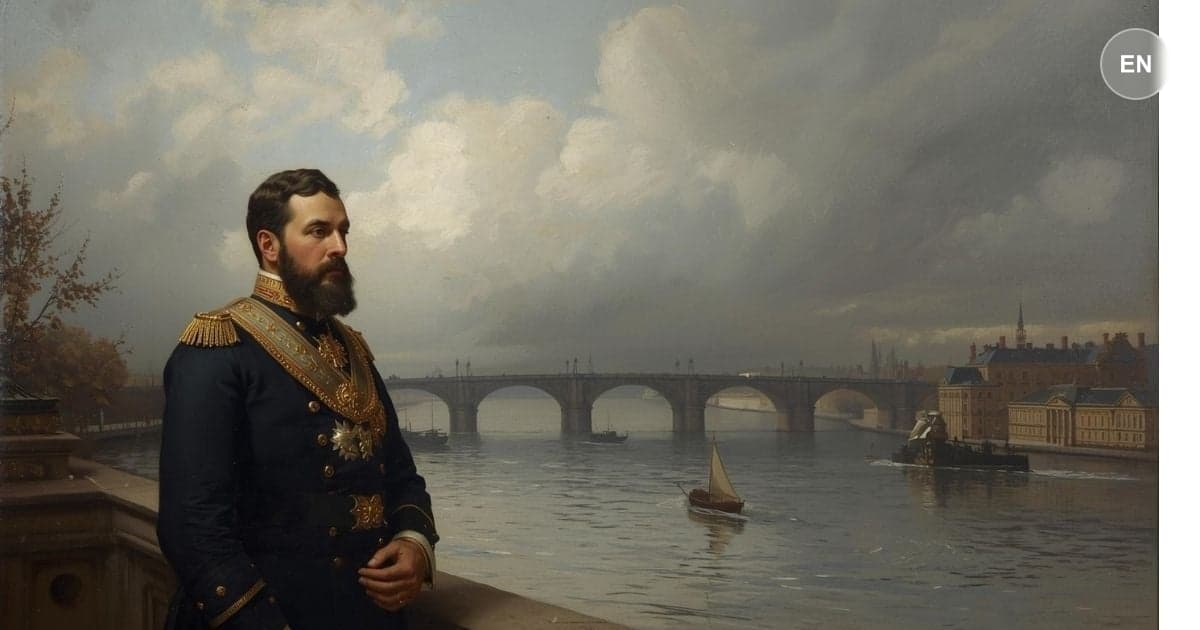
At the Battle of Borodino, Napoleon stands on a hill trying to command a battle he cannot see. Smoke and distance obscure everything—he watches through a telescope but can't tell French soldiers from Russian ones. The reports flooding back to him are all wrong: messengers claim victories that have already turned to defeats, announce deaths of generals who are still alive, and describe captured positions that have already been lost again. Meanwhile, the actual fighting unfolds in complete chaos. Soldiers ignore orders, running backward when told to advance and charging forward when told to hold position. Officers on the ground make their own decisions without consulting their superiors because survival trumps military hierarchy. Two cavalry regiments gallop into battle only to immediately turn around and flee. The grand strategies drawn up in headquarters mean nothing when bullets start flying and men start dying. Tolstoy reveals the fundamental disconnect between how we think leadership works and how it actually functions under extreme pressure. Napoleon, the great military genius, is essentially a blind man shouting orders into the wind. The real battle is fought by terrified soldiers making split-second decisions based on instinct, not strategy. This chapter exposes the myth of control in crisis situations—showing how even the most powerful leaders become helpless when faced with the fog of war.

Coming Up in Chapter 224

As the battle rages on, we'll see how individual soldiers experience this same chaos from ground level, where the grand strategies of emperors mean nothing compared to the simple desire to stay alive.

Share it with friends

Previous ChapterNext Chapter
GO ADS FREE — JOIN US
Original text
complete·1,244 words
T

he chief action of the battle of Borodinó was fought within the seven thousand feet between Borodinó and Bagratión’s flèches. Beyond that space there was, on the one side, a demonstration made by the Russians with Uvárov’s cavalry at midday, and on the other side, beyond Utítsa, Poniatowski’s collision with Túchkov; but these two were detached and feeble actions in comparison with what took place in the center of the battlefield. On the field between Borodinó and the flèches, beside the wood, the chief action of the day took place on an open space visible from both sides and was fought in the simplest and most artless way.

The battle began on both sides with a cannonade from several hundred guns.

Then when the whole field was covered with smoke, two divisions, Campan’s and Dessaix’s, advanced from the French right, while Murat’s troops advanced on Borodinó from their left.

1 / 7

Master this chapter. Complete your experience

Purchase the complete book to access all chapters and support classic literature

Read Free on GutenbergBuy at Powell'sBuy on Amazon

As an Amazon Associate, we earn a small commission from qualifying purchases at no additional cost to you.

Available in paperback, hardcover, and e-book formats

GO ADS FREE — JOIN US

Why This Matters

Connect literature to life

Skill: Reading Power Dynamics

This chapter teaches you to spot the gap between what leaders claim to control and what they actually see.

Practice This Today

This week, notice when someone in authority makes confident statements about situations they're not directly involved in—then look for the real information sources.

GO ADS FREE — JOIN US

Now let's explore the literary elements.

Key Quotes & Analysis

"Napoleon could not see what was happening there, especially as the smoke mingling with the mist hid the whole locality."

— Narrator

Context: Describing Napoleon's position during the battle

This perfectly captures the central irony - the great commander is blind to his own battle. All his strategic genius means nothing when he can't see what's actually happening.

In Today's Words:

The boss has no clue what is actually happening because he's too far removed from the actual work.

"The soldiers of Dessaix's division advancing against the flèches could only be seen till they had entered the hollow."

— Narrator

Context: Explaining how troops disappear from Napoleon's view

Once soldiers enter the real fight, they vanish from command's sight. This shows how leadership becomes impossible when the action starts and communication breaks down.

In Today's Words:

Once your people get into the thick of things, you lose track of what they're actually doing.

"The chief action of the day took place on an open space visible from both sides and was fought in the simplest and most artless way."

— Narrator

Context: Describing the main battlefield between Borodinó and the flèches

Despite all the complex military strategy, the actual fighting comes down to simple, brutal combat. All the sophisticated planning dissolves into basic survival.

In Today's Words:

When things get real, all your fancy plans go out the window and it comes down to who can handle the pressure.

Thematic Threads

Power

In This Chapter

Napoleon's supposed absolute power becomes meaningless when he can't see or control the actual battle

Development

Building from earlier scenes of aristocratic power games to show power's ultimate limitations

In Your Life:

You might see this when your boss makes decisions that seem completely disconnected from your daily work reality

Identity

In This Chapter

Soldiers abandon their military identities and act on pure survival instinct when faced with death

Development

Continuing exploration of how crisis strips away social roles to reveal core human nature

In Your Life:

You might recognize this when extreme stress makes you act completely differently than your usual professional persona

Class

In This Chapter

The class divide between Napoleon on his hill and soldiers in the mud becomes literally a matter of perspective and survival

Development

Deepening the theme to show how class creates physical and informational distance from reality

In Your Life:

You might experience this divide between management and frontline workers in any job

Human Relationships

In This Chapter

Military hierarchy breaks down as soldiers form survival bonds with whoever is next to them, regardless of rank

Development

Showing how genuine human connection emerges when artificial social structures collapse

In Your Life:

You might find your closest work relationships are with people who share your actual daily struggles, not your official teammates

Social Expectations

In This Chapter

The expectation that great leaders control great events is completely shattered by the chaos of actual battle

Development

Exposing the myth of individual control over complex systems

In Your Life:

You might feel this pressure when people expect you to control outcomes that are actually beyond anyone's individual influence

You now have the context. Time to form your own thoughts.

Discussion Questions

  1. 1

    What prevented Napoleon from knowing what was actually happening during the Battle of Borodino?

    analysis • surface
  2. 2

    Why were the reports reaching Napoleon so inaccurate, and what does this reveal about how information travels up hierarchies?

    analysis • medium
  3. 3

    Where have you seen this same pattern of leaders being disconnected from ground-level reality in your workplace, school, or community?

    application • medium
  4. 4

    If you were a soldier on the ground trying to get accurate information to your commander, what strategies would you use to cut through the noise?

    application • deep
  5. 5

    What does this chapter suggest about the limits of control and the illusion of leadership during crisis situations?

    reflection • deep

Critical Thinking Exercise

10 minutes

Map Your Information Chain

Think of a situation where you need to communicate important information up or down a hierarchy - at work, in your family, or in an organization you belong to. Draw a simple map showing all the people information has to pass through to reach the decision-maker. Then identify where information might get filtered, delayed, or distorted along the way.

Consider:

  • •What motivations might each person have to change or filter the message?
  • •How much time passes between each step, and how might urgency get lost?
  • •What happens when people tell others what they think they want to hear instead of the truth?

Journaling Prompt

Write about a time when you experienced this information breakdown firsthand - either as someone trying to get a message through or as someone who made a decision based on incomplete information. What could have been done differently?

Coming Up Next...

Chapter 224: When Victory Turns to Nightmare

As the battle rages on, we'll see how individual soldiers experience this same chaos from ground level, where the grand strategies of emperors mean nothing compared to the simple desire to stay alive.

Continue to Chapter 224
Previous
When Instinct Takes Over
Contents
Next
When Victory Turns to Nightmare

Continue Exploring

War and Peace Study GuideTeaching ResourcesEssential Life IndexBrowse by ThemeAll Books
Power & CorruptionLove & RelationshipsIdentity & Self-Discovery

You Might Also Like

Anna Karenina cover

Anna Karenina

Leo Tolstoy

Also by Leo Tolstoy

The Idiot cover

The Idiot

Fyodor Dostoevsky

Explores love & romance

Moby-Dick cover

Moby-Dick

Herman Melville

Explores mortality & legacy

Dracula cover

Dracula

Bram Stoker

Explores love & romance

Browse all 47+ books

Share This Chapter

Know someone who'd enjoy this? Spread the wisdom!

TwitterFacebookLinkedInEmail

Read ad-free with Prestige

Get rid of ads, unlock study guides and downloads, and support free access for everyone.

Subscribe to PrestigeCreate free account
Intelligence Amplifier
Intelligence Amplifier™Powering Wide Reads

Exploring human-AI collaboration through books, essays, and philosophical dialogues. Classic literature transformed into navigational maps for modern life.

2025 Books

→ The Amplified Human Spirit→ The Alarming Rise of Stupidity Amplified→ San Francisco: The AI Capital of the World
Visit intelligenceamplifier.org
hello@widereads.com

WideReads Originals

→ You Are Not Lost→ The Last Chapter First→ The Lit of Love→ Wealth and Poverty→ 10 Paradoxes in the Classics · coming soon
Arvintech
arvintechAmplify your Mind
Visit at arvintech.com

Navigate

  • Home
  • Library
  • Essential Life Index
  • How It Works
  • Subscribe
  • Account
  • About
  • Contact
  • Authors
  • Suggest a Book
  • Landings

Made For You

  • Students
  • Educators
  • Families
  • Readers
  • Literary Analysis
  • Finding Purpose
  • Letting Go
  • Recovering from a Breakup
  • Corruption
  • Gaslighting in the Classics

Newsletter

Weekly insights from the classics. Amplify Your Mind.

Legal

  • Privacy Policy
  • Terms of Service
  • Cookie Policy
  • Accessibility

Why Public Domain?

We focus on public domain classics because these timeless works belong to everyone. No paywalls, no restrictions—just wisdom that has stood the test of centuries, freely accessible to all readers.

Public domain books have shaped humanity's understanding of love, justice, ambition, and the human condition. By amplifying these works, we help preserve and share literature that truly belongs to the world.

A Pilgrimage

Powell's City of Books

Portland, Oregon

If you ever find yourself in Portland, walk to the corner of Burnside and 10th. The building takes up an entire city block. Inside is over a million books, new and used on the same shelf, organized by color-coded rooms with names like the Rose Room and the Pearl Room. You can lose an afternoon. You can lose a weekend. You will find a book you have been looking for your whole life, and three you did not know existed.

It is a pilgrimage. We cannot find a bookstore like it anywhere on earth. If you read the classics, and you ever get the chance, go. It belongs on every reader's bucket list.

Visit powells.com

We are not in any way affiliated with Powell's. We are just a very big fan.

© 2026 Wide Reads™. All Rights Reserved.

Intelligence Amplifier™ and Wide Reads™ are proprietary trademarks of Arvin Lioanag.

Copyright Protection: All original content, analyses, discussion questions, pedagogical frameworks, and methodology are protected by U.S. and international copyright law. Unauthorized reproduction, distribution, web scraping, or use for AI training is strictly prohibited. See our Copyright Notice for details.

Disclaimer: The information provided on this website is for general informational and educational purposes only and does not constitute professional, legal, financial, or technical advice. While we strive to ensure accuracy and relevance, we make no warranties regarding completeness, reliability, or suitability. Any reliance on such information is at your own risk. We are not liable for any losses or damages arising from use of this site. By using this site, you agree to these terms.