Wide Reads
Literature MattersLife IndexEducators
Sign in
Where to Begin
War and Peace - The Emperor's Defiant Stand

Leo Tolstoy

War and Peace

The Emperor's Defiant Stand

Home›Books›War and Peace›Chapter 266
Previous
266 of 361
Next

Summary

A French messenger named Michaud arrives at the Emperor's palace to deliver devastating news: Moscow has been abandoned and is burning. The Emperor's initial reaction reveals his humanity—tears spring to his eyes, his voice trembles. But within moments, he transforms this vulnerability into strength, asking not for sympathy but for honest assessment of his army's morale. Michaud, skilled in the delicate art of delivering bad news, initially hesitates before delivering what sounds like more terrible news—that the army is in 'desperate and agonized terror.' But he's setting up a masterful pivot: they're not afraid of Napoleon, they're afraid their Emperor might make peace too soon. They're burning to fight. This message transforms the Emperor completely. His despair becomes defiance, his weakness becomes resolve. He delivers a stirring declaration that even if he loses everything—his army, his throne, his empire—he would rather 'eat potatoes with the meanest of my peasants' than surrender his country's honor. The scene captures a crucial leadership moment: how a ruler processes devastating news, manages his emotions, and transforms crisis into rallying cry. Michaud witnesses not just political theater, but a man choosing to embody his nation's spirit rather than its fears. The chapter shows how sometimes the most powerful response to loss isn't strategy or tactics, but an unshakeable declaration of values.

Coming Up in Chapter 267

With the Emperor's defiant words still echoing, the focus shifts back to the burning capital itself, where the real consequences of these grand declarations play out in the lives of ordinary people caught in history's tide.

Share it with friends

Previous ChapterNext Chapter
GO ADS FREE — JOIN US
Original text
complete·1,033 words
N

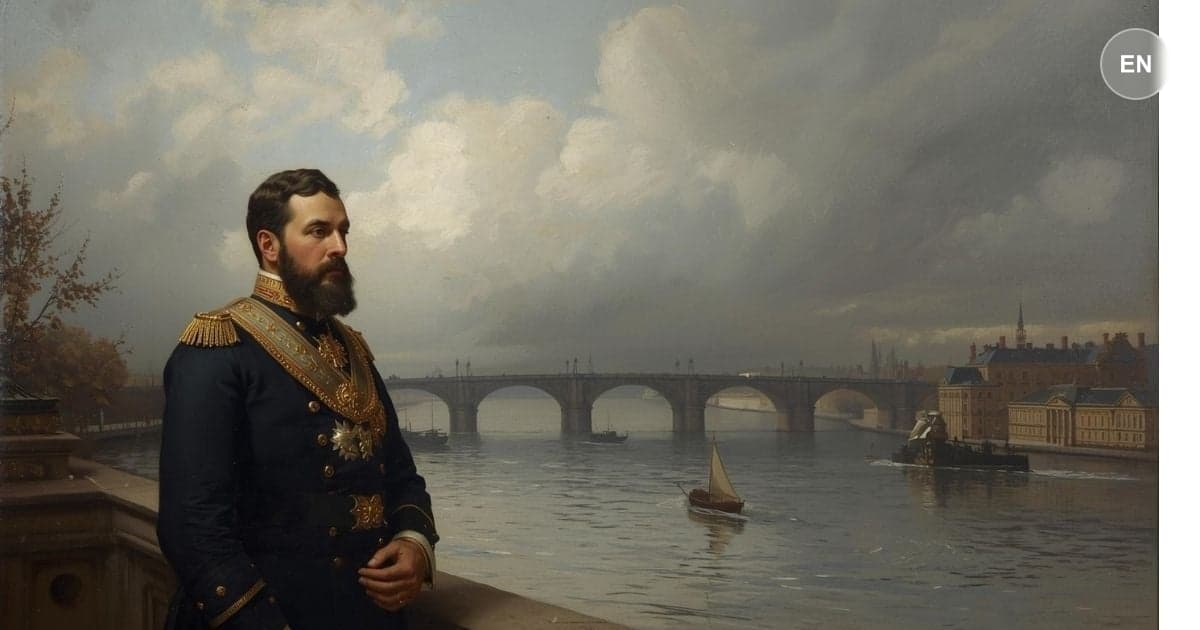
ine days after the abandonment of Moscow, a messenger from Kutúzov reached Petersburg with the official announcement of that event. This messenger was Michaud, a Frenchman who did not know Russian, but who was quoique étranger, russe de cœur et d’âme, * as he said of himself.

* Though a foreigner, Russian in heart and soul.

The Emperor at once received this messenger in his study at the palace on Stone Island. Michaud, who had never seen Moscow before the campaign and who did not know Russian, yet felt deeply moved (as he wrote) when he appeared before notre très gracieux souverain * with the news of the burning of Moscow, dont les flammes éclairaient sa route. *(2)

* Our most gracious sovereign.

* (2) Whose flames illumined his route.

Though the source of M. Michaud’s chagrin must have been different from that which caused Russians to grieve, he had such a sad face when shown into the Emperor’s study that the latter at once asked:

“Have you brought me sad news, Colonel?”

“Very sad, sire,” replied Michaud, lowering his eyes with a sigh. “The abandonment of Moscow.”

1 / 7

Master this chapter. Complete your experience

Purchase the complete book to access all chapters and support classic literature

Read Free on GutenbergBuy at Powell'sBuy on Amazon

As an Amazon Associate, we earn a small commission from qualifying purchases at no additional cost to you.

Available in paperback, hardcover, and e-book formats

GO ADS FREE — JOIN US

Why This Matters

Connect literature to life

Skill: Transforming Crisis into Rallying Energy

This chapter teaches how to process devastating news by converting it into evidence of what matters most to you and your people.

Practice This Today

Next time you face a major setback, ask yourself: 'What does this crisis prove about my values?' and speak that connection out loud to others who share your mission.

GO ADS FREE — JOIN US

Now let's explore the literary elements.

Key Quotes & Analysis

"Have they surrendered my ancient capital without a battle?"

— The Emperor

Context: His immediate reaction upon hearing Moscow has been abandoned

This reveals the Emperor's initial shock and the personal pain of losing something precious to his identity. The word 'ancient' shows how deeply Moscow connects to Russian heritage and his sense of duty as protector.

In Today's Words:

They just gave up the thing that matters most to us without even trying to save it?

"It had been impossible to fight before Moscow, and that as the only remaining choice was between losing the army as well as Moscow, or losing Moscow alone"

— Michaud (delivering Kutúzov's message)

Context: Explaining the strategic reasoning behind the retreat

This demonstrates how to frame a devastating loss as a strategic choice. By presenting it as choosing the lesser of two evils, it transforms defeat into wisdom and preserves hope for future victory.

In Today's Words:

We had to choose between losing everything or just losing this one thing - so we chose to live to fight another day.

"I would rather eat potatoes with the meanest of my peasants than surrender my country's honor"

— The Emperor

Context: His defiant response after processing the news and his army's determination

This transforms personal and national crisis into a declaration of unshakeable values. It shows leadership that chooses principle over comfort, inspiring others through example rather than just words.

In Today's Words:

I'd rather lose everything and start over than compromise what we stand for.

Thematic Threads

Leadership Under Pressure

In This Chapter

The Emperor transforms from vulnerable human to resolute leader within minutes of receiving devastating news

Development

Building on earlier scenes of military leadership, now showing emotional leadership in crisis

In Your Life:

You might recognize this when you're the person others look to when everything goes wrong at work or home

The Art of Difficult Conversations

In This Chapter

Michaud skillfully delivers terrible news by framing it as evidence of loyalty rather than defeat

Development

Expanding the theme of strategic communication seen in diplomatic scenes

In Your Life:

You see this when you need to tell your boss about a major problem or give your family bad news

Values Under Fire

In This Chapter

The Emperor declares he'd rather eat potatoes with peasants than compromise his country's honor

Development

Deepening the exploration of what people will sacrifice for principles versus survival

In Your Life:

You face this when keeping your integrity might cost you money, relationships, or security

Emotional Regulation

In This Chapter

The Emperor allows himself to feel grief briefly, then channels it into determination

Development

Continuing the theme of how characters manage intense emotions in high-stakes situations

In Your Life:

You use this when you get devastating news but still need to function and lead others

Reframing Narrative

In This Chapter

The army's terror becomes proof of their eagerness to fight, not evidence of defeat

Development

Building on themes of how perspective shapes reality and outcomes

In Your Life:

You see this when you choose to view setbacks as opportunities or proof of what matters most

You now have the context. Time to form your own thoughts.

Discussion Questions

  1. 1

    How does the Emperor's reaction change from the moment he hears the news about Moscow to the end of his conversation with Michaud?

    analysis • surface
  2. 2

    What role does Michaud play in transforming the Emperor's despair into defiance? How does he deliver terrible news in a way that actually strengthens resolve?

    analysis • medium
  3. 3

    Think about a leader you've observed during a crisis - at work, in your community, or in the news. How did their response either rally people or cause them to lose confidence?

    application • medium
  4. 4

    The Emperor says he'd rather 'eat potatoes with the meanest of my peasants' than surrender his country's honor. When have you had to choose between comfort and principles? How did you decide?

    application • deep
  5. 5

    Why do people sometimes become stronger and more determined when they receive devastating news instead of being crushed by it? What makes the difference?

    reflection • deep

Critical Thinking Exercise

10 minutes

Practice Crisis Reframing

Think of a recent setback or disappointment in your life - maybe at work, with family, or a personal goal that didn't work out. Write down what happened, then practice the Emperor's technique: reframe this setback as evidence of something important about your values or commitment. What does this crisis actually prove about what matters to you?

Consider:

  • •Don't minimize the real impact or pain of the setback
  • •Look for the thread that connects the loss to your deeper values
  • •Consider how this reframe might change your next actions

Journaling Prompt

Write about a time when bad news or a crisis actually clarified what was most important to you. How did that clarity change the way you responded to the situation?

Coming Up Next...

Chapter 267: When Personal Interests Trump History

With the Emperor's defiant words still echoing, the focus shifts back to the burning capital itself, where the real consequences of these grand declarations play out in the lives of ordinary people caught in history's tide.

Continue to Chapter 267
Previous
When News Becomes Truth
Contents
Next
When Personal Interests Trump History

Continue Exploring

War and Peace Study GuideTeaching ResourcesEssential Life IndexBrowse by ThemeAll Books
Power & CorruptionLove & RelationshipsIdentity & Self-Discovery

You Might Also Like

Anna Karenina cover

Anna Karenina

Leo Tolstoy

Also by Leo Tolstoy

The Idiot cover

The Idiot

Fyodor Dostoevsky

Explores love & romance

Moby-Dick cover

Moby-Dick

Herman Melville

Explores mortality & legacy

Dracula cover

Dracula

Bram Stoker

Explores love & romance

Browse all 47+ books

Share This Chapter

Know someone who'd enjoy this? Spread the wisdom!

TwitterFacebookLinkedInEmail

Read ad-free with Prestige

Get rid of ads, unlock study guides and downloads, and support free access for everyone.

Subscribe to PrestigeCreate free account
Intelligence Amplifier
Intelligence Amplifier™Powering Wide Reads

Exploring human-AI collaboration through books, essays, and philosophical dialogues. Classic literature transformed into navigational maps for modern life.

2025 Books

→ The Amplified Human Spirit→ The Alarming Rise of Stupidity Amplified→ San Francisco: The AI Capital of the World
Visit intelligenceamplifier.org
hello@widereads.com

WideReads Originals

→ You Are Not Lost→ The Last Chapter First→ The Lit of Love→ Wealth and Poverty→ 10 Paradoxes in the Classics · coming soon
Arvintech
arvintechAmplify your Mind
Visit at arvintech.com

Navigate

  • Home
  • Library
  • Essential Life Index
  • How It Works
  • Subscribe
  • Account
  • About
  • Contact
  • Authors
  • Suggest a Book
  • Landings

Made For You

  • Students
  • Educators
  • Families
  • Readers
  • Literary Analysis
  • Finding Purpose
  • Letting Go
  • Recovering from a Breakup
  • Corruption
  • Gaslighting in the Classics

Newsletter

Weekly insights from the classics. Amplify Your Mind.

Legal

  • Privacy Policy
  • Terms of Service
  • Cookie Policy
  • Accessibility

Why Public Domain?

We focus on public domain classics because these timeless works belong to everyone. No paywalls, no restrictions—just wisdom that has stood the test of centuries, freely accessible to all readers.

Public domain books have shaped humanity's understanding of love, justice, ambition, and the human condition. By amplifying these works, we help preserve and share literature that truly belongs to the world.

A Pilgrimage

Powell's City of Books

Portland, Oregon

If you ever find yourself in Portland, walk to the corner of Burnside and 10th. The building takes up an entire city block. Inside is over a million books, new and used on the same shelf, organized by color-coded rooms with names like the Rose Room and the Pearl Room. You can lose an afternoon. You can lose a weekend. You will find a book you have been looking for your whole life, and three you did not know existed.

It is a pilgrimage. We cannot find a bookstore like it anywhere on earth. If you read the classics, and you ever get the chance, go. It belongs on every reader's bucket list.

Visit powells.com

We are not in any way affiliated with Powell's. We are just a very big fan.

© 2026 Wide Reads™. All Rights Reserved.

Intelligence Amplifier™ and Wide Reads™ are proprietary trademarks of Arvin Lioanag.

Copyright Protection: All original content, analyses, discussion questions, pedagogical frameworks, and methodology are protected by U.S. and international copyright law. Unauthorized reproduction, distribution, web scraping, or use for AI training is strictly prohibited. See our Copyright Notice for details.

Disclaimer: The information provided on this website is for general informational and educational purposes only and does not constitute professional, legal, financial, or technical advice. While we strive to ensure accuracy and relevance, we make no warranties regarding completeness, reliability, or suitability. Any reliance on such information is at your own risk. We are not liable for any losses or damages arising from use of this site. By using this site, you agree to these terms.