Wide Reads
Literature MattersLife IndexEducators
Sign in
Where to Begin
War and Peace - When Leadership Becomes Theater

Leo Tolstoy

War and Peace

When Leadership Becomes Theater

Home›Books›War and Peace›Chapter 289
Previous
289 of 361
Next

Summary

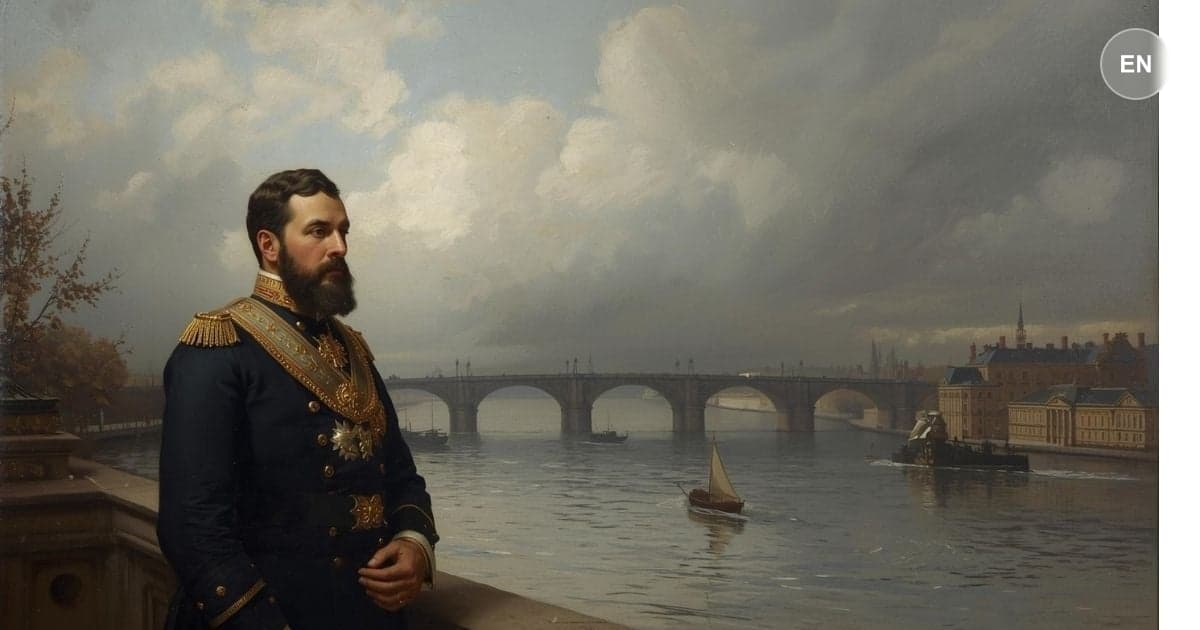
Napoleon's occupation of Moscow becomes a masterclass in how leadership can completely disconnect from reality. Despite issuing decree after decree—trying to establish order, stop looting, create municipal government, and restore commerce—nothing works. His soldiers continue pillaging, his diplomatic overtures to Alexander are ignored, and every administrative measure fails spectacularly. The French army has become like a wounded animal, thrashing about destructively while slowly dying. Tolstoy uses devastating imagery to show how Napoleon, once seemingly all-powerful, now resembles a child holding strings in a carriage, thinking he's driving when he has no control whatsoever. The chapter reveals how quickly authority can become meaningless when it loses touch with ground truth. Napoleon's generals can't even locate the Russian army they're supposed to be pursuing. His own elite guards are robbing and beating their officers. The very soldiers meant to set an example of discipline are breaking into supply stores under the Emperor's own windows. This isn't just military failure—it's organizational collapse. The gap between what leaders think they're accomplishing and what's actually happening on the ground becomes a chasm. When the Battle of Tarutino finally spooks Napoleon into retreat, his army flees carrying all their stolen goods, further slowing their escape. The irony is brutal: the very success of their looting becomes the mechanism of their destruction.

Coming Up in Chapter 290

As Napoleon's army begins its catastrophic retreat from Moscow, we'll see how the hunter becomes the hunted. The Russians, who seemed defeated, are about to turn the tables in ways no one could have predicted.

Share it with friends

Previous ChapterNext Chapter
GO ADS FREE — JOIN US
Original text
complete·1,271 words
B

ut strange to say, all these measures, efforts, and plans—which were not at all worse than others issued in similar circumstances—did not affect the essence of the matter but, like the hands of a clock detached from the mechanism, swung about in an arbitrary and aimless way without engaging the cogwheels.

1 / 8

Master this chapter. Complete your experience

Purchase the complete book to access all chapters and support classic literature

Read Free on GutenbergBuy at Powell'sBuy on Amazon

As an Amazon Associate, we earn a small commission from qualifying purchases at no additional cost to you.

Available in paperback, hardcover, and e-book formats

GO ADS FREE — JOIN US

Why This Matters

Connect literature to life

Skill: Reading Power Dynamics

This chapter teaches how to distinguish between real authority and phantom authority by watching what people actually do versus what they say.

Practice This Today

This week, notice when someone in authority keeps explaining why their plan will work while evidence shows it's already failing—that's phantom authority in action.

GO ADS FREE — JOIN US

Now let's explore the literary elements.

Key Quotes & Analysis

"like the hands of a clock detached from the mechanism, swung about in an arbitrary and aimless way without engaging the cogwheels"

— Narrator

Context: Describing how Napoleon's orders and plans had no connection to reality

This mechanical metaphor perfectly captures organizational failure. The leadership thinks it's working, but nothing connects to make actual change happen. It's motion without purpose.

In Today's Words:

Like a boss giving orders that everyone ignores - lots of activity but nothing actually gets done

"as a child wants the floor on which he has hurt himself to be beaten"

— Narrator

Context: Explaining Napoleon's desire to blow up the Kremlin when leaving Moscow

Shows how Napoleon's grand military strategy has devolved into petty revenge. He's not thinking strategically anymore, just lashing out like a frustrated child.

In Today's Words:

Like wanting to key your ex's car - it won't help you but it might make you feel better

"The French generals lost touch with the Russian army of sixty thousand men, and according to Thiers it was only eventually found, like a lost pin"

— Narrator

Context: Describing the complete military incompetence of Napoleon's commanders

The comparison to a lost pin is devastating - how do you misplace an entire army? It shows the total breakdown of military intelligence and command structure.

In Today's Words:

Like a delivery company that somehow loses a whole truck and acts like finding it again is impressive

Thematic Threads

Power

In This Chapter

Napoleon's complete disconnect between his imperial decrees and the reality of his disintegrating army

Development

Evolution from earlier themes of power's seductive nature to its ultimate impotence when divorced from reality

In Your Life:

You might see this when your supervisor makes grand announcements about workplace improvements while ignoring the daily problems you actually face.

Class

In This Chapter

The breakdown of military hierarchy as common soldiers rob and beat their own officers with impunity

Development

Builds on previous themes of rigid social structure by showing how quickly class distinctions collapse under pressure

In Your Life:

You might recognize this when crisis hits your workplace and suddenly everyone's equal—titles don't matter when the building's on fire.

Identity

In This Chapter

Napoleon clinging to his role as Emperor even as his empire crumbles around him, unable to see himself as anything else

Development

Deepens the theme of how people become trapped by their own self-image and refuse to adapt to changing reality

In Your Life:

You might experience this when you're so invested in being 'the reliable one' that you can't admit when you're overwhelmed and need help.

Social Expectations

In This Chapter

The complete collapse of military discipline and social order as survival instincts override institutional expectations

Development

Shows how social expectations only hold when supported by real consequences and mutual benefit

In Your Life:

You might see this when workplace 'culture' falls apart during layoffs—suddenly all those team-building exercises mean nothing.

You now have the context. Time to form your own thoughts.

Discussion Questions

  1. 1

    What specific actions does Napoleon take to try to control Moscow, and what actually happens instead?

    analysis • surface
  2. 2

    Why do Napoleon's commands become meaningless even though he still has the title of Emperor?

    analysis • medium
  3. 3

    Where have you seen leaders who think they're in control but clearly aren't? What were the warning signs?

    application • medium
  4. 4

    If you were Napoleon's advisor, how would you help him see the reality of his situation without getting yourself shot?

    application • deep
  5. 5

    What does this chapter reveal about the difference between having authority and actually being able to use it?

    reflection • deep

Critical Thinking Exercise

10 minutes

Spot the Phantom Authority

Think of a situation in your life where someone in charge issues orders or makes announcements, but things keep going wrong anyway. Map out what the authority figure thinks is happening versus what's actually happening on the ground. Then identify three early warning signs that could have predicted this disconnect.

Consider:

  • •Look for gaps between official statements and daily reality
  • •Notice who the authority figure talks to versus who does the actual work
  • •Consider whether the leader has systems to hear bad news

Journaling Prompt

Write about a time when you had authority (as a parent, team leader, or supervisor) but realized your control was more limited than you thought. What helped you reconnect with reality?

Coming Up Next...

Chapter 290: The Nameless Dog and Human Dignity

As Napoleon's army begins its catastrophic retreat from Moscow, we'll see how the hunter becomes the hunted. The Russians, who seemed defeated, are about to turn the tables in ways no one could have predicted.

Continue to Chapter 290
Previous
Napoleon's Grand Illusion of Control
Contents
Next
The Nameless Dog and Human Dignity

Continue Exploring

War and Peace Study GuideTeaching ResourcesEssential Life IndexBrowse by ThemeAll Books
Power & CorruptionLove & RelationshipsIdentity & Self-Discovery

You Might Also Like

Anna Karenina cover

Anna Karenina

Leo Tolstoy

Also by Leo Tolstoy

The Idiot cover

The Idiot

Fyodor Dostoevsky

Explores love & romance

Moby-Dick cover

Moby-Dick

Herman Melville

Explores mortality & legacy

Dracula cover

Dracula

Bram Stoker

Explores love & romance

Browse all 47+ books

Share This Chapter

Know someone who'd enjoy this? Spread the wisdom!

TwitterFacebookLinkedInEmail

Read ad-free with Prestige

Get rid of ads, unlock study guides and downloads, and support free access for everyone.

Subscribe to PrestigeCreate free account
Intelligence Amplifier
Intelligence Amplifier™Powering Wide Reads

Exploring human-AI collaboration through books, essays, and philosophical dialogues. Classic literature transformed into navigational maps for modern life.

2025 Books

→ The Amplified Human Spirit→ The Alarming Rise of Stupidity Amplified→ San Francisco: The AI Capital of the World
Visit intelligenceamplifier.org
hello@widereads.com

WideReads Originals

→ You Are Not Lost→ The Last Chapter First→ The Lit of Love→ Wealth and Poverty→ 10 Paradoxes in the Classics · coming soon
Arvintech
arvintechAmplify your Mind
Visit at arvintech.com

Navigate

  • Home
  • Library
  • Essential Life Index
  • How It Works
  • Subscribe
  • Account
  • About
  • Contact
  • Authors
  • Suggest a Book
  • Landings

Made For You

  • Students
  • Educators
  • Families
  • Readers
  • Literary Analysis
  • Finding Purpose
  • Letting Go
  • Recovering from a Breakup
  • Corruption
  • Gaslighting in the Classics

Newsletter

Weekly insights from the classics. Amplify Your Mind.

Legal

  • Privacy Policy
  • Terms of Service
  • Cookie Policy
  • Accessibility

Why Public Domain?

We focus on public domain classics because these timeless works belong to everyone. No paywalls, no restrictions—just wisdom that has stood the test of centuries, freely accessible to all readers.

Public domain books have shaped humanity's understanding of love, justice, ambition, and the human condition. By amplifying these works, we help preserve and share literature that truly belongs to the world.

A Pilgrimage

Powell's City of Books

Portland, Oregon

If you ever find yourself in Portland, walk to the corner of Burnside and 10th. The building takes up an entire city block. Inside is over a million books, new and used on the same shelf, organized by color-coded rooms with names like the Rose Room and the Pearl Room. You can lose an afternoon. You can lose a weekend. You will find a book you have been looking for your whole life, and three you did not know existed.

It is a pilgrimage. We cannot find a bookstore like it anywhere on earth. If you read the classics, and you ever get the chance, go. It belongs on every reader's bucket list.

Visit powells.com

We are not in any way affiliated with Powell's. We are just a very big fan.

© 2026 Wide Reads™. All Rights Reserved.

Intelligence Amplifier™ and Wide Reads™ are proprietary trademarks of Arvin Lioanag.

Copyright Protection: All original content, analyses, discussion questions, pedagogical frameworks, and methodology are protected by U.S. and international copyright law. Unauthorized reproduction, distribution, web scraping, or use for AI training is strictly prohibited. See our Copyright Notice for details.

Disclaimer: The information provided on this website is for general informational and educational purposes only and does not constitute professional, legal, financial, or technical advice. While we strive to ensure accuracy and relevance, we make no warranties regarding completeness, reliability, or suitability. Any reliance on such information is at your own risk. We are not liable for any losses or damages arising from use of this site. By using this site, you agree to these terms.