Wide Reads
Literature MattersLife IndexEducators
Sign in
Where to Begin
War and Peace - Napoleon Crosses the Rubicon

Leo Tolstoy

War and Peace

Napoleon Crosses the Rubicon

Home›Books›War and Peace›Chapter 169
Previous
169 of 361
Next

Summary

Napoleon leaves Dresden's glittering court life and heads east toward Russia, officially still claiming he wants peace while simultaneously ordering his massive army forward. The contradiction is stark—he writes friendly letters to Tsar Alexander calling him 'brother' while accelerating troop movements that signal war. When Napoleon reaches the Niemen River, the boundary between his empire and Russia, he makes a fateful decision. Looking across at the Russian steppes and thinking of Moscow, he impulsively orders his army to cross, abandoning both strategic planning and diplomatic solutions. The crossing becomes a spectacle of dangerous devotion. Polish cavalry officers, desperate to impress Napoleon, volunteer to swim the treacherous river instead of using a safer ford. Forty men drown in the attempt, but Napoleon barely notices—he's absorbed in maps and military planning. The soldiers shout 'Vive l'Empereur!' as they risk their lives for his attention, but he's already mentally moved on to the next tactical problem. Tolstoy shows us a leader drunk on his own legend, surrounded by people willing to die for his approval. Napoleon has become so accustomed to inspiring fanatical devotion that he takes it for granted, even when it leads to pointless deaths. The chapter ends with the ominous Latin phrase: 'Those whom God wishes to destroy, he first drives mad.' This moment marks Napoleon's point of no return—not just geographically, but psychologically. He's crossed into territory where his judgment is clouded by his own mythology.

Coming Up in Chapter 170

As Napoleon's massive army pours into Russia, we'll see how the Russian leadership responds to this invasion. The stage is set for a confrontation that will test both empires to their limits.

Share it with friends

Previous ChapterNext Chapter
GO ADS FREE — JOIN US
Original text
complete·1,525 words
O

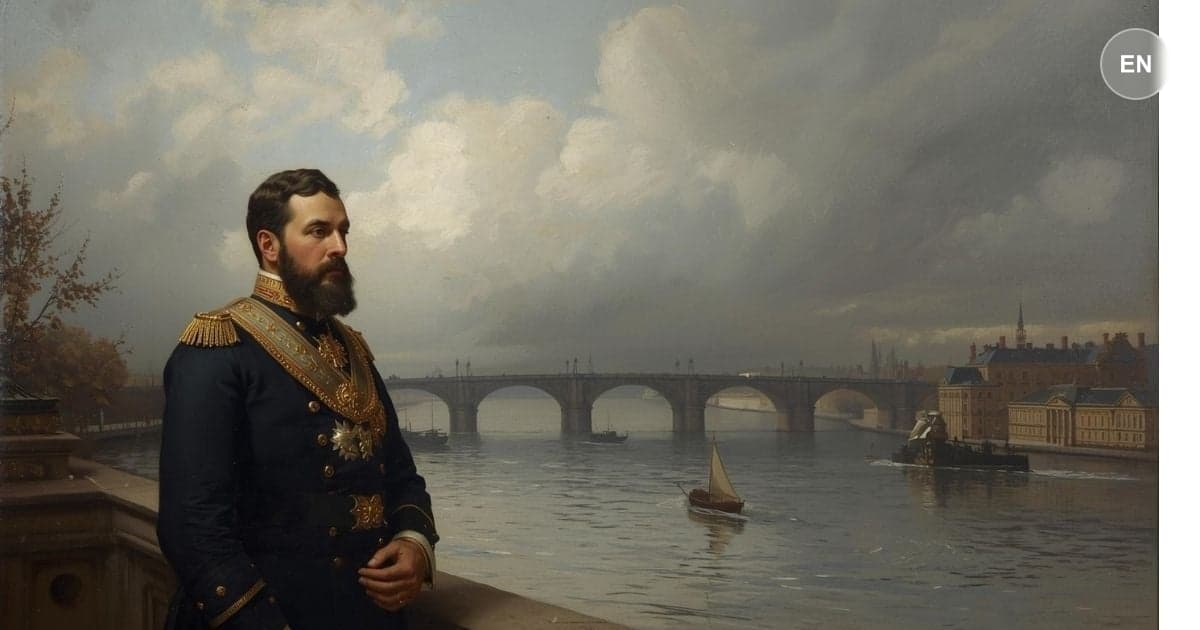
n the twenty-ninth of May Napoleon left Dresden, where he had spent three weeks surrounded by a court that included princes, dukes, kings, and even an emperor. Before leaving, Napoleon showed favor to the emperor, kings, and princes who had deserved it, reprimanded the kings and princes with whom he was dissatisfied, presented pearls and diamonds of his own—that is, which he had taken from other kings—to the Empress of Austria, and having, as his historian tells us, tenderly embraced the Empress Marie Louise—who regarded him as her husband, though he had left another wife in Paris—left her grieved by the parting which she seemed hardly able to bear. Though the diplomatists still firmly believed in the possibility of peace and worked zealously to that end, and though the Emperor Napoleon himself wrote a letter to Alexander, calling him Monsieur mon frère, and sincerely assured him that he did not want war and would always love and honor him—yet he set off to join his army, and at every station gave fresh orders to accelerate the movement of his troops from west to east. He went in a traveling coach with six horses, surrounded by pages, aides-de-camp, and an escort, along the road to Posen, Thorn, Danzig, and Königsberg. At each of these towns thousands of people met him with excitement and enthusiasm.

1 / 10

Master this chapter. Complete your experience

Purchase the complete book to access all chapters and support classic literature

Read Free on GutenbergBuy at Powell'sBuy on Amazon

As an Amazon Associate, we earn a small commission from qualifying purchases at no additional cost to you.

Available in paperback, hardcover, and e-book formats

GO ADS FREE — JOIN US

Why This Matters

Connect literature to life

Skill: Recognizing Dangerous Overconfidence

This chapter teaches how to spot when someone's past success has made them blind to present risks and human costs.

Practice This Today

This week, notice when someone stops asking questions and starts making pronouncements—including yourself when you feel most certain about a decision.

GO ADS FREE — JOIN US

Now let's explore the literary elements.

Key Quotes & Analysis

"Those whom God wishes to destroy, he first drives mad"

— Narrator

Context: Tolstoy's ominous conclusion as Napoleon crosses into Russia

This ancient warning captures the essence of Napoleon's downfall - his success has made him reckless and blind to danger. It's the moment when confidence becomes fatal overreach.

In Today's Words:

When someone's about to destroy themselves, they first lose their common sense

"Monsieur mon frère"

— Napoleon (in his letter)

Context: How Napoleon addresses Tsar Alexander while preparing to invade

The fake friendliness reveals Napoleon's duplicity - calling someone 'brother' while planning to attack them. Shows how power corrupts even basic honesty.

In Today's Words:

Hey buddy, we're cool (while I stab you in the back)

"Vive l'Empereur!"

— Polish cavalry officers

Context: Shouted while drowning in the river trying to impress Napoleon

The ultimate expression of blind loyalty - dying while praising the leader who caused your death. Shows how hero worship can become literally fatal.

In Today's Words:

Long live the boss! (even as he kills us)

Thematic Threads

Power

In This Chapter

Napoleon's power has become so absolute that he makes life-and-death decisions on impulse, barely noticing when men die for his attention

Development

Building from earlier chapters showing power's corrupting influence on various characters

In Your Life:

You might see this when a boss becomes so comfortable with authority they stop listening to input from their team

Self-Deception

In This Chapter

Napoleon simultaneously claims he wants peace while ordering his army to cross into Russia, lying to himself about his true intentions

Development

Expanding the theme of characters who can't face their own contradictions

In Your Life:

You might catch yourself saying you want one thing while your actions clearly show you want something else

Devotion

In This Chapter

Polish officers risk drowning just to impress Napoleon, showing how dangerous blind loyalty becomes

Development

Continuing exploration of how people sacrifice themselves for others' approval

In Your Life:

You might recognize this when you're working yourself to exhaustion trying to please someone who barely notices your efforts

Pride

In This Chapter

Napoleon's pride has grown so large that he believes his own legend and makes decisions based on ego rather than strategy

Development

Deepening the examination of how pride blinds characters to reality

In Your Life:

You might see this when your confidence in one area makes you overestimate your abilities in completely different situations

GO ADS FREE — JOIN US

You now have the context. Time to form your own thoughts.

Discussion Questions

  1. 1

    What contradictory actions does Napoleon take as he approaches the Russian border, and what does this tell us about his state of mind?

    analysis • surface
  2. 2

    Why does Napoleon barely react when forty Polish soldiers drown trying to impress him? What does this reveal about how power can change someone's ability to see others as human?

    analysis • medium
  3. 3

    Think of a boss, coach, or leader you've known who seemed 'drunk on their own power.' What warning signs did you notice, and how did it affect the people around them?

    application • medium
  4. 4

    When you've had success in an area of your life, how do you keep yourself open to feedback and avoid the trap of thinking you know better than everyone else?

    application • deep
  5. 5

    The chapter ends with 'Those whom God wishes to destroy, he first drives mad.' What does this suggest about the relationship between unchecked power and self-destruction?

    reflection • deep

Critical Thinking Exercise

10 minutes

Power Check: Create Your Reality Testing System

Think of an area where you have some authority or influence (work, parenting, volunteer role, etc.). Design a simple system to keep yourself grounded and open to feedback. What specific questions would you ask yourself regularly? Who could you trust to tell you hard truths? What warning signs would tell you that success is going to your head?

Consider:

  • •Consider both formal feedback (performance reviews, surveys) and informal reality checks (trusted friends, family observations)
  • •Think about times when you were wrong despite feeling confident - what could have helped you see it sooner?
  • •Remember that the people most likely to tell you what you want to hear are often the least helpful for your growth

Journaling Prompt

Write about a time when you had to admit you were wrong about something you felt confident about. What helped you see the truth, and how did it change your approach to decision-making?

Coming Up Next...

Chapter 170: Dancing While the World Burns

As Napoleon's massive army pours into Russia, we'll see how the Russian leadership responds to this invasion. The stage is set for a confrontation that will test both empires to their limits.

Continue to Chapter 170
Previous
The Machinery of History
Contents
Next
Dancing While the World Burns

Continue Exploring

War and Peace Study GuideTeaching ResourcesEssential Life IndexBrowse by ThemeAll Books
Power & CorruptionLove & RelationshipsIdentity & Self-Discovery

You Might Also Like

Anna Karenina cover

Anna Karenina

Leo Tolstoy

Also by Leo Tolstoy

The Idiot cover

The Idiot

Fyodor Dostoevsky

Explores love & romance

Moby-Dick cover

Moby-Dick

Herman Melville

Explores mortality & legacy

Dracula cover

Dracula

Bram Stoker

Explores love & romance

Browse all 47+ books

Share This Chapter

Know someone who'd enjoy this? Spread the wisdom!

TwitterFacebookLinkedInEmail

Read ad-free with Prestige

Get rid of ads, unlock study guides and downloads, and support free access for everyone.

Subscribe to PrestigeCreate free account
Intelligence Amplifier
Intelligence Amplifier™Powering Wide Reads

Exploring human-AI collaboration through books, essays, and philosophical dialogues. Classic literature transformed into navigational maps for modern life.

2025 Books

→ The Amplified Human Spirit→ The Alarming Rise of Stupidity Amplified→ San Francisco: The AI Capital of the World
Visit intelligenceamplifier.org
hello@widereads.com

WideReads Originals

→ You Are Not Lost→ The Last Chapter First→ The Lit of Love→ Wealth and Poverty→ 10 Paradoxes in the Classics · coming soon
Arvintech
arvintechAmplify your Mind
Visit at arvintech.com

Navigate

  • Home
  • Library
  • Essential Life Index
  • How It Works
  • Subscribe
  • Account
  • About
  • Contact
  • Authors
  • Suggest a Book
  • Landings

Made For You

  • Students
  • Educators
  • Families
  • Readers
  • Literary Analysis
  • Finding Purpose
  • Letting Go
  • Recovering from a Breakup
  • Corruption
  • Gaslighting in the Classics

Newsletter

Weekly insights from the classics. Amplify Your Mind.

Legal

  • Privacy Policy
  • Terms of Service
  • Cookie Policy
  • Accessibility

Why Public Domain?

We focus on public domain classics because these timeless works belong to everyone. No paywalls, no restrictions—just wisdom that has stood the test of centuries, freely accessible to all readers.

Public domain books have shaped humanity's understanding of love, justice, ambition, and the human condition. By amplifying these works, we help preserve and share literature that truly belongs to the world.

A Pilgrimage

Powell's City of Books

Portland, Oregon

If you ever find yourself in Portland, walk to the corner of Burnside and 10th. The building takes up an entire city block. Inside is over a million books, new and used on the same shelf, organized by color-coded rooms with names like the Rose Room and the Pearl Room. You can lose an afternoon. You can lose a weekend. You will find a book you have been looking for your whole life, and three you did not know existed.

It is a pilgrimage. We cannot find a bookstore like it anywhere on earth. If you read the classics, and you ever get the chance, go. It belongs on every reader's bucket list.

Visit powells.com

We are not in any way affiliated with Powell's. We are just a very big fan.

© 2026 Wide Reads™. All Rights Reserved.

Intelligence Amplifier™ and Wide Reads™ are proprietary trademarks of Arvin Lioanag.

Copyright Protection: All original content, analyses, discussion questions, pedagogical frameworks, and methodology are protected by U.S. and international copyright law. Unauthorized reproduction, distribution, web scraping, or use for AI training is strictly prohibited. See our Copyright Notice for details.

Disclaimer: The information provided on this website is for general informational and educational purposes only and does not constitute professional, legal, financial, or technical advice. While we strive to ensure accuracy and relevance, we make no warranties regarding completeness, reliability, or suitability. Any reliance on such information is at your own risk. We are not liable for any losses or damages arising from use of this site. By using this site, you agree to these terms.