Master this chapter. Complete your experience
Purchase the complete book to access all chapters and support classic literature

As an Amazon Associate, we earn a small commission from qualifying purchases at no additional cost to you.
Available in paperback, hardcover, and e-book formats
Why This Matters
Connect literature to life
This chapter teaches how to recognize when fear of uncontrollable threats gets redirected toward available targets.
Practice This Today
This week, notice when you feel explosive anger toward someone who can't actually solve your real problem—then ask what you're really afraid of.
Now let's explore the literary elements.
Key Quotes & Analysis
"Princess Mary well knew this mood of quiet absorbed querulousness, which generally culminated in a burst of rage, and she went about all that morning as though facing a cocked and loaded gun."
Context: Describing Mary's awareness of her father's dangerous mood on his name day
This shows how people in toxic relationships become experts at reading emotional weather patterns. Mary has learned to navigate around her father's volatility, but she's always in survival mode, never safe.
In Today's Words:
She knew when he got that quiet, grumpy vibe, he was about to explode, so she spent the morning walking on eggshells.
"Spy! Traitor! Out of my house! Be off, I tell you!"
Context: Shouting at Dr. Métivier when the doctor comes to give name day congratulations
The prince's paranoia transforms a routine social visit into evidence of espionage. His fear of losing control makes him see enemies everywhere, turning allies into threats.
In Today's Words:
You're working for them! You're betraying us! Get out of my house right now!
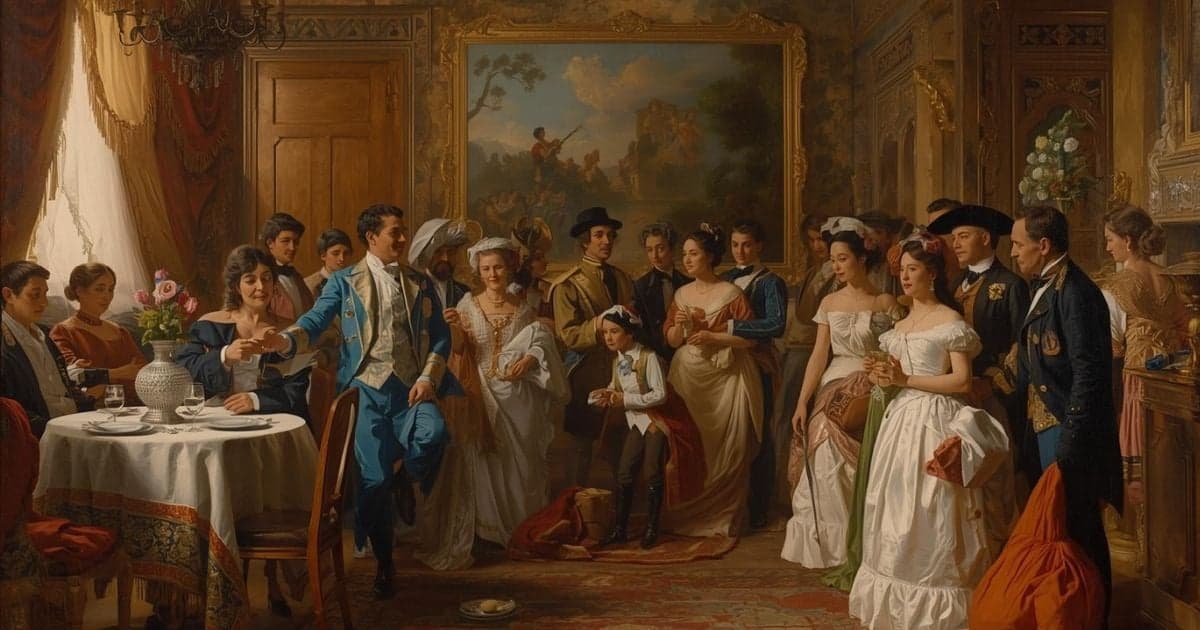
"We have become too fond of these French ideas, and that is why we are in danger."
Context: Speaking at the dinner party about Russian vulnerability to French influence
This captures the complex relationship between cultural admiration and political fear. The very things Russians have loved about French culture now seem like weapons that could be used against them.
In Today's Words:
We got too caught up in their way of thinking, and now we're sitting ducks.
Thematic Threads
Class
In This Chapter
The Russian elite simultaneously embrace French culture while fearing French political power, revealing their complex relationship with foreign influence
Development
Builds on earlier themes of Russian aristocrats speaking French and admiring European customs
In Your Life:
You might feel conflicted about adopting workplace culture from a company you don't fully trust
Identity
In This Chapter
Rostopchín argues that Russians have lost their identity by embracing French customs, making them vulnerable to invasion
Development
Expands the identity theme from individual character struggles to national cultural anxiety
In Your Life:
You might worry that adapting to new environments means losing who you really are
Power
In This Chapter
Prince Bolkonski uses emotional manipulation as his 'cruelest weapon' against Mary, threatening abandonment to control her
Development
Shows how his tyrannical control has evolved into psychological warfare
In Your Life:
You might recognize when someone uses your deepest fears to manipulate your behavior
Fear
In This Chapter
Paranoia about French infiltration drives both personal cruelty and political rhetoric
Development
Introduced here as a driving force behind character actions
In Your Life:
You might notice how your own fears make you suspicious of people who remind you of bigger threats
Loyalty
In This Chapter
Mary endures her father's cruelty out of devotion, while society questions loyalty to foreign cultural influences
Development
Continues Mary's pattern of self-sacrifice while adding questions about national loyalty
In Your Life:
You might struggle with staying loyal to people or institutions that hurt you but that you feel obligated to support
You now have the context. Time to form your own thoughts.
Discussion Questions
- 1
Why does Prince Bolkonski explode at his French doctor on his birthday, and what does this reveal about his true fears?
analysis • surface - 2
How does the prince's treatment of his daughter Mary connect to his feelings about the approaching war with France?
analysis • medium - 3
Think of a time when someone lashed out at you when they were really upset about something else entirely. What was the real problem they couldn't address?
application • medium - 4
When you feel powerless against a big problem, how can you avoid taking it out on the wrong people?
application • deep - 5
What does this chapter teach us about how fear makes us hurt the people closest to us?
reflection • deep
Critical Thinking Exercise
Track Your Misdirected Anger
Think about the last time you felt really angry at someone close to you - a family member, coworker, or friend. Write down what the fight was supposedly about, then dig deeper. What bigger problem were you actually worried about that you couldn't control or confront directly? Map the connection between your real fear and your chosen target.
Consider:
- •The person you attacked probably had some connection to your real problem - that's what made it feel justified
- •Ask yourself: could this person actually solve the thing you're really worried about?
- •Notice how attacking the wrong target might have made your real problem worse
Journaling Prompt
Write about a pattern you've noticed in your own life: what kinds of big, scary problems make you lash out at smaller, safer targets? How could you redirect that energy toward something more productive next time?
Coming Up Next...
Chapter 149: When Loneliness Makes Us Desperate
The aftermath of the prince's outburst will have lasting consequences for the household. Meanwhile, the political tensions discussed at dinner are about to explode into something much larger than drawing room conversations.