Wide Reads
Literature MattersLife IndexEducators
Sign in
Where to Begin
War and Peace - Chaos on the Bridge

Leo Tolstoy

War and Peace

Chaos on the Bridge

Home›Books›War and Peace›Chapter 35
Previous
35 of 361
Next

Summary

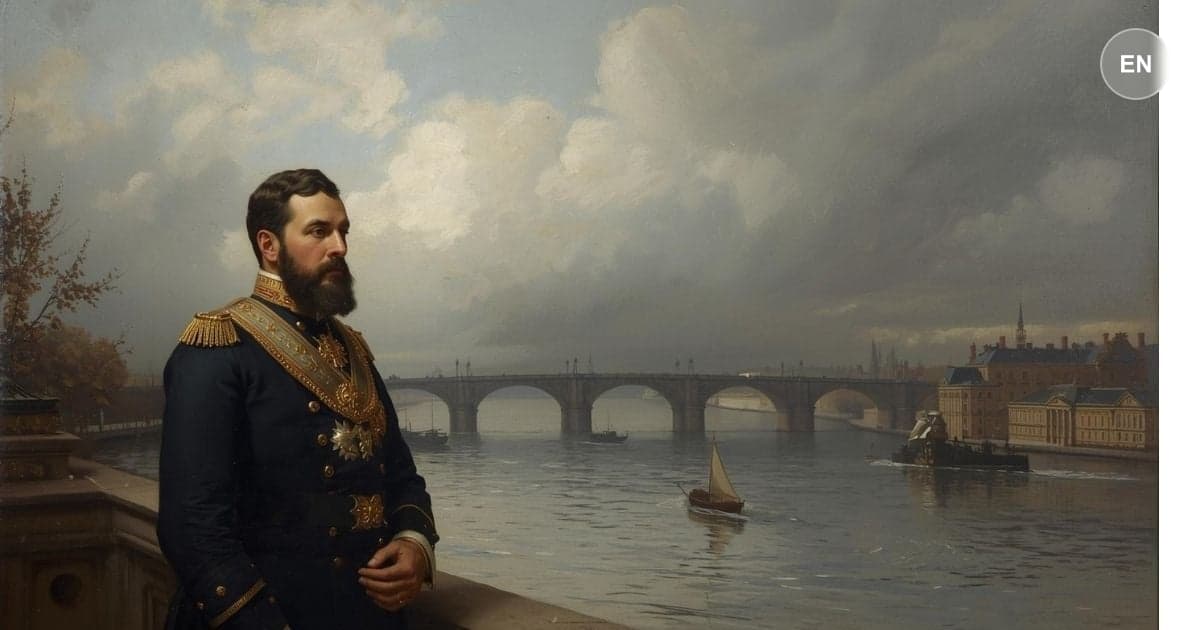
Prince Nesvítski finds himself trapped on a crowded bridge as Russian troops retreat under enemy fire. What should be an orderly military withdrawal becomes a chaotic crush of soldiers, wagons, and civilians all trying to cross at once. Nesvítski, despite his rank, can't move—he's just another body pressed against the railings, watching the human river flow past him. The soldiers reveal their personalities through crisis: some joke to mask fear, others complain bitterly, and a few panic openly when cannonballs start splashing into the water below. A German family with their possessions gets special treatment to cross, drawing crude comments from the troops who momentarily forget their own danger to ogle the women. The arrival of the hot-tempered cavalry officer Denísov changes everything—his fierce determination and drawn sword clear a path where polite requests failed. This scene captures how war strips away social pretenses and reveals raw human nature. Tolstoy shows us that in crisis, official authority means less than personal force of will. The bridge becomes a microcosm of society under stress—some people freeze, others adapt, and a few take charge. The soldiers' gallows humor and casual cruelty toward the German family reveal how quickly civilized behavior can erode when survival instincts kick in.

Coming Up in Chapter 36

With the bridge finally cleared, the military units begin to reorganize on the other side. But the enemy's cannon fire is getting closer, and the real test of these soldiers' courage is about to begin.

Share it with friends

Previous ChapterNext Chapter
GO ADS FREE — JOIN US
Original text
complete·1,760 words
T

wo of the enemy’s shots had already flown across the bridge, where there was a crush. Halfway across stood Prince Nesvítski, who had alighted from his horse and whose big body was jammed against the railings. He looked back laughing to the Cossack who stood a few steps behind him holding two horses by their bridles. Each time Prince Nesvítski tried to move on, soldiers and carts pushed him back again and pressed him against the railings, and all he could do was to smile.

“What a fine fellow you are, friend!” said the Cossack to a convoy soldier with a wagon, who was pressing onto the infantrymen who were crowded together close to his wheels and his horses. “What a fellow! You can’t wait a moment! Don’t you see the general wants to pass?”

1 / 10

Master this chapter. Complete your experience

Purchase the complete book to access all chapters and support classic literature

Read Free on GutenbergBuy at Powell'sBuy on Amazon

As an Amazon Associate, we earn a small commission from qualifying purchases at no additional cost to you.

Available in paperback, hardcover, and e-book formats

GO ADS FREE — JOIN US

Why This Matters

Connect literature to life

Skill: Reading Power Dynamics

This chapter teaches how to spot the difference between official authority and real influence during high-stress situations.

Practice This Today

This week, notice when someone without the highest title takes charge during a workplace crisis—watch what they do differently that makes people follow them.

GO ADS FREE — JOIN US

Now let's explore the literary elements.

Key Quotes & Analysis

"What a fine fellow you are, friend!"

— The Cossack

Context: Sarcastically addressing a convoy soldier who won't make way for the general

Shows how politeness becomes a weapon when direct orders fail. The Cossack uses irony to shame the soldier, revealing frustration with broken hierarchy.

In Today's Words:

Oh, you're a real team player, aren't you?

"Don't you see the general wants to pass?"

— The Cossack

Context: Trying to invoke Nesvítski's authority to clear the crowd

Demonstrates the gap between theoretical authority and practical power. The title 'general' should command respect but means nothing in this chaos.

In Today's Words:

Can't you see the boss is trying to get through here?

"Looking on the bridge he saw equally uniform living waves of soldiers"

— Narrator

Context: Describing Nesvítski's view of the troops flowing past him

Tolstoy compares soldiers to water, showing how individuals become part of a mindless flow in crisis. The metaphor strips away human dignity and choice.

In Today's Words:

He watched people move like a river of bodies, no longer thinking for themselves

Thematic Threads

Class

In This Chapter

Nesvítski's noble rank becomes meaningless on the bridge, while Denísov's forceful personality creates real authority

Development

Continues showing how war dissolves traditional class boundaries and hierarchies

In Your Life:

You might notice how workplace titles matter less during actual emergencies than who takes decisive action

Identity

In This Chapter

Soldiers reveal their true characters under pressure—some joke, some panic, some adapt

Development

Building on earlier scenes where crisis strips away social masks

In Your Life:

You see people's real personalities emerge during stressful situations like family crises or workplace deadlines

Social Expectations

In This Chapter

Normal military courtesy breaks down as survival instincts override proper behavior

Development

Reinforces how war disrupts civilized social norms

In Your Life:

You might find yourself abandoning usual politeness when you're desperate to get something done

Human Relationships

In This Chapter

The German family receives special treatment while soldiers make crude comments, showing how crisis affects group dynamics

Development

Continues exploring how extreme situations reveal both kindness and cruelty

In Your Life:

You notice how people treat outsiders differently when they're under stress or feeling threatened

Personal Growth

In This Chapter

Nesvítski learns that his usual approach doesn't work in crisis, while Denísov demonstrates effective leadership

Development

Characters discovering what works and what doesn't in extreme situations

In Your Life:

You might realize that your normal way of handling problems needs to change in emergency situations

GO ADS FREE — JOIN US

You now have the context. Time to form your own thoughts.

Discussion Questions

  1. 1

    Why couldn't Prince Nesvítski move forward on the bridge despite his military rank?

    analysis • surface
  2. 2

    What made Denísov successful at clearing the path when Nesvítski's polite requests failed?

    analysis • medium
  3. 3

    Where have you seen formal authority become useless during a crisis while someone else took real control?

    application • medium
  4. 4

    When facing a situation where your usual approach isn't working, how do you decide whether to escalate or step back?

    application • deep
  5. 5

    What does this scene reveal about the difference between the power people think they have and the power that actually works?

    reflection • deep

Critical Thinking Exercise

10 minutes

Map Your Authority Gaps

Think of three situations where you have official authority but struggle to get results (at work, home, or in groups). For each situation, identify what type of power actually works there and what you could do differently. Then consider one area where you lack official authority but could step up and lead through personal force like Denísov did.

Consider:

  • •Official titles and real influence are often completely different things
  • •People respond to confidence and decisive action more than to requests and procedures
  • •Sometimes the person who should be leading isn't the person who can lead effectively

Journaling Prompt

Write about a time when you had to choose between following proper channels and taking direct action to solve a problem. What did you learn about when rules help and when they get in the way?

Coming Up Next...

Chapter 36: Under Fire for the First Time

With the bridge finally cleared, the military units begin to reorganize on the other side. But the enemy's cannon fire is getting closer, and the real test of these soldiers' courage is about to begin.

Continue to Chapter 36
Previous
War Games and Nervous Energy
Contents
Next
Under Fire for the First Time

Continue Exploring

War and Peace Study GuideTeaching ResourcesEssential Life IndexBrowse by ThemeAll Books
Power & CorruptionLove & RelationshipsIdentity & Self-Discovery

You Might Also Like

Anna Karenina cover

Anna Karenina

Leo Tolstoy

Also by Leo Tolstoy

The Idiot cover

The Idiot

Fyodor Dostoevsky

Explores love & romance

Moby-Dick cover

Moby-Dick

Herman Melville

Explores mortality & legacy

Dracula cover

Dracula

Bram Stoker

Explores love & romance

Browse all 47+ books

Share This Chapter

Know someone who'd enjoy this? Spread the wisdom!

TwitterFacebookLinkedInEmail

Read ad-free with Prestige

Get rid of ads, unlock study guides and downloads, and support free access for everyone.

Subscribe to PrestigeCreate free account
Intelligence Amplifier
Intelligence Amplifier™Powering Wide Reads

Exploring human-AI collaboration through books, essays, and philosophical dialogues. Classic literature transformed into navigational maps for modern life.

2025 Books

→ The Amplified Human Spirit→ The Alarming Rise of Stupidity Amplified→ San Francisco: The AI Capital of the World
Visit intelligenceamplifier.org
hello@widereads.com

WideReads Originals

→ You Are Not Lost→ The Last Chapter First→ The Lit of Love→ Wealth and Poverty→ 10 Paradoxes in the Classics · coming soon
Arvintech
arvintechAmplify your Mind
Visit at arvintech.com

Navigate

  • Home
  • Library
  • Essential Life Index
  • How It Works
  • Subscribe
  • Account
  • About
  • Contact
  • Authors
  • Suggest a Book
  • Landings

Made For You

  • Students
  • Educators
  • Families
  • Readers
  • Literary Analysis
  • Finding Purpose
  • Letting Go
  • Recovering from a Breakup
  • Corruption
  • Gaslighting in the Classics

Newsletter

Weekly insights from the classics. Amplify Your Mind.

Legal

  • Privacy Policy
  • Terms of Service
  • Cookie Policy
  • Accessibility

Why Public Domain?

We focus on public domain classics because these timeless works belong to everyone. No paywalls, no restrictions—just wisdom that has stood the test of centuries, freely accessible to all readers.

Public domain books have shaped humanity's understanding of love, justice, ambition, and the human condition. By amplifying these works, we help preserve and share literature that truly belongs to the world.

A Pilgrimage

Powell's City of Books

Portland, Oregon

If you ever find yourself in Portland, walk to the corner of Burnside and 10th. The building takes up an entire city block. Inside is over a million books, new and used on the same shelf, organized by color-coded rooms with names like the Rose Room and the Pearl Room. You can lose an afternoon. You can lose a weekend. You will find a book you have been looking for your whole life, and three you did not know existed.

It is a pilgrimage. We cannot find a bookstore like it anywhere on earth. If you read the classics, and you ever get the chance, go. It belongs on every reader's bucket list.

Visit powells.com

We are not in any way affiliated with Powell's. We are just a very big fan.

© 2026 Wide Reads™. All Rights Reserved.

Intelligence Amplifier™ and Wide Reads™ are proprietary trademarks of Arvin Lioanag.

Copyright Protection: All original content, analyses, discussion questions, pedagogical frameworks, and methodology are protected by U.S. and international copyright law. Unauthorized reproduction, distribution, web scraping, or use for AI training is strictly prohibited. See our Copyright Notice for details.

Disclaimer: The information provided on this website is for general informational and educational purposes only and does not constitute professional, legal, financial, or technical advice. While we strive to ensure accuracy and relevance, we make no warranties regarding completeness, reliability, or suitability. Any reliance on such information is at your own risk. We are not liable for any losses or damages arising from use of this site. By using this site, you agree to these terms.