Wide Reads
Literature MattersLife IndexEducators
Sign in
Where to Begin
War and Peace - When Crisis Reveals Who We Really Are

Leo Tolstoy

War and Peace

When Crisis Reveals Who We Really Are

Home›Books›War and Peace›Chapter 256
Previous
256 of 361
Next

Summary

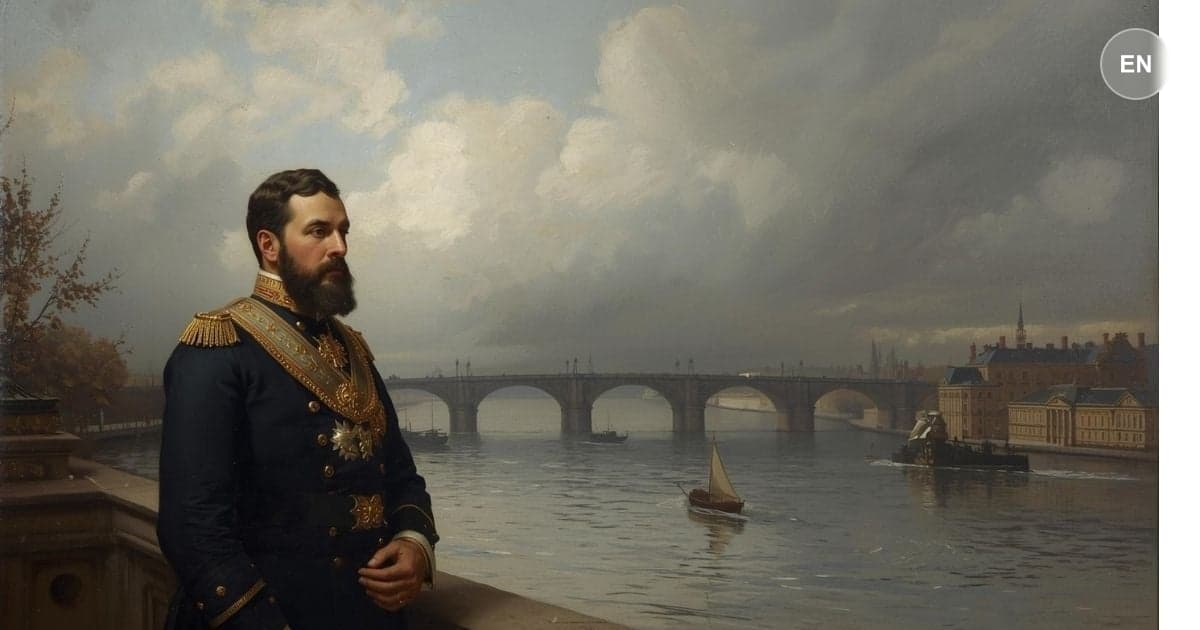
Pierre reaches a breaking point as Moscow falls to the French. Holed up in his mentor's study, he's convinced himself that he's destined to assassinate Napoleon - a plan that seems both heroic and completely unhinged. His thinking has become dangerously obsessed, fueled by sleepless nights, poor food, and total isolation from normal life. Two powerful forces drive him: a genuine desire to sacrifice for others, and a very Russian urge to reject everything society values. He's romanticizing his own destruction, imagining himself as a divine instrument of justice. The chapter shows how crisis can strip away our usual supports and reveal both our noblest impulses and our capacity for self-deception. Pierre's physical deterioration mirrors his mental state - when we don't take care of our basic needs, our judgment suffers. The arrival of a drunk, delusional old man wielding Pierre's pistol serves as a dark mirror, showing what Pierre himself might look like to an outside observer. Just as Pierre wrestles with whether he's a hero or a madman, the chapter ends with French soldiers arriving at the door, forcing him to face reality instead of his fantasies. Tolstoy masterfully shows how isolation during trauma can make us lose perspective on what's reasonable versus what's destructive.

Coming Up in Chapter 257

The French soldiers are at the door, and Pierre must finally confront the reality of his situation. His elaborate assassination fantasy is about to collide with the actual chaos of occupied Moscow.

Share it with friends

Previous ChapterNext Chapter
GO ADS FREE — JOIN US
Original text
complete·1,547 words
T

he absorption of the French by Moscow, radiating starwise as it did, only reached the quarter where Pierre was staying by the evening of the second of September.

After the last two days spent in solitude and unusual circumstances, Pierre was in a state bordering on insanity. He was completely obsessed by one persistent thought. He did not know how or when this thought had taken such possession of him, but he remembered nothing of the past, understood nothing of the present, and all he saw and heard appeared to him like a dream.

1 / 10

Master this chapter. Complete your experience

Purchase the complete book to access all chapters and support classic literature

Read Free on GutenbergBuy at Powell'sBuy on Amazon

As an Amazon Associate, we earn a small commission from qualifying purchases at no additional cost to you.

Available in paperback, hardcover, and e-book formats

GO ADS FREE — JOIN US

Why This Matters

Connect literature to life

Skill: Recognizing Righteous Isolation

This chapter teaches how to identify when moral certainty has cut us off from the reality checks we need to stay effective.

Practice This Today

This week, notice when you feel like the only one who truly understands a problem—that's your cue to actively seek out other perspectives before taking action.

GO ADS FREE — JOIN US

Now let's explore the literary elements.

Key Quotes & Analysis

"He had left home only to escape the intricate tangle of life's demands that enmeshed him, and which in his present condition he was unable to unravel."

— Narrator

Context: Explaining why Pierre isolated himself in his mentor's study

This shows how overwhelming life can become when we're already struggling. Instead of facing problems one by one, Pierre runs away entirely, which only makes things worse.

In Today's Words:

Life felt like too much to handle, so he just checked out completely.

"The absorption of the French by Moscow, radiating starwise as it did, only reached the quarter where Pierre was staying by the evening of the second of September."

— Narrator

Context: Describing how the French occupation spread through Moscow

Tolstoy uses the image of a star to show how conquest spreads outward. Pierre's isolation has delayed but not prevented reality from reaching him.

In Today's Words:

Bad news travels fast, but it took a couple days to reach Pierre's hideout.

"He was completely obsessed by one persistent thought."

— Narrator

Context: Describing Pierre's mental state as he plans to kill Napoleon

This is how obsession works - one idea takes over everything else. Pierre can't think clearly about anything because this fantasy consumes all his mental energy.

In Today's Words:

He couldn't think about anything else - it was like having a song stuck in his head, but dangerous.

Thematic Threads

Identity

In This Chapter

Pierre constructs a heroic identity as Napoleon's destined assassin, using this fantasy to avoid facing his actual powerlessness

Development

Evolution from earlier social confusion to dangerous self-mythology during crisis

In Your Life:

You might create heroic narratives about yourself when feeling powerless in your actual circumstances

Class

In This Chapter

Pierre's aristocratic privilege allows him to indulge in romantic fantasies of sacrifice that working people can't afford

Development

Continues theme of how class shapes response to crisis and moral choices

In Your Life:

Your economic position affects what kinds of risks and moral stances you can realistically take

Isolation

In This Chapter

Physical and social isolation feeds Pierre's delusions and prevents reality checks on his deteriorating judgment

Development

Introduced here as crisis response mechanism

In Your Life:

When you're facing major stress, isolation can make your thinking more extreme and less practical

Self-Deception

In This Chapter

Pierre convinces himself his assassination plan is divinely inspired rather than acknowledging it as a breakdown

Development

Builds on earlier patterns of characters avoiding uncomfortable truths about themselves

In Your Life:

You might dress up impulsive or destructive urges as noble callings when under extreme stress

Crisis Response

In This Chapter

Trauma strips away Pierre's usual supports, revealing both his capacity for sacrifice and self-destruction

Development

Introduced here as major theme about how extreme circumstances reveal character

In Your Life:

Crisis can bring out both your best and worst impulses simultaneously, requiring careful self-monitoring

GO ADS FREE — JOIN US

You now have the context. Time to form your own thoughts.

Discussion Questions

  1. 1

    What signs show that Pierre's judgment is becoming dangerous, and how does his physical condition affect his thinking?

    analysis • surface
  2. 2

    Why does Pierre convince himself that assassinating Napoleon is his destiny, and what role does his isolation play in this delusion?

    analysis • medium
  3. 3

    Where do you see people today becoming so convinced they're right that they stop listening to others or taking care of themselves?

    application • medium
  4. 4

    When you feel like you're the only one who truly understands a problem, what steps could you take to check your thinking against reality?

    application • deep
  5. 5

    What does Pierre's story teach us about the relationship between moral certainty and dangerous decision-making?

    reflection • deep

Critical Thinking Exercise

10 minutes

Reality Check Your Certainty

Think of a time when you felt strongly that you were right about something important while others disagreed. Write down three ways your thinking might have been influenced by stress, isolation, or neglecting your basic needs. Then identify two people whose judgment you trust who could have given you perspective at the time.

Consider:

  • •Consider how physical exhaustion or poor self-care might have affected your judgment
  • •Think about whether you were getting input from people who cared about you but might disagree
  • •Reflect on the difference between being right about facts versus being wise about actions

Journaling Prompt

Write about a current situation where you feel certain you're right but others seem to disagree. What would it look like to stay open to feedback while still trusting your instincts?

Coming Up Next...

Chapter 257: When Crisis Reveals True Character

The French soldiers are at the door, and Pierre must finally confront the reality of his situation. His elaborate assassination fantasy is about to collide with the actual chaos of occupied Moscow.

Continue to Chapter 257
Previous
When Order Dissolves Into Chaos
Contents
Next
When Crisis Reveals True Character

Continue Exploring

War and Peace Study GuideTeaching ResourcesEssential Life IndexBrowse by ThemeAll Books
Power & CorruptionLove & RelationshipsIdentity & Self-Discovery

You Might Also Like

Anna Karenina cover

Anna Karenina

Leo Tolstoy

Also by Leo Tolstoy

The Idiot cover

The Idiot

Fyodor Dostoevsky

Explores love & romance

Moby-Dick cover

Moby-Dick

Herman Melville

Explores mortality & legacy

Dracula cover

Dracula

Bram Stoker

Explores love & romance

Browse all 47+ books

Share This Chapter

Know someone who'd enjoy this? Spread the wisdom!

TwitterFacebookLinkedInEmail

Read ad-free with Prestige

Get rid of ads, unlock study guides and downloads, and support free access for everyone.

Subscribe to PrestigeCreate free account
Intelligence Amplifier
Intelligence Amplifier™Powering Wide Reads

Exploring human-AI collaboration through books, essays, and philosophical dialogues. Classic literature transformed into navigational maps for modern life.

2025 Books

→ The Amplified Human Spirit→ The Alarming Rise of Stupidity Amplified→ San Francisco: The AI Capital of the World
Visit intelligenceamplifier.org
hello@widereads.com

WideReads Originals

→ You Are Not Lost→ The Last Chapter First→ The Lit of Love→ Wealth and Poverty→ 10 Paradoxes in the Classics · coming soon
Arvintech
arvintechAmplify your Mind
Visit at arvintech.com

Navigate

  • Home
  • Library
  • Essential Life Index
  • How It Works
  • Subscribe
  • Account
  • About
  • Contact
  • Authors
  • Suggest a Book
  • Landings

Made For You

  • Students
  • Educators
  • Families
  • Readers
  • Literary Analysis
  • Finding Purpose
  • Letting Go
  • Recovering from a Breakup
  • Corruption
  • Gaslighting in the Classics

Newsletter

Weekly insights from the classics. Amplify Your Mind.

Legal

  • Privacy Policy
  • Terms of Service
  • Cookie Policy
  • Accessibility

Why Public Domain?

We focus on public domain classics because these timeless works belong to everyone. No paywalls, no restrictions—just wisdom that has stood the test of centuries, freely accessible to all readers.

Public domain books have shaped humanity's understanding of love, justice, ambition, and the human condition. By amplifying these works, we help preserve and share literature that truly belongs to the world.

A Pilgrimage

Powell's City of Books

Portland, Oregon

If you ever find yourself in Portland, walk to the corner of Burnside and 10th. The building takes up an entire city block. Inside is over a million books, new and used on the same shelf, organized by color-coded rooms with names like the Rose Room and the Pearl Room. You can lose an afternoon. You can lose a weekend. You will find a book you have been looking for your whole life, and three you did not know existed.

It is a pilgrimage. We cannot find a bookstore like it anywhere on earth. If you read the classics, and you ever get the chance, go. It belongs on every reader's bucket list.

Visit powells.com

We are not in any way affiliated with Powell's. We are just a very big fan.

© 2026 Wide Reads™. All Rights Reserved.

Intelligence Amplifier™ and Wide Reads™ are proprietary trademarks of Arvin Lioanag.

Copyright Protection: All original content, analyses, discussion questions, pedagogical frameworks, and methodology are protected by U.S. and international copyright law. Unauthorized reproduction, distribution, web scraping, or use for AI training is strictly prohibited. See our Copyright Notice for details.

Disclaimer: The information provided on this website is for general informational and educational purposes only and does not constitute professional, legal, financial, or technical advice. While we strive to ensure accuracy and relevance, we make no warranties regarding completeness, reliability, or suitability. Any reliance on such information is at your own risk. We are not liable for any losses or damages arising from use of this site. By using this site, you agree to these terms.