Master this chapter. Complete your experience
Purchase the complete book to access all chapters and support classic literature
As an Amazon Associate, we earn a small commission from qualifying purchases at no additional cost to you.
Available in paperback, hardcover, and e-book formats
Why This Matters
Connect literature to life
This chapter teaches how to recognize when collective anxiety transforms into performative normalcy and displaced cruelty.
Practice This Today
This week, notice when groups become unusually social or mean during stressful times—it often signals what they're afraid to discuss directly.
Now let's explore the literary elements.
Key Quotes & Analysis
"At the approach of danger there are always two voices that speak with equal power in the human soul: one very reasonably tells a man to consider the nature of the danger and the means of escaping it; the other, still more reasonably, says that it is too depressing and painful to think of the danger."
Context: Tolstoy explains why people choose frivolity over facing reality when crisis approaches
This reveals the fundamental human tendency to avoid painful truths through distraction. Tolstoy shows that denial isn't weakness - it's a natural psychological response to overwhelming situations.
In Today's Words:
When something really bad is coming, part of you knows you should prepare, but another part says it's too scary to think about, so why not just ignore it and have fun instead?
"In solitude a man generally listens to the first voice, but in society to the second."
Context: Explaining why people make worse decisions in groups than alone
This captures how peer pressure and group dynamics push people toward denial and distraction rather than honest assessment. Social settings encourage performance over truth.
In Today's Words:
When you're alone, you usually face reality, but when you're with other people, you just go along with pretending everything's fine.
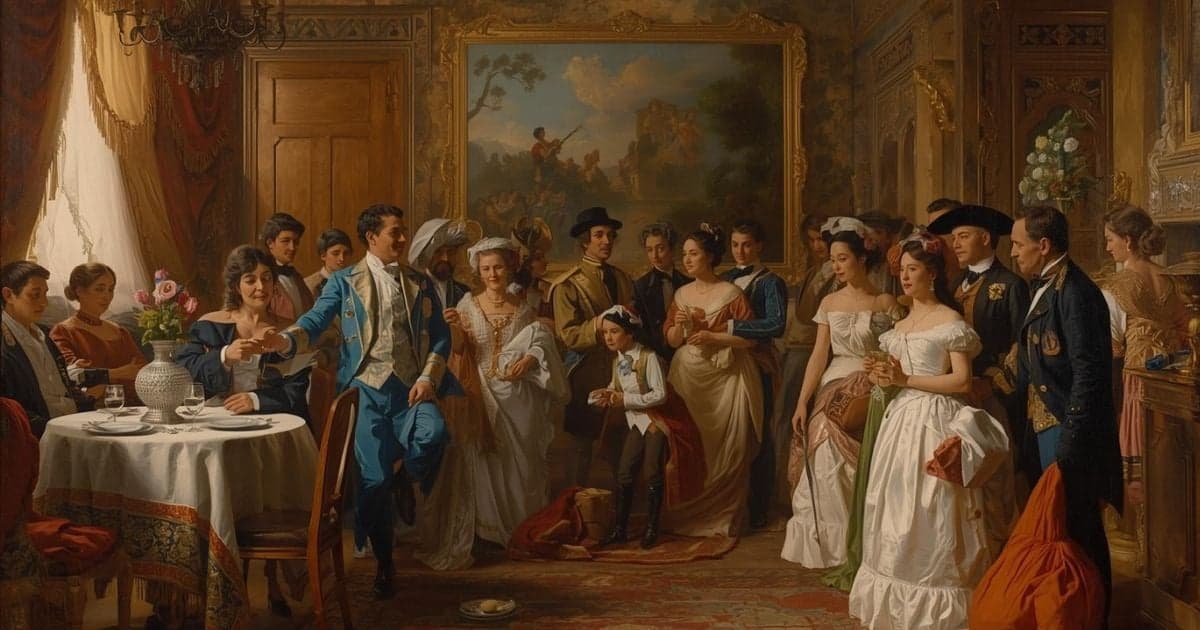
"The conversation did not flag all evening and turned on the three topics of general interest: the latest war news, the gossip of the town, and a mild form of ridicule."
Context: Describing the shallow nature of conversation at Julie's party while Moscow faces invasion
Tolstoy shows how social gatherings during crisis become exercises in avoidance. People discuss war like entertainment, focusing on gossip and mockery rather than genuine concern.
In Today's Words:
All night they talked about three things: what's happening in the war like it's a TV show, who's doing what around town, and making fun of people.
Thematic Threads
Class
In This Chapter
The wealthy use social gatherings to maintain their sense of superiority even as their world collapses
Development
Continues the theme of how class creates blindness to reality
In Your Life:
Notice how your social circle might use status symbols or exclusive activities to avoid discussing real problems
Social Performance
In This Chapter
Guests perform gaiety and wit to mask their terror about the approaching army
Development
Introduced here as a group survival mechanism
In Your Life:
Recognize when you're performing normalcy instead of addressing what's actually wrong
Cruelty
In This Chapter
The group bonds through gossip and mockery of absent friends like the Rostovs
Development
Shows how fear transforms into aggression toward safe targets
In Your Life:
Watch for times when you or your group become unusually critical of others during stressful periods
Authenticity
In This Chapter
Pierre feels uncomfortable with the shallow conversation while others embrace it
Development
Pierre's ongoing struggle between genuine feeling and social expectation
In Your Life:
Trust the discomfort you feel when group dynamics don't match the seriousness of the situation
Denial
In This Chapter
The entire party structure serves to avoid discussing the military threat
Development
Collective version of individual denial patterns seen throughout
In Your Life:
Notice when family or workplace gatherings seem designed to avoid discussing obvious problems
You now have the context. Time to form your own thoughts.
Discussion Questions
- 1
Why do Moscow's wealthy elite throw parties and gossip while Napoleon's army approaches their city?
analysis • surface - 2
What psychological purpose does the cruel gossip about the Rostov family serve for the party guests?
analysis • medium - 3
Where have you seen groups become more superficial or gossipy during times of stress or crisis?
application • medium - 4
How would you handle being in Pierre's position - uncomfortable with group cruelty but socially trapped in the situation?
application • deep - 5
What does this chapter reveal about how people use social performance to avoid facing difficult realities?
reflection • deep
Critical Thinking Exercise
Spot the Distraction Pattern
Think of a current situation in your life, workplace, or community where people seem unusually focused on trivial matters or gossip. Map out what serious issue might be lurking underneath that everyone is avoiding. Write down the surface behaviors you observe and the deeper fears that might be driving them.
Consider:
- •Notice when social activity increases during stressful times - it's often a red flag
- •Pay attention to who becomes the target of group criticism - they're usually safe scapegoats for bigger fears
- •Ask yourself: What would happen if this group stopped the performance and faced the real issue directly?
Journaling Prompt
Write about a time when you participated in group avoidance behavior during a crisis. What were you really afraid of? How might things have gone differently if someone had named the real problem?
Coming Up Next...
Chapter 208: Pierre Faces the Coming Storm
The focus shifts to Princess Mary's arrival in Moscow and her emotional reunion with old friends, as the reality of war begins to penetrate even the most protected social circles.