Wide Reads
Literature MattersLife IndexEducators
Sign in
Where to Begin
War and Peace - The Art of Strategic Romance

Leo Tolstoy

War and Peace

The Art of Strategic Romance

Home›Books›War and Peace›Chapter 150
Previous
150 of 361
Next

Summary

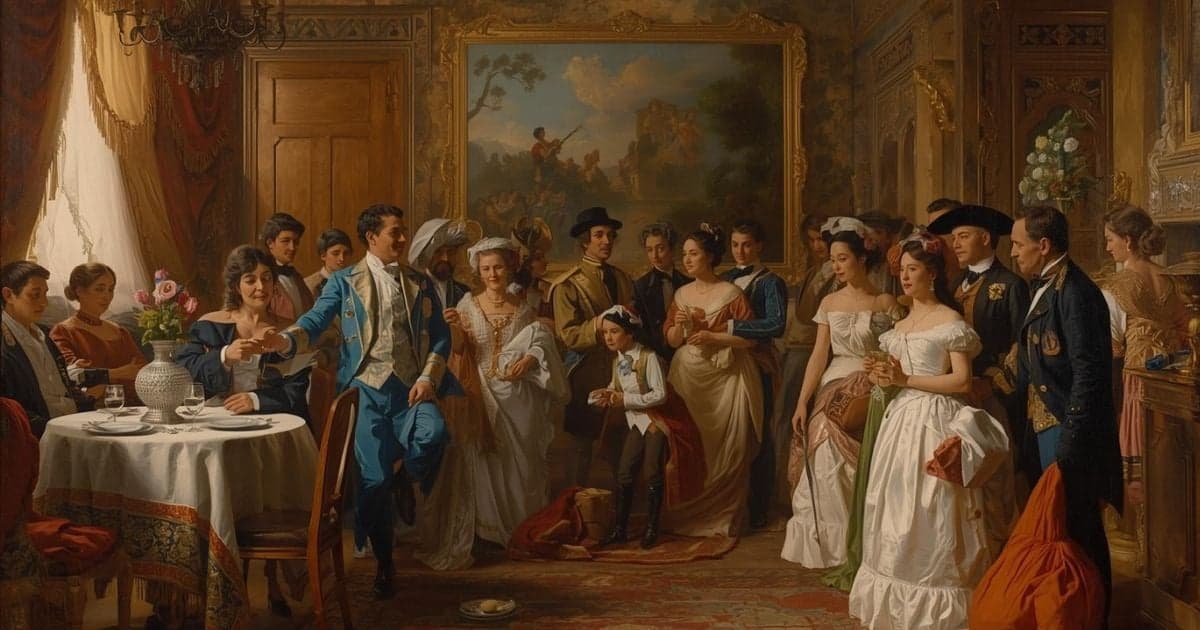
Boris finds himself caught between financial necessity and genuine feeling as he pursues wealthy heiresses in Moscow. He's drawn to Princess Mary but intimidated by her authenticity, while Julie offers an easier target despite his instinctive repulsion. Julie, now 27 and plain but wealthy, has crafted an elaborate persona of melancholy sophistication to attract suitors. She hosts fashionable salons where she performs sadness she's never actually experienced, quoting romantic literature and playing doleful music. Boris plays along with this charade, writing mournful poetry and sharing in her artificial despair, all while his mother Anna Mikhaylovna carefully researches Julie's estates and income. The performance becomes increasingly hollow for Boris, who feels genuine disgust at Julie's desperation to marry and her theatrical emotions. When Anatole Kuragin arrives and shows interest in Julie, Boris panics at losing his financial prize. Despite his revulsion, he forces himself to propose, and Julie triumphantly accepts, knowing she's bought his declaration with her dowry. Their engagement immediately drops all pretense of romantic melancholy as they plan their practical, wealthy future. This chapter exposes how economic pressure can turn love into a marketplace transaction, where both parties know they're buying and selling but maintain the fiction of romance. It shows how desperation makes people perform versions of themselves they don't recognize, and how society's expectations can trap people in relationships that satisfy everyone except their authentic selves.

Coming Up in Chapter 151

As Boris secures his financial future through strategic marriage, other characters face their own crossroads between duty and desire. The war continues to reshape lives and force impossible choices on those caught between love and survival.

Share it with friends

Previous ChapterNext Chapter
GO ADS FREE — JOIN US
Original text
complete·1,723 words
B

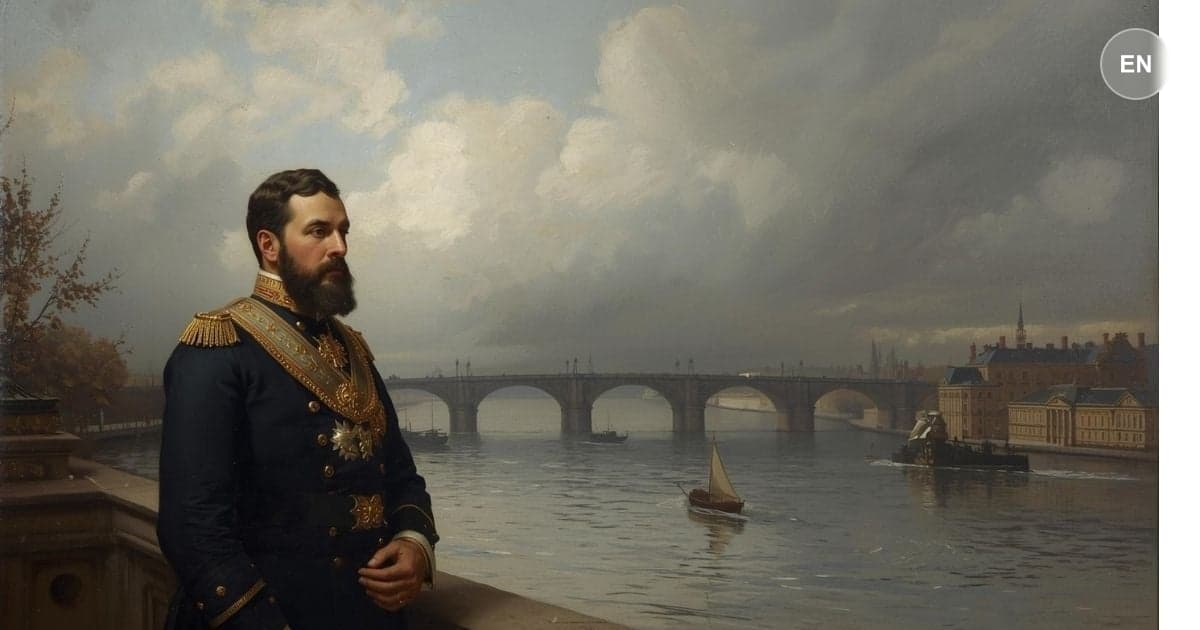
orís had not succeeded in making a wealthy match in Petersburg, so with the same object in view he came to Moscow. There he wavered between the two richest heiresses, Julie and Princess Mary. Though Princess Mary despite her plainness seemed to him more attractive than Julie, he, without knowing why, felt awkward about paying court to her. When they had last met on the old prince’s name day, she had answered at random all his attempts to talk sentimentally, evidently not listening to what he was saying.

Julie on the contrary accepted his attentions readily, though in a manner peculiar to herself.

1 / 11

Master this chapter. Complete your experience

Purchase the complete book to access all chapters and support classic literature

Read Free on GutenbergBuy at Powell'sBuy on Amazon

As an Amazon Associate, we earn a small commission from qualifying purchases at no additional cost to you.

Available in paperback, hardcover, and e-book formats

GO ADS FREE — JOIN US

Why This Matters

Connect literature to life

Skill: Detecting Transactional Relationships

This chapter teaches how to recognize when relationships become marketplace transactions disguised as genuine connection.

Practice This Today

This week, notice when someone's attention to you increases right after they learn about your resources, job, or connections - and pay attention to when you do the same thing.

GO ADS FREE — JOIN US

Now let's explore the literary elements.

Key Quotes & Analysis

"A man who would have been afraid ten years before of going every day to the house when there was a girl of seventeen there, for fear of compromising her and committing himself, would now go boldly every day and treat her not as a marriageable girl but as a sexless acquaintance."

— Narrator

Context: Describing how men now feel safe around Julie because she's older and plainer

This reveals the cruel reality of how society values women primarily for youth and beauty. Once Julie aged past her prime, men could use her hospitality without fear of having to marry her. It shows how women become invisible when they're no longer considered desirable.

In Today's Words:

Guys who wouldn't hang around a hot 20-year-old because they might catch feelings now feel totally safe using a 27-year-old for her parties and connections.

"She was confirmed in this delusion by the fact that she had become a very wealthy heiress and also by the fact that the older she grew the less dangerous she became to men."

— Narrator

Context: Explaining why Julie thinks she's become more attractive with age

This shows Julie's tragic self-deception. She mistakes men's comfort around her for attraction, not realizing they're only comfortable because they don't see her as a real romantic option anymore. Her wealth gives her false confidence.

In Today's Words:

She thought guys liked her more now, not realizing they were just comfortable using her because they didn't see her as girlfriend material anymore.

"Boris felt that he had been caught by the wealthy Julie and that to escape from her would now be almost impossible."

— Narrator

Context: When Boris realizes he's trapped himself into proposing

This captures the moment Boris realizes his scheme has backfired. He thought he was hunting Julie for her money, but she was hunting him for a husband. Both were using each other, but she was better at the game.

In Today's Words:

Boris realized he'd been played - he thought he was using her, but she'd been reeling him in the whole time.

Thematic Threads

Economic Pressure

In This Chapter

Boris must marry wealth despite his revulsion, while Julie uses her money to buy love she can't naturally attract

Development

Escalating from earlier hints about financial necessity to explicit marketplace marriage

In Your Life:

You might recognize this when you stay in jobs or relationships primarily for financial security rather than fulfillment.

Performance vs Authenticity

In This Chapter

Both Boris and Julie create elaborate personas - melancholy poetry, tragic salons - that bear no relation to their actual feelings

Development

Building on themes of social masks, now showing how performance can completely replace genuine emotion

In Your Life:

You might see this in how you present yourself on social media or in professional settings, crafting an image that serves your goals but isn't really you.

Social Expectations

In This Chapter

Society demands romantic fiction even in obviously transactional marriages, forcing both parties to maintain elaborate charades

Development

Deepening the exploration of how social conventions trap people in inauthentic behaviors

In Your Life:

You might experience this pressure to pretend family gatherings are joyful or work relationships are friendships when they're purely functional.

Self-Disgust

In This Chapter

Boris feels genuine revulsion at both Julie's desperation and his own willingness to exploit it for money

Development

New theme showing the psychological cost of betraying one's authentic self for practical gain

In Your Life:

You might recognize this feeling when you've compromised your values for advancement or acceptance, leaving you disgusted with your own choices.

Desperation

In This Chapter

Julie's frantic need to marry and Boris's panic when Anatole shows interest reveal how desperation makes people perform versions of themselves they don't recognize

Development

Introduced here as driving force behind elaborate self-deception and performance

In Your Life:

You might see this when financial stress or loneliness drives you to accept situations or relationships that feel fundamentally wrong.

GO ADS FREE — JOIN US

You now have the context. Time to form your own thoughts.

Discussion Questions

  1. 1

    What specific performances do Boris and Julie put on to attract each other, and how do these performances mask their real motivations?

    analysis • surface
  2. 2

    Why does Boris feel disgusted with himself even after getting what he thought he wanted - Julie's wealth through marriage?

    analysis • medium
  3. 3

    Where do you see people today performing versions of themselves they don't recognize to get something they need or want?

    application • medium
  4. 4

    How can someone tell the difference between necessary strategic adaptation and selling their authentic self?

    application • deep
  5. 5

    What does this chapter reveal about what happens to our capacity for genuine feeling when we turn relationships into transactions?

    reflection • deep

Critical Thinking Exercise

10 minutes

Performance Audit

List three different situations in your life where you perform a version of yourself that isn't quite authentic. For each one, identify what you're trying to get, what you're afraid of losing, and how much of your real self you're trading away. Then rate each performance: survival necessity, strategic choice, or soul-selling.

Consider:

  • •Some performance is normal and necessary for functioning in society
  • •The danger comes when you lose track of who you really are underneath the performance
  • •Economic pressure can make people compromise their authenticity in ways they later regret

Journaling Prompt

Write about a time when you performed a version of yourself to get something you wanted. Did you get it? How did it feel afterward? What would you do differently now?

Coming Up Next...

Chapter 151: The Wise Woman's Guidance

As Boris secures his financial future through strategic marriage, other characters face their own crossroads between duty and desire. The war continues to reshape lives and force impossible choices on those caught between love and survival.

Continue to Chapter 151
Previous
When Loneliness Makes Us Desperate
Contents
Next
The Wise Woman's Guidance

Continue Exploring

War and Peace Study GuideTeaching ResourcesEssential Life IndexBrowse by ThemeAll Books
Power & CorruptionLove & RelationshipsIdentity & Self-Discovery

You Might Also Like

Anna Karenina cover

Anna Karenina

Leo Tolstoy

Also by Leo Tolstoy

The Idiot cover

The Idiot

Fyodor Dostoevsky

Explores love & romance

Moby-Dick cover

Moby-Dick

Herman Melville

Explores mortality & legacy

Dracula cover

Dracula

Bram Stoker

Explores love & romance

Browse all 47+ books

Share This Chapter

Know someone who'd enjoy this? Spread the wisdom!

TwitterFacebookLinkedInEmail

Read ad-free with Prestige

Get rid of ads, unlock study guides and downloads, and support free access for everyone.

Subscribe to PrestigeCreate free account
Intelligence Amplifier
Intelligence Amplifier™Powering Wide Reads

Exploring human-AI collaboration through books, essays, and philosophical dialogues. Classic literature transformed into navigational maps for modern life.

2025 Books

→ The Amplified Human Spirit→ The Alarming Rise of Stupidity Amplified→ San Francisco: The AI Capital of the World
Visit intelligenceamplifier.org
hello@widereads.com

WideReads Originals

→ You Are Not Lost→ The Last Chapter First→ The Lit of Love→ Wealth and Poverty→ 10 Paradoxes in the Classics · coming soon
Arvintech
arvintechAmplify your Mind
Visit at arvintech.com

Navigate

  • Home
  • Library
  • Essential Life Index
  • How It Works
  • Subscribe
  • Account
  • About
  • Contact
  • Authors
  • Suggest a Book
  • Landings

Made For You

  • Students
  • Educators
  • Families
  • Readers
  • Literary Analysis
  • Finding Purpose
  • Letting Go
  • Recovering from a Breakup
  • Corruption
  • Gaslighting in the Classics

Newsletter

Weekly insights from the classics. Amplify Your Mind.

Legal

  • Privacy Policy
  • Terms of Service
  • Cookie Policy
  • Accessibility

Why Public Domain?

We focus on public domain classics because these timeless works belong to everyone. No paywalls, no restrictions—just wisdom that has stood the test of centuries, freely accessible to all readers.

Public domain books have shaped humanity's understanding of love, justice, ambition, and the human condition. By amplifying these works, we help preserve and share literature that truly belongs to the world.

A Pilgrimage

Powell's City of Books

Portland, Oregon

If you ever find yourself in Portland, walk to the corner of Burnside and 10th. The building takes up an entire city block. Inside is over a million books, new and used on the same shelf, organized by color-coded rooms with names like the Rose Room and the Pearl Room. You can lose an afternoon. You can lose a weekend. You will find a book you have been looking for your whole life, and three you did not know existed.

It is a pilgrimage. We cannot find a bookstore like it anywhere on earth. If you read the classics, and you ever get the chance, go. It belongs on every reader's bucket list.

Visit powells.com

We are not in any way affiliated with Powell's. We are just a very big fan.

© 2026 Wide Reads™. All Rights Reserved.

Intelligence Amplifier™ and Wide Reads™ are proprietary trademarks of Arvin Lioanag.

Copyright Protection: All original content, analyses, discussion questions, pedagogical frameworks, and methodology are protected by U.S. and international copyright law. Unauthorized reproduction, distribution, web scraping, or use for AI training is strictly prohibited. See our Copyright Notice for details.

Disclaimer: The information provided on this website is for general informational and educational purposes only and does not constitute professional, legal, financial, or technical advice. While we strive to ensure accuracy and relevance, we make no warranties regarding completeness, reliability, or suitability. Any reliance on such information is at your own risk. We are not liable for any losses or damages arising from use of this site. By using this site, you agree to these terms.