Wide Reads
Literature MattersLife IndexEducators
Sign in
Where to Begin
War and Peace - The Art of Social Climbing

Leo Tolstoy

War and Peace

The Art of Social Climbing

Home›Books›War and Peace›Chapter 126
Previous
126 of 361
Next

Summary

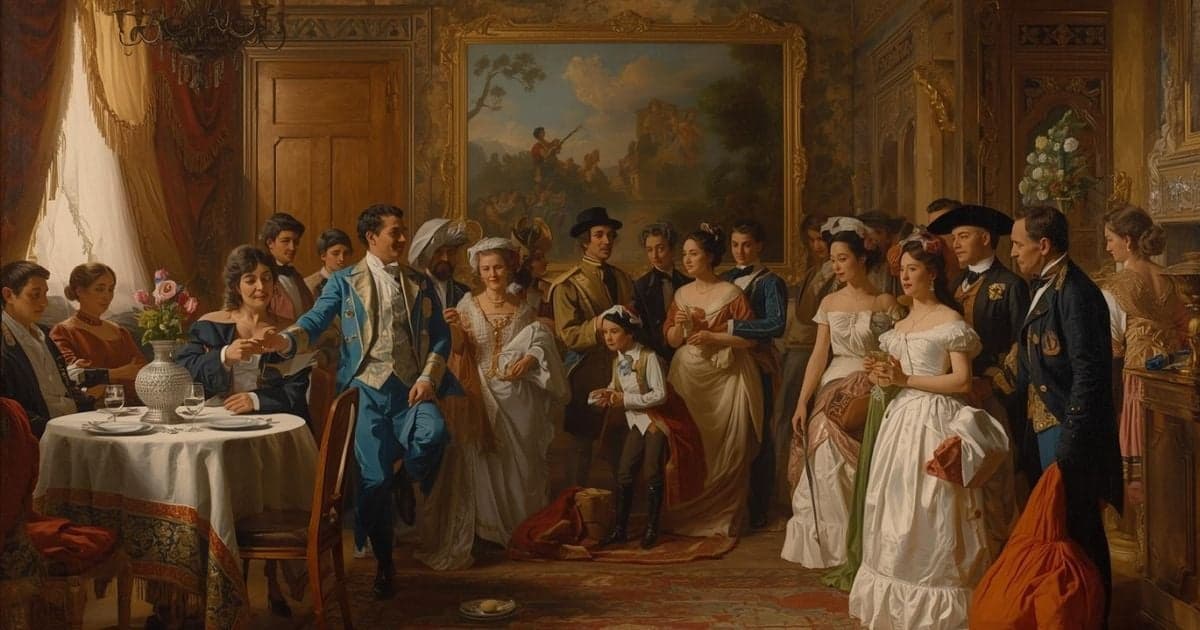
Colonel Berg invites Pierre to a dinner party at his new apartment, revealing himself as a master of calculated social climbing. Berg explains to his wife Vera how he's advanced his career by carefully choosing which people to befriend - always aiming upward in social rank. The couple's relationship shows a fascinating dynamic: each thinks they're superior to the other while playing their assigned roles. Berg believes women are weak and foolish, while Vera thinks men are conceited but lack real understanding. Their apartment is obsessively perfect, with every piece of furniture arranged just so - a physical manifestation of their desperate need to appear successful and refined. When Pierre arrives, both Berg and Vera compete to entertain him properly, each believing their social skills are what attracted such an important guest. As more guests arrive, including military officers and the Rostov family, Berg and Vera beam with satisfaction. Everything is exactly like every other fashionable party - the same conversations, the same refreshments, the same social rituals. Tolstoy shows us how people perform their social status through material possessions and careful behavior, while revealing the anxiety beneath their polished surfaces. The Bergs represent those who've made it into respectable society through strategy rather than birthright, and their need to prove they belong drives every detail of their evening.

Coming Up in Chapter 127

As the party continues, the conversation will turn to weightier matters, and we'll see how different characters respond when social pleasantries give way to more serious discussions about the war and changing times.

Share it with friends

Previous ChapterNext Chapter
GO ADS FREE — JOIN US
Original text
complete·1,186 words
O

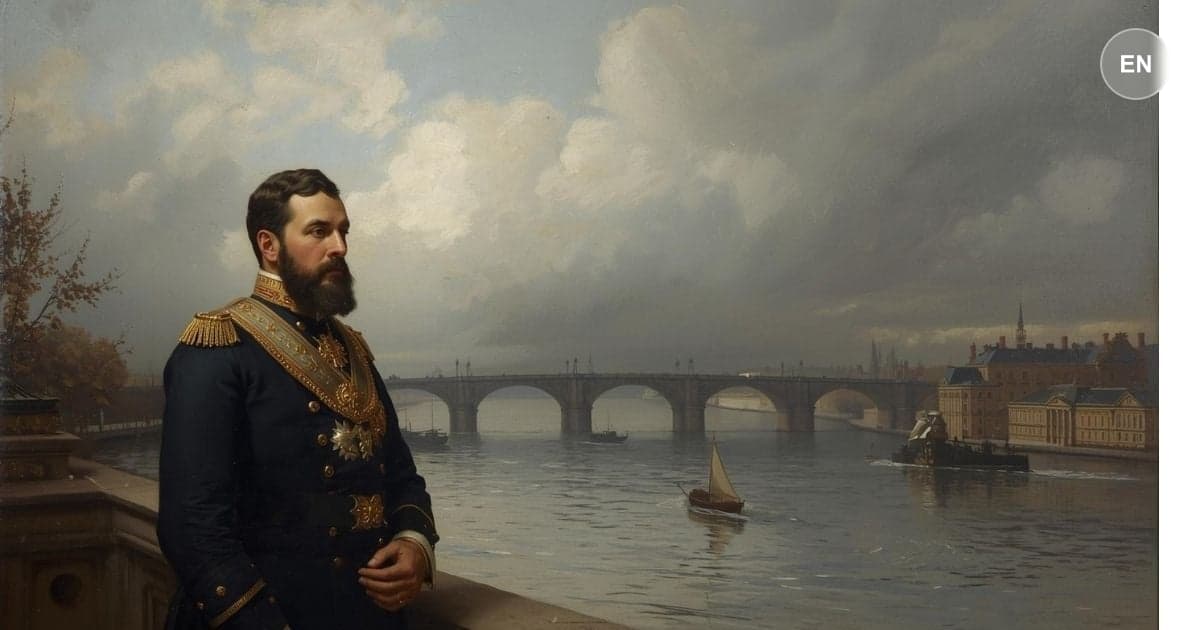
ne morning Colonel Berg, whom Pierre knew as he knew everybody in Moscow and Petersburg, came to see him. Berg arrived in an immaculate brand-new uniform, with his hair pomaded and brushed forward over his temples as the Emperor Alexander wore his hair.

“I have just been to see the countess, your wife. Unfortunately she could not grant my request, but I hope, Count, I shall be more fortunate with you,” he said with a smile.

“What is it you wish, Colonel? I am at your service.”

“I have now quite settled in my new rooms, Count” (Berg said this with perfect conviction that this information could not but be agreeable), “and so I wish to arrange just a small party for my own and my wife’s friends.” (He smiled still more pleasantly.) “I wished to ask the countess and you to do me the honor of coming to tea and to supper.”

1 / 8

Master this chapter. Complete your experience

Purchase the complete book to access all chapters and support classic literature

Read Free on GutenbergBuy at Powell'sBuy on Amazon

As an Amazon Associate, we earn a small commission from qualifying purchases at no additional cost to you.

Available in paperback, hardcover, and e-book formats

GO ADS FREE — JOIN US

Why This Matters

Connect literature to life

Skill: Reading Status Anxiety

This chapter teaches how to spot when someone is performing their social position rather than naturally occupying it.

Practice This Today

This week, notice when someone over-explains their choices or name-drops their achievements - they might be feeling insecure about their place and could use genuine friendship rather than judgment.

GO ADS FREE — JOIN US

Now let's explore the literary elements.

Key Quotes & Analysis

"I have now quite settled in my new rooms, Count, and so I wish to arrange just a small party for my own and my wife's friends."

— Colonel Berg

Context: Berg explaining why he's inviting Pierre to dinner

This seemingly innocent statement reveals Berg's calculated approach - he's not inviting friends, he's staging a performance. The phrase 'small but select' shows he understands exclusivity creates value.

In Today's Words:

I've got my place looking perfect, so now I want to throw a dinner party to show it off and network with the right people.

"Berg explained so clearly why he wanted to collect at his house a small but select company, and why this would give him pleasure."

— Narrator

Context: Describing how Berg convinced Pierre to attend

Tolstoy shows how Berg weaponizes reasonableness and social obligation. He makes refusal seem unreasonable, trapping Pierre through politeness rather than genuine connection.

In Today's Words:

Berg made it sound so logical and polite that saying no would have made Pierre look like a jerk.

"Everything was exactly like what one sees at parties everywhere - the same kind of conversation, the same kind of refreshments, the same kind of people."

— Narrator

Context: Describing the actual dinner party

This reveals the emptiness beneath the Bergs' careful performance. They've succeeded in creating something indistinguishable from every other fashionable gathering, which is exactly what they wanted but also shows how hollow it is.

In Today's Words:

It was like every other networking event - same small talk, same food, same types trying to impress each other.

Thematic Threads

Class Anxiety

In This Chapter

Berg and Vera's desperate need to prove their social legitimacy through perfect dinner parties and calculated friendships

Development

Builds on earlier themes of social hierarchy, showing the psychological cost of climbing social ladders

In Your Life:

You might recognize this in your own tendency to over-prepare for social situations where you feel you need to prove yourself.

Identity Performance

In This Chapter

Every detail of the Berg apartment and evening is carefully staged to project respectability and success

Development

Continues the theme of characters constructing artificial identities to navigate society

In Your Life:

This appears when you find yourself acting differently around certain people to fit in or impress them.

Strategic Relationships

In This Chapter

Berg explicitly explains how he chooses friends based on their ability to advance his career and social position

Development

Expands on earlier explorations of how people use relationships for personal advancement

In Your Life:

You see this when networking feels transactional, or when you realize someone only contacts you when they need something.

Mutual Deception

In This Chapter

Berg and Vera each believe they're superior to their spouse while both are equally calculating and insecure

Development

Deepens the theme of self-deception and how people rationalize their behavior

In Your Life:

This shows up when you judge others for behaviors you engage in yourself, especially in close relationships.

Social Conformity

In This Chapter

The party succeeds because it perfectly replicates every other fashionable gathering, with identical conversations and rituals

Development

Reinforces ongoing themes about how society rewards conformity over authenticity

In Your Life:

You experience this pressure when you find yourself saying what's expected rather than what you actually think or feel.

You now have the context. Time to form your own thoughts.

Discussion Questions

  1. 1

    What specific things do Berg and Vera do to make their apartment and dinner party 'perfect'? What are they trying to prove?

    analysis • surface
  2. 2

    Why do Berg and Vera each think they're superior to the other, yet still work together to impress their guests?

    analysis • medium
  3. 3

    Where have you seen this same pattern of 'performed success' - people exhausting themselves trying to prove they belong somewhere?

    application • medium
  4. 4

    When is performing your success helpful versus when does it become a trap? How can you tell the difference?

    application • deep
  5. 5

    What does this chapter reveal about the difference between actually having something and needing to constantly prove you have it?

    reflection • deep

Critical Thinking Exercise

10 minutes

Map Your Own Performance Patterns

Think of a situation where you felt like you had to prove you belonged - a new job, social group, neighborhood, or relationship. Write down three specific things you did to 'perform' your worthiness in that situation. Then identify what you were really afraid would happen if you didn't perform perfectly.

Consider:

  • •Notice the difference between adapting appropriately and exhausting yourself with performance
  • •Consider who you were really trying to convince - them or yourself
  • •Think about what energy you could have saved for things that actually mattered to you

Journaling Prompt

Write about a time when you stopped performing and just showed up as yourself. What happened? What did you learn about who actually accepts the real you?

Coming Up Next...

Chapter 127: Love Transforms Everything

As the party continues, the conversation will turn to weightier matters, and we'll see how different characters respond when social pleasantries give way to more serious discussions about the war and changing times.

Continue to Chapter 127
Previous
When Love Awakens the Soul
Contents
Next
Love Transforms Everything

Continue Exploring

War and Peace Study GuideTeaching ResourcesEssential Life IndexBrowse by ThemeAll Books
Power & CorruptionLove & RelationshipsIdentity & Self-Discovery

You Might Also Like

Anna Karenina cover

Anna Karenina

Leo Tolstoy

Also by Leo Tolstoy

The Idiot cover

The Idiot

Fyodor Dostoevsky

Explores love & romance

Moby-Dick cover

Moby-Dick

Herman Melville

Explores mortality & legacy

Dracula cover

Dracula

Bram Stoker

Explores love & romance

Browse all 47+ books

Share This Chapter

Know someone who'd enjoy this? Spread the wisdom!

TwitterFacebookLinkedInEmail

Read ad-free with Prestige

Get rid of ads, unlock study guides and downloads, and support free access for everyone.

Subscribe to PrestigeCreate free account
Intelligence Amplifier
Intelligence Amplifier™Powering Wide Reads

Exploring human-AI collaboration through books, essays, and philosophical dialogues. Classic literature transformed into navigational maps for modern life.

2025 Books

→ The Amplified Human Spirit→ The Alarming Rise of Stupidity Amplified→ San Francisco: The AI Capital of the World
Visit intelligenceamplifier.org
hello@widereads.com

WideReads Originals

→ You Are Not Lost→ The Last Chapter First→ The Lit of Love→ Wealth and Poverty→ 10 Paradoxes in the Classics · coming soon
Arvintech
arvintechAmplify your Mind
Visit at arvintech.com

Navigate

  • Home
  • Library
  • Essential Life Index
  • How It Works
  • Subscribe
  • Account
  • About
  • Contact
  • Authors
  • Suggest a Book
  • Landings

Made For You

  • Students
  • Educators
  • Families
  • Readers
  • Literary Analysis
  • Finding Purpose
  • Letting Go
  • Recovering from a Breakup
  • Corruption
  • Gaslighting in the Classics

Newsletter

Weekly insights from the classics. Amplify Your Mind.

Legal

  • Privacy Policy
  • Terms of Service
  • Cookie Policy
  • Accessibility

Why Public Domain?

We focus on public domain classics because these timeless works belong to everyone. No paywalls, no restrictions—just wisdom that has stood the test of centuries, freely accessible to all readers.

Public domain books have shaped humanity's understanding of love, justice, ambition, and the human condition. By amplifying these works, we help preserve and share literature that truly belongs to the world.

A Pilgrimage

Powell's City of Books

Portland, Oregon

If you ever find yourself in Portland, walk to the corner of Burnside and 10th. The building takes up an entire city block. Inside is over a million books, new and used on the same shelf, organized by color-coded rooms with names like the Rose Room and the Pearl Room. You can lose an afternoon. You can lose a weekend. You will find a book you have been looking for your whole life, and three you did not know existed.

It is a pilgrimage. We cannot find a bookstore like it anywhere on earth. If you read the classics, and you ever get the chance, go. It belongs on every reader's bucket list.

Visit powells.com

We are not in any way affiliated with Powell's. We are just a very big fan.

© 2026 Wide Reads™. All Rights Reserved.

Intelligence Amplifier™ and Wide Reads™ are proprietary trademarks of Arvin Lioanag.

Copyright Protection: All original content, analyses, discussion questions, pedagogical frameworks, and methodology are protected by U.S. and international copyright law. Unauthorized reproduction, distribution, web scraping, or use for AI training is strictly prohibited. See our Copyright Notice for details.

Disclaimer: The information provided on this website is for general informational and educational purposes only and does not constitute professional, legal, financial, or technical advice. While we strive to ensure accuracy and relevance, we make no warranties regarding completeness, reliability, or suitability. Any reliance on such information is at your own risk. We are not liable for any losses or damages arising from use of this site. By using this site, you agree to these terms.