Master this chapter. Complete your experience
Purchase the complete book to access all chapters and support classic literature
As an Amazon Associate, we earn a small commission from qualifying purchases at no additional cost to you.
Available in paperback, hardcover, and e-book formats
Why This Matters
Connect literature to life
This chapter teaches how to recognize when someone creates false closeness to bypass your normal decision-making process.
Practice This Today
This week, notice when someone shares personal information unusually quickly, then asks for something—pause and ask yourself what boundaries you're being invited to cross.
Now let's explore the literary elements.
Key Quotes & Analysis
"Natasha was strangely and agreeably struck by the fact that there was nothing formidable in this man about whom there was so much talk, but that on the contrary his smile was most naïve, cheerful, and good-natured."
Context: Natasha's first impression of Anatole when they meet
This shows how skilled manipulators disarm their targets by appearing harmless and genuine. Natasha expected someone dangerous but finds someone who seems sweet and innocent - exactly what Anatole wants her to think.
In Today's Words:
He wasn't the player everyone said he was - he seemed so genuine and nice.
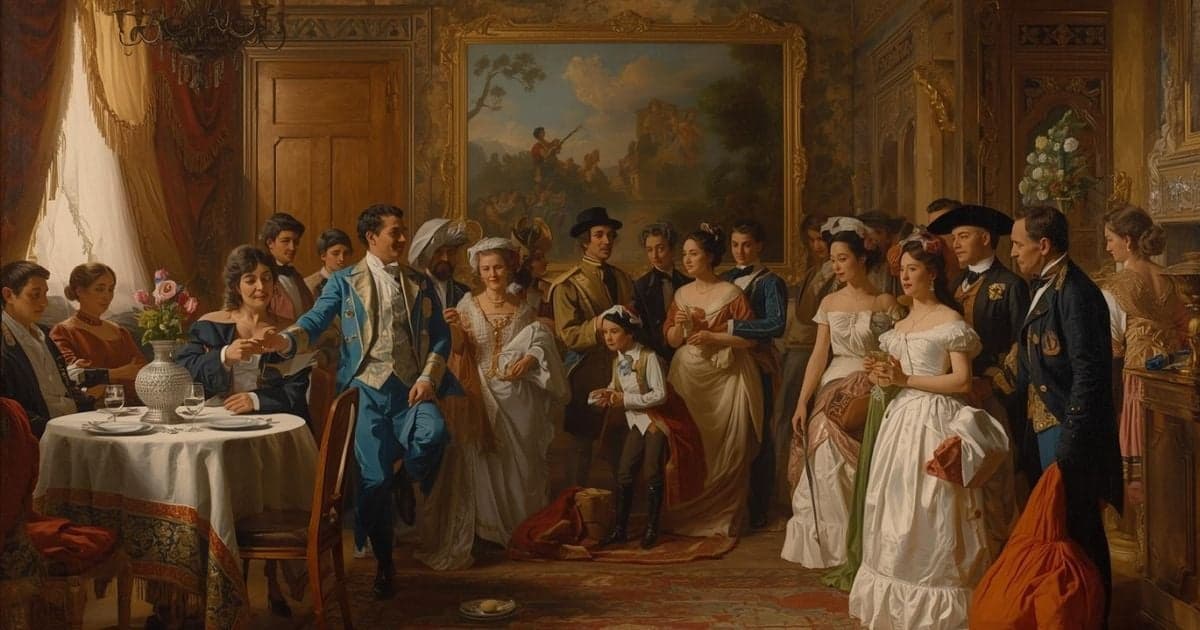
"We are getting up a costume tournament; you ought to take part in it! It will be great fun."
Context: Anatole immediately invites Natasha to a private party
He's creating an opportunity to see her again in a setting where normal rules don't apply. The costume element adds fantasy and playfulness, making it seem innocent while actually being quite calculated.
In Today's Words:
You should come to this party I'm throwing - it'll be amazing, you'll love it.
"While saying this he never removed his smiling eyes from her face, her neck, and her bare shoulders."
Context: Describing Anatole's intense focus on Natasha during their conversation
This reveals his predatory nature - the way he studies her physically while maintaining that charming smile. It's both flattering attention and objectification, which Natasha feels but doesn't fully understand.
In Today's Words:
He couldn't stop staring at her while he talked, looking her up and down with that smile.
Thematic Threads
Social Expectations
In This Chapter
Natasha feels pressure to be polite and engaging at the theater, which becomes the opening Anatole exploits
Development
Previously shown through formal engagement rules; now shows how social politeness can become vulnerability
In Your Life:
Your professional obligation to be friendly with patients or customers can be exploited by those with ulterior motives
Identity
In This Chapter
Natasha's sense of who she is—a faithful fiancée—crumbles under Anatole's attention, leaving her confused about her own character
Development
Builds on earlier themes of self-discovery, now showing how identity can be destabilized by external influence
In Your Life:
You might find yourself acting completely out of character when someone makes you feel special or understood
Human Relationships
In This Chapter
The contrast between Anatole's immediate intensity and Prince Andrew's distant formality reveals relationship vulnerabilities
Development
Continues exploration of how different relationship styles create different emotional needs
In Your Life:
When your current relationships feel lacking, you become more susceptible to anyone offering what seems missing
Personal Growth
In This Chapter
Natasha's horror at her own behavior afterward shows the gap between who we think we are and how we actually act under pressure
Development
Extends earlier themes about self-knowledge, now focusing on moral consistency under temptation
In Your Life:
The biggest growth often comes from recognizing the gap between your values and your actual choices in difficult moments
Class
In This Chapter
The sophisticated theater setting and Hélène's social circle create an environment where normal moral rules seem suspended
Development
Shows how elite social spaces can normalize behavior that would seem obviously wrong elsewhere
In Your Life:
Certain professional or social environments can make compromising your values feel sophisticated rather than wrong
You now have the context. Time to form your own thoughts.
Discussion Questions
- 1
What specific techniques does Anatole use to make Natasha feel special and connected to him so quickly?
analysis • surface - 2
Why does Natasha's relationship with Prince Andrew suddenly feel cold and distant compared to this brief encounter with Anatole?
analysis • medium - 3
Where have you seen this pattern of instant, intense connection being used to influence someone's decisions in real life?
application • medium - 4
What warning signs could help someone recognize when charm is being used to bypass their normal boundaries?
application • deep - 5
What does this chapter reveal about the difference between genuine intimacy and manufactured connection?
reflection • deep
Critical Thinking Exercise
Map Your Boundary Bypass Points
Think about your own vulnerabilities to this kind of instant connection. What makes you feel special and understood? What situations make you more likely to lower your guard? Create a personal 'warning system' by identifying your specific triggers and the environments where you're most susceptible to charm-based influence.
Consider:
- •Consider when you're emotionally vulnerable (stressed, lonely, frustrated with current relationships)
- •Notice environments that make boundaries feel less important (social events, professional networking, online interactions)
- •Think about what kind of attention makes you feel most flattered and special
Journaling Prompt
Write about a time when someone made you feel instantly understood or special, and you later realized they wanted something from you. What were the warning signs you missed, and how would you handle it differently now?
Coming Up Next...
Chapter 156: The Charming Predator's Playbook
Natasha's inner turmoil deepens as she struggles to understand what happened to her and what it means for her future with Prince Andrew.