Chapter 70
Coming Home Changed
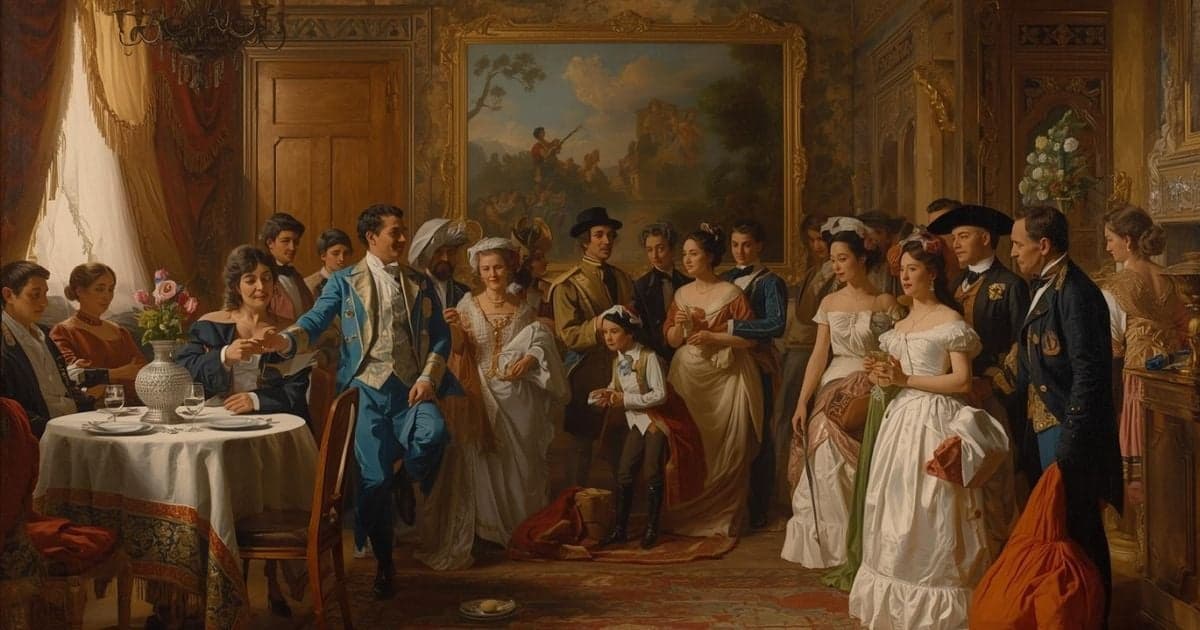
On his return to Moscow from the army, Nicholas Rostóv was welcomed by his home circle as the best of sons, a hero, and their darling Nikólenka; by his relations as a charming, attractive, and polite young man; by his acquaintances as a handsome lieutenant of hussars, a good dancer, and one of the best matches in the city. The Rostóvs knew everybody in Moscow. The old count had money enough that year, as all his estates had been remortgaged, and so Nicholas, acquiring a trotter of his own, very stylish riding breeches of the latest cut, such as no…
Public-domain chapter text, formatted for reading.
Master this chapter. Complete your experience
Purchase the complete book to access all chapters and support classic literature

Available in paperback, hardcover, and e-book formats
Now let's explore the literary elements.
Key Quotes & Analysis
"Had there been no Bagratión, it would have been necessary to invent him"
Context: Moscow chooses a hero after Austerlitz
Defeat demands a face that cannot threaten the court narrative.
In Today's Words:
Shinshín jokes Moscow would have invented Bagratión if he did not exist after Austerlitz. After failure, institutions promote a safe hero to avoid hard blame and awkward questions. When praise suddenly fixes on one blameless name, ask what truth the story is hiding from the banquet.
"Ah, there will be, and there are, many more such girls somewhere whom I do not yet know"
Context: He drifts from Sónya during his Moscow leave
Freedom becomes avoidance dressed as future possibility.
In Today's Words:
Nicholas tells himself there will be many other girls somewhere later when he has time. Open options can excuse avoiding the person who already loves you and waited. If you are always waiting for a better match, admit you are choosing delay, not destiny, and say so plainly.
"Really, Papa, I believe Prince Bagratión worried himself less before the battle of Schön Grabern than you do now"
Context: The count plans the English Club dinner
Domestic spectacle can outstress the battlefield it claims to honor.
In Today's Words:
Nicholas teases that his father fusses over turtle soup more than Bagratión worried before Schön Grabern ever did. Hosts can sweat banquet details harder than the honoree ever did in combat under fire. Notice when ceremony serves the organizer's ego more than the guest's need for rest.
"Of Bolkónski, nothing was said"
Context: Moscow retells Austerlitz with heroes and scapegoats
The wounded truth is too inconvenient for the comfort story.
In Today's Words:
The narrator says of Bolkónski nothing was said while Berg's wounded hand is repeated at dinner instead. Cities prefer inventable heroes to living witnesses who complicate the moral story after defeat. Seek the silent names when a defeat gets its official story and its feast.
Thematic Threads
Feast Over Fact
In This Chapter
Count Ilyá spends fortunes on sterlets and flowers while Andrew lies wounded
Development
Public ritual replaces honest reckoning with Austerlitz
In Your Life:
You might see expensive praise dinners after a mission fails while truth-tellers stay quiet.
Drifting from Devotion
In This Chapter
Nicholas prizes freedom and races over Sónya's steady love
Development
War hero status widens his options and shrinks his urgency
In Your Life:
You might feel too busy for the person who waited through your absence.
You now have the context. Time to form your own thoughts.
Discussion Questions
This is not a test. Five prompts guide you through the chapter, from how it opens to how it closes, so you notice context and rhythm rather than facts to memorize. Sit with each question in your own words. When you see "One way to read it," treat it as a starting point, not the only answer.
- 1
Why does Moscow elevate Bagratión after Austerlitz?
analysis • surfaceOne way to read it
He is a simple fighting hero without court ties. Honoring him slights Kutúzov and soothes shame.
- 2
How does Nicholas treat Sónya during this Moscow stay?
analysis • mediumOne way to read it
He drifts away, telling himself other girls and freedom matter more than binding love now.
- 3
When have you seen a group invent a hero after a failure?
application • mediumOne way to read it
Name who was celebrated and what uncomfortable fact was left off the agenda. Andrew maps the English Club pattern.
- 4
What does Shinshín's joke about inventing Bagratión imply?
application • deepOne way to read it
The city needs a symbol more than a person. Narrative repair beats honest accounting.
- 5
Why is Andrew barely mentioned in Moscow's retelling?
reflection • deepOne way to read it
His living wound complicates the comfort tale. Berg's anecdote is easier to repeat at dinner.
Critical Thinking Exercise
Map Your Success Isolation Risk
Think of a recent achievement or improvement in your life - a promotion, weight loss, new skill, or overcoming a challenge. Write down the relationships that were important to you before this success. Now honestly assess: have any of these relationships changed since your achievement? Are you treating anyone differently or expecting them to treat you differently?
Consider:
- •Notice if you've started feeling like certain people 'don't understand you anymore' since your success
- •Pay attention to whether you're seeking validation from new people while taking old supporters for granted
- •Consider if you're using your achievement as a reason to avoid vulnerability with people who knew you before
Journaling Prompt
Write about a time when someone you cared about achieved something significant and then seemed to drift away from you. How did that feel, and what do you wish they had done differently?
Coming Up Next...
Chapter 71: The Hero's Uncomfortable Welcome
The grand dinner for Prince Bagration begins, bringing together Moscow's elite in a celebration that will reveal the true character of the city's social fabric and the complex politics surrounding Russia's military heroes.