Wide Reads
Literature MattersLife IndexEducators
Sign in
Where to Begin
War and Peace - When Victory Turns to Nightmare

Leo Tolstoy

War and Peace

When Victory Turns to Nightmare

Home›Books›War and Peace›Chapter 224
Previous
224 of 361
Next

Summary

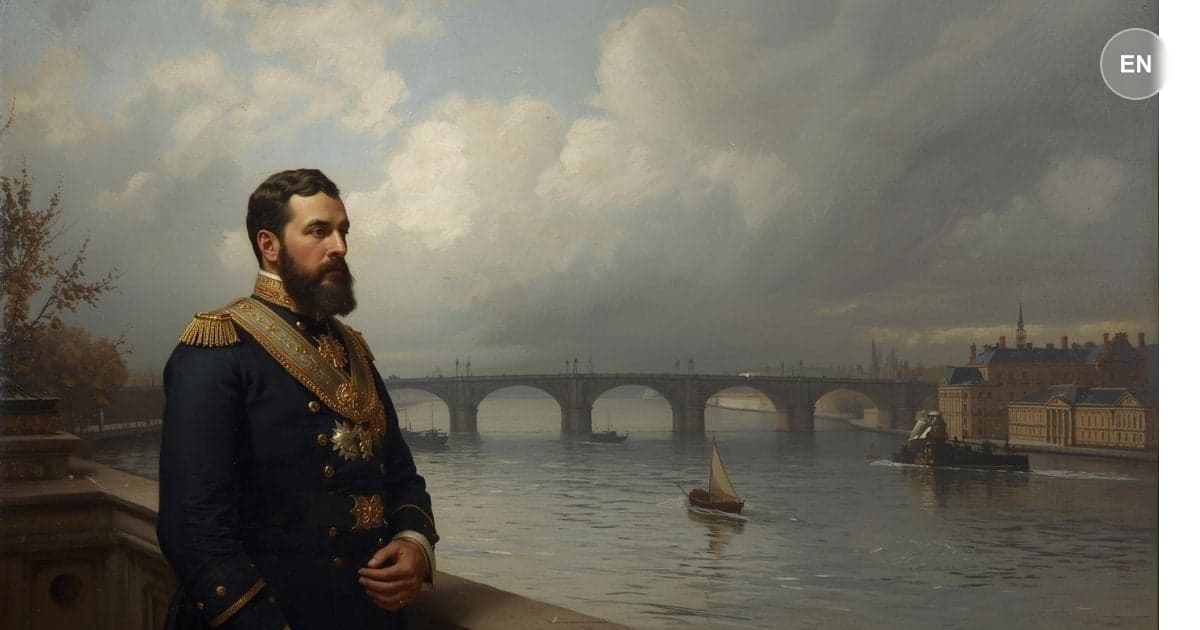
Napoleon sits on a hill at Borodino, watching his empire crumble in real time. His generals keep galloping up, begging for reinforcements as their troops are slaughtered. For the first time in his career, Napoleon's proven tactics aren't working. The Russians aren't breaking. His army is melting away. He makes contradictory decisions—first sending one division, then changing his mind and sending another—the kind of flip-flopping that happens when panic sets in. A courtier tries to congratulate him on victory, but Napoleon knows better. He's experiencing what Tolstoy describes as the nightmare of an overconfident gambler who suddenly realizes the game has turned against him. This isn't just military failure—it's the psychological unraveling of a man who built his identity on being unstoppable. Napoleon finally rides out to see the battlefield himself and is horrified by the carnage. When a general suggests sending in his elite Old Guard, Napoleon refuses: 'At eight hundred leagues from France, I will not have my Guard destroyed!' This chapter captures the moment when a leader realizes their methods no longer work, but they're too deep in to change course. It's about the dangerous gap between how we see ourselves and reality, and how past success can blind us to present failure.

Coming Up in Chapter 225

As Napoleon retreats from the horror of Borodino, we'll see how both armies deal with the aftermath of this brutal stalemate. The Russians may have held their ground, but at what cost?

Share it with friends

Previous ChapterNext Chapter
GO ADS FREE — JOIN US
Original text
complete·1,752 words
N

apoleon’s generals—Davout, Ney, and Murat, who were near that region of fire and sometimes even entered it—repeatedly led into it huge masses of well-ordered troops. But contrary to what had always happened in their former battles, instead of the news they expected of the enemy’s flight, these orderly masses returned thence as disorganized and terrified mobs. The generals re-formed them, but their numbers constantly decreased. In the middle of the day Murat sent his adjutant to Napoleon to demand reinforcements.

Napoleon sat at the foot of the knoll, drinking punch, when Murat’s adjutant galloped up with an assurance that the Russians would be routed if His Majesty would let him have another division.

“Reinforcements?” said Napoleon in a tone of stern surprise, looking at the adjutant—a handsome lad with long black curls arranged like Murat’s own—as though he did not understand his words.

“Reinforcements!” thought Napoleon to himself. “How can they need reinforcements when they already have half the army directed against a weak, unentrenched Russian wing?”

“Tell the King of Naples,” said he sternly, “that it is not noon yet, and I don’t yet see my chessboard clearly. Go!...”

1 / 10

Master this chapter. Complete your experience

Purchase the complete book to access all chapters and support classic literature

Read Free on GutenbergBuy at Powell'sBuy on Amazon

As an Amazon Associate, we earn a small commission from qualifying purchases at no additional cost to you.

Available in paperback, hardcover, and e-book formats

GO ADS FREE — JOIN US

Why This Matters

Connect literature to life

Skill: Recognizing Sunk Cost Blindness

This chapter teaches how past investment can blind us to present reality, making us double down on failing strategies.

Practice This Today

This week, notice when you hear yourself saying 'I've come too far to quit now' and ask instead: 'If I started fresh today, would I choose this same path?'

GO ADS FREE — JOIN US

Now let's explore the literary elements.

Key Quotes & Analysis

"Reinforcements? How can they need reinforcements when they already have half the army directed against a weak, unentrenched Russian wing?"

— Napoleon

Context: Napoleon's response when told his troops need backup

Shows Napoleon's dangerous disconnect from reality. He's still thinking like the old Napoleon who always won, unable to process that his proven tactics are failing. His logic makes sense on paper but ignores what's actually happening.

In Today's Words:

What do you mean we need more help? We already have plenty of people working on this easy project.

"I don't yet see my chessboard clearly."

— Napoleon

Context: Napoleon refusing to send reinforcements

Reveals how Napoleon views war as a strategic game rather than human reality. He's treating living soldiers like chess pieces, and his inability to 'see the board' shows he's losing control of the situation.

In Today's Words:

I need to understand the big picture before I make any moves.

"At eight hundred leagues from France, I will not have my Guard destroyed!"

— Napoleon

Context: Refusing to send his elite troops into battle

Napoleon finally shows fear and self-preservation. He's thinking about retreat while pretending to still be in control. The distance from France reminds him how far he is from safety and reinforcements.

In Today's Words:

I'm not risking my best people on this - we're too far from home base if this goes wrong.

Thematic Threads

Identity

In This Chapter

Napoleon's self-image as 'the unstoppable genius' prevents him from adapting to battlefield reality

Development

Evolved from earlier portrayals of Napoleon as confident leader to showing the psychological prison of his own reputation

In Your Life:

You might cling to outdated roles or methods because changing would feel like losing who you are

Power

In This Chapter

Napoleon's absolute authority becomes a weakness—no one can effectively challenge his failing decisions

Development

Builds on themes of how unchecked power corrupts judgment throughout the novel

In Your Life:

You might find yourself making worse decisions when you're the unquestioned authority in any situation

Class

In This Chapter

The courtier tries to flatter Napoleon with false congratulations, showing how hierarchy distorts truth

Development

Continues the novel's exploration of how social position shapes what people are willing to say

In Your Life:

You might not get honest feedback at work or home because people don't want to challenge your position

Human Relationships

In This Chapter

Napoleon's isolation from his generals creates a communication breakdown at the worst possible moment

Development

Reflects the novel's recurring theme that authentic connection requires vulnerability

In Your Life:

You might push people away precisely when you need their honest input most

GO ADS FREE — JOIN US

You now have the context. Time to form your own thoughts.

Discussion Questions

  1. 1

    What signs show Napoleon that his usual tactics aren't working at Borodino, and how does he respond to these warning signals?

    analysis • surface
  2. 2

    Why does Napoleon make contradictory decisions during the battle, and what does this reveal about how pressure affects decision-making?

    analysis • medium
  3. 3

    Think of someone you know who kept using the same approach even when it clearly wasn't working anymore. What made it hard for them to change course?

    application • medium
  4. 4

    Napoleon refuses to risk his Old Guard because he's 'eight hundred leagues from France.' When is it smart to cut your losses, and when should you double down?

    application • deep
  5. 5

    How does past success sometimes become a trap that prevents us from adapting to new situations?

    reflection • deep

Critical Thinking Exercise

10 minutes

The Reality Check Audit

Think of one area of your life where you've been using the same approach for a long time—parenting, work, relationships, health. Write down what you've been doing, then honestly assess: is it actually working? List three concrete signs that would tell you if your approach is succeeding or failing.

Consider:

  • •Focus on results, not intentions—what's actually happening versus what you hoped would happen
  • •Consider feedback you might have been dismissing or explaining away
  • •Ask yourself: if you started fresh today, would you choose this same approach?

Journaling Prompt

Write about a time when you had to admit that something you'd invested heavily in—time, money, or identity—wasn't working. What made it hard to change course, and what finally helped you see clearly?

Coming Up Next...

Chapter 225: The Weight of Command

As Napoleon retreats from the horror of Borodino, we'll see how both armies deal with the aftermath of this brutal stalemate. The Russians may have held their ground, but at what cost?

Continue to Chapter 225
Previous
The Fog of War
Contents
Next
The Weight of Command

Continue Exploring

War and Peace Study GuideTeaching ResourcesEssential Life IndexBrowse by ThemeAll Books
Power & CorruptionLove & RelationshipsIdentity & Self-Discovery

You Might Also Like

Anna Karenina cover

Anna Karenina

Leo Tolstoy

Also by Leo Tolstoy

The Idiot cover

The Idiot

Fyodor Dostoevsky

Explores love & romance

Moby-Dick cover

Moby-Dick

Herman Melville

Explores mortality & legacy

Dracula cover

Dracula

Bram Stoker

Explores love & romance

Browse all 47+ books

Share This Chapter

Know someone who'd enjoy this? Spread the wisdom!

TwitterFacebookLinkedInEmail

Read ad-free with Prestige

Get rid of ads, unlock study guides and downloads, and support free access for everyone.

Subscribe to PrestigeCreate free account
Intelligence Amplifier
Intelligence Amplifier™Powering Wide Reads

Exploring human-AI collaboration through books, essays, and philosophical dialogues. Classic literature transformed into navigational maps for modern life.

2025 Books

→ The Amplified Human Spirit→ The Alarming Rise of Stupidity Amplified→ San Francisco: The AI Capital of the World
Visit intelligenceamplifier.org
hello@widereads.com

WideReads Originals

→ You Are Not Lost→ The Last Chapter First→ The Lit of Love→ Wealth and Poverty→ 10 Paradoxes in the Classics · coming soon
Arvintech
arvintechAmplify your Mind
Visit at arvintech.com

Navigate

  • Home
  • Library
  • Essential Life Index
  • How It Works
  • Subscribe
  • Account
  • About
  • Contact
  • Authors
  • Suggest a Book
  • Landings

Made For You

  • Students
  • Educators
  • Families
  • Readers
  • Literary Analysis
  • Finding Purpose
  • Letting Go
  • Recovering from a Breakup
  • Corruption
  • Gaslighting in the Classics

Newsletter

Weekly insights from the classics. Amplify Your Mind.

Legal

  • Privacy Policy
  • Terms of Service
  • Cookie Policy
  • Accessibility

Why Public Domain?

We focus on public domain classics because these timeless works belong to everyone. No paywalls, no restrictions—just wisdom that has stood the test of centuries, freely accessible to all readers.

Public domain books have shaped humanity's understanding of love, justice, ambition, and the human condition. By amplifying these works, we help preserve and share literature that truly belongs to the world.

A Pilgrimage

Powell's City of Books

Portland, Oregon

If you ever find yourself in Portland, walk to the corner of Burnside and 10th. The building takes up an entire city block. Inside is over a million books, new and used on the same shelf, organized by color-coded rooms with names like the Rose Room and the Pearl Room. You can lose an afternoon. You can lose a weekend. You will find a book you have been looking for your whole life, and three you did not know existed.

It is a pilgrimage. We cannot find a bookstore like it anywhere on earth. If you read the classics, and you ever get the chance, go. It belongs on every reader's bucket list.

Visit powells.com

We are not in any way affiliated with Powell's. We are just a very big fan.

© 2026 Wide Reads™. All Rights Reserved.

Intelligence Amplifier™ and Wide Reads™ are proprietary trademarks of Arvin Lioanag.

Copyright Protection: All original content, analyses, discussion questions, pedagogical frameworks, and methodology are protected by U.S. and international copyright law. Unauthorized reproduction, distribution, web scraping, or use for AI training is strictly prohibited. See our Copyright Notice for details.

Disclaimer: The information provided on this website is for general informational and educational purposes only and does not constitute professional, legal, financial, or technical advice. While we strive to ensure accuracy and relevance, we make no warranties regarding completeness, reliability, or suitability. Any reliance on such information is at your own risk. We are not liable for any losses or damages arising from use of this site. By using this site, you agree to these terms.