Wide Reads
Literature MattersLife IndexEducators
Sign in
Where to Begin
War and Peace - The Paradox of Human Freedom

Leo Tolstoy

War and Peace

The Paradox of Human Freedom

Home›Books›War and Peace›Chapter 361
Previous
361 of 361

Summary

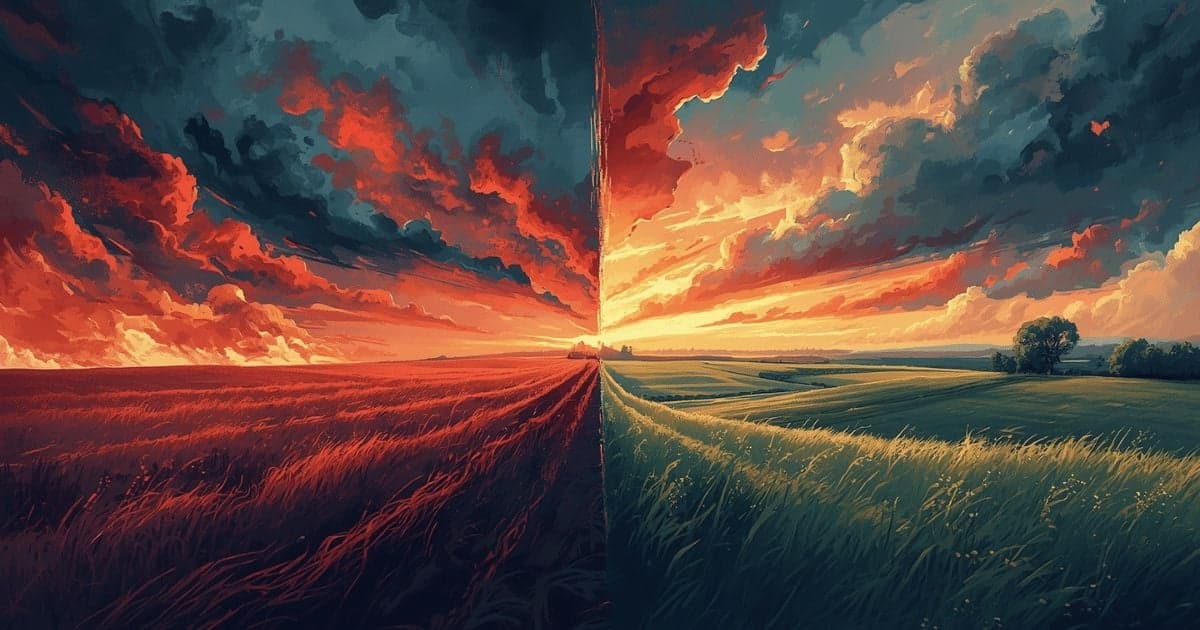
Tolstoy ends his epic by tackling the biggest question of all: Are we truly free, or just following invisible laws like everything else in nature? He presents the central paradox of human existence—from the outside, science shows us we're controlled by forces beyond our control, but from the inside, we absolutely know we're free to choose. When you lift your hand right now, you feel that choice. When you decide to keep reading or put this book down, that feels like your decision. Tolstoy argues this isn't an illusion—it's the most real thing about being human. He criticizes those who think science has solved the mystery by explaining our brains and evolution. That's like plasterers who cover up the windows while fixing the walls—they're missing the whole point. The freedom we feel isn't something reason can explain away because consciousness operates on a different level than logic. This matters because without feeling free, we couldn't live. Every human drive—for wealth, love, power, or meaning—is really a drive for more freedom. Tolstoy suggests we don't need to solve this paradox to live with it. We can accept that we're both determined beings following natural laws AND free agents making real choices. The contradiction doesn't paralyze us—it defines us. This final philosophical meditation caps a novel that has shown us characters wrestling with fate and choice throughout history's greatest upheaval.

Share it with friends

Previous Chapter
GO ADS FREE — JOIN US
Original text
complete·1,677 words
F

history dealt only with external phenomena, the establishment of this simple and obvious law would suffice and we should have finished our argument. But the law of history relates to man. A particle of matter cannot tell us that it does not feel the law of attraction or repulsion and that that law is untrue, but man, who is the subject of history, says plainly: I am free and am therefore not subject to the law.

The presence of the problem of man’s free will, though unexpressed, is felt at every step of history.

All seriously thinking historians have involuntarily encountered this question. All the contradictions and obscurities of history and the false path historical science has followed are due solely to the lack of a solution of that question.

If the will of every man were free, that is, if each man could act as he pleased, all history would be a series of disconnected incidents.

1 / 10

Master this chapter. Complete your experience

Purchase the complete book to access all chapters and support classic literature

Read Free on GutenbergBuy at Powell'sBuy on Amazon

As an Amazon Associate, we earn a small commission from qualifying purchases at no additional cost to you.

Available in paperback, hardcover, and e-book formats

GO ADS FREE — JOIN US

Why This Matters

Connect literature to life

Skill: Embracing Productive Paradoxes

This chapter teaches how to hold contradictory truths simultaneously without needing to resolve them into false simplicity.

Practice This Today

This week, notice when you feel both trapped and free in the same situation—then ask what real choices exist within your actual constraints.

GO ADS FREE — JOIN US

Now let's explore the literary elements.

Key Quotes & Analysis

"A particle of matter cannot tell us that it does not feel the law of attraction or repulsion and that that law is untrue, but man, who is the subject of history, says plainly: I am free and am therefore not subject to the law."

— Narrator

Context: Tolstoy is explaining why studying humans is different from studying physics

This captures the essential difference between humans and everything else in nature. Rocks don't argue with gravity, but humans insist they make real choices. Tolstoy suggests this isn't stubbornness but insight into something science misses.

In Today's Words:

A rock can't argue with gravity, but people will always insist they have real choices, and maybe they're right about something science doesn't understand.

"If the will of every man were free, that is, if each man could act as he pleased, all history would be a series of disconnected incidents."

— Narrator

Context: Tolstoy is exploring what would happen if humans were completely free

This shows Tolstoy working through the logical problem: complete freedom would mean chaos, but complete determinism would mean we're just sophisticated machines. He's looking for a middle path that preserves both human dignity and historical patterns.

In Today's Words:

If everyone could do absolutely whatever they wanted, history would just be random chaos with no patterns.

"In this contradiction lies the problem of free will, which from most ancient times has occupied the best human minds and from most ancient times has been presented in its whole tremendous significance."

— Narrator

Context: Tolstoy is acknowledging this is an ancient philosophical puzzle

Tolstoy places himself in conversation with thousands of years of human thought. He's not claiming to solve the mystery but to illuminate why it matters so much. The 'tremendous significance' suggests our humanity depends on grappling with this question.

In Today's Words:

This contradiction between feeling free and being controlled has puzzled the smartest people throughout history, and for good reason - it's huge.

Thematic Threads

Human Agency

In This Chapter

Tolstoy argues that human consciousness of freedom is irreducible and real, despite external determinism

Development

Culmination of the novel's exploration of how characters navigate fate versus choice throughout historical upheaval

In Your Life:

You experience this every time you feel both limited by circumstances and responsible for your choices

Philosophical Paradox

In This Chapter

The contradiction between scientific determinism and experienced freedom doesn't need resolution to be livable

Development

Final synthesis of the novel's questioning of historical forces versus individual will

In Your Life:

You face daily paradoxes that don't need solving—being independent yet needing others, planning while accepting uncertainty

Consciousness

In This Chapter

Tolstoy positions consciousness as operating on a different level than rational explanation

Development

Builds on characters' moments of insight throughout the novel that transcend logical analysis

In Your Life:

Your gut feelings and intuitive knowledge often matter more than what you can rationally explain

Human Drive

In This Chapter

All human desires—for wealth, love, power—are fundamentally drives for greater freedom

Development

Explains the motivations driving all characters throughout the epic's scope

In Your Life:

Your deepest wants usually stem from seeking more control over your life circumstances

Living with Mystery

In This Chapter

Tolstoy suggests we can live productively with unresolved fundamental questions about existence

Development

Final answer to the novel's persistent questioning of life's meaning and human purpose

In Your Life:

You can act decisively even when you don't understand everything about your situation

GO ADS FREE — JOIN US

You now have the context. Time to form your own thoughts.

Discussion Questions

  1. 1

    According to Tolstoy, what's the central contradiction of human existence that we all experience daily?

    analysis • surface
  2. 2

    Why does Tolstoy argue that trying to solve the freedom vs. determinism debate scientifically misses the point entirely?

    analysis • medium
  3. 3

    Think about your current job or main responsibility - where do you feel completely constrained by forces beyond your control, and where do you still experience real choice?

    application • medium
  4. 4

    When someone feels stuck and says 'nothing I do matters,' what would Tolstoy suggest they're missing about their situation?

    application • deep
  5. 5

    How might accepting both our limitations and our freedom simultaneously change how we approach major life decisions?

    reflection • deep

Critical Thinking Exercise

10 minutes

Map Your Freedom Within Constraints

Choose one area of your life where you feel most trapped or limited - work, finances, family obligations, health, etc. Draw two columns: 'What I Cannot Control' and 'What I Can Still Choose.' Fill both sides honestly. Then circle the three most important choices you're actually making within those constraints.

Consider:

  • •Don't minimize real constraints - financial pressure, health issues, and family needs are genuinely limiting
  • •Don't overlook small choices - your attitude, timing, and response style are often more powerful than they appear
  • •Look for choices you might be giving away unnecessarily - where are you acting constrained when you actually have options?

Journaling Prompt

Write about a time when you felt completely powerless but later realized you had been making choices all along. What did you learn about the difference between external constraints and internal freedom?

Previous
The True Nature of Power
Contents

Continue Exploring

War and Peace Study GuideTeaching ResourcesEssential Life IndexBrowse by ThemeAll Books
Power & CorruptionLove & RelationshipsIdentity & Self-Discovery

You Might Also Like

Anna Karenina cover

Anna Karenina

Leo Tolstoy

Also by Leo Tolstoy

The Idiot cover

The Idiot

Fyodor Dostoevsky

Explores love & romance

Moby-Dick cover

Moby-Dick

Herman Melville

Explores mortality & legacy

Dracula cover

Dracula

Bram Stoker

Explores love & romance

Browse all 47+ books

Share This Chapter

Know someone who'd enjoy this? Spread the wisdom!

TwitterFacebookLinkedInEmail

Read ad-free with Prestige

Get rid of ads, unlock study guides and downloads, and support free access for everyone.

Subscribe to PrestigeCreate free account
Intelligence Amplifier
Intelligence Amplifier™Powering Wide Reads

Exploring human-AI collaboration through books, essays, and philosophical dialogues. Classic literature transformed into navigational maps for modern life.

2025 Books

→ The Amplified Human Spirit→ The Alarming Rise of Stupidity Amplified→ San Francisco: The AI Capital of the World
Visit intelligenceamplifier.org
hello@widereads.com

WideReads Originals

→ You Are Not Lost→ The Last Chapter First→ The Lit of Love→ Wealth and Poverty→ 10 Paradoxes in the Classics · coming soon
Arvintech
arvintechAmplify your Mind
Visit at arvintech.com

Navigate

  • Home
  • Library
  • Essential Life Index
  • How It Works
  • Subscribe
  • Account
  • About
  • Contact
  • Authors
  • Suggest a Book
  • Landings

Made For You

  • Students
  • Educators
  • Families
  • Readers
  • Literary Analysis
  • Finding Purpose
  • Letting Go
  • Recovering from a Breakup
  • Corruption
  • Gaslighting in the Classics

Newsletter

Weekly insights from the classics. Amplify Your Mind.

Legal

  • Privacy Policy
  • Terms of Service
  • Cookie Policy
  • Accessibility

Why Public Domain?

We focus on public domain classics because these timeless works belong to everyone. No paywalls, no restrictions—just wisdom that has stood the test of centuries, freely accessible to all readers.

Public domain books have shaped humanity's understanding of love, justice, ambition, and the human condition. By amplifying these works, we help preserve and share literature that truly belongs to the world.

A Pilgrimage

Powell's City of Books

Portland, Oregon

If you ever find yourself in Portland, walk to the corner of Burnside and 10th. The building takes up an entire city block. Inside is over a million books, new and used on the same shelf, organized by color-coded rooms with names like the Rose Room and the Pearl Room. You can lose an afternoon. You can lose a weekend. You will find a book you have been looking for your whole life, and three you did not know existed.

It is a pilgrimage. We cannot find a bookstore like it anywhere on earth. If you read the classics, and you ever get the chance, go. It belongs on every reader's bucket list.

Visit powells.com

We are not in any way affiliated with Powell's. We are just a very big fan.

© 2026 Wide Reads™. All Rights Reserved.

Intelligence Amplifier™ and Wide Reads™ are proprietary trademarks of Arvin Lioanag.

Copyright Protection: All original content, analyses, discussion questions, pedagogical frameworks, and methodology are protected by U.S. and international copyright law. Unauthorized reproduction, distribution, web scraping, or use for AI training is strictly prohibited. See our Copyright Notice for details.

Disclaimer: The information provided on this website is for general informational and educational purposes only and does not constitute professional, legal, financial, or technical advice. While we strive to ensure accuracy and relevance, we make no warranties regarding completeness, reliability, or suitability. Any reliance on such information is at your own risk. We are not liable for any losses or damages arising from use of this site. By using this site, you agree to these terms.