Chapter 54
When Truth Shatters Illusions
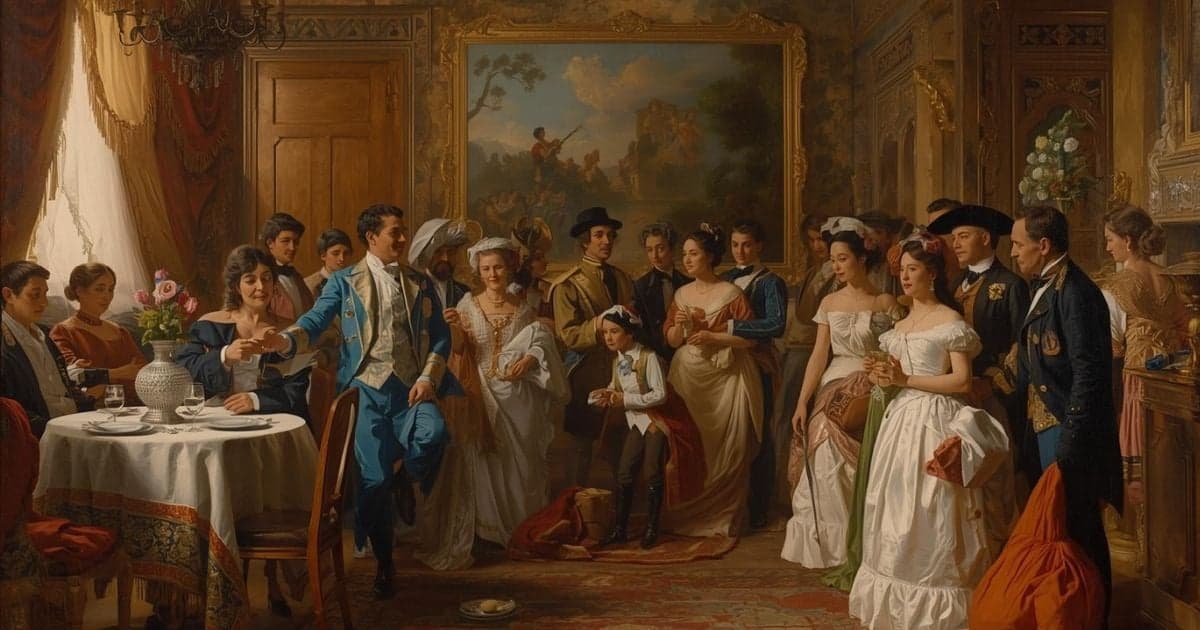
They all separated, but, except Anatole who fell asleep as soon as he got into bed, all kept awake a long time that night. “Is he really to be my husband, this stranger who is so kind—yes, kind, that is the chief thing,” thought Princess Mary; and fear, which she had seldom experienced, came upon her. She feared to look round, it seemed to her that someone was there standing behind the screen in the dark corner. And this someone was he—the devil—and he was also this man with the white forehead, black eyebrows, and red lips. She rang for…
Public-domain chapter text, formatted for reading.
Master this chapter. Complete your experience
Purchase the complete book to access all chapters and support classic literature

Available in paperback, hardcover, and e-book formats
Now let's explore the literary elements.
Key Quotes & Analysis
"Is he really to be my husband, this stranger who is so kind—yes, kind, that is the chief thing,”"
Context: She lies awake trying to believe the match could work
She latches onto one adjective because evidence is thin.
In Today's Words:
Mary tells herself the stranger must be kind because kindness is all she has to hold. When you repeat one good trait like a mantra, check what you are ignoring to sleep. A marriage plot built on a single word rarely survives daylight. If you track only the public moment, you miss the private stake: who gains leverage, who loses face, and what gets asked once the room relaxes.
"He will take you with your dowry and take Mademoiselle Bourienne into the bargain."
Context: His bitter joke during the proposal talk
Truth arrives as mockery because he fears wounding her pride.
In Today's Words:
The old prince jokes that Anatole would marry Mary for dowry and keep Bourienne anyway. Sometimes the sharpest warning wears a laugh so pride can survive it. When a protector mocks your suitor, ask what they saw that you still hope away. If you track only the public moment, you miss the private stake: who gains leverage, who loses face, and what gets asked once the room relaxes.
"My desire is never to leave you, Father, never to separate my life from yours. I don’t wish to marry,”"
Context: Her formal refusal before Vasíli and Bolkónski
No becomes loyalty to her father once illusion dies.
In Today's Words:
Mary tells Vasíli she will not marry and wants to stay with her father. Refusal can be clarity, not failure, once you see the bargain. If you say no after humiliation, check whether you are rejecting one man or an entire inspection you never chose.
"If he is not rich I will give her the means; I will ask my father and Andrew."
Context: After refusing, she plans Bourienne's happiness
Grace replaces revenge; she rewrites pain into service.
In Today's Words:
Mary decides to fund Bourienne's match if Anatole is poor. Some people convert betrayal into caretaking instead of spite. Ask whether your forgiveness helps anyone or only reframes your hurt as noble duty. If you track only the public moment, you miss the private stake: who gains leverage, who loses face, and what gets asked once the room relaxes.
Thematic Threads
Night Thoughts
In This Chapter
Mary fears the devil in Anatole's face; the old prince plots to keep her
Development
Private dread precedes public yes-or-no
In Your Life:
You might lie awake sensing danger while daytime manners still say proceed.
Caught in the Open
In This Chapter
Anatole embraces Bourienne where Mary must walk
Development
Illusion breaks without argument
In Your Life:
You might need one visible breach to trust what friends already saw.
You now have the context. Time to form your own thoughts.
Discussion Questions
This is not a test. Five prompts guide you through the chapter, from how it opens to how it closes, so you notice context and rhythm rather than facts to memorize. Sit with each question in your own words. When you see "One way to read it," treat it as a starting point, not the only answer.
- 1
Why does Mary ask her maid to sleep in her room?
analysis • surfaceOne way to read it
Fear of marriage and Anatole feels like physical danger. She rarely experiences fear.
- 2
What does the old prince's joke about Bourienne reveal?
analysis • mediumOne way to read it
He sees Anatole's real interest and tries to warn Mary without crushing her pride outright.
- 3
When has one visible moment changed your mind about someone?
application • mediumOne way to read it
Name the scene and what polite talk had kept alive before it. Mary shows forced clarity.
- 4
Why does Mary refuse yet plan to help Bourienne afterward?
application • deepOne way to read it
She converts humiliation into service. Refusal frees her; arranging their match reclaims agency.
- 5
How does Anatole's shrug after the embrace show his character?
reflection • deepOne way to read it
He treats betrayal as shared joke. Mary needed that shrug to answer no with certainty.
Critical Thinking Exercise
Spot the False Rescue Pattern
Think of a time when someone offered you exactly what you needed during a difficult period. Write down what they offered, what they gained, and how they treated other people when they thought you weren't watching. Look for the pattern: Do they rush decisions? Isolate you from advice? Benefit more than you do?
Consider:
- •Real helpers give you time to think and don't pressure quick decisions
- •Watch how they treat people who can't benefit them
- •Notice if they discourage you from getting outside opinions
Journaling Prompt
Write about a time when desperation made you ignore red flags about someone's true intentions. What would you do differently now?
Coming Up Next...
Chapter 55: News from the Front
With the Kurágin proposal firmly rejected, the family dynamic shifts as Princess Mary's decision ripples through the household. But her newfound clarity about people's true natures will soon be tested in ways she never expected.