Wide Reads
Literature MattersLife IndexEducators
Sign in
Where to Begin
War and Peace - The Clock Begins to Tick

Leo Tolstoy

War and Peace

The Clock Begins to Tick

Home›Books›War and Peace›Chapter 60
Previous
60 of 361
Next

Summary

Napoleon's messenger Savary arrives seeking a meeting with the Russian Emperor, but Alexander refuses and sends Prince Dolgorúkov instead. The army buzzes with excitement, interpreting this as strength, but experienced General Kutúzov grows increasingly worried. Tolstoy uses a brilliant clock metaphor to show how the Emperor's decision sets an unstoppable chain of events in motion—like one gear turning another until the entire military machine moves toward the disastrous Battle of Austerlitz. Prince Andrew witnesses the disconnect between confident young officers like Dolgorúkov, who dismiss Napoleon as a frightened man in a gray coat, and Kutúzov's grim realism. When Andrew asks what Kutúzov thinks of tomorrow's battle, the old general reveals the tragic truth: he told the Emperor they would lose, but was brushed off with talk of 'rice and cutlets.' This chapter captures a universal workplace dynamic—how decisions made in boardrooms by people removed from reality affect everyone below them. Kutúzov represents the experienced voice that gets ignored because it's inconvenient, while Dolgorúkov embodies dangerous overconfidence. The clock metaphor shows how organizational momentum can become unstoppable, even when heading toward disaster. It's a powerful lesson about listening to experience over enthusiasm, and how pride can blind us to obvious dangers.

Coming Up in Chapter 61

The great battle approaches as 160,000 men prepare for what will become one of Napoleon's most decisive victories. But first, we'll see the final preparations and hear more of Kutúzov's warnings that no one wants to hear.

Share it with friends

Previous ChapterNext Chapter
GO ADS FREE — JOIN US
Original text
complete·1,534 words
T

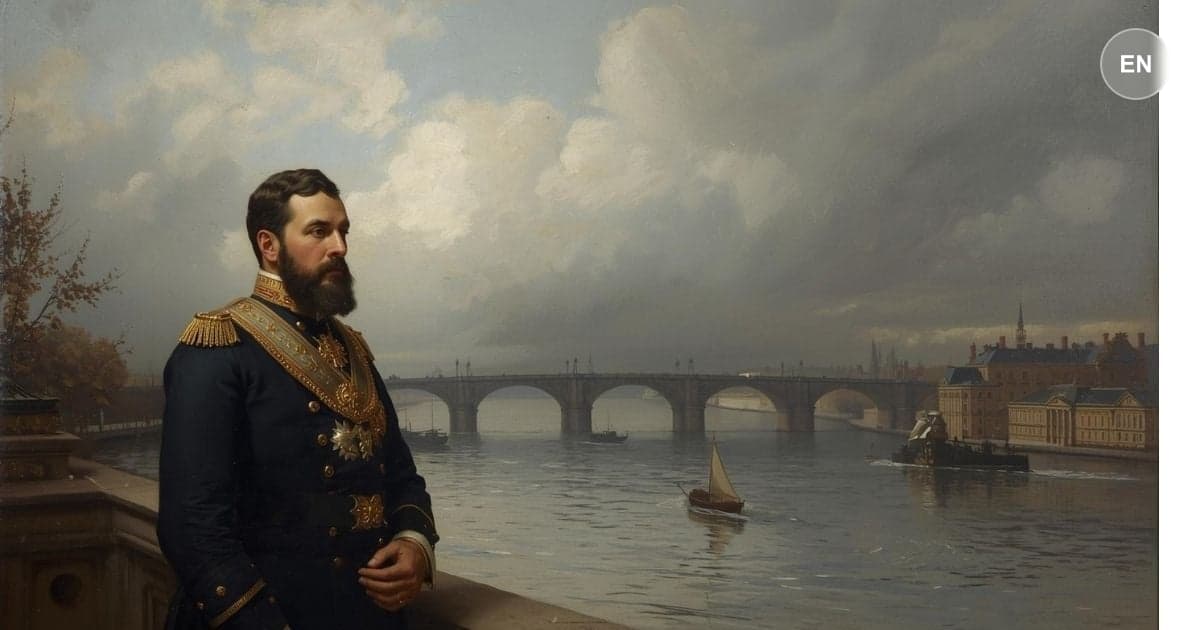
he next day the Emperor stopped at Wischau, and Villier, his physician, was repeatedly summoned to see him. At headquarters and among the troops near by the news spread that the Emperor was unwell. He ate nothing and had slept badly that night, those around him reported. The cause of this indisposition was the strong impression made on his sensitive mind by the sight of the killed and wounded.

At daybreak on the seventeenth, a French officer who had come with a flag of truce, demanding an audience with the Russian Emperor, was brought into Wischau from our outposts. This officer was Savary. The Emperor had only just fallen asleep and so Savary had to wait. At midday he was admitted to the Emperor, and an hour later he rode off with Prince Dolgorúkov to the advanced post of the French army.

1 / 10

Master this chapter. Complete your experience

Purchase the complete book to access all chapters and support classic literature

Read Free on GutenbergBuy at Powell'sBuy on Amazon

As an Amazon Associate, we earn a small commission from qualifying purchases at no additional cost to you.

Available in paperback, hardcover, and e-book formats

GO ADS FREE — JOIN US

Why This Matters

Connect literature to life

Skill: Reading Organizational Momentum

This chapter teaches how to recognize when institutional decisions create unstoppable chains of consequences, regardless of wisdom or warning signs.

Practice This Today

This week, notice when meetings generate excitement about plans that experienced workers quietly doubt—that's dangerous momentum building.

GO ADS FREE — JOIN US

Now let's explore the literary elements.

Key Quotes & Analysis

"To the joy and pride of the whole army, a personal interview was refused"

— Narrator

Context: When Alexander refuses to meet Napoleon directly

This shows how pride can be mistaken for strength. The army celebrates what they see as defiance, but it's actually the first step toward a catastrophic battle they're not ready for.

In Today's Words:

Everyone cheered when the boss refused to negotiate, thinking it made us look tough.

"Like a clock, the whole matter was definitely settled and irrevocably set in motion"

— Narrator

Context: Describing how the Emperor's decision creates unstoppable momentum

Tolstoy uses this mechanical metaphor to show how one decision triggers a chain reaction that no one can stop. It captures how organizations can become trapped by their own momentum.

In Today's Words:

Once the decision was made, everything started rolling downhill and there was no way to stop it.

"What do you think of our position? Tomorrow we shall probably be fighting"

— Prince Andrew

Context: Andrew asking Kutúzov about the upcoming battle

This simple question reveals the disconnect between those who see war as glorious and those who understand its reality. Andrew is seeking honest assessment from someone with experience.

In Today's Words:

So what do you really think about this situation we're walking into?

Thematic Threads

Class

In This Chapter

Young aristocrats like Dolgorukov dismiss Napoleon while experienced Kutuzov sees reality clearly

Development

Continues showing how social position can blind people to practical truths

In Your Life:

You might see this when new managers ignore veteran workers' warnings about workplace changes

Pride

In This Chapter

Alexander refuses to meet Napoleon, setting disaster in motion rather than appear weak

Development

Pride increasingly drives characters toward destructive choices

In Your Life:

You might recognize this when you continue a failing project because admitting mistakes feels impossible

Experience vs Youth

In This Chapter

Kutuzov's wisdom is dismissed while young officers' enthusiasm is celebrated

Development

Deepens the conflict between practical knowledge and confident inexperience

In Your Life:

You might see this when seasoned coworkers' concerns are brushed off for newer, more optimistic voices

Power

In This Chapter

Decisions made by those in power affect everyone below them, regardless of consequences

Development

Shows how power creates responsibility that leaders often ignore

In Your Life:

You might experience this when management decisions directly impact your daily work without considering your input

GO ADS FREE — JOIN US

You now have the context. Time to form your own thoughts.

Discussion Questions

  1. 1

    Why does Alexander refuse to meet with Napoleon's messenger, and what does Kutuzov predict will happen because of this decision?

    analysis • surface
  2. 2

    What does Tolstoy's clock metaphor reveal about how decisions create unstoppable momentum in organizations?

    analysis • medium
  3. 3

    Where have you seen the pattern of experienced voices being ignored while confident but inexperienced people drive decisions?

    application • medium
  4. 4

    When you recognize dangerous organizational momentum building around you, what strategies could you use to protect yourself and others?

    application • deep
  5. 5

    Why do people often choose pride and appearance over practical wisdom, even when the stakes are high?

    reflection • deep

Critical Thinking Exercise

10 minutes

Map the Momentum Machine

Think of a current situation in your workplace, family, or community where momentum is building toward a decision you suspect might be wrong. Draw or describe the 'gears' - who made the initial decision, what forces are pushing it forward, who benefits from continuing, and who gets hurt. Identify the 'Kutuzovs' whose warnings are being ignored.

Consider:

  • •Look for the difference between what people say publicly and what they admit privately
  • •Notice who has the most to lose if the current path continues
  • •Consider whether the momentum can still be stopped or if you need to focus on damage control

Journaling Prompt

Write about a time when you were either the ignored voice of experience or got caught up in dangerous momentum. What did you learn about speaking up versus protecting yourself?

Coming Up Next...

Chapter 61: The War Council's Deadly Dance

The great battle approaches as 160,000 men prepare for what will become one of Napoleon's most decisive victories. But first, we'll see the final preparations and hear more of Kutúzov's warnings that no one wants to hear.

Continue to Chapter 61
Previous
The Emperor's Eyes
Contents
Next
The War Council's Deadly Dance

Continue Exploring

War and Peace Study GuideTeaching ResourcesEssential Life IndexBrowse by ThemeAll Books
Power & CorruptionLove & RelationshipsIdentity & Self-Discovery

You Might Also Like

Anna Karenina cover

Anna Karenina

Leo Tolstoy

Also by Leo Tolstoy

The Idiot cover

The Idiot

Fyodor Dostoevsky

Explores love & romance

Moby-Dick cover

Moby-Dick

Herman Melville

Explores mortality & legacy

Dracula cover

Dracula

Bram Stoker

Explores love & romance

Browse all 47+ books

Share This Chapter

Know someone who'd enjoy this? Spread the wisdom!

TwitterFacebookLinkedInEmail

Read ad-free with Prestige

Get rid of ads, unlock study guides and downloads, and support free access for everyone.

Subscribe to PrestigeCreate free account
Intelligence Amplifier
Intelligence Amplifier™Powering Wide Reads

Exploring human-AI collaboration through books, essays, and philosophical dialogues. Classic literature transformed into navigational maps for modern life.

2025 Books

→ The Amplified Human Spirit→ The Alarming Rise of Stupidity Amplified→ San Francisco: The AI Capital of the World
Visit intelligenceamplifier.org
hello@widereads.com

WideReads Originals

→ You Are Not Lost→ The Last Chapter First→ The Lit of Love→ Wealth and Poverty→ 10 Paradoxes in the Classics · coming soon
Arvintech
arvintechAmplify your Mind
Visit at arvintech.com

Navigate

  • Home
  • Library
  • Essential Life Index
  • How It Works
  • Subscribe
  • Account
  • About
  • Contact
  • Authors
  • Suggest a Book
  • Landings

Made For You

  • Students
  • Educators
  • Families
  • Readers
  • Literary Analysis
  • Finding Purpose
  • Letting Go
  • Recovering from a Breakup
  • Corruption
  • Gaslighting in the Classics

Newsletter

Weekly insights from the classics. Amplify Your Mind.

Legal

  • Privacy Policy
  • Terms of Service
  • Cookie Policy
  • Accessibility

Why Public Domain?

We focus on public domain classics because these timeless works belong to everyone. No paywalls, no restrictions—just wisdom that has stood the test of centuries, freely accessible to all readers.

Public domain books have shaped humanity's understanding of love, justice, ambition, and the human condition. By amplifying these works, we help preserve and share literature that truly belongs to the world.

A Pilgrimage

Powell's City of Books

Portland, Oregon

If you ever find yourself in Portland, walk to the corner of Burnside and 10th. The building takes up an entire city block. Inside is over a million books, new and used on the same shelf, organized by color-coded rooms with names like the Rose Room and the Pearl Room. You can lose an afternoon. You can lose a weekend. You will find a book you have been looking for your whole life, and three you did not know existed.

It is a pilgrimage. We cannot find a bookstore like it anywhere on earth. If you read the classics, and you ever get the chance, go. It belongs on every reader's bucket list.

Visit powells.com

We are not in any way affiliated with Powell's. We are just a very big fan.

© 2026 Wide Reads™. All Rights Reserved.

Intelligence Amplifier™ and Wide Reads™ are proprietary trademarks of Arvin Lioanag.

Copyright Protection: All original content, analyses, discussion questions, pedagogical frameworks, and methodology are protected by U.S. and international copyright law. Unauthorized reproduction, distribution, web scraping, or use for AI training is strictly prohibited. See our Copyright Notice for details.

Disclaimer: The information provided on this website is for general informational and educational purposes only and does not constitute professional, legal, financial, or technical advice. While we strive to ensure accuracy and relevance, we make no warranties regarding completeness, reliability, or suitability. Any reliance on such information is at your own risk. We are not liable for any losses or damages arising from use of this site. By using this site, you agree to these terms.