Wide Reads
Literature MattersLife IndexEducators
Sign in
Where to Begin
War and Peace - Under Fire for the First Time

Leo Tolstoy

War and Peace

Under Fire for the First Time

Home›Books›War and Peace›Chapter 36
Previous
36 of 361
Next

Summary

Denisov's squadron of hussars faces their first real combat as French artillery opens fire on them while they attempt to destroy a bridge. The chapter captures the electric tension of soldiers under fire—the way cannon balls whistle overhead, how faces change when death becomes real, and the strange mixture of terror and exhilaration that combat brings. Young Rostov, eager to prove his courage, discovers that actual battle is nothing like his romantic imaginings. When ordered to help burn the bridge, he stumbles in the mud, falls behind, and feels like a coward while his comrades work under enemy fire. The mission succeeds—the bridge burns—but several hussars are wounded or killed by grapeshot. Rostov experiences a profound moment of clarity, gazing at the beautiful Danube landscape and realizing how precious life is when death lurks so close. He's convinced everyone noticed his fear and failure, but discovers that no one paid attention—they were all too focused on their own survival and duties. The chapter reveals how our internal experience of fear and inadequacy often goes unnoticed by others, who are dealing with their own struggles. It also shows how quickly the romanticized notion of glorious battle dissolves when faced with the brutal reality of flying metal and falling comrades.

Coming Up in Chapter 37

The aftermath of the bridge burning brings new challenges as the retreat continues. Rostov must grapple with what he's learned about himself and war, while the larger strategic situation develops around the scattered Russian forces.

Share it with friends

Previous ChapterNext Chapter
GO ADS FREE — JOIN US
Original text
complete·3,290 words
T

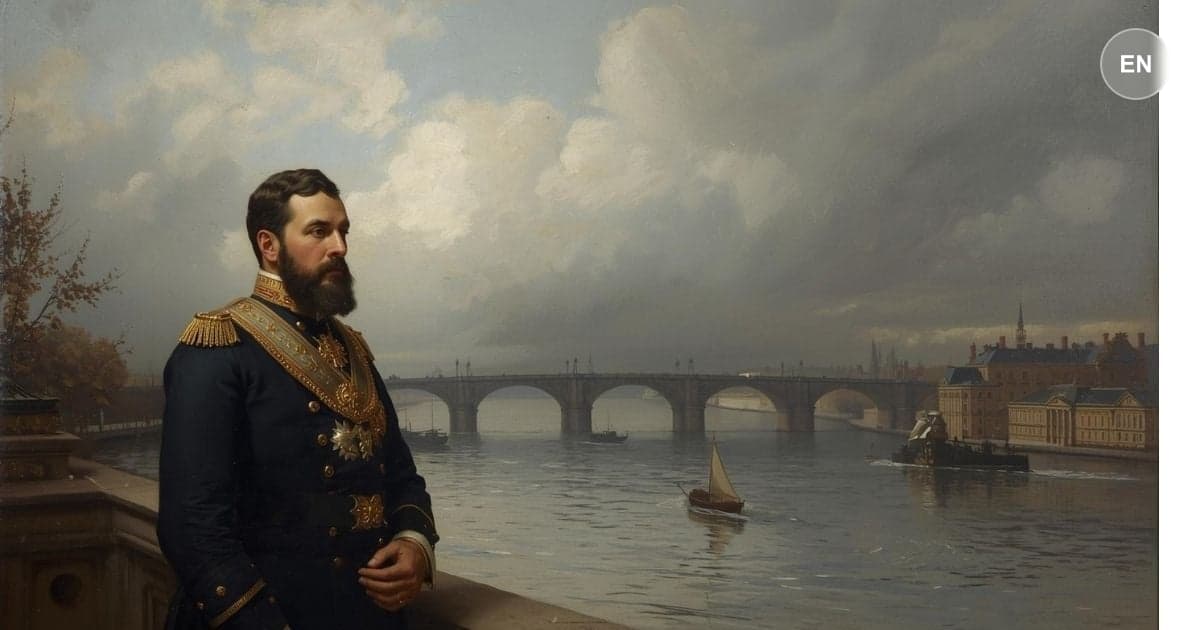
he last of the infantry hurriedly crossed the bridge, squeezing together as they approached it as if passing through a funnel. At last the baggage wagons had all crossed, the crush was less, and the last battalion came onto the bridge. Only Denísov’s squadron of hussars remained on the farther side of the bridge facing the enemy, who could be seen from the hill on the opposite bank but was not yet visible from the bridge, for the horizon as seen from the valley through which the river flowed was formed by the rising ground only half a mile away. At the foot of the hill lay wasteland over which a few groups of our Cossack scouts were moving. Suddenly on the road at the top of the high ground, artillery and troops in blue uniform were seen. These were the French. A group of Cossack scouts retired down the hill at a trot. All the officers and men of Denísov’s squadron, though they tried to talk of other things and to look in other directions, thought only of what was there on the hilltop, and kept constantly looking at the patches appearing on the skyline, which they knew to be the enemy’s troops. The weather had cleared again since noon and the sun was descending brightly upon the Danube and the dark hills around it. It was calm, and at intervals the bugle calls and the shouts of the enemy could be heard from the hill. There was no one now between the squadron and the enemy except a few scattered skirmishers. An empty space of some seven hundred yards was all that separated them. The enemy ceased firing, and that stern, threatening, inaccessible, and intangible line which separates two hostile armies was all the more clearly felt.

1 / 18

Master this chapter. Complete your experience

Purchase the complete book to access all chapters and support classic literature

Read Free on GutenbergBuy at Powell'sBuy on Amazon

As an Amazon Associate, we earn a small commission from qualifying purchases at no additional cost to you.

Available in paperback, hardcover, and e-book formats

GO ADS FREE — JOIN US

Why This Matters

Connect literature to life

Skill: Recognizing the Spotlight Effect

This chapter teaches how to distinguish between actual social judgment and the amplified shame our minds create when we make mistakes.

Practice This Today

This week, notice when you feel like everyone is watching your mistakes—then look around and see what others are actually focused on.

GO ADS FREE — JOIN US

Now let's explore the literary elements.

Key Quotes & Analysis

"All the officers and men of Denisov's squadron, though they tried to talk of other things and to look in other directions, thought only of what was there on the hilltop."

— Narrator

Context: As the soldiers wait under enemy observation before the battle begins

Shows how fear works - we try to act normal and distract ourselves, but our minds keep returning to the source of danger. It's a universal human response to threat.

In Today's Words:

Everyone was trying to act casual, but they couldn't stop thinking about the danger.

"The weather had cleared again since noon and the sun was descending brightly upon the Danube and the dark hills around it."

— Narrator

Context: Describing the beautiful landscape just before the violence begins

Tolstoy contrasts natural beauty with human violence. The world remains beautiful even as people prepare to kill each other - life goes on regardless of our conflicts.

In Today's Words:

It was a gorgeous day, which made the whole situation feel even more surreal.

"There was no one to be seen save a few Cossack scouts."

— Narrator

Context: Describing the empty landscape that will soon become a battlefield

The calm before the storm. This emptiness creates tension - we know violence is coming, but the peaceful scene makes it feel unreal and inevitable at the same time.

In Today's Words:

Everything looked normal and quiet, but you could feel something bad was about to happen.

Thematic Threads

Identity

In This Chapter

Rostov's self-image as a brave soldier crumbles when faced with real combat, forcing him to confront who he actually is versus who he thought he was

Development

Building from earlier romantic notions of military glory to harsh reality check

In Your Life:

You might recognize this when a new job or responsibility reveals gaps between your self-concept and your actual abilities

Social Expectations

In This Chapter

Rostov believes he must display courage to meet expectations of his fellow soldiers and his own social class

Development

Continues the theme of characters struggling to meet societal roles and expectations

In Your Life:

You see this when you feel pressure to appear competent or brave in situations where you're actually struggling or afraid

Personal Growth

In This Chapter

Combat strips away Rostov's illusions and forces rapid maturation through direct confrontation with mortality and his own limitations

Development

Part of ongoing character development through harsh experience rather than gradual learning

In Your Life:

You experience this during crisis moments that force you to grow up fast and abandon comfortable self-deceptions

Human Relationships

In This Chapter

Rostov discovers his comrades weren't judging his performance because they were focused on their own survival and duties

Development

Reveals how shared struggle can both isolate us in our own experience and connect us through common challenges

In Your Life:

You might notice this when you realize others aren't as focused on your mistakes as you thought because they're dealing with their own problems

GO ADS FREE — JOIN US

You now have the context. Time to form your own thoughts.

Discussion Questions

  1. 1

    What does Rostov expect battle to be like versus what he actually experiences when the artillery opens fire?

    analysis • surface
  2. 2

    Why is Rostov convinced that everyone noticed his fear and mistakes, and what does he discover about this assumption?

    analysis • medium
  3. 3

    Think about a time you felt embarrassed or made a mistake in public. How much attention do you think others actually paid to your stumble?

    application • medium
  4. 4

    When you're struggling with something difficult, how can you tell the difference between real feedback from others and your own internal shame spiral?

    application • deep
  5. 5

    What does this chapter reveal about how we experience our own failures versus how others perceive them?

    reflection • deep

Critical Thinking Exercise

10 minutes

The Spotlight Effect Reality Check

Think of a recent moment when you felt exposed, embarrassed, or like you failed publicly. Write down what you thought everyone else was thinking about you in that moment. Then flip the script: if you had witnessed someone else in that exact same situation, what would you actually have been thinking about? How much attention would you have really paid to their mistake?

Consider:

  • •Consider what you were personally dealing with during times when others around you made mistakes
  • •Think about how quickly you forget other people's small embarrassments versus how long you remember your own
  • •Notice the difference between how harshly you judge yourself versus how you judge others in similar situations

Journaling Prompt

Write about a time when you were certain everyone was judging you, but later realized they were too busy with their own concerns to notice your struggle. How did this realization change how you approach similar situations now?

GO ADS FREE — JOIN US

Coming Up Next...

Chapter 37: Victory's Hollow Taste

The aftermath of the bridge burning brings new challenges as the retreat continues. Rostov must grapple with what he's learned about himself and war, while the larger strategic situation develops around the scattered Russian forces.

Continue to Chapter 37
Previous
Chaos on the Bridge
Contents
Next
Victory's Hollow Taste

Continue Exploring

War and Peace Study GuideTeaching ResourcesEssential Life IndexBrowse by ThemeAll Books
Power & CorruptionLove & RelationshipsIdentity & Self-Discovery

You Might Also Like

Anna Karenina cover

Anna Karenina

Leo Tolstoy

Also by Leo Tolstoy

The Idiot cover

The Idiot

Fyodor Dostoevsky

Explores love & romance

Moby-Dick cover

Moby-Dick

Herman Melville

Explores mortality & legacy

Dracula cover

Dracula

Bram Stoker

Explores love & romance

Browse all 47+ books
GO ADS FREE — JOIN US

Share This Chapter

Know someone who'd enjoy this? Spread the wisdom!

TwitterFacebookLinkedInEmail

Read ad-free with Prestige

Get rid of ads, unlock study guides and downloads, and support free access for everyone.

Subscribe to PrestigeCreate free account
Intelligence Amplifier
Intelligence Amplifier™Powering Wide Reads

Exploring human-AI collaboration through books, essays, and philosophical dialogues. Classic literature transformed into navigational maps for modern life.

2025 Books

→ The Amplified Human Spirit→ The Alarming Rise of Stupidity Amplified→ San Francisco: The AI Capital of the World
Visit intelligenceamplifier.org
hello@widereads.com

WideReads Originals

→ You Are Not Lost→ The Last Chapter First→ The Lit of Love→ Wealth and Poverty→ 10 Paradoxes in the Classics · coming soon
Arvintech
arvintechAmplify your Mind
Visit at arvintech.com

Navigate

  • Home
  • Library
  • Essential Life Index
  • How It Works
  • Subscribe
  • Account
  • About
  • Contact
  • Authors
  • Suggest a Book
  • Landings

Made For You

  • Students
  • Educators
  • Families
  • Readers
  • Literary Analysis
  • Finding Purpose
  • Letting Go
  • Recovering from a Breakup
  • Corruption
  • Gaslighting in the Classics

Newsletter

Weekly insights from the classics. Amplify Your Mind.

Legal

  • Privacy Policy
  • Terms of Service
  • Cookie Policy
  • Accessibility

Why Public Domain?

We focus on public domain classics because these timeless works belong to everyone. No paywalls, no restrictions—just wisdom that has stood the test of centuries, freely accessible to all readers.

Public domain books have shaped humanity's understanding of love, justice, ambition, and the human condition. By amplifying these works, we help preserve and share literature that truly belongs to the world.

A Pilgrimage

Powell's City of Books

Portland, Oregon

If you ever find yourself in Portland, walk to the corner of Burnside and 10th. The building takes up an entire city block. Inside is over a million books, new and used on the same shelf, organized by color-coded rooms with names like the Rose Room and the Pearl Room. You can lose an afternoon. You can lose a weekend. You will find a book you have been looking for your whole life, and three you did not know existed.

It is a pilgrimage. We cannot find a bookstore like it anywhere on earth. If you read the classics, and you ever get the chance, go. It belongs on every reader's bucket list.

Visit powells.com

We are not in any way affiliated with Powell's. We are just a very big fan.

© 2026 Wide Reads™. All Rights Reserved.

Intelligence Amplifier™ and Wide Reads™ are proprietary trademarks of Arvin Lioanag.

Copyright Protection: All original content, analyses, discussion questions, pedagogical frameworks, and methodology are protected by U.S. and international copyright law. Unauthorized reproduction, distribution, web scraping, or use for AI training is strictly prohibited. See our Copyright Notice for details.

Disclaimer: The information provided on this website is for general informational and educational purposes only and does not constitute professional, legal, financial, or technical advice. While we strive to ensure accuracy and relevance, we make no warranties regarding completeness, reliability, or suitability. Any reliance on such information is at your own risk. We are not liable for any losses or damages arising from use of this site. By using this site, you agree to these terms.