Wide Reads
Literature MattersLife IndexEducators
Sign in
Where to Begin
War and Peace - The Myth of the Great Man

Leo Tolstoy

War and Peace

The Myth of the Great Man

Home›Books›War and Peace›Chapter 218
Previous
218 of 361
Next

Summary

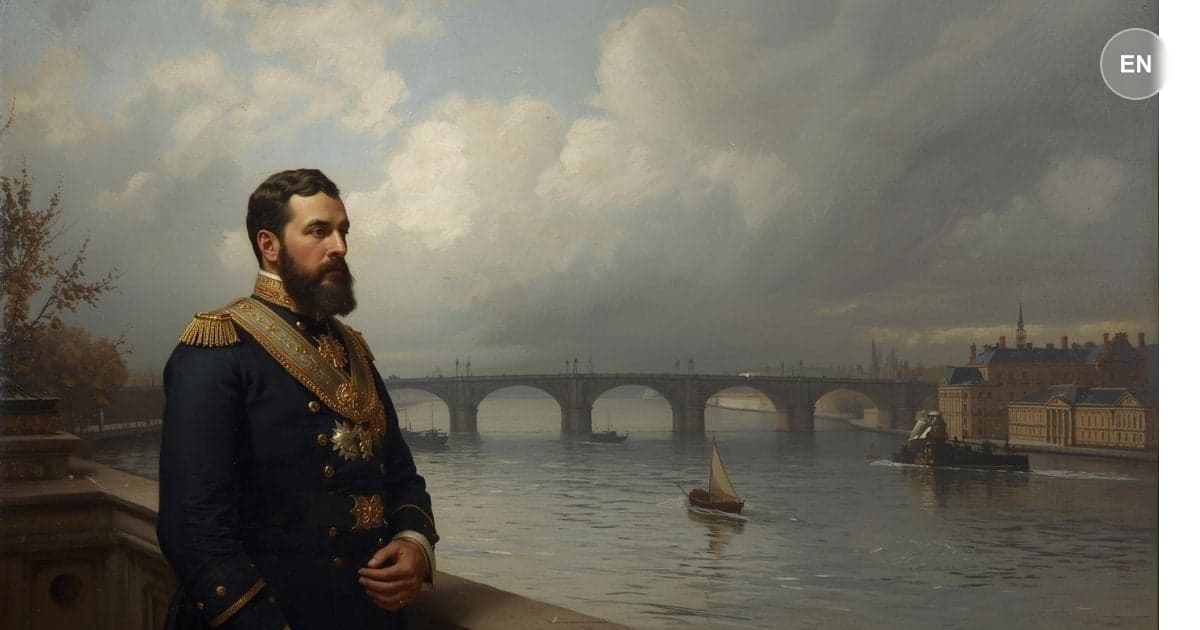
Tolstoy takes a philosophical hammer to one of history's biggest myths: that great events happen because of great individuals. Using Napoleon's cold at the Battle of Borodinó as his starting point, he argues that historians who claim Russia would have fallen if Napoleon hadn't been sick are missing the point entirely. The real story isn't about one man's sniffles—it's about hundreds of thousands of people making individual choices that collectively shaped history. Napoleon didn't personally shoot anyone at Borodinó. His soldiers fought not because he commanded them to, but because they were hungry, exhausted, and saw Moscow as their only hope for food and rest. They would have fought regardless of his orders. Even his famous battle plans weren't actually better or worse than usual—they just look terrible in hindsight because he lost. Tolstoy argues that Napoleon was essentially performing the role of a commander rather than actually commanding. He appeared calm and dignified, made reasonable-sounding decisions, but the real battle unfolded according to the collective will of everyone involved, not his personal genius. This chapter challenges our tendency to credit individual leaders with outcomes that result from complex social forces. It's a reminder that behind every 'great man' are countless ordinary people whose choices and actions actually drive events. Whether in war, business, or daily life, the person at the top often gets too much credit for success and too much blame for failure.

Coming Up in Chapter 219

Having demolished the myth of Napoleon's individual control over Borodinó, Tolstoy will continue exploring how historical forces really work, revealing the gap between how events appear to unfold and how they actually happen.

Share it with friends

Previous ChapterNext Chapter
GO ADS FREE — JOIN US
Original text
complete·1,082 words
M

any historians say that the French did not win the battle of Borodinó because Napoleon had a cold, and that if he had not had a cold the orders he gave before and during the battle would have been still more full of genius and Russia would have been lost and the face of the world have been changed. To historians who believe that Russia was shaped by the will of one man—Peter the Great—and that France from a republic became an empire and French armies went to Russia at the will of one man—Napoleon—to say that Russia remained a power because Napoleon had a bad cold on the twenty-fourth of August may seem logical and convincing.

1 / 7

Master this chapter. Complete your experience

Purchase the complete book to access all chapters and support classic literature

Read Free on GutenbergBuy at Powell'sBuy on Amazon

As an Amazon Associate, we earn a small commission from qualifying purchases at no additional cost to you.

Available in paperback, hardcover, and e-book formats

GO ADS FREE — JOIN US

Why This Matters

Connect literature to life

Skill: Detecting Leadership Theater

This chapter teaches how to distinguish between leaders who perform authority and those who actually create change.

Practice This Today

This week, notice when someone takes credit for group success—ask yourself who really did the work and what conditions made the outcome possible.

GO ADS FREE — JOIN US

Now let's explore the literary elements.

Key Quotes & Analysis

"If it had depended on Napoleon's will to fight or not to fight the battle of Borodinó, and if this or that other arrangement depended on his will, then evidently a cold affecting the manifestation of his will might have saved Russia"

— Narrator

Context: Tolstoy is setting up his argument against the great man theory

This quote shows the absurdity of crediting individual leaders with massive historical outcomes. If Napoleon's personal health could change world history, then history isn't really about grand strategy or deep causes.

In Today's Words:

If one person's bad day could change everything, then maybe that person wasn't really in control to begin with.

"the valet who omitted to bring Napoleon his waterproof boots on the twenty-fourth would have been the savior of Russia"

— Narrator

Context: Taking the great man theory to its logical extreme

Tolstoy pushes the individual-focused view of history to show how ridiculous it becomes. A servant's forgetfulness becomes more important than the decisions of millions of people.

In Today's Words:

By this logic, the intern who forgot to charge the CEO's phone saved the company from a bad deal.

"But to men who do not admit that Russia was formed by the will of one man, Peter I, or that the French Empire was formed by the will of one man, Napoleon"

— Narrator

Context: Introducing the alternative view that collective forces shape history

Tolstoy is setting up his main argument that nations and empires arise from complex social forces, not individual genius. He's challenging readers to think beyond the great man narrative.

In Today's Words:

But if you don't buy into the idea that one person can single-handedly build or destroy entire countries...

Thematic Threads

Power

In This Chapter

Napoleon's authority is revealed as performance rather than actual control over events

Development

Evolved from earlier depictions of aristocratic power to show even military command is largely illusion

In Your Life:

You might mistake your boss's authority for actual control when systemic issues affect your workplace

Class

In This Chapter

Common soldiers' individual choices collectively shape history more than aristocratic commanders

Development

Continues theme of working people's hidden influence on major events

In Your Life:

Your daily work decisions have more collective impact than you realize, even if you get no credit

Identity

In This Chapter

Napoleon performs the role of great leader while actual leadership happens elsewhere

Development

Builds on theme of people playing expected social roles rather than authentic selves

In Your Life:

You might be performing competence or authority at work while feeling uncertain inside

Social Expectations

In This Chapter

Society needs to believe in great men, so it creates myths about individual influence

Development

Extends earlier themes about society's need for simple explanations and clear hierarchies

In Your Life:

Others expect you to have more control over outcomes than you actually do

You now have the context. Time to form your own thoughts.

Discussion Questions

  1. 1

    According to Tolstoy, why does Napoleon's cold at Borodinó prove that individual leaders don't control historical events as much as we think?

    analysis • surface
  2. 2

    Why did Napoleon's soldiers fight at Borodinó - because of his orders, or because of their own desperate circumstances?

    analysis • medium
  3. 3

    Think about your workplace or family. Who gets credit for success, and who actually does the daily work that makes things function?

    application • medium
  4. 4

    When something goes wrong in your life, how do you decide whether to blame an individual person or examine the larger circumstances that created the problem?

    application • deep
  5. 5

    What does this chapter suggest about why we prefer simple explanations (like 'Napoleon had a cold') over complex ones (like analyzing supply chains and troop morale)?

    reflection • deep

Critical Thinking Exercise

10 minutes

Map the Invisible Power Structure

Choose a situation where you've seen someone get praised or blamed for an outcome. Draw two columns: 'Visible Leader' and 'Hidden Forces.' In the first column, list what the obvious person did. In the second, list all the behind-the-scenes people, circumstances, and systems that actually created the result. Look for patterns in who gets credit versus who does the work.

Consider:

  • •Consider both positive outcomes (who really deserved the credit?) and negative ones (what forces beyond individual control contributed?)
  • •Think about your own invisible contributions - where do you do essential work that goes unrecognized?
  • •Notice whether the 'leader' was performing authority (looking decisive, staying calm) rather than actually controlling the outcome

Journaling Prompt

Write about a time when you were either blamed for something beyond your control, or when your essential work went unrecognized while someone else got credit. How did that experience shape how you view leadership and responsibility?

Coming Up Next...

Chapter 219: The Night Before Battle

Having demolished the myth of Napoleon's individual control over Borodinó, Tolstoy will continue exploring how historical forces really work, revealing the gap between how events appear to unfold and how they actually happen.

Continue to Chapter 219
Previous
When Perfect Plans Meet Reality
Contents
Next
The Night Before Battle

Continue Exploring

War and Peace Study GuideTeaching ResourcesEssential Life IndexBrowse by ThemeAll Books
Power & CorruptionLove & RelationshipsIdentity & Self-Discovery

You Might Also Like

Anna Karenina cover

Anna Karenina

Leo Tolstoy

Also by Leo Tolstoy

The Idiot cover

The Idiot

Fyodor Dostoevsky

Explores love & romance

Moby-Dick cover

Moby-Dick

Herman Melville

Explores mortality & legacy

Dracula cover

Dracula

Bram Stoker

Explores love & romance

Browse all 47+ books

Share This Chapter

Know someone who'd enjoy this? Spread the wisdom!

TwitterFacebookLinkedInEmail

Read ad-free with Prestige

Get rid of ads, unlock study guides and downloads, and support free access for everyone.

Subscribe to PrestigeCreate free account
Intelligence Amplifier
Intelligence Amplifier™Powering Wide Reads

Exploring human-AI collaboration through books, essays, and philosophical dialogues. Classic literature transformed into navigational maps for modern life.

2025 Books

→ The Amplified Human Spirit→ The Alarming Rise of Stupidity Amplified→ San Francisco: The AI Capital of the World
Visit intelligenceamplifier.org
hello@widereads.com

WideReads Originals

→ You Are Not Lost→ The Last Chapter First→ The Lit of Love→ Wealth and Poverty→ 10 Paradoxes in the Classics · coming soon
Arvintech
arvintechAmplify your Mind
Visit at arvintech.com

Navigate

  • Home
  • Library
  • Essential Life Index
  • How It Works
  • Subscribe
  • Account
  • About
  • Contact
  • Authors
  • Suggest a Book
  • Landings

Made For You

  • Students
  • Educators
  • Families
  • Readers
  • Literary Analysis
  • Finding Purpose
  • Letting Go
  • Recovering from a Breakup
  • Corruption
  • Gaslighting in the Classics

Newsletter

Weekly insights from the classics. Amplify Your Mind.

Legal

  • Privacy Policy
  • Terms of Service
  • Cookie Policy
  • Accessibility

Why Public Domain?

We focus on public domain classics because these timeless works belong to everyone. No paywalls, no restrictions—just wisdom that has stood the test of centuries, freely accessible to all readers.

Public domain books have shaped humanity's understanding of love, justice, ambition, and the human condition. By amplifying these works, we help preserve and share literature that truly belongs to the world.

A Pilgrimage

Powell's City of Books

Portland, Oregon

If you ever find yourself in Portland, walk to the corner of Burnside and 10th. The building takes up an entire city block. Inside is over a million books, new and used on the same shelf, organized by color-coded rooms with names like the Rose Room and the Pearl Room. You can lose an afternoon. You can lose a weekend. You will find a book you have been looking for your whole life, and three you did not know existed.

It is a pilgrimage. We cannot find a bookstore like it anywhere on earth. If you read the classics, and you ever get the chance, go. It belongs on every reader's bucket list.

Visit powells.com

We are not in any way affiliated with Powell's. We are just a very big fan.

© 2026 Wide Reads™. All Rights Reserved.

Intelligence Amplifier™ and Wide Reads™ are proprietary trademarks of Arvin Lioanag.

Copyright Protection: All original content, analyses, discussion questions, pedagogical frameworks, and methodology are protected by U.S. and international copyright law. Unauthorized reproduction, distribution, web scraping, or use for AI training is strictly prohibited. See our Copyright Notice for details.

Disclaimer: The information provided on this website is for general informational and educational purposes only and does not constitute professional, legal, financial, or technical advice. While we strive to ensure accuracy and relevance, we make no warranties regarding completeness, reliability, or suitability. Any reliance on such information is at your own risk. We are not liable for any losses or damages arising from use of this site. By using this site, you agree to these terms.