Wide Reads
Literature MattersLife IndexEducators
Sign in
Where to Begin

Where to Begin — Classic Literature for Every Reader

Where to Begin

You Are Not the Wrong Kind of Reader

For anyone who has ever opened a great book, felt small, and put it back on the shelf. The fault was never yours. You were taught to read it the wrong way.

For original long-form books about paradox and the classics, explore The Paradoxes.

~2 min
Per chapter
~1 hr
Per book
106+
Classics

Wide Reads is not a summary.

Wide Reads is not a substitute.

Wide Reads is the spark. The book is the fire.

The Scenario

It All Starts With Wide Reads.

Two minutes per chapter. One afternoon per book. A lifetime of inheritance.

Picture it. You open a Wide Reads page on a Tuesday evening. You press play on the first chapter narration. It lasts two minutes. You let it play. You press play on the second. Two more minutes. You keep going. One hour later, sometimes two, you have heard the entire shape of a book that has been waiting a hundred years for you.

~2 min

per chapter narration

~1 hour

the whole shape of a book

106+

classics on the shelf

That is the catalyst. After the hour, you will know. Some of the books will not be for you. That is allowed. Not every classic deserves your reading time. Be selective. Be honest. Close the ones that do not speak.

But it is a shame to waste the greatest gift civilization has ever given. The library you inherit by being alive is older than your country, older than your language, older than every loss you have ever had. You do not have to read all of it. You only have to listen long enough to know which parts of it were written for you.

Three Confessions

You Already Half-Know the Book.

Three readers. Three classics they had been almost-reading for years. Three first encounters.

At Thirty-One

Wuthering Heights, Emily Brontë

I am thirty-one. I have never read Wuthering Heights. I have heard about it my whole adult life. A man I once dated called it the greatest love story ever written. A song I love is named after it. The cover has watched me from bookstore tables for ten years. I have opened it three times. The Yorkshire moors and the strange names and the spectral cold of the prose turned me back each time. I told myself I would read it one day. One day kept moving. Last month I read its Wide Reads page on a long flight. I learned it was not a love story at all. It was something stranger and harder and more honest. For the first time, I wanted to read it. Not to finish it. Not to say I had. To meet it. The book is on my list now in a way it never was before.

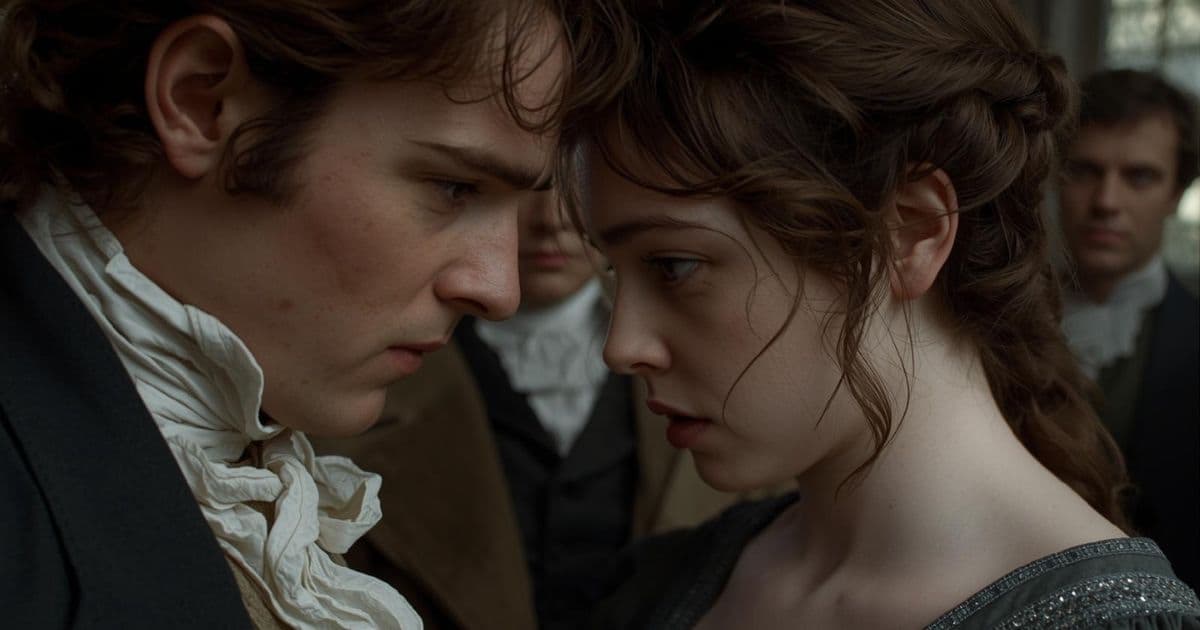
Listen to Chapter 1 of Wuthering Heights~2 min

At Forty-Five

Machiavelli and Sun Tzu

I am forty-five. I have never read The Prince. I have never read The Art of War. I have been quoting both books for twenty years. Every time someone in a meeting says the ends justify the means, that is Machiavelli. Every time a leadership podcast quotes the supreme art of war is to subdue the enemy without fighting, that is Sun Tzu. I have nodded. I have agreed. I have never opened either spine. I told myself I would get to them. Then I was lied to by a partner I trusted, and a colleague I respected destroyed his career out of spite, and the world started to feel like it had teeth. I read both Wide Reads pages in one weekend. Machiavelli was not a manual for sociopaths. He was a man who had watched his city fall, trying to teach survival. Sun Tzu was not a fortune cookie. He was a general who had seen what war does, trying to keep men out of it. I bought both books the next day. They are on my desk. They are next on the list.

Listen to Chapter 1 of The Prince~2 min

At Sixty-Three

Saint John of the Cross and the Book of Proverbs

I am sixty-three. I have never read Saint John of the Cross. I have heard the phrase the dark night of the soul my whole adult life. It comes up in sermons. It comes up in books I admire. Friends use it casually to describe a hard week. I have nodded as if I knew. I did not. And Proverbs, I had read four times in my life, the way you read a road sign, for direction, not for company. I did not know what to do with either book. Then last year I lost almost everything I had built. I could not pray. I could not stop crying. A friend mentioned the Wide Reads page on Saint John of the Cross. I read it on my phone in the parking lot of a hospital. I sat in the car for an hour after. The phrase I had used my whole life had a meaning I had never touched. The book is on my bedside table now. I have not opened it yet. I will. The same week I went back to Proverbs. For the first time in fifty-five years, I want to read it.

Listen to Chapter 1 of Dark Night of the Soul~2 min

The Seven Fears

Pick the One That Sounds Most Like You

You are probably more than one of these. That is fine. So was I.

  1. 1

    “I won't understand it.”

    The fault has never been yours. You were taught to read it the wrong way.

  2. 2

    “I'll be bored.”

    The book is patient because life is patient. We can show you which one is patient with you.

  3. 3

    “I won't finish.”

    You don't have to. A page can be enough. A paragraph can be enough.

  4. 4

    “I'll miss what's important.”

    The important thing is what stays with you after you close the book. That cannot be missed.

  5. 5

    “It's not for someone like me.”

    It was written for someone in your situation. We can show you which one.

  6. 6

    “It will be irrelevant.”

    The carriages change. The questions do not.

  7. 7

    “I'll have to read it like school.”

    You don't. Read it like a letter from a friend who survived.

The Pivot

Why the Fear Is Wrong, but Not in the Way You Expect

The fear treats the classic as a test. It assumes the book is sitting there, arms folded, waiting to grade you. Pass, and you join the club. Fail, and you confirm what you already suspected about yourself.

This is not what the classics are. It is not what they ever were. The Iliad was sung in rooms of people who could not read. The Brothers Karamazov was published in installments to magazine subscribers, like prestige television runs now. Pride and Prejudice was passed between sisters in a parsonage. None of these books were written for the version of you who is afraid she will look stupid. They were written for the version of you who is up at three in the morning wondering whether this life is the right one. They are letters from people who were also up at three.

The difficulty you are afraid of is not the price of admission. It is the texture of an honest letter. A letter that is true to the size of the question is going to take a while to read. A letter from someone who has been through what you are going through will not arrive as a clean paragraph. The classics are difficult because life is difficult, and the people who wrote them refused to lie to you about that.

You do not have to pass them.
You have to receive them.

How Wide Reads Works

A First Encounter, Not a Substitute

We do not replace the classic. We introduce you to it. What follows is a first meeting, made to send you to the original.

A first encounter, not a summary.

Every page we write is built to make you want the book in your hands. We do not condense. We do not retell. We light the match.

The classic, legible enough to begin.

What scares most readers is the first fifty pages. We give you a way in: the spine of the book, the heart of it, the question the author was actually asking.

The destination is the original.

If a Wide Reads page does its job, it sends you to buy the book. The classical joy of reading, slow and patient and unhurried, was always the point.

Seven Permissions

Sentences You Are Not Used to Seeing

Read these slowly. They are all true.

  • You can stop.
  • You can skip.
  • You can reread the same page until it makes sense.
  • You can read out of order.
  • You can read it slowly. Years slowly.
  • You can ask for help.
  • You can read a Wide Reads page, feel something real, and never buy the book. That counts.

Three Books to Start With

Pick by the Fear, Not by the Reputation

These are not duty picks. They are real entry points, chosen because they meet specific fears with specific kindness.

If you're afraid it will be boring

A Christmas Carol

by Charles Dickens

Short, propulsive, ghostly. You already know the ending, which removes the anxiety. What you do not know is how much of yourself is in Scrooge before he wakes.

Begin the encounterFind a copy

If you're afraid you'll feel stupid

Meditations

by Marcus Aurelius

Read one entry. Then close it. There is no plot to follow, no chapter to finish, no test to pass. The emperor of Rome wrote it for himself, and somehow also for you.

Begin the encounterFind a copy

If you're afraid it isn't for someone like you

Jane Eyre

by Charlotte Brontë

A poor, plain, parentless girl who refuses to apologize for existing. If you have ever felt like a tourist in a room you were told you did not belong in, this book was written for you.

Begin the encounterFind a copy

More Starting Points

Titles We Often Recommend Next

A short shelf of classics with full encounters in the library — pick one and treat it as a doorway, not homework.

Wuthering Heights cover
1

Wuthering Heights

by Emily Brontë

Recognize toxic love, understand obsession, and see the multigenerational effects of revenge.

Start the encounter
Pride and Prejudice cover
2

Pride and Prejudice

by Jane Austen

Navigate social dynamics, recognize manipulation, and understand the economics of relationships.

Start the encounter
The Awakening cover
3

The Awakening

by Kate Chopin

Break free from social expectations and navigate the cost of autonomy.

Start the encounter
Great Expectations cover
4

Great Expectations

by Charles Dickens

Recognize how expectations shape identity and find authentic self-worth.

Start the encounter
More featured titles

What Counts as Success

The Bar We Set for Ourselves

Wide Reads is not a summary. It is not a digest. It is not the kind of site where you read about the book so you can pretend you read the book. It is a first encounter, made carefully enough that the great work begins to wake something in you, and brief enough that you put it down and go find the original. The classics were written for the joy of reading them slowly, in your own chair, with your own life rising up between the pages. We exist to send you there.

If you walk away from a Wide Reads page wanting to buy the book, we have done our work. If you walk away without buying it, but carrying something real you did not have when you arrived, we have met our minimum. You did not get nothing. We have failed only if you walk away thinking you no longer need the book at all.

Popular Topics

Trending Themes

The life questions readers are exploring through classic literature.

Gothic Horror & Hidden Truths

Fear what's lurking in the shadows? Sensing danger but can't prove it? These Gothic masterpieces teach you to trust your instincts, recognize predatory behavior, and expose dangerous secrets before they destroy you.

Featured in

A Sicilian Romance cover

A Sicilian Romance

Dracula cover

Dracula

Dr. Jekyll and Mr. Hyde cover

Dr. Jekyll and Mr. Hyde

Love & Obsession

Can't let go of someone? Love turning toxic? Understand the line between passion and obsession, recognize unhealthy patterns, and learn when to walk away.

Featured in

Wuthering Heights cover

Wuthering Heights

Evelina cover

Evelina

Sense and Sensibility cover

Sense and Sensibility

Social Class & Mobility

Struggling with career advancement? Feeling trapped by your background? These classics decode the unwritten rules of social climbing and wealth that no one teaches you.

Featured in

Great Expectations cover

Great Expectations

Pride and Prejudice cover

Pride and Prejudice

Sense and Sensibility cover

Sense and Sensibility

Spirituality & Self Mastery

Feeling lost or disconnected from purpose? Overwhelmed by modern chaos? Master your inner world, find unshakeable peace, and build the discipline to transform your life.

Featured in

Dark Night of the Soul cover

Dark Night of the Soul

Interior Castle cover

Interior Castle

The Book of Job cover

The Book of Job

Identity & Self-Discovery

Lost in others' expectations? Wearing masks to fit in? Discover who you truly are beneath the roles society assigns you and find courage to live authentically.

Featured in

Jane Eyre cover

Jane Eyre

The Picture of Dorian Gray cover

The Picture of Dorian Gray

The Great Gatsby cover

The Great Gatsby

The Brontë Sisters

Three sisters who revolutionized literature from a Yorkshire parsonage. They wrote about passionate women who refused to be tamed — raw, Gothic, and utterly modern.

Featured in

Wuthering Heights cover

Wuthering Heights

Jane Eyre cover

Jane Eyre

The Tenant of Wildfell Hall cover

The Tenant of Wildfell Hall

The Immortal Austen

The master of social intelligence. Jane Austen decoded human nature with surgical precision — teaching us to read between the lines, spot manipulation, and balance head with heart.

Featured in

Pride and Prejudice cover

Pride and Prejudice

Sense and Sensibility cover

Sense and Sensibility

Emma cover

Emma

Dostoevsky: Moral Extremes

The psychologist of the soul. Dostoevsky dragged humanity's darkest impulses into the light: guilt, redemption, suffering, faith, and the terrifying freedom of moral choice.

Featured in

Crime and Punishment cover

Crime and Punishment

The Brothers Karamazov cover

The Brothers Karamazov

The Idiot cover

The Idiot

Power & Corruption

Dealing with toxic leadership? Watching corruption unfold? Learn to recognize manipulation, protect yourself from power games, and navigate corrupt systems without losing your soul.

Featured in

The Prince cover

The Prince

Richard III cover

Richard III

Crime and Punishment cover

Crime and Punishment

Two Doors, Both Honest

Take the one that fits the night you're having.

One door sends you to the library, where the encounters live. The other sends you to a bookseller, where the fire waits. Either is a real beginning.

Browse the LibraryFind a Classic at a Bookseller
Intelligence Amplifier
Intelligence Amplifier™Powering Wide Reads

Exploring human-AI collaboration through books, essays, and philosophical dialogues. Classic literature transformed into navigational maps for modern life.

2025 Books

→ The Amplified Human Spirit→ The Alarming Rise of Stupidity Amplified→ San Francisco: The AI Capital of the World
Visit intelligenceamplifier.org
hello@widereads.com

WideReads Originals

→ You Are Not Lost→ The Last Chapter First→ The Lit of Love→ Wealth and Poverty→ Wisdom for the Wounded
Arvintech
arvintechAmplify your Mind
Visit at arvintech.com

Navigate

  • Home
  • Library
  • Essential Life Index
  • How It Works
  • Subscribe
  • Account
  • About
  • Contact
  • Authors
  • Suggest a Book
  • Landings

Made For You

  • Trending
  • Students
  • Educators
  • Families
  • Readers
  • Literary Analysis
  • Finding Purpose
  • Letting Go
  • Recovering from a Breakup
  • Corruption
  • Gaslighting in the Classics

Newsletter

Weekly insights from the classics. Amplify Your Mind.

Legal

  • Privacy Policy
  • Terms of Service
  • Editorial Standards
  • Cookie Policy
  • Accessibility

Why Public Domain?

We focus on public domain classics because these timeless works belong to everyone. No paywalls, no restrictions—just wisdom that has stood the test of centuries, freely accessible to all readers.

Public domain books have shaped humanity's understanding of love, justice, ambition, and the human condition. By amplifying these works, we help preserve and share literature that truly belongs to the world.

A Pilgrimage

Powell's City of Books

Portland, Oregon

If you ever find yourself in Portland, walk to the corner of Burnside and 10th. The building takes up an entire city block. Inside is over a million books, new and used on the same shelf, organized by color-coded rooms with names like the Rose Room and the Pearl Room. You can lose an afternoon. You can lose a weekend. You will find a book you have been looking for your whole life, and three you did not know existed.

It is a pilgrimage. We cannot find a bookstore like it anywhere on earth. If you read the classics, and you ever get the chance, go. It belongs on every reader's bucket list.

Visit powells.com

We are not in any way affiliated with Powell's. We are just a very big fan.

© 2026 Wide Reads™. All Rights Reserved.

Intelligence Amplifier™ and Wide Reads™ are proprietary trademarks of Arvin Lioanag.

Copyright Protection: All original content, analyses, discussion questions, pedagogical frameworks, and methodology are protected by U.S. and international copyright law. Unauthorized reproduction, distribution, web scraping, or use for AI training is strictly prohibited. See our Copyright Notice for details.

Disclaimer: The information provided on this website is for general informational and educational purposes only and does not constitute professional, legal, financial, or technical advice. While we strive to ensure accuracy and relevance, we make no warranties regarding completeness, reliability, or suitability. Any reliance on such information is at your own risk. We are not liable for any losses or damages arising from use of this site. By using this site, you agree to these terms.