
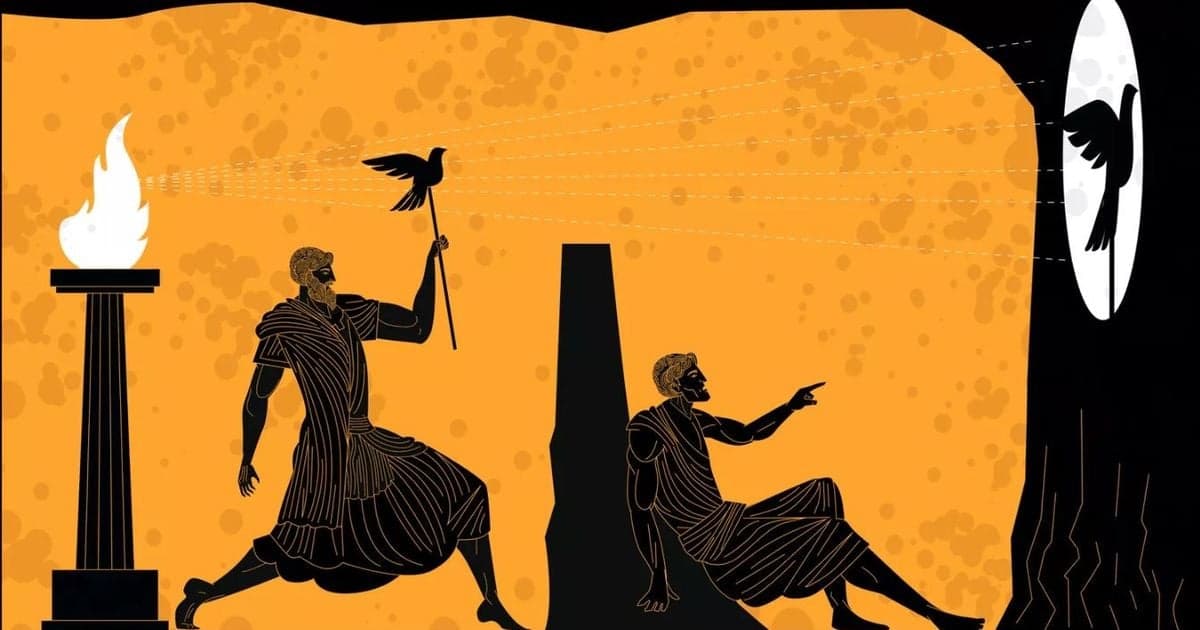
The Republic looks like a book about an ideal state. It is a book about an inner constitution that is easier to deny than a skyline. Socrates builds a city so the letters of justice will be large. Then he says the same letters are written in you: a calculating part, a spirited part, and a hungry part. They will not stay in a truce because you have good manners. They will write laws. You will call those laws your personality.
Leontius, walking up from the Piraeus, wants to stare at corpses and is furious at himself for wanting it. That small scene is the whole theory in one body. Appetite lunges. Spirit takes reason's side, or it sells itself to the lunge. Most of what we call willpower is just spirit yelling. Plato wants something colder: an agreement about who governs. Temperance is that agreement, not the volume of the yell.
Book 9's beast, lion, and man is the same claim with teeth. From the outside you look like one person. Inside, a government is always in session. The tyrant is only the case where the beast has a standing army. The life skill is not crushing desire. It is noticing which part is currently on the throne, and restoring the man to office before the lion has been hired as the beast's guard.
The Central Lesson
You are already a city. Reason, spirit, and appetite are not metaphors for moods. They are offices, and one of them is always writing the laws you will have to inhabit. Justice, in Plato, is each part doing its own work rather than seizing the others. Ruling yourself first is not a war on desire. It is restoring a constitution before the beast hires the lion and the man is locked underneath a face that still looks like yours.
Applying This to Your Life
Name Tonight's Government
Before a decision you already half regret, ask which part is writing the law: appetite, spirit, or reason. If you cannot tell, the beast is probably speaking in the man's voice. Naming the office is the first check on it.
Aim at Agreement, Not a Civil War
Spirit screaming at appetite is not temperance. It is a riot. Temperance, in Plato, is the worse and the better agreeing about who should rule. Build a smaller yes for appetite so it does not have to seize the state. Starved parts stage coups.
Suspect the Philosophy of the Part in Charge
Whatever is ruling you will have an ideology. Honor-lovers have a theory of respect. Profit-lovers have a theory of realism. Ask whether you would still endorse the theory if a different part were on the throne. That is the beginning of the man's job.
Other lessons in this book
More life-skill deep dives from the same classic.
How Good People Become Bad Systems
Catch the moment a real virtue (honor, thrift, freedom) stops governing and starts colonizing everything else.
2 chapters·Explore AnalysisOwning the Life You Choose
Read the Tuesday inside the prize before you grab it, and stop transferring the blame for the pick.
4 chapters·Explore AnalysisThe Cave
Notice which contest you are currently ranked in, and whether it only works if nobody turns toward the fire.
4 chapters·Explore AnalysisWhat Makes a Leader Worth Following
Separate the fight for the helm from the craft of reading weather, and follow the person who can steer without milking the chair.
4 chapters·Explore AnalysisWhy Be Good When You Could Get Away With It
Treat Glaucon's ring as a weekly test: would this still be your rule if no one could check, and the just man still went to the rack?
5 chapters·Explore Analysis
Continue exploring
Explore this theme
The same lessons in other books
See how other books teach the same life skills.

Les Misérables: Essential Edition
Navigating Poverty and Social ClassTrace Fantine from 1817 hope to factory gossip, and the class that treats need as indictment.
The Jungle
Reading Graft as Everyday GovernmentStay with Duane's cell and chapter 25: votes, inspectors, and a city that prices justice.
Hard Times
Understanding Worker DignityWatch Stephen refuse both mill-owner and union when each side treats him as a unit, and see what integrity costs when neither camp will have you.
Where the lesson lives in the book
A City So You Can See a Soul
Socrates proposes looking for justice in a city first, because the letters are larger there. The move is easy to misread as political blueprints. It is a method. If a person is a small city, you can watch classes quarrel in public and then recognize the same quarrel when you cannot sleep. The founding of the city in speech is already an inner project wearing outer clothes.
Key Insight:
When you cannot see your own factions, look at the groups you build. The way you run a team, a household, or a calendar is often a clearer picture of your soul than your stated principles. Plato starts large so the pattern can be admitted before it is personal.
Three Parts, One Civil War
The city has craftsmen, auxiliaries, and rulers. The soul, Socrates says, has appetite, spirit, and reason. Leontius walking up from the Piraeus wants to look at corpses and is angry at himself for wanting it. That anger is spirit taking reason's side against appetite. Justice is not a contract with neighbors. It is each part doing its own work: reason ruling, spirit allied with it, appetite satisfied without seizing the government.
Key Insight:
Self-control is not a war on desire. It is a constitution. Appetite is not the enemy. Appetite as monarch is. Spirit is not the hero. Spirit as a hired thug for appetite is. The skill is noticing which part is currently writing the laws you will have to live under tomorrow.
“The just man does not permit the several elements within him to interfere with one another.”
The Other Virtues Are Positions, Not Moods
Wisdom is the rulers' knowledge of what is good for the whole. Courage is the auxiliaries' preservation of the right belief about what is to be feared. Temperance is a harmony: the agreement of the worse and the better about who should rule. These are not decorations around justice. They are what a well-ordered city, and a well-ordered person, looks like when each part is in its office.
Key Insight:
If your discipline is only spirit screaming at appetite, you do not have temperance. You have a riot with a slogan. Temperance is the agreement, not the volume. Courage is holding a true belief about danger, not performing fearlessness. Wisdom is knowledge of the whole, not a clever tactic for one part.
The Beast, the Lion, and the Man
Socrates builds an image of the soul: a many-headed beast, a lion, and a man, fitted into a human shape so the outside looks single. Injustice is feeding the beast and starving the man, or teaching the lion to take the beast's side. Justice is the man tending the beast as a farmer tends stock, making the lion his ally, and keeping the inner city from eating itself. The tyrant is the opposite arrangement made permanent.
Key Insight:
You already know this picture from the inside. The day the beast writes the schedule and the lion enforces it, you still look like one person at dinner. Plato's image is a diagnostic you can run without a palace: who is actually governing, and who is only the face?
“We must do everything we can to give the man within us complete domination over the entire man.”
Which Life Is Actually Pleasant
The philosopher, the honor-lover, and the profit-lover each claim their life is the pleasantest. Socrates argues that only the person who has tasted the others can judge, and that the calculating part's pleasures are the only ones that do not require a lie about what they are. The argument is not that money and honor are fake. It is that they make bad monarchs, and a monarch who is a bad judge of pleasure will call his own hunger happiness.
Key Insight:
People defend the part of themselves that is currently in charge. If appetite is ruling, you will have a philosophy of appetite and call it honesty. If spirit is ruling, you will have a philosophy of winning and call it standards. Ruling yourself first includes suspicion toward the story the current government is selling.