Strength Through Surrender
Dark Night of the Soul · Interior Castle · Job

Loading...
Prestige · $2.99/month
Chapter audio, theme analysis, and downloads
paradox.widereads.com
Drawing wisdom from humanity's greatest literature
Intro
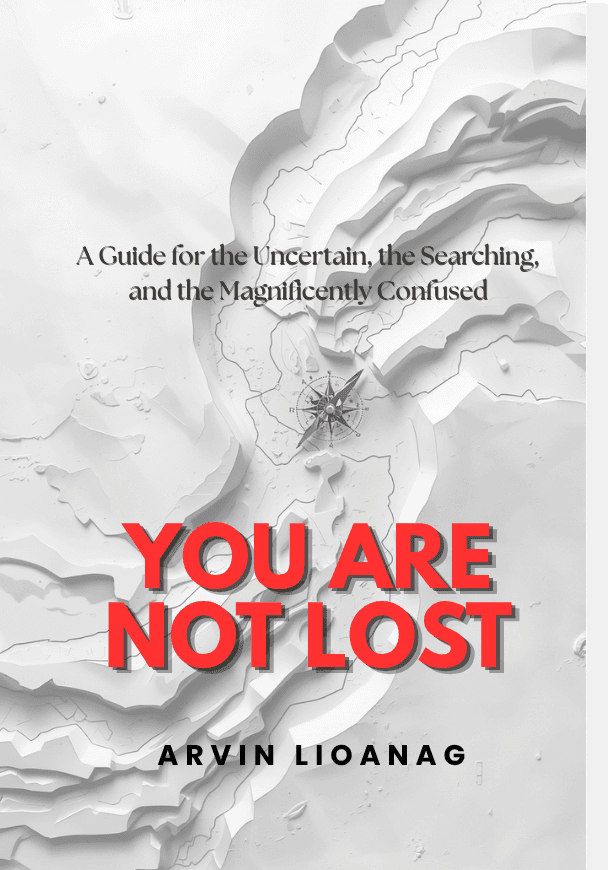
A Guide for the Uncertain, the Searching, and the Magnificently Confused
Arvin Lioanag
17 chapters · 6 interludes · Epilogue · 49,285 words
The Ten Paradoxes from Those Who Knew Pain
Arvin Lioanag
10 essays · In progress
Understanding Love Through the Greatest Stories Ever Told
Arvin Lioanag
18 chapters · 7 parts · 44,600 words
The wisdom that contradicts itself — and works anyway.
The books that have outlived three thousand years did not survive because they were comforting.
They survived because they told the truth the way paradoxes tell it — on both sides at once.
Modern advice sells clarity: optimize, hustle, find your passion, take the ten steps. The Stoics, the Taoists, the Buddhists, the Greeks, the mystics — the traditions that outlasted every empire that tried to bury them — taught the opposite. Surrender to strengthen. Act without grasping. Lose yourself to find yourself. Know only that you know nothing. The contradictions are not decorative. They are the lesson.
Before the gurus. Before the TED Talks. Before productivity was a shelf, the ancient books were already holding the tensions that no framework can resolve — only hold.
These pages collect those tensions, one paradox at a time.
Ancient wisdom is astonishingly effective at modern problems (career, relationships, mental health) precisely because it predates our modern framing of them. The people who knew us best never met us. The current copy leans here — "Before the gurus. Before the TED Talks."
The wisdom is free, old, and everywhere — and almost no one actually extracts it. The books sit on shelves unread; the "self-help" industry repackages diluted versions for money. The public-domain stance and free access lean into this one.
The traditions themselves teach a set of genuine paradoxes: act without grasping outcomes; lead by stepping back; the way to strength is through weakness; knowing you know nothing is the beginning of knowing. This is the meat of the wisdom itself — Wu Wei, kenosis, the Socratic paradox, Krishna's instruction to Arjuna, Ecclesiastes, the Beatitudes, Lao Tzu.
#3 is the biggest untapped asset and would give the site a distinctive editorial voice. The paradox angle is the thing self-help can't copy, because self-help is allergic to paradox.
Visual artifact
Ten paradoxes, the classics that teach each one, and one interactive diagram — hover any node to trace the lineage. Use the zoom controls inside the frame, scroll to zoom where supported, then drag to pan.
The full map displays on desktop. Here is the list view.
Act Without Attachment
Strength Through Surrender
Know That You Know Nothing
Lose Yourself to Find Yourself
Less Is More
The Wound Is Where Light Enters
The Fool Is Wiser Than the Clever
Memento Mori Makes You Live
The Longest Way Round Is Shortest
Lead by Stepping Back
A dedicated hub that sits alongside Themes. Each paradox is a short, well-written essay page that (a) states the paradox in plain language, (b) shows which classics teach it and where exactly, (c) translates it into a modern decision the reader might be facing this week.
Dark Night of the Soul · Interior Castle · Job
Bhagavad Gita · Enchiridion
Tao Te Ching · The Prince (read against the grain)
Crime and Punishment · The Odyssey
Siddhartha · Jane Eyre
Ecclesiastes · Tao Te Ching
King Lear · The Idiot · Socratic dialogues
The Last Chapter First · Letters from a Stoic
The Odyssey · Great Expectations
The Republic · Apology
Welcome · A Series of Five Books
Here we rendezvous with the classics and the ancients — and let them prove, again, the wisdom that the modern world has fogged.
The Alchemy
This is the alchemy of the Paradox Series: we take the lead of modern confusion — the noise, the burnout, the lostness, the ache around money and love and time — and we hold it against the gold the ancients already mined. Seneca on time. Aurelius on control. Lao Tzu on yielding. Dostoevsky on regret. Each book picks one human paradox and reads it through a chorus of voices that out-lived empires. Nothing here is new. Everything here was waiting. The transmutation is yours: same ore, older fire, clearer life.
You Are Not Lost is the front door — the introductory volume that names the territory the rest of the series walks through.
Print edition
Available now on Amazon
A note on this printed edition
Meant to be held, marked, and passed on. The complete edition, with end-notes, linked sources, and search, lives online, free.
Read while you listen, or just listen. The door opens both ways.
Share it, gift it, meet others with empathy and whatever wisdom you've found. That's part of the process.
In the Months Ahead
Released one at a time, free online, sourced transparently — built to be sat with, not skimmed.
If you only have one evening, start with the door already open. You are not late, you are not behind, and — as the title quietly insists — you are not lost.
The Paradox Series sits inside Wide Reads — a growing library of the classics, opened up chapter by chapter, with audio, source notes, and life-skill themes drawn out plainly. Marcus Aurelius and Lao Tzu live on the same shelf as Austen and Tolstoy; Dostoevsky beside Walden; Job beside the Tao Te Ching.
The point isn't to finish them. The point is to find yourself in them. Wander in. Open whichever cover catches you. The door is always open, and the books are always free.
Newest in the Library