
The Republic ends with a soldier who dies, watches souls pick their next lives, and is sent back to tell the living. The prophet's line is the whole book in one sentence: the blame is his who chooses; God is blameless. That is not comfort. It is a refusal to let you keep the scenery and lose the responsibility. Glaucon had already stripped the scenery in Book 2. Er strips it again after death. In both rooms, you still have to pick.
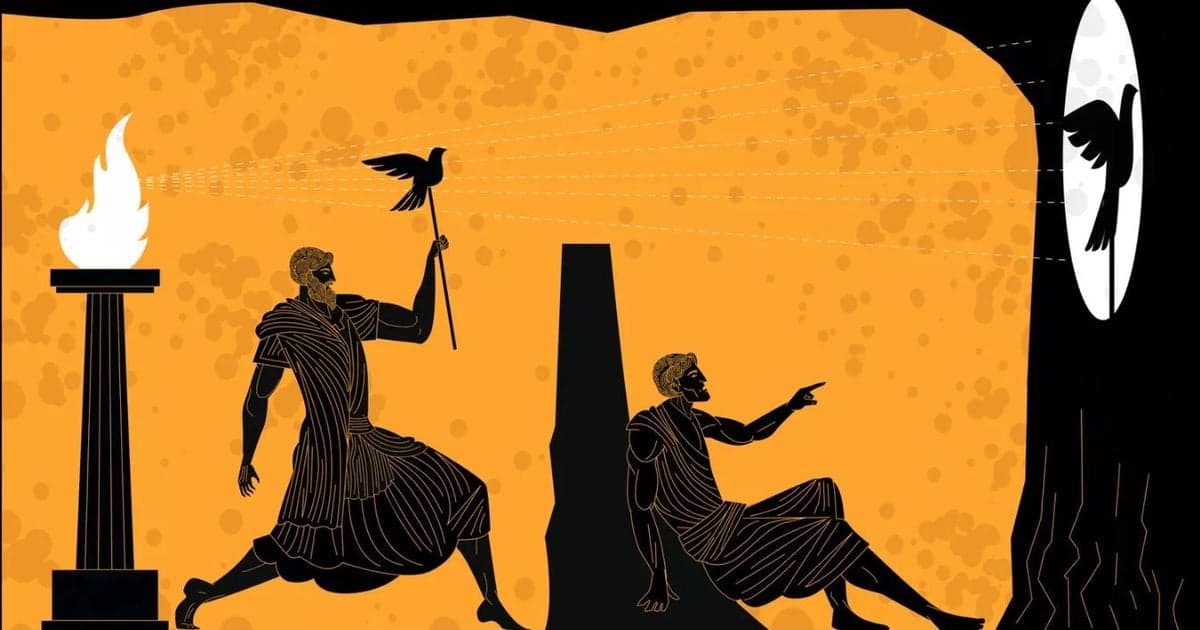
The souls who grab tyranny are not cartoon villains. They are people who have not learned to read a life except as a prize. They see power the way the cave sees a shadow: as the obvious good. Then they open the lot and find the fate inside it. Odysseus, who has already worn enough lives, looks for a quiet private one. Wisdom here is not a bigger appetite. It is a better literacy about what a life actually contains.
You will not get Er's meadow. You will get ordinary Tuesdays that compound. The tyrant of Book 9 was chosen in installments. The prisoner of Book 7 chose a world before he chose a prize. Owning the life you choose means catching the pick while it still looks like a small permission, and refusing to transfer the blame to luck, to the city, or to a god who, in Plato's story, already declined to carry it.
The Central Lesson
A life is a choice that keeps being made, often in rooms where the lighting is flattering and the prize is easy to see. Glaucon strips the lighting. Er strips it again and adds the sentence Plato will not soften: the blame is his who chooses. You cannot hand that sentence to luck, to a city, or to a god. You can only get better at reading what a life contains before you grab it, and at noticing the small permissions that are already choosing for you.
Applying This to Your Life
Read the Fate Inside the Prize
Before you take a role, a relationship, or a revenge that looks like winning, write the Tuesday it contains: who you have to become, who you have to fear, what you will not be able to say. The souls who grabbed tyranny failed this literacy. The prize was visible. The life inside it was not.
Catch the Installment, Not Only the Ending
Name one exception you have been calling temporary. Plato's tyrant is compound interest. If you cannot see the installment, you will call the later life something that happened to you. It did not. It accrued.
Stop Transferring the Blame
You can tell the truth about unfair menus: class, luck, a city that killed its teacher. Plato still will not let the chooser disappear. Keep the injustice of the menu and the responsibility of the pick in the same sentence. Dropping either one is a kind of forgetting.
Other lessons in this book
More life-skill deep dives from the same classic.
How Good People Become Bad Systems
Catch the moment a real virtue (honor, thrift, freedom) stops governing and starts colonizing everything else.
2 chapters·Explore AnalysisRuling Yourself First
Read reason, spirit, and appetite as offices in an inner city, and notice which one is writing tonight's laws.
3 chapters·Explore AnalysisThe Cave
Notice which contest you are currently ranked in, and whether it only works if nobody turns toward the fire.
4 chapters·Explore AnalysisWhat Makes a Leader Worth Following
Separate the fight for the helm from the craft of reading weather, and follow the person who can steer without milking the chair.
4 chapters·Explore AnalysisWhy Be Good When You Could Get Away With It
Treat Glaucon's ring as a weekly test: would this still be your rule if no one could check, and the just man still went to the rack?
5 chapters·Explore Analysis
Continue exploring
Explore this theme
The same lessons in other books
See how other books teach the same life skills.

Les Misérables: Essential Edition
Navigating Poverty and Social ClassTrace Fantine from 1817 hope to factory gossip, and the class that treats need as indictment.
The Jungle
Reading Graft as Everyday GovernmentStay with Duane's cell and chapter 25: votes, inspectors, and a city that prices justice.
Hard Times
Understanding Worker DignityWatch Stephen refuse both mill-owner and union when each side treats him as a unit, and see what integrity costs when neither camp will have you.
Where the lesson lives in the book
Glaucon Makes You Choose Naked
Before any myth of the afterlife, Glaucon already forces a choice. He will not let justice hide behind wages. Pick the just life with the rack, or the unjust life with the crown. The thought experiment is a rehearsal for Book 10: you do not get to keep the scenery that makes your choice look obvious. Character is what remains when the scenery is stripped.
Key Insight:
We like to choose a life with the lighting still on: applause, salary, a story that will play well. Glaucon turns the lights off. If you would not pick this character without the lighting, you have not chosen a life. You have chosen a set.
Turning Is Already a Choice of World
The prisoner does not vote in an election. He is dragged, then he sees, then he goes back. Still, the cave is a picture of what you take to be real, and what you take to be real governs every later pick. Education, for Plato, is not information. It is a conversion of what counts as a life worth wanting. If your world is the wall, you will choose wall-prizes with a clear conscience.
Key Insight:
People think they are choosing careers, partners, and sides. Often they are only choosing within a picture they never examined. The cave says the first responsibility is for the picture. Without that, later choices are just shopping in a prison commissary.
The Tyrant's Life Was Chosen in Installments
Nobody sits down at eighteen and selects tyrant. They select relief, then more relief, then a protector for the relief, then a bodyguard for the protector. Book 9's slave-king is the compound interest of small permissions. The life you will have to own is often assembled out of exceptions you told yourself were temporary.
Key Insight:
Responsibility is not only for the dramatic fork. It is for the sequence. If you cannot name the installment that made the next one feel necessary, you will keep calling the end of the sequence fate. Plato's tyrant is a warning about compound interest in character.
Poets, and the Lives They Rehearse
Before Er, Socrates sends Homer out of the city. Imitation trains the soul in the feelings it rehearses. A culture that feeds on lament, rage, and clever injustice is already choosing lives in dress rehearsal. The ban is harsh. The diagnosis is not: you become a little like what you keep practicing in the dark of a story.
Key Insight:
You are already picking lives by what you binge, quote, and laugh at. That is not a call for a barren inner life. It is a call to notice which characters you are letting your spirit ally with. Practice is not neutral just because it is entertainment.
The Meadow Where Blame Stops Transferring
Er dies in war, sees the machinery of reward, and watches souls choose their next lives. A prophet announces that virtue has no master: each will choose, and the blame is the chooser's. God is blameless. Some, still filthy from a bad life, grab the greatest tyranny they can see and wail when they inspect the fate inside it. Odysseus, last, looks for the life of a private man who minds his own business. They drink the river of Unheeding, and forget. Er is sent back as a messenger.
Key Insight:
The myth is not a proof of reincarnation. It is a picture of the one thing Plato will not let you outsource: the shape of a life. You can blame teachers, cities, gods, and luck for the menu. You cannot blame them for the picking. Forgetting, in the story, is what makes the next life feel like it happened to you. Remembering is the skill.
“The blame is his who chooses: God is blameless.”