Wide Reads
Literature MattersLife IndexEducators
Sign in
Where to Begin
The Republic - The Festival and the First Question

Plato

The Republic

The Festival and the First Question

Home›Books›The Republic›Chapter 1
1 of 10
Next

Summary

The Festival and the First Question

The Republic by Plato

0:000:00
Listen to Next Chapter

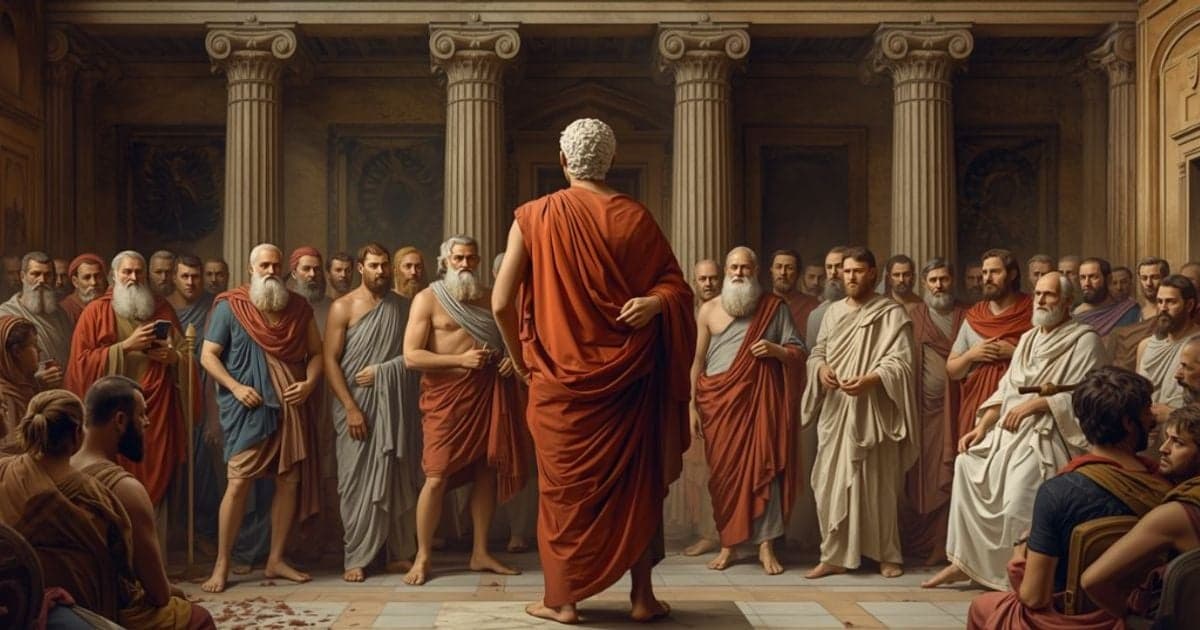
The Republic begins at a religious festival where Socrates and his friends are playfully detained by young men who want to talk philosophy. They visit the elderly Cephalus, who shares his perspective on old age - it's peaceful when you've lived justly and have enough money to avoid desperate choices. This sparks the central question: What is justice? The first attempt - 'telling the truth and paying your debts' - immediately falls apart. Would you return a weapon to a friend who's gone mad? The definition evolves to 'helping friends and harming enemies,' but Socrates dismantles this too. Can we always tell who our real friends are? Does harming others ever make them better people? Just as they're getting somewhere, Thrasymachus bursts in like a wild animal with a brutal claim: justice is simply whatever benefits the powerful. The rulers make the rules for their own advantage. Socrates cleverly uses the example of other professions - doctors, shepherds - to show that true expertise means serving those under your care, not yourself. But Thrasymachus doubles down, arguing that injustice actually pays better than justice. Through patient questioning, Socrates reveals the contradictions in this worldview, showing how even thieves need some form of justice among themselves to succeed. The chapter ends with questions unresolved but foundations laid for exploring what justice truly means.

Coming Up in Chapter 2

Thrasymachus may be silenced, but young Glaucon isn't satisfied with Socrates' arguments. He's about to present the most challenging case yet: what if being unjust really is the smart choice, as long as you can fake being good?

Share it with friends

Next Chapter
GO ADS FREE — JOIN US
Original text
complete·3,712 words
B

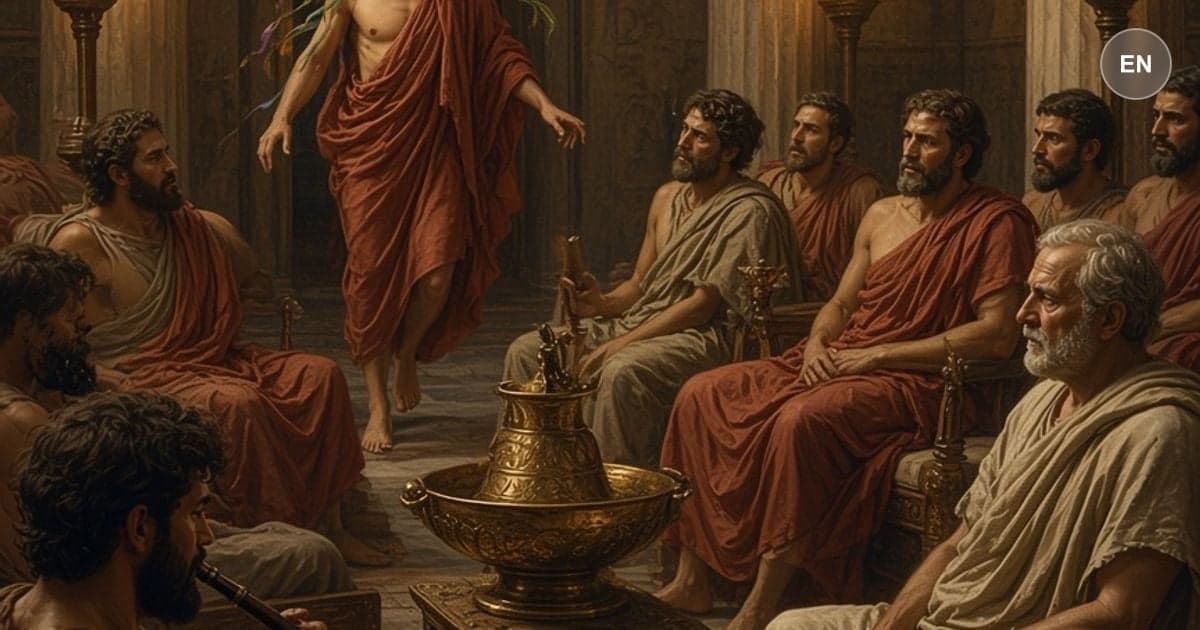
OOK I. The Republic opens with a truly Greek scene—a festival in honour of the goddess Bendis which is held in the Piraeus; to this is added the promise of an equestrian torch-race in the evening. The whole work is supposed to be recited by Socrates on the day after the festival to a small party, consisting of Critias, Timaeus, Hermocrates, and another; this we learn from the first words of the Timaeus.

1 / 17

Master this chapter. Complete your experience

Purchase the complete book to access all chapters and support classic literature

Read Free on GutenbergBuy at Powell'sBuy on Amazon

As an Amazon Associate, we earn a small commission from qualifying purchases at no additional cost to you.

Available in paperback, hardcover, and e-book formats

GO ADS FREE — JOIN US

Why This Matters

Connect literature to life

Skill: Detecting Definitional Manipulation

This chapter teaches you to recognize when people redefine common terms like 'fairness' or 'loyalty' to serve their own interests.

Practice This Today

This week, notice when someone at work suddenly changes what a word means mid-conversation - it usually signals they're losing the argument or want something from you.

GO ADS FREE — JOIN US

Now let's explore the literary elements.

Key Quotes & Analysis

"I inherit, Socrates, your love of discourse"

— Polemarchus

Context: Said when taking over the argument from his father

Shows how we inherit not just property but ideas and assumptions from our parents. Polemarchus thinks he's inherited wisdom, but Socrates will show he's inherited unexamined beliefs. This sets up the theme of questioning what we think we know.

In Today's Words:

I learned this from my dad, so it must be right

"Justice is nothing else than the interest of the stronger"

— Thrasymachus

Context: His explosive entry into the debate with his cynical definition

This brutal view strips away all pretense - laws exist to benefit those in power, period. It's compelling because we see this everywhere, but Socrates will show why this view ultimately defeats itself. Even the powerful need some real justice to maintain their power.

In Today's Words:

Rules are just what rich people made up to stay rich

"The unjust man has the advantage over the just"

— Thrasymachus

Context: Arguing that being unjust is more profitable than being just

He's saying nice guys finish last - cheaters prosper while honest people get exploited. This resonates because we've all seen it happen. But Socrates will show that even successful criminals need trust and cooperation among themselves.

In Today's Words:

Cheaters win and honest people are suckers

"Is the physician, taken in that strict sense of which you are speaking, a healer of the sick or a maker of money?"

— Socrates

Context: Beginning to dismantle Thrasymachus's argument about rulers

Socrates distinguishes between what a profession truly is versus how it's corrupted. A real doctor serves patients, not profit. This sets up his argument that true leadership serves the led, not the leader.

In Today's Words:

Is a doctor supposed to heal people or just make bank?

Thematic Threads

Power

In This Chapter

Thrasymachus bursts in claiming justice is simply the advantage of the stronger

Development

Introduced here

In Your Life:

Notice who gets to define 'professional behavior' at your workplace and how it benefits them

Class

In This Chapter

Cephalus's definition of justice assumes wealth - you need money to pay debts and avoid desperation

Development

Introduced here

In Your Life:

When people say 'just save more,' they're assuming resources you might not have

Truth

In This Chapter

The simple definition 'tell the truth' immediately breaks down with the mad friend example

Development

Introduced here

In Your Life:

Sometimes protecting someone means not telling them everything, like shielding kids from adult problems

Expertise

In This Chapter

Socrates shows true expertise means serving those in your care, not yourself

Development

Introduced here

In Your Life:

The best nurses advocate for patients against hospital profits - that's real professional skill

Corruption

In This Chapter

Even thieves need justice among themselves to succeed - pure injustice destroys itself

Development

Introduced here

In Your Life:

Even toxic workplaces need some fairness to function - watch for the minimum cooperation that keeps things running

GO ADS FREE — JOIN US

You now have the context. Time to form your own thoughts.

Discussion Questions

  1. 1

    What happens when Socrates tries to define justice with different people, and why does each definition fall apart?

    analysis • surface
  2. 2

    Why does each person define justice in a way that benefits their own situation? What does this reveal about how we create our beliefs?

    analysis • medium
  3. 3

    Think of a recent argument at work or home. How did each person define 'fairness' differently? Whose definition won and why?

    application • medium
  4. 4

    Your boss announces new 'efficiency standards' that mean unpaid overtime. How would you recognize and respond to this redefinition of terms?

    application • deep
  5. 5

    If we all bend definitions to serve our interests, is there any such thing as real justice? Or is Thrasymachus right that it's all about power?

    reflection • deep

Critical Thinking Exercise

10 minutes

Map the Definition Game

Pick a loaded word from your life - 'respect,' 'fair share,' 'hard work,' or 'family time.' Write down how three different people in your life define this word. Include someone with power over you, someone equal to you, and someone who depends on you. Notice how each definition serves the definer's interests.

Consider:

  • •Who benefits when this definition is accepted as 'truth'?
  • •What would happen if you challenged their definition?
  • •How does your own definition protect your interests?

Journaling Prompt

Describe a time when someone changed their definition of something important mid-argument. How did you know they were losing? What definition would have served everyone, not just them?

GO ADS FREE — JOIN US

Coming Up Next...

Chapter 2: The Challenge of Justice

Thrasymachus may be silenced, but young Glaucon isn't satisfied with Socrates' arguments. He's about to present the most challenging case yet: what if being unjust really is the smart choice, as long as you can fake being good?

Continue to Chapter 2
Contents
Next
The Challenge of Justice

Continue Exploring

The Republic Study GuideTeaching ResourcesEssential Life IndexBrowse by ThemeAll Books
Moral Dilemmas & EthicsPower & CorruptionIdentity & Self-Discovery

You Might Also Like

On Liberty cover

On Liberty

John Stuart Mill

Explores justice & fairness

The Analects cover

The Analects

Confucius

Explores society & class

The Idiot cover

The Idiot

Fyodor Dostoevsky

Explores society & class

Nicomachean Ethics cover

Nicomachean Ethics

Aristotle

Explores morality & ethics

Browse all 47+ books
GO ADS FREE — JOIN US

Share This Chapter

Know someone who'd enjoy this? Spread the wisdom!

TwitterFacebookLinkedInEmail

Read ad-free with Prestige

Get rid of ads, unlock study guides and downloads, and support free access for everyone.

Subscribe to PrestigeCreate free account
Intelligence Amplifier
Intelligence Amplifier™Powering Wide Reads

Exploring human-AI collaboration through books, essays, and philosophical dialogues. Classic literature transformed into navigational maps for modern life.

2025 Books

→ The Amplified Human Spirit→ The Alarming Rise of Stupidity Amplified→ San Francisco: The AI Capital of the World
Visit intelligenceamplifier.org
hello@widereads.com

WideReads Originals

→ You Are Not Lost→ The Last Chapter First→ The Lit of Love→ Wealth and Poverty→ 10 Paradoxes in the Classics · coming soon
Arvintech
arvintechAmplify your Mind
Visit at arvintech.com

Navigate

  • Home
  • Library
  • Essential Life Index
  • How It Works
  • Subscribe
  • Account
  • About
  • Contact
  • Authors
  • Suggest a Book
  • Landings

Made For You

  • Students
  • Educators
  • Families
  • Readers
  • Literary Analysis
  • Finding Purpose
  • Letting Go
  • Recovering from a Breakup
  • Corruption
  • Gaslighting in the Classics

Newsletter

Weekly insights from the classics. Amplify Your Mind.

Legal

  • Privacy Policy
  • Terms of Service
  • Cookie Policy
  • Accessibility

Why Public Domain?

We focus on public domain classics because these timeless works belong to everyone. No paywalls, no restrictions—just wisdom that has stood the test of centuries, freely accessible to all readers.

Public domain books have shaped humanity's understanding of love, justice, ambition, and the human condition. By amplifying these works, we help preserve and share literature that truly belongs to the world.

A Pilgrimage

Powell's City of Books

Portland, Oregon

If you ever find yourself in Portland, walk to the corner of Burnside and 10th. The building takes up an entire city block. Inside is over a million books, new and used on the same shelf, organized by color-coded rooms with names like the Rose Room and the Pearl Room. You can lose an afternoon. You can lose a weekend. You will find a book you have been looking for your whole life, and three you did not know existed.

It is a pilgrimage. We cannot find a bookstore like it anywhere on earth. If you read the classics, and you ever get the chance, go. It belongs on every reader's bucket list.

Visit powells.com

We are not in any way affiliated with Powell's. We are just a very big fan.

© 2026 Wide Reads™. All Rights Reserved.

Intelligence Amplifier™ and Wide Reads™ are proprietary trademarks of Arvin Lioanag.

Copyright Protection: All original content, analyses, discussion questions, pedagogical frameworks, and methodology are protected by U.S. and international copyright law. Unauthorized reproduction, distribution, web scraping, or use for AI training is strictly prohibited. See our Copyright Notice for details.

Disclaimer: The information provided on this website is for general informational and educational purposes only and does not constitute professional, legal, financial, or technical advice. While we strive to ensure accuracy and relevance, we make no warranties regarding completeness, reliability, or suitability. Any reliance on such information is at your own risk. We are not liable for any losses or damages arising from use of this site. By using this site, you agree to these terms.