
The Gambler
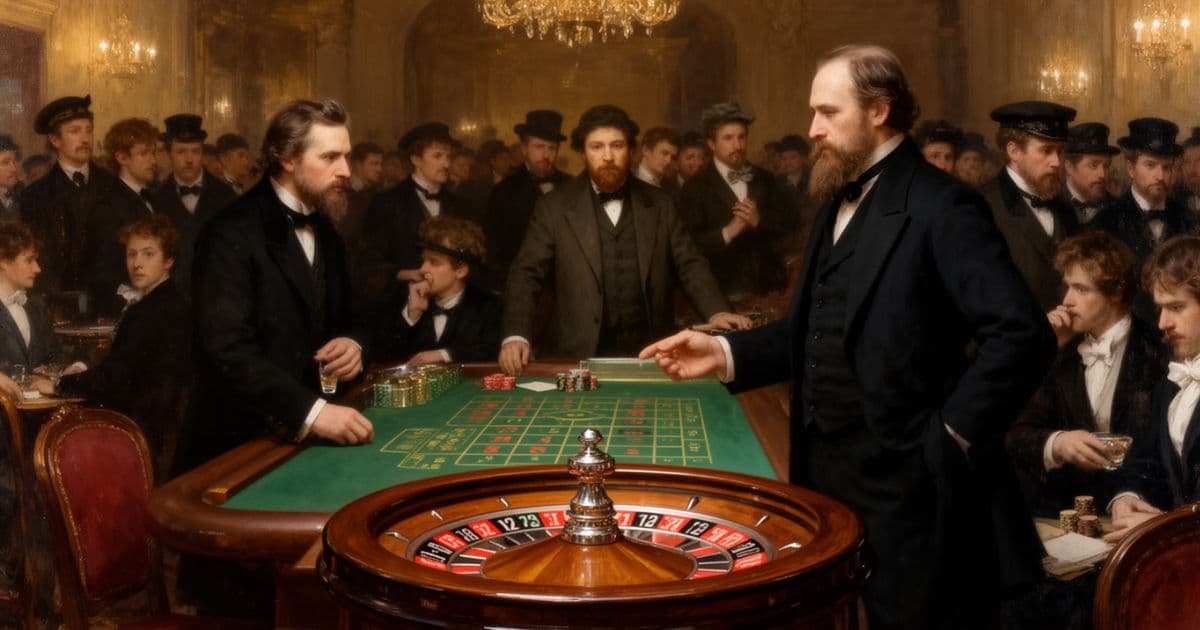
Fyodor Dostoevsky
0:00 / 0:00
The General's circle has already spent the inheritance. They are waiting for a telegram that the Moscow grandmother is dead so the French debts can clear and Blanche can be paid in a wedding. Then the old woman arrives in an armchair, very much alive, and asks the way to the casino. Dostoevsky published the novella in 1866. Seeing the trap is not the same as leaving it. The tutor who can name every mechanism will still sit down at the wheel.
Alexei Ivanovich is a tutor in a Russian household stranded at a German spa called Roulettenburg: quick, proud, broke, and so sure that intensity counts as love that Polina's contempt feels like a form of attention. Polina Alexandrovna is the General's stepdaughter, used by the Marquis de Griers and using Alexei in turn, asking him to play her money and then to make a fool of himself in public. The General waits for his grandmother, Antonida Tarasevicheva, to die so he can marry Mlle Blanche and settle what he has already mortgaged. Mr. Astley, the English sugar refiner, sees the whole arrangement and cannot make anyone leave it. De Griers treats people as accounts, and Blanche prices a husband by the telegram.
Alexei enters the casino with Polina's six hundred gulden, angry at playing for someone else, and wins enough to mistake luck for a faculty. She then sends him to bow to a Baroness and speak broken French; he does it, and the household treats the insult as a scandal he chose. The grandmother arrives on the verandah, mocks De Griers as a mountebank, and asks to see roulette. She wins on zero, becomes imperious by dinner, and ruins herself in days. Alexei runs back to the tables to rescue Polina from De Griers, piles a fortune on the cloth, and brings it home; she throws the money at him and leaves. He burns the winnings in three weeks of Paris with Blanche. A year and eight months later Astley finds him at Homburg, reports that Polina inherited seven thousand pounds and that the General is dead, and still cannot buy him off the wheel.
Dostoevsky dictated the book in twenty-six days to Anna Snitkina because a contract would have stripped him of every future work if he missed the deadline, and because he already knew the tables from the inside. He never treats roulette as local colour, or the first win as a cute initiation. Compulsion here is not ignorance. It is a premise that survives evidence: the loss was an error, the next system will correct it, one hour of patience will raise the dead. What remains is not a sermon against risk. It is a picture of how a rescue fantasy, a humiliating attachment, and a public score can share one mechanism, and how intelligence will refine the method rather than abandon the premise.
The first stake is already the first pressure. Recognizing the Gambling Spiral is Polina's six hundred gulden, the grandmother winning on zero then ruining herself in days, and the chase that treats every loss as a correctable error. The One Big Win Illusion is the desperate run to rescue Polina from De Griers, the fortune piled on the cloth, and the money she throws back because cash was never the problem. Humiliation as a Way of Life is the Baroness dare, the broken French, and a devotion that uses contempt as proof. When You Become the Instrument is playing her money, insulting a stranger on command, and watching the General live as Blanche's ledger. Status as the Real Stake is the inheritance telegram they needed her to die for, the Russians at the spa, and the wish that Baden talk about him. What Happens After is three weeks of Paris with Blanche, then Astley on a Homburg bench a year and eight months later, reporting that Polina inherited seven thousand pounds while tomorrow is still the plan.
She wins on zero and is ruined before the week is out. He brings a fortune home and she throws it at him. Wide Reads gathers summaries, quotes, and audio on all seventeen chapters, from an armchair on the verandah to a last gulden at Homburg.
Lessons from The Gambler
Six lessons from this classic novel.
Lessons from The Gambler
Six lessons from this classic novel.Recognizing the Gambling Spiral
Watch Polina's first stake, the grandmother's afternoon transformation, and the chase that treats every loss as a correctable error.
wish to play for myself
The One Big Win Illusion
Sit with De Griers's visit, the desperate run to the tables, and the fortune Polina throws back because cash was never the problem.
An accurate outside view does not dissolve a rescue fantasy. Alexei can hear Astley and still treat departure as the wrong plot.…
Deep dives
Chapter-by-chapter breakdowns
Humiliation as a Way of Life
Stay with the tutor's place in the household, the Baroness dare, and a devotion that uses contempt as proof of intensity.
I hate you because I have allowed you to go to such lengths
What Happens After
Follow Paris with Blanche, debtor's prison, and Astley on the Homburg bench while tomorrow is still the plan.
Even my passion for Polina is dead.
Table of Contents
Return to Roulettenberg
The narrator returns from a two-week absence to find the General's party at Roulettenberg suddenly f...
First Steps into the Casino
Ordered to gamble with Polina's money, the narrator enters the casino for the first time with anger ...
Power Games and Hidden Motives
Polina avoids the narrator while making no secret that she despises him and still needs him for undi...
The Gambler's Delusion and Cultural Clash
Playing again for Polina with six hundred gülden, the narrator wins, then loses everything in two re...
The Power of Dangerous Questions
After lunch Polina orders a walk and reveals the General has mortgaged everything to the Marquis, so...
The Aftermath of Defiance
Two days after his public scene with the Baron and Baroness, the narrator replays the fracas with sh...
The Power Behind the Throne
The morning after his dismissal, the narrator takes control of his own hotel bill and still spends l...
The Englishman's Revelations
On the promenade the narrator meets Mr. Astley, who already knows about the dismissal though almost ...
The Grandmother's Explosive Arrival
The supposed dying grandmother arrives at the hotel verandah in her carrying chair, trunks, and full...
The Grandmother's First Taste of Victory
The hotel landlord gives the grandmother a ducal suite and registers her as a princess she never was...
Victory's Dangerous Intoxication
The Grandmother wheels away from the roulette table with roughly eight thousand roubles, and the sal...
The Point of No Return
The Grandmother returns to the casino irritable and fixated, dismissing servants and trusting only t...
The Aftermath of Ruin
A month later the narrator writes from a melancholy German town, trying to convince himself he is sa...
The Miracle of Desperate Luck
Polina appears in the narrator's room at night with De Griers's cold farewell letter and fury of her...
Money Can't Buy Love
The narrator returns to Polina drunk on his roulette win, spreading banknotes across the table while...
The Gambler's Last Dance
The narrator calls his Paris stay a delirium: in three weeks he burns through the hundred thousand f...
The Final Gamble
A year and eight months after leaving for Homburg, the narrator resumes his notes in deeper ruin. He...
Common Questions About The Gambler
Trending search questions mapped to the lessons in this book—what readers actually ask Google about an hour that cannot buy her, hands sent on her errand, necessary, and hated for it, the loss that demands a replay, and the room the chips rent.
What is The Gambler about?
Alexei Ivanovich is a tutor stranded at a German spa with a Russian household that has already spent an inheritance it does not have. He is in love with Polina, the General's stepdaughter, who sends him to the roulette tables to play her money and then to insult a Baroness on command, and he does both because refusing would cost him her attention. When the household's supposedly dying grandmother arrives alive and wins a fortune on zero before losing it in days, Dostoevsky shows a whole cast of people who can describe exactly how the wheel destroys them and still cannot leave the table.
Explore Recognizing the Gambling SpiralWhy does Alexei keep gambling even though he understands the mechanism?
Alexei can explain the odds, the house's edge, and his own tells better than anyone at the table, and none of that knowledge stops him. Each loss becomes proof that the next system will work, and each win becomes proof he was right all along. Dostoevsky treats this as the real subject of the book: compulsion is not ignorance you can educate away. It is a premise, the next bet will fix the last one, that survives every piece of evidence against it.
Explore Recognizing the Gambling SpiralWhat is the one big win illusion in The Gambler?
After Polina throws his winnings back at him, Alexei runs to the tables convinced that one enormous win will fix everything at once: the debt, the humiliation, and Polina's contempt. He piles a fortune on the cloth and carries it home, and it changes nothing. She takes the money and leaves anyway. The book uses that scene to show that a gambler's fantasy is never really about the cash. It is about believing a single number can rewrite a relationship a person already lost.
Explore The One Big Win IllusionWhy does Alexei let Polina humiliate him?
Polina sends Alexei to bow to a Baroness and speak broken French in public, purely to test how far he will go, and he does it without hesitating. He treats her contempt as a form of attention, and the household later blames him for the resulting scandal as if he chose the insult himself rather than obeying her. Dostoevsky is precise about the trade: Alexei accepts humiliation as the price of being noticed, because being noticed with contempt still feels safer than being ignored.
Explore Humiliation as a Way of LifeWhat happens to Alexei at the end of The Gambler?
Alexei burns his winnings in three weeks of Paris with Mlle Blanche, then resurfaces at Homburg more than a year later, still playing. His old friend Mr. Astley finds him there and reports that Polina inherited a fortune of her own and that the General has died, news that changes nothing about where Alexei is standing. The ending refuses him a recovery arc. He is not punished dramatically or redeemed quietly. He is simply still at the wheel, certain that tomorrow will be the day it turns.
Explore What Happens AfterWhat life lessons does The Gambler teach?
Six lessons run through the book: recognise the gambling spiral in the way every loss becomes an error to correct rather than a reason to stop; question the one big win illusion that a single windfall could ever fix a relationship instead of a debt; notice humiliation as a way of life when contempt starts to feel like the only attention available; watch what happens after the fantasy of skill collides with an ordinary Tuesday of continued losing; ask when you become the instrument of someone else's plan rather than a partner in it; and weigh status as the real stake whenever the amount at the table matters less than who is watching you lose it. Those patterns, not a morality tale about cards, are why the book still answers modern searches.
About Fyodor Dostoevsky
Published 1866
Fyodor Dostoevsky (1821-1881) wrote The Gambler in 1866 under crushing pressure. He was simultaneously finishing Crime and Punishment, drowning in gambling debts, and bound by a contract that would strip him of all future publishing rights if he missed his deadline. He dictated the entire novella in twenty-six days to Anna Grigoryevna Snitkina, a stenographer who would become his second wife and the steadying force in his chaotic life.
Dostoevsky did not research gambling addiction from a distance. For years he haunted European casinos, losing fortunes at roulette, pawning watches and coats, writing desperate letters home for money. The Gambler reads like testimony because it is testimony transmuted into fiction. Alexei Ivanovich's clarity about his own destruction, and his inability to stop despite that clarity, mirrors what Dostoevsky lived and what psychology would spend another century trying to explain.
The novel's urgency reflects its circumstances. Written to pay debts incurred by the very vice it portrays, it strips away romanticism about risk and shows compulsion as a full-eyed choice to keep going. That honesty makes it one of the shortest and most devastating works in the Russian canon, essential reading for anyone trying to understand how intelligent people walk into traps they can already see.
Why Fyodor Dostoevsky Matters Today
Fyodor Dostoevsky speaks to the moment when you can name exactly how a trap works and still sit down at it: the system that will surely correct itself this time, the loss that was only ever a fluke, the one good run that would prove you were never really the problem. The Gambler treats that clarity without escape as the whole subject, not a footnote to it.
What makes him indispensable is that he was not observing this from outside. Dostoevsky wrote the novella from inside his own addiction, dictating the entire book in twenty-six days to a stenographer named Anna Snitkina because a contract with his publisher would have stripped him of every future work if he missed the deadline. He had spent years losing fortunes at the same tables he was describing, and married Snitkina within months of finishing the book she had helped him rescue.
Few writers have earned the right to describe compulsion this precisely. Dostoevsky does not let Alexei's self-awareness function as a cure, and he does not let the reader mistake insight for safety either: the book insists that knowing exactly how the trap works is not the same thing as being able to leave it.
More by Fyodor Dostoevsky in Our Library


Wide Reads is different.
Plot, characters, and themes — plus audio, source text, and patterns you can use after class
Two ways in
Read & listen to the summary
Chapter by chapter, with audio. The meaning arrives because you experienced it — not because someone listed bullet points.
Start with this.
Read the original text
The actual words the author wrote, alongside every summary. Use the guide, then step into the source.
Then step into the source.
Either way, the door opens inward.
— and most of all, Why does this matter?
Get the Full Book
Purchase the complete book to access all chapters and support classic literature

Available in paperback, hardcover, and e-book formats
You Might Also Like
Free to read • No account required