Wide Reads
Literature MattersLife IndexEducators
Sign in
Where to Begin
The Gambler - The Gambler's Delusion and Cultural Clash

Fyodor Dostoevsky

The Gambler

The Gambler's Delusion and Cultural Clash

Home›Books›The Gambler›Chapter 4
Previous
4 of 17
Next

Summary

The Gambler's Delusion and Cultural Clash

The Gambler by Fyodor Dostoevsky

0:000:00
Listen to Next Chapter

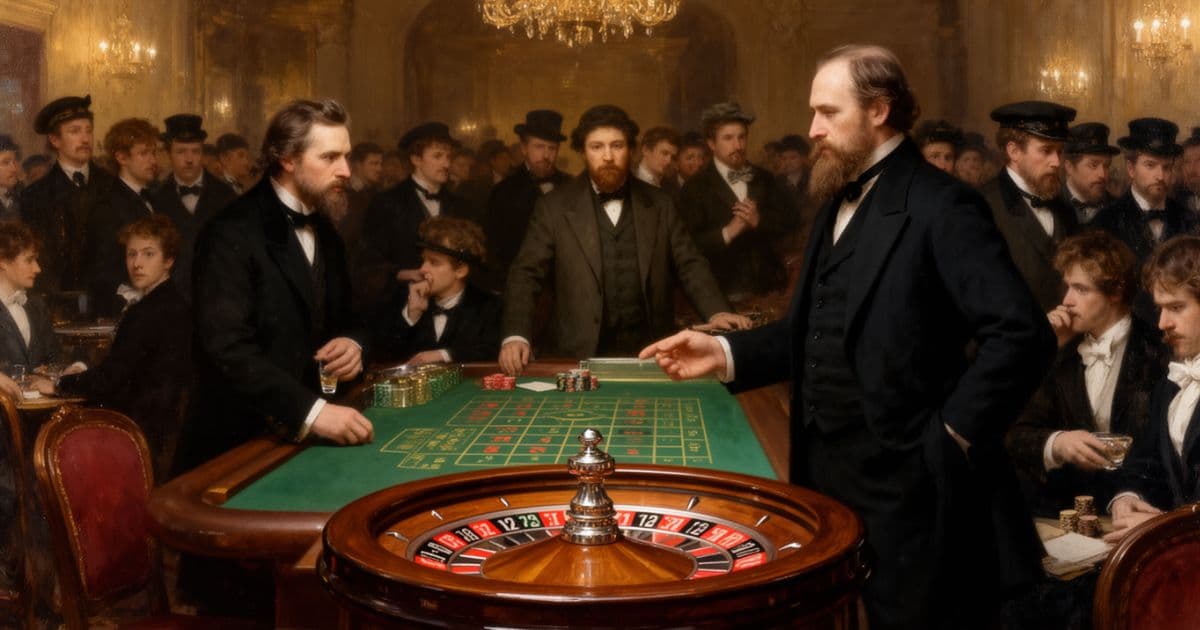
The narrator loses everything at the roulette table while gambling with Polina's money, but his real downfall isn't the cards—it's his psychology. He starts cautiously, wins big, then gets swept up in what he calls 'a challenge to Fate.' When he has 4000 gulden in his hands, the smart move would be to walk away. Instead, he bets it all and loses everything. This isn't just bad luck; it's the classic gambler's trap of mistaking random chance for meaningful patterns. At lunch, he lies about losing his own money to protect Polina's secret, then launches into a bitter tirade against German work ethic and values. His rant reveals someone desperately trying to justify his own failures by attacking an entire culture's approach to building wealth through patience and discipline. He romanticizes the Russian approach of quick wins and dramatic losses, calling German methodical saving 'slavery.' But his words ring hollow—he's a man who just lost everything defending the very recklessness that destroyed him. The French guest sees through his bluster, and even the General calls him insufferable. Most telling is Polina's reaction: complete indifference. She barely acknowledges his existence, suggesting their relationship is more transactional than romantic. The chapter exposes how people create elaborate philosophical justifications for their worst impulses, turning personal failure into cultural identity.

Coming Up in Chapter 5

The narrator's losses have consequences beyond his own shame. Polina still owes him an explanation for why she needed the money so desperately, and the mysterious dynamics between the General, the Frenchman, and the household's financial troubles are about to become clearer.

Share it with friends

Previous ChapterNext Chapter
GO ADS FREE — JOIN US
Original text
complete·2,276 words
T

oday has been a day of folly, stupidity, and ineptness. The time is now eleven o’clock in the evening, and I am sitting in my room and thinking. It all began, this morning, with my being forced to go and play roulette for Polina Alexandrovna. When she handed me over her store of six hundred gülden I exacted two conditions—namely, that I should not go halves with her in her winnings, if any (that is to say, I should not take anything for myself), and that she should explain to me, that same evening, why it was so necessary for her to win, and how much was the sum which she needed. For, I could not suppose that she was doing all this merely for the sake of money. Yet clearly she did need some money, and that as soon as possible, and for a special purpose. Well, she promised to explain matters, and I departed. There was a tremendous crowd in the gaming-rooms. What an arrogant, greedy crowd it was! I pressed forward towards the middle of the room until I had secured a seat at a croupier’s elbow. Then I began to play in timid fashion, venturing only twenty or thirty gülden at a time. Meanwhile, I observed and took notes. It seemed to me that calculation was superfluous, and by no means possessed of the importance which certain other players attached to it, even though they sat with ruled papers in their hands, whereon they set down the coups, calculated the chances, reckoned, staked, and—lost exactly as we more simple mortals did who played without any reckoning at all.

1 / 10

Master this chapter. Complete your experience

Purchase the complete book to access all chapters and support classic literature

Read Free on GutenbergBuy at Powell'sBuy on Amazon

As an Amazon Associate, we earn a small commission from qualifying purchases at no additional cost to you.

Available in paperback, hardcover, and e-book formats

GO ADS FREE — JOIN US

Why This Matters

Connect literature to life

Skill: Detecting Self-Justification

This chapter teaches how to recognize when elaborate explanations mask simple failures or poor choices.

Practice This Today

This week, notice when you find yourself building complex reasons for basic mistakes - catch yourself and ask what you're trying not to admit.

GO ADS FREE — JOIN US

Now let's explore the literary elements.

Key Quotes & Analysis

"I could not suppose that she was doing all this merely for the sake of money. Yet clearly she did need some money, and that as soon as possible, and for a special purpose."

— Narrator

Context: Reflecting on why Polina asked him to gamble with her money

Shows the narrator creating mystery and romance around what's probably a simple financial transaction. He can't accept that their relationship might be purely practical.

In Today's Words:

I figured she must have some deeper reason for needing cash, not just regular money problems

"It seemed to me that calculation was superfluous, and by no means possessed of the importance which certain other players attached to it."

— Narrator

Context: Dismissing other gamblers' attempts to track patterns

The narrator rejects systematic thinking in favor of intuition and 'fate.' This attitude sets him up for disaster by ignoring the mathematical reality of gambling.

In Today's Words:

I thought all those people with their systems and tracking sheets were wasting their time

"To win money by the mere pressure of will—is not that better than to slave and save?"

— Narrator

Context: During his rant defending Russian gambling culture against German work ethic

Reveals the narrator's fundamental delusion that gambling is about willpower rather than chance. He's romanticizing his addiction as a superior way of life.

In Today's Words:

Isn't it better to get rich quick through pure determination than to work and save like a robot?

Thematic Threads

Self-Deception

In This Chapter

The narrator transforms his gambling addiction into a philosophical stance about Russian passion versus German methodical saving

Development

Deepening from earlier hints of rationalization into full-blown ideological justification

In Your Life:

You might catch yourself creating noble reasons for behaviors you know are actually harmful or self-defeating

Class Resentment

In This Chapter

His anti-German tirade masks deeper feelings of inadequacy about his own financial failures and social position

Development

Evolved from subtle class anxiety to open hostility toward different cultural approaches to wealth

In Your Life:

You might find yourself criticizing others' success strategies when you're actually frustrated with your own results

Transactional Relationships

In This Chapter

Polina's complete indifference to his loss suggests their connection is based on utility, not genuine care

Development

Building on earlier hints that their relationship lacks authentic emotional foundation

In Your Life:

You might recognize when someone only engages with you when they need something, showing little interest in your actual wellbeing

Addiction Psychology

In This Chapter

The classic pattern of starting cautiously, winning big, then betting everything and losing it all while calling it 'challenging fate'

Development

First clear demonstration of the gambling addiction that drives the entire narrative

In Your Life:

You might notice this escalation pattern in any compulsive behavior—shopping, social media, or risky decisions

Cultural Identity

In This Chapter

Using national stereotypes to justify personal failures, claiming Russian recklessness is superior to German discipline

Development

Introduced here as a new defense mechanism

In Your Life:

You might catch yourself using group identity to avoid personal accountability for individual choices

GO ADS FREE — JOIN US

You now have the context. Time to form your own thoughts.

Discussion Questions

  1. 1

    The narrator wins big at roulette but then bets everything and loses it all. What specific moment could he have walked away, and why didn't he?

    analysis • surface
  2. 2

    After losing Polina's money, the narrator launches into a bitter speech against German work habits and values. What is he really trying to accomplish with this rant?

    analysis • medium
  3. 3

    Think about someone you know who creates elaborate explanations for their repeated mistakes. How do their justifications protect them from facing the real problem?

    application • medium
  4. 4

    When you've made a serious error in judgment, how do you catch yourself before building a whole philosophy to justify it?

    application • deep
  5. 5

    The narrator transforms his gambling addiction into a statement about national character and fate. What does this reveal about how people protect their self-image when their actions contradict their values?

    reflection • deep

Critical Thinking Exercise

10 minutes

Decode Your Own Rationalizations

Think of a recent mistake or failure you made. Write down the first explanation you gave yourself or others about why it happened. Then write what actually happened without any justifications. Notice the difference between your protective story and the simple truth.

Consider:

  • •Look for language that makes you sound noble or victimized rather than responsible
  • •Notice if your explanation involves attacking others or entire groups of people
  • •Pay attention to how elaborate your justification is compared to how simple the actual mistake was

Journaling Prompt

Write about a time when you caught yourself building an elaborate justification for a simple mistake. How did it feel to drop the story and just admit what really happened?

GO ADS FREE — JOIN US

Coming Up Next...

Chapter 5: The Power of Dangerous Questions

The narrator's losses have consequences beyond his own shame. Polina still owes him an explanation for why she needed the money so desperately, and the mysterious dynamics between the General, the Frenchman, and the household's financial troubles are about to become clearer.

Continue to Chapter 5
Previous
Power Games and Hidden Motives
Contents
Next
The Power of Dangerous Questions

Continue Exploring

The Gambler Study GuideTeaching ResourcesEssential Life IndexBrowse by ThemeAll Books

You Might Also Like

Crime and Punishment cover

Crime and Punishment

Fyodor Dostoevsky

Also by Fyodor Dostoevsky

The Brothers Karamazov cover

The Brothers Karamazov

Fyodor Dostoevsky

Also by Fyodor Dostoevsky

The Idiot cover

The Idiot

Fyodor Dostoevsky

Also by Fyodor Dostoevsky

Jane Eyre cover

Jane Eyre

Charlotte Brontë

Explores personal growth

Browse all 47+ books

Share This Chapter

Know someone who'd enjoy this? Spread the wisdom!

TwitterFacebookLinkedInEmail

Read ad-free with Prestige

Get rid of ads, unlock study guides and downloads, and support free access for everyone.

Subscribe to PrestigeCreate free account
Intelligence Amplifier
Intelligence Amplifier™Powering Wide Reads

Exploring human-AI collaboration through books, essays, and philosophical dialogues. Classic literature transformed into navigational maps for modern life.

2025 Books

→ The Amplified Human Spirit→ The Alarming Rise of Stupidity Amplified→ San Francisco: The AI Capital of the World
Visit intelligenceamplifier.org
hello@widereads.com

WideReads Originals

→ You Are Not Lost→ The Last Chapter First→ The Lit of Love→ Wealth and Poverty→ 10 Paradoxes in the Classics · coming soon
Arvintech
arvintechAmplify your Mind
Visit at arvintech.com

Navigate

  • Home
  • Library
  • Essential Life Index
  • How It Works
  • Subscribe
  • Account
  • About
  • Contact
  • Authors
  • Suggest a Book
  • Landings

Made For You

  • Students
  • Educators
  • Families
  • Readers
  • Literary Analysis
  • Finding Purpose
  • Letting Go
  • Recovering from a Breakup
  • Corruption
  • Gaslighting in the Classics

Newsletter

Weekly insights from the classics. Amplify Your Mind.

Legal

  • Privacy Policy
  • Terms of Service
  • Cookie Policy
  • Accessibility

Why Public Domain?

We focus on public domain classics because these timeless works belong to everyone. No paywalls, no restrictions—just wisdom that has stood the test of centuries, freely accessible to all readers.

Public domain books have shaped humanity's understanding of love, justice, ambition, and the human condition. By amplifying these works, we help preserve and share literature that truly belongs to the world.

A Pilgrimage

Powell's City of Books

Portland, Oregon

If you ever find yourself in Portland, walk to the corner of Burnside and 10th. The building takes up an entire city block. Inside is over a million books, new and used on the same shelf, organized by color-coded rooms with names like the Rose Room and the Pearl Room. You can lose an afternoon. You can lose a weekend. You will find a book you have been looking for your whole life, and three you did not know existed.

It is a pilgrimage. We cannot find a bookstore like it anywhere on earth. If you read the classics, and you ever get the chance, go. It belongs on every reader's bucket list.

Visit powells.com

We are not in any way affiliated with Powell's. We are just a very big fan.

© 2026 Wide Reads™. All Rights Reserved.

Intelligence Amplifier™ and Wide Reads™ are proprietary trademarks of Arvin Lioanag.

Copyright Protection: All original content, analyses, discussion questions, pedagogical frameworks, and methodology are protected by U.S. and international copyright law. Unauthorized reproduction, distribution, web scraping, or use for AI training is strictly prohibited. See our Copyright Notice for details.

Disclaimer: The information provided on this website is for general informational and educational purposes only and does not constitute professional, legal, financial, or technical advice. While we strive to ensure accuracy and relevance, we make no warranties regarding completeness, reliability, or suitability. Any reliance on such information is at your own risk. We are not liable for any losses or damages arising from use of this site. By using this site, you agree to these terms.