Wide Reads
Literature MattersLife IndexEducators
Sign in
Where to Begin
The Gambler - First Steps into the Casino

Fyodor Dostoevsky

The Gambler

First Steps into the Casino

Home›Books›The Gambler›Chapter 2
Previous
2 of 17
Next

Summary

First Steps into the Casino

The Gambler by Fyodor Dostoevsky

0:000:00
Listen to Next Chapter

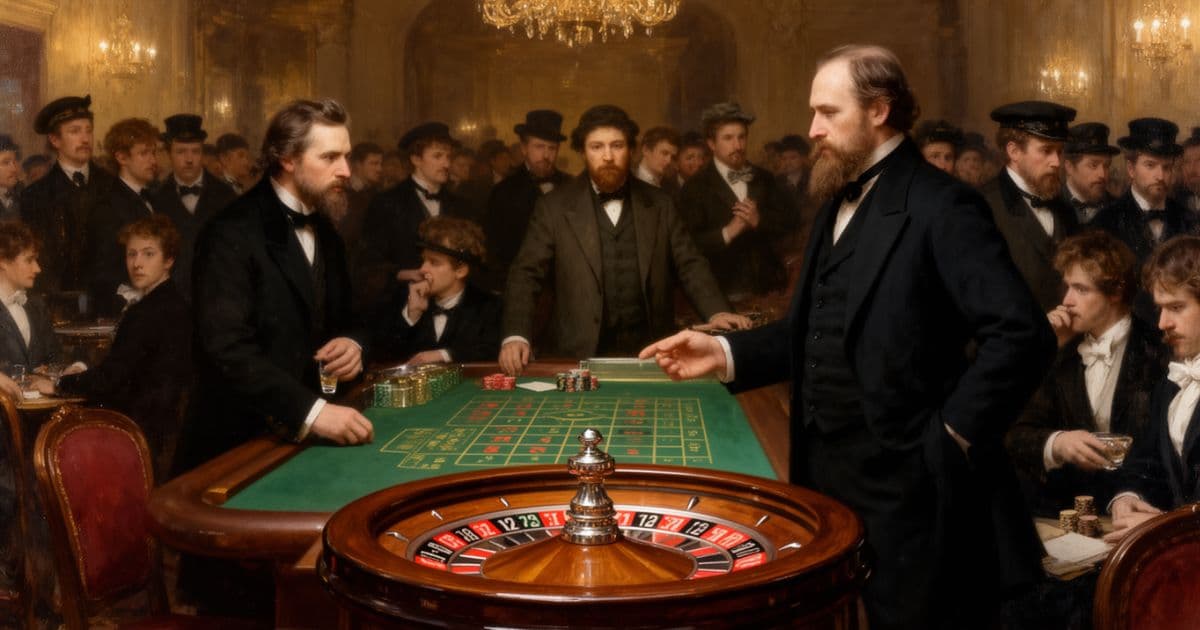
The narrator enters the casino for the first time, playing with Polina's money rather than his own. He's immediately struck by the stark class differences he observes: wealthy gentlemen who gamble with detached amusement versus desperate common folk who play with trembling hands. The narrator finds himself caught between these worlds, philosophizing about the morality of gambling while simultaneously being drawn into its grip. Despite his initial reluctance and nervousness, he experiences remarkable beginner's luck, turning 100 gulden into 1600. However, this success feels hollow because he's not playing for himself. When he returns Polina's winnings, she insists he continue playing as her partner, but he refuses, declaring he wants to play for his own interests. This chapter reveals the narrator's complex relationship with money, class, and control. His observations about aristocratic versus common gambling styles show his keen awareness of social hierarchies, while his discomfort playing for others suggests a need for personal agency. The easy money he wins feels almost supernatural, hinting at the addictive nature of gambling success. Most importantly, we see how external expectations and obligations can corrupt even our victories, making the narrator question whether his luck would hold if he were truly playing for himself.

Coming Up in Chapter 3

With his pockets full of winnings and his confidence building, the narrator prepares to gamble for his own future. But will his luck continue when the stakes become personal?

Share it with friends

Previous ChapterNext Chapter
GO ADS FREE — JOIN US
Original text
complete·2,491 words
I

confess I did not like it. Although I had made up my mind to play, I felt averse to doing so on behalf of some one else. In fact, it almost upset my balance, and I entered the gaming rooms with an angry feeling at my heart. At first glance the scene irritated me. Never at any time have I been able to bear the flunkeyishness which one meets in the Press of the world at large, but more especially in that of Russia, where, almost every evening, journalists write on two subjects in particular—namely, on the splendour and luxury of the casinos to be found in the Rhenish towns, and on the heaps of gold which are daily to be seen lying on their tables. Those journalists are not paid for doing so: they write thus merely out of a spirit of disinterested complaisance. For there is nothing splendid about the establishments in question; and, not only are there no heaps of gold to be seen lying on their tables, but also there is very little money to be seen at all. Of course, during the season, some madman or another may make his appearance—generally an Englishman, or an Asiatic, or a Turk—and (as had happened during the summer of which I write) win or lose a great deal; but, as regards the rest of the crowd, it plays only for petty gülden, and seldom does much wealth figure on the board.

1 / 11

Master this chapter. Complete your experience

Purchase the complete book to access all chapters and support classic literature

Read Free on GutenbergBuy at Powell'sBuy on Amazon

As an Amazon Associate, we earn a small commission from qualifying purchases at no additional cost to you.

Available in paperback, hardcover, and e-book formats

GO ADS FREE — JOIN US

Why This Matters

Connect literature to life

Skill: Detecting Hidden Agendas in Opportunities

This chapter teaches how to spot when someone's offer of help or opportunity is really about serving their interests, not yours.

Practice This Today

This week, notice when someone offers you an opportunity and ask yourself: what do they get out of this, and what control are they expecting in return?

GO ADS FREE — JOIN US

Now let's explore the literary elements.

Key Quotes & Analysis

"I felt averse to doing so on behalf of some one else. In fact, it almost upset my balance, and I entered the gaming rooms with an angry feeling at my heart."

— Narrator

Context: As he prepares to gamble with Polina's money rather than his own

This reveals how gambling with someone else's money creates psychological discomfort. The narrator understands that true gambling requires personal risk - when it's not your money, the entire emotional experience is corrupted.

In Today's Words:

I hated the idea of gambling with her money instead of my own. It felt wrong and made me angry before I even started.

"Those journalists are not paid for doing so: they write thus merely out of a spirit of disinterested complaisance."

— Narrator

Context: Criticizing journalists who write glowing reports about casino luxury without compensation

The narrator sees through the performative nature of social climbing. These writers aren't even being paid - they're just desperate to seem connected to wealth and sophistication.

In Today's Words:

These reporters aren't even getting paid to write this stuff - they just want to look like they're part of the cool, rich crowd.

"I want to play for my own sake."

— Narrator

Context: When Polina asks him to continue gambling as her partner after his big win

This declaration marks a crucial turning point where the narrator asserts his independence. He realizes that gambling has meaning only when the stakes are truly personal - both the risk and the reward must be his own.

In Today's Words:

I want to gamble with my own money and for my own reasons, not yours.

Thematic Threads

Class

In This Chapter

The narrator observes stark differences between how wealthy and poor people gamble - aristocrats play with detached amusement while common folk tremble with desperation

Development

Building from previous chapter's class tensions between the narrator and his employers

In Your Life:

You might notice how differently people with financial security approach risks compared to those living paycheck to paycheck

Identity

In This Chapter

The narrator feels caught between social worlds and uncomfortable playing for someone else's interests rather than his own

Development

Deepening the narrator's struggle to define himself outside his servant role

In Your Life:

You might recognize the discomfort of not knowing where you truly belong or whose agenda you're serving

Control

In This Chapter

Despite winning, the narrator feels powerless because he's not playing for himself and refuses to continue as Polina's partner

Development

Introduced here as the narrator begins asserting personal agency

In Your Life:

You might feel this when others try to direct your choices even when they're helping you succeed

Expectations

In This Chapter

The narrator's beginner's luck feels almost supernatural, but he questions whether it would continue if he played for himself

Development

Introduced here as doubt about sustainable success

In Your Life:

You might wonder if your achievements are real or just temporary luck that won't last

Relationships

In This Chapter

The dynamic between the narrator and Polina becomes strained when money and gambling enter their relationship

Development

Evolving from previous tension to active conflict over independence

In Your Life:

You might see how financial arrangements can complicate personal relationships and create power imbalances

GO ADS FREE — JOIN US

You now have the context. Time to form your own thoughts.

Discussion Questions

  1. 1

    Why does the narrator feel uncomfortable winning money at the casino, even though he's successful?

    analysis • surface
  2. 2

    What does the narrator's observation about wealthy versus poor gamblers reveal about how class affects risk-taking?

    analysis • medium
  3. 3

    Where do you see this pattern of 'hollow victories' in modern workplaces or relationships?

    application • medium
  4. 4

    How would you maintain your sense of ownership and agency when accepting help or resources from others?

    application • deep
  5. 5

    What does this chapter suggest about the relationship between independence and self-worth?

    reflection • deep

Critical Thinking Exercise

10 minutes

Map Your Resource Dependencies

List three current situations where you're using someone else's resources, connections, or support to achieve something. For each one, identify what you contribute versus what they contribute, and what obligations or expectations come with their help. Then consider how you could increase your own 'skin in the game' to maintain more agency.

Consider:

  • •Notice the difference between collaboration and dependency
  • •Consider both tangible resources (money, tools) and intangible ones (connections, reputation)
  • •Think about how the power dynamic affects your decision-making freedom

Journaling Prompt

Write about a time when someone else's help made your success feel less meaningful. What would you do differently now to preserve your sense of ownership while still accepting support?

GO ADS FREE — JOIN US

Coming Up Next...

Chapter 3: Power Games and Hidden Motives

With his pockets full of winnings and his confidence building, the narrator prepares to gamble for his own future. But will his luck continue when the stakes become personal?

Continue to Chapter 3
Previous
Return to Roulettenberg
Contents
Next
Power Games and Hidden Motives

Continue Exploring

The Gambler Study GuideTeaching ResourcesEssential Life IndexBrowse by ThemeAll Books

You Might Also Like

Crime and Punishment cover

Crime and Punishment

Fyodor Dostoevsky

Also by Fyodor Dostoevsky

The Brothers Karamazov cover

The Brothers Karamazov

Fyodor Dostoevsky

Also by Fyodor Dostoevsky

The Idiot cover

The Idiot

Fyodor Dostoevsky

Also by Fyodor Dostoevsky

Jane Eyre cover

Jane Eyre

Charlotte Brontë

Explores personal growth

Browse all 47+ books
GO ADS FREE — JOIN US

Share This Chapter

Know someone who'd enjoy this? Spread the wisdom!

TwitterFacebookLinkedInEmail

Read ad-free with Prestige

Get rid of ads, unlock study guides and downloads, and support free access for everyone.

Subscribe to PrestigeCreate free account
Intelligence Amplifier
Intelligence Amplifier™Powering Wide Reads

Exploring human-AI collaboration through books, essays, and philosophical dialogues. Classic literature transformed into navigational maps for modern life.

2025 Books

→ The Amplified Human Spirit→ The Alarming Rise of Stupidity Amplified→ San Francisco: The AI Capital of the World
Visit intelligenceamplifier.org
hello@widereads.com

WideReads Originals

→ You Are Not Lost→ The Last Chapter First→ The Lit of Love→ Wealth and Poverty→ 10 Paradoxes in the Classics · coming soon
Arvintech
arvintechAmplify your Mind
Visit at arvintech.com

Navigate

  • Home
  • Library
  • Essential Life Index
  • How It Works
  • Subscribe
  • Account
  • About
  • Contact
  • Authors
  • Suggest a Book
  • Landings

Made For You

  • Students
  • Educators
  • Families
  • Readers
  • Literary Analysis
  • Finding Purpose
  • Letting Go
  • Recovering from a Breakup
  • Corruption
  • Gaslighting in the Classics

Newsletter

Weekly insights from the classics. Amplify Your Mind.

Legal

  • Privacy Policy
  • Terms of Service
  • Cookie Policy
  • Accessibility

Why Public Domain?

We focus on public domain classics because these timeless works belong to everyone. No paywalls, no restrictions—just wisdom that has stood the test of centuries, freely accessible to all readers.

Public domain books have shaped humanity's understanding of love, justice, ambition, and the human condition. By amplifying these works, we help preserve and share literature that truly belongs to the world.

A Pilgrimage

Powell's City of Books

Portland, Oregon

If you ever find yourself in Portland, walk to the corner of Burnside and 10th. The building takes up an entire city block. Inside is over a million books, new and used on the same shelf, organized by color-coded rooms with names like the Rose Room and the Pearl Room. You can lose an afternoon. You can lose a weekend. You will find a book you have been looking for your whole life, and three you did not know existed.

It is a pilgrimage. We cannot find a bookstore like it anywhere on earth. If you read the classics, and you ever get the chance, go. It belongs on every reader's bucket list.

Visit powells.com

We are not in any way affiliated with Powell's. We are just a very big fan.

© 2026 Wide Reads™. All Rights Reserved.

Intelligence Amplifier™ and Wide Reads™ are proprietary trademarks of Arvin Lioanag.

Copyright Protection: All original content, analyses, discussion questions, pedagogical frameworks, and methodology are protected by U.S. and international copyright law. Unauthorized reproduction, distribution, web scraping, or use for AI training is strictly prohibited. See our Copyright Notice for details.

Disclaimer: The information provided on this website is for general informational and educational purposes only and does not constitute professional, legal, financial, or technical advice. While we strive to ensure accuracy and relevance, we make no warranties regarding completeness, reliability, or suitability. Any reliance on such information is at your own risk. We are not liable for any losses or damages arising from use of this site. By using this site, you agree to these terms.