
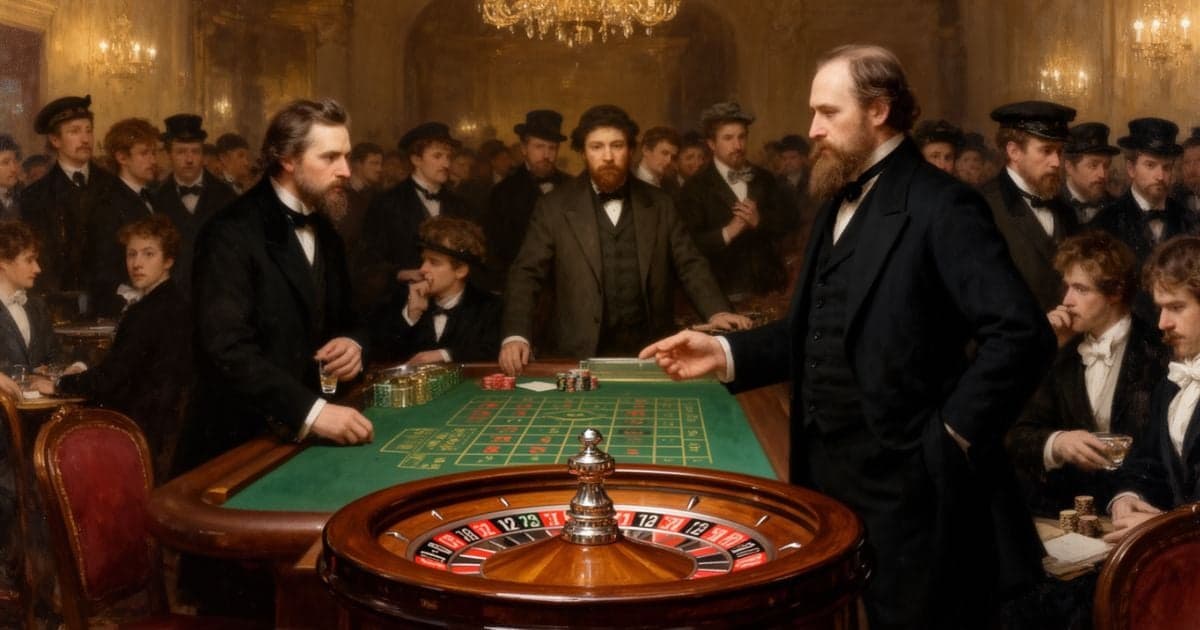
The first true sentence about use in this novel is not the public French. It is a private aversion. Alexei has already agreed to play, and he still does not like doing it on behalf of someone else. That dislike is the last uncorrupted reading of the job. Everything after is a story that makes the job feel like intensity, devotion, even freedom. Dostoevsky is exact about the sequence: itch, compliance, then a performance so complete that the room will remember the tutor and forget the woman who sent him.
The Baroness assignment is a smaller kill question. Take off your hat. Say something in French. He says he is her slave, loudly, embroidering the words. Then he explains that it all came of Polina, which is accurate and useless. Causal credit does not cancel the next envelope. De Griers arrives only when the instrument might knock over the ledger. Courtesy from a man who treated you as furniture is inventory. You have become a variable. Variables get managed.
Blanche is the last user, and she does not need to dare him. She only needs a man who has already learned to spend himself. What do you want with money, she asks, after taking it. He answers that faster is better. Tu étais bon enfant: a grade for softness, tears included. The General lived the same pattern in the other direction, a husband-shaped account until the transfer cleared. Becoming an instrument is not a single scandal. It is a skill you can take to Paris. The novel's warning is that the skill feels, near the end, like personality.
The Central Lesson
You become an instrument at the moment the first aversion loses the argument. Alexei does not like playing for someone else, then says he is a slave in public French, then traces the fracas to Polina and stays on call. De Griers inventories him. Blanche grades him as a good child while the remainder disappears. If you cannot say the request aloud without shame, you were not a partner. You were a tool. Do the next necessary thing in your own name, or do not do it.
Prestige deep dive
A Psychological Reading of The Gambler
The Gambler shows a man who can name every mechanism of the wheel, of a humiliating love, and of a household waiting on a death, and who still treats that clarity as a reason to sit down again, because one turn is asked to reverse a life that ordinary time will not.
Read the full psychological readingApplying This to Your Life
Keep the First Aversion
If a task only makes sense because someone else needs a body, name the owner before you start. Alexei felt the imbalance and played anyway. The itch is data. Treat it as a stop sign, not as a mood that will pass once you prove yourself.
Refuse the Small Public Test
A hat, a message under someone else's name, a joke at your expense in a room that matters: these are calibrations. If you cannot refuse the small one, the large one has already been answered. Decline the hat in daylight.
Read Sudden Politeness as Inventory
De Griers visits when Alexei can affect the arrangement. A manipulator who ignored you and now wants a quiet meeting is not offering friendship. Ask what leak you represent. Then decide whether you still want to be sealable.
Other lessons in this book
More life-skill deep dives from the same classic.
The One Big Win Illusion
Sit with De Griers's visit, the desperate run to the tables, and the fortune Polina throws back because cash was never the problem.
5 chapters·Explore AnalysisHumiliation as a Way of Life
Stay with the tutor's place in the household, the Baroness dare, and a devotion that uses contempt as proof of intensity.
5 chapters·Explore AnalysisRecognizing the Gambling Spiral
Watch Polina's first stake, the grandmother's afternoon transformation, and the chase that treats every loss as a correctable error.
6 chapters·Explore AnalysisStatus as the Real Stake
Read the inheritance telegrams, the Russians at the spa, and the wish that Baden talk about him as money that is really admission.
6 chapters·Explore AnalysisWhat Happens After
Follow Paris with Blanche, debtor's prison, and Astley on the Homburg bench while tomorrow is still the plan.
3 chapters·Explore Analysis
Continue exploring
Explore this theme
The same lessons in other books
See how other books teach the same life skills.

The Jungle
Reading Graft as Everyday GovernmentStay with Duane's cell and chapter 25: votes, inspectors, and a city that prices justice.
The Idiot
Maintaining Goodness Without NaivetySit with Myshkin on the train in chapter 1: honesty with no angle, and a city that can only call it idiocy.
Jude the Obscure
When Desire Becomes a TrapTrack the pig, the dimple, the false pregnancy, and the second marriage arranged over gin.
Where the lesson lives in the book
Averse, and Still at the Table
He has made up his mind to play, and he still does not like it. The dislike is specific: he feels averse to doing so on behalf of someone else. The feeling is the last uncorrupted data. He plays anyway. Sixteen hundred florins later, the aversion has not been paid. It has been postponed. The hands were already hers.
Key Insight:
The first errand always itches. That itch is the last moment you can still tell whose work it is. If you wait until the errand feels like power, you will call the itch immaturity and keep going.
“I felt averse to doing so on behalf of some one else.”
A Hat, a Baroness, a Line of French
After the kill question comes the practical assignment: go to the Baroness, take off your hat, say something in French. The substitution is the point. She does not need a corpse. She needs a man who will become ridiculous on a walk with the children listening. The instrument is being calibrated, not loved.
Key Insight:
Small public tasks are how a person is trained for larger ones. The hat is easier to defend later than a crime, which is why it is more useful. If you cannot refuse the hat, you have already answered the kill question in miniature.
“go to the Baroness, take off your hat to her, and say something in French.”
Votre Esclave, Loudly
He does it in the open, embroidering each word: Madame la Baronne, j'ai l'honneur d'être votre esclave. The household then treats the fracas as his character. He knows the authorship and still says it all came of Polina, as if naming the source were the same as leaving the role. The tool that succeeds becomes the scandal's face.
Key Insight:
An instrument that performs well inherits the blame. Other people will remember the scene, not the person who wrote it. If you cannot tell the room the errand was assigned, you have accepted authorship of someone else's move.
“Madame la Baronne, said I, loudly and distinctly, j'ai l'honneur d'être votre esclave.”
It All Came of Polina
He traces the fracas to her and stops there, as if diagnosis were resignation from the job. But for her, there might never have been a scene. The sentence is true and insufficient. Causal credit is not the same as a refusal to be sent again. The General, meanwhile, needs him gone so the French arrangement can proceed without a noisy tutor.
Key Insight:
You can be right about who issued the order and still remain on payroll. Naming the sender is analysis. Declining the next envelope is the job change.
“It all came of Polina—yes, of Polina. But for her, there might never have been a fracas.”
The Frenchman Comes to Inventory Him
De Griers, who treats furniture as furniture, arrives because Alexei has become a variable. Something out of the way is on the carpet. The visit is not respect. It is a bid to put the instrument back in the drawer before it knocks over the marriage market. Sudden courtesy from a man who ignored you is a risk assessment, not a friendship.
Key Insight:
When a manipulator becomes polite, you have stopped being scenery. You have started being a leak. Do not confuse the meeting with an apology. It is an attempt to reseal you.
“At once I divined that something out of the way was on the carpet.”
Bon Enfant, Then the Remainder
Blanche takes what is left of the fortune and asks, reasonably in her own grammar, what he wants with money. He tells her the quicker it goes the better. At the goodbye she calls him a good child. The General lived this role first: a man kept on hand until the value he represented could be transferred. A practiced instrument is easy to reassign.
Key Insight:
Once you are fluent at being used, a new user does not need your love. They need a fortune that arrived attached to a man who no longer knows what the money was for. Softness, in Blanche's mouth, is a grade, not a compliment.
“The quicker it goes the better.”