Wide Reads
Literature MattersLife IndexEducators
Sign in
Where to Begin
The Gambler - Money Can't Buy Love

Fyodor Dostoevsky

The Gambler

Money Can't Buy Love

Home›Books›The Gambler›Chapter 15
Previous
15 of 17
Next

Summary

Money Can't Buy Love

The Gambler by Fyodor Dostoevsky

0:000:00
Listen to Next Chapter

The narrator returns to Polina with his massive gambling winnings, convinced that money will solve their problems and prove his devotion. He offers her fifty thousand francs to throw in De Griers' face, but Polina reacts with contempt and hysteria. She accuses him of trying to buy her like De Griers did, revealing her deep shame about being treated as a commodity. In an emotional breakdown, she oscillates between clinging to him desperately and pushing him away with hatred. The next morning, she demands the money, then hurls it in his face before storming out. Meanwhile, Mr. Astley has taken the sick Polina under his protection at his hotel, creating a scandal. When the narrator visits, Astley coldly informs him that Polina is ill and staying in his rooms, suggesting the narrator will soon leave for Paris like all newly rich Russians. The prediction proves accurate when Mlle. Blanche seduces the narrator into accompanying her to Paris with his winnings. As they depart together, the narrator realizes his gambling addiction has fundamentally changed him, even as he promises himself he'll return to settle scores with Astley. This chapter exposes how money amplifies existing relationship dynamics rather than healing them, and how addiction can make us abandon our deepest values.

Coming Up in Chapter 16

In Paris, the narrator discovers what happens when a gambling addict tries to buy happiness in the world's most expensive playground. Will his fortune last, or will his compulsions destroy everything he's won?

Share it with friends

Previous ChapterNext Chapter
GO ADS FREE — JOIN US
Original text
complete·3,961 words
I

remember, too, how, without moving from her place, or changing her attitude, she gazed into my face.

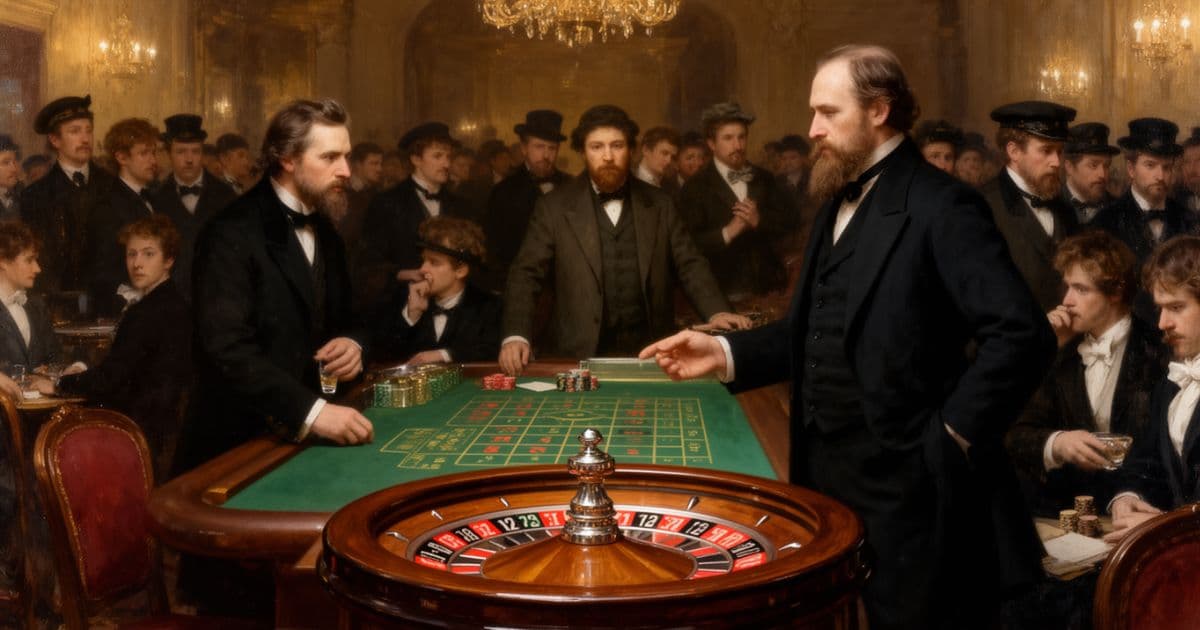
“I have won two hundred thousand francs!” cried I as I pulled out my last sheaf of bank-notes. The pile of paper currency occupied the whole table. I could not withdraw my eyes from it. Consequently, for a moment or two Polina escaped my mind. Then I set myself to arrange the pile in order, and to sort the notes, and to mass the gold in a separate heap. That done, I left everything where it lay, and proceeded to pace the room with rapid strides as I lost myself in thought. Then I darted to the table once more, and began to recount the money; until all of a sudden, as though I had remembered something, I rushed to the door, and closed and double-locked it. Finally I came to a meditative halt before my little trunk.

“Shall I put the money there until tomorrow?” I asked, turning sharply round to Polina as the recollection of her returned to me.

1 / 24

Master this chapter. Complete your experience

Purchase the complete book to access all chapters and support classic literature

Read Free on GutenbergBuy at Powell'sBuy on Amazon

As an Amazon Associate, we earn a small commission from qualifying purchases at no additional cost to you.

Available in paperback, hardcover, and e-book formats

GO ADS FREE — JOIN US

Why This Matters

Connect literature to life

Skill: Distinguishing Between Financial and Emotional Problems

This chapter teaches how to recognize when someone's anger or hurt stems from feeling disrespected rather than lacking resources.

Practice This Today

This week, notice when you want to solve a relationship problem by spending money—pause and ask what the person actually needs to feel heard or valued.

GO ADS FREE — JOIN US

Now let's explore the literary elements.

Key Quotes & Analysis

"I have won two hundred thousand francs!"

— Narrator

Context: The narrator bursts in to tell Polina about his massive gambling win

His excitement reveals he thinks money will solve their relationship problems. He's high on the win and can't read the room. The exclamation shows how gambling victory has made him tone-deaf to others' feelings.

In Today's Words:

I'm rich! This changes everything!

"Somehow in her face there was a strange expression—an expression which I did not like. I think that I shall not be wrong if I say that it indicated sheer hatred."

— Narrator

Context: He notices Polina's reaction as he counts his money obsessively

He sees her disgust but doesn't understand it. His focus on the money blinds him to how his behavior looks to her. The 'sheer hatred' foreshadows her explosive rejection of his offer.

In Today's Words:

She was looking at me like I was trash, but I didn't get why

"You wished to buy me! You thought that you could buy me!"

— Polina

Context: Her furious response to the narrator's offer of money

She sees his 'generous' offer as identical to De Griers' manipulation. Money offered as love feels like purchase to someone who's been treated as property. Her repetition shows how deeply this wounds her.

In Today's Words:

You think you can just throw money at me and I'll be yours!

"She is very ill, and I think that she is out of her mind."

— Mr. Astley

Context: Explaining why Polina is staying in his hotel rooms

Astley's clinical description shows Polina's complete breakdown. Her 'madness' reflects the impossible position of needing help but refusing to be owned. It also justifies the scandal of their living arrangement.

In Today's Words:

She's having a complete breakdown and isn't thinking straight

Thematic Threads

Pride

In This Chapter

The narrator's pride in his winnings blinds him to Polina's actual needs and feelings

Development

Evolved from earlier gambling pride to romantic pride—now he believes money proves his worth as a lover

In Your Life:

You might see this when you use achievements or purchases to prove your value to others instead of being vulnerable

Class

In This Chapter

Polina's shame about being treated as a commodity reveals how class dynamics poison intimate relationships

Development

Deepened from earlier social climbing themes to show how class shame affects personal identity

In Your Life:

You might feel this when someone's financial help makes you feel like you owe them or aren't their equal

Addiction

In This Chapter

The narrator abandons his deepest values, leaving with Blanche despite claiming to love Polina

Development

Progressed from gambling compulsion to showing how addiction destroys our ability to act on our stated priorities

In Your Life:

You might recognize this when you repeatedly choose the immediate gratification over what you say matters most

Identity

In This Chapter

Astley predicts the narrator will become another stereotypical rich Russian in Paris, and he does

Development

Culminated earlier themes about social expectations becoming self-fulfilling prophecies

In Your Life:

You might see this when others' low expectations of you become the path you actually follow

Communication

In This Chapter

Polina and the narrator completely misread each other—she sees his offer as an insult, he sees her rejection as inexplicable

Development

Introduced here as the breakdown of understanding between people who claim to love each other

In Your Life:

You might experience this when your good intentions are completely misunderstood by someone you care about

GO ADS FREE — JOIN US

You now have the context. Time to form your own thoughts.

Discussion Questions

  1. 1

    Why does the narrator believe his gambling winnings will fix his relationship with Polina, and how does she actually react to his offer?

    analysis • surface
  2. 2

    What does Polina mean when she accuses the narrator of trying to 'buy' her like De Griers did, and why does this make her so angry?

    analysis • medium
  3. 3

    Where do you see people today trying to solve emotional problems with money instead of addressing the real issues?

    application • medium
  4. 4

    When someone you care about is hurt or angry, how can you tell the difference between problems that money can solve and problems that need emotional healing?

    application • deep
  5. 5

    What does this chapter reveal about why throwing money at relationship problems often backfires, even when our intentions are good?

    reflection • deep

Critical Thinking Exercise

10 minutes

Diagnose the Real Problem

Think of a recent conflict or tension in your life where someone (maybe you) tried to fix things with money, gifts, or material gestures. Write down what the surface problem seemed to be, then dig deeper to identify what the person really needed. Finally, brainstorm three non-monetary ways the situation could have been addressed.

Consider:

  • •Look for patterns where money became a substitute for time, attention, or emotional work
  • •Consider how the person receiving the money or gifts actually felt about the gesture
  • •Think about whether the underlying emotional need was ever directly acknowledged or addressed

Journaling Prompt

Write about a time when someone tried to solve a problem with you using money or gifts when what you really needed was something else entirely. How did it make you feel, and what would have actually helped?

GO ADS FREE — JOIN US

Coming Up Next...

Chapter 16: The Gambler's Last Dance

In Paris, the narrator discovers what happens when a gambling addict tries to buy happiness in the world's most expensive playground. Will his fortune last, or will his compulsions destroy everything he's won?

Continue to Chapter 16
Previous
The Miracle of Desperate Luck
Contents
Next
The Gambler's Last Dance

Continue Exploring

The Gambler Study GuideTeaching ResourcesEssential Life IndexBrowse by ThemeAll Books

You Might Also Like

Crime and Punishment cover

Crime and Punishment

Fyodor Dostoevsky

Also by Fyodor Dostoevsky

The Brothers Karamazov cover

The Brothers Karamazov

Fyodor Dostoevsky

Also by Fyodor Dostoevsky

The Idiot cover

The Idiot

Fyodor Dostoevsky

Also by Fyodor Dostoevsky

Jane Eyre cover

Jane Eyre

Charlotte Brontë

Explores personal growth

Browse all 47+ books
GO ADS FREE — JOIN US

Share This Chapter

Know someone who'd enjoy this? Spread the wisdom!

TwitterFacebookLinkedInEmail

Read ad-free with Prestige

Get rid of ads, unlock study guides and downloads, and support free access for everyone.

Subscribe to PrestigeCreate free account
Intelligence Amplifier
Intelligence Amplifier™Powering Wide Reads

Exploring human-AI collaboration through books, essays, and philosophical dialogues. Classic literature transformed into navigational maps for modern life.

2025 Books

→ The Amplified Human Spirit→ The Alarming Rise of Stupidity Amplified→ San Francisco: The AI Capital of the World
Visit intelligenceamplifier.org
hello@widereads.com

WideReads Originals

→ You Are Not Lost→ The Last Chapter First→ The Lit of Love→ Wealth and Poverty→ 10 Paradoxes in the Classics · coming soon
Arvintech
arvintechAmplify your Mind
Visit at arvintech.com

Navigate

  • Home
  • Library
  • Essential Life Index
  • How It Works
  • Subscribe
  • Account
  • About
  • Contact
  • Authors
  • Suggest a Book
  • Landings

Made For You

  • Students
  • Educators
  • Families
  • Readers
  • Literary Analysis
  • Finding Purpose
  • Letting Go
  • Recovering from a Breakup
  • Corruption
  • Gaslighting in the Classics

Newsletter

Weekly insights from the classics. Amplify Your Mind.

Legal

  • Privacy Policy
  • Terms of Service
  • Cookie Policy
  • Accessibility

Why Public Domain?

We focus on public domain classics because these timeless works belong to everyone. No paywalls, no restrictions—just wisdom that has stood the test of centuries, freely accessible to all readers.

Public domain books have shaped humanity's understanding of love, justice, ambition, and the human condition. By amplifying these works, we help preserve and share literature that truly belongs to the world.

A Pilgrimage

Powell's City of Books

Portland, Oregon

If you ever find yourself in Portland, walk to the corner of Burnside and 10th. The building takes up an entire city block. Inside is over a million books, new and used on the same shelf, organized by color-coded rooms with names like the Rose Room and the Pearl Room. You can lose an afternoon. You can lose a weekend. You will find a book you have been looking for your whole life, and three you did not know existed.

It is a pilgrimage. We cannot find a bookstore like it anywhere on earth. If you read the classics, and you ever get the chance, go. It belongs on every reader's bucket list.

Visit powells.com

We are not in any way affiliated with Powell's. We are just a very big fan.

© 2026 Wide Reads™. All Rights Reserved.

Intelligence Amplifier™ and Wide Reads™ are proprietary trademarks of Arvin Lioanag.

Copyright Protection: All original content, analyses, discussion questions, pedagogical frameworks, and methodology are protected by U.S. and international copyright law. Unauthorized reproduction, distribution, web scraping, or use for AI training is strictly prohibited. See our Copyright Notice for details.

Disclaimer: The information provided on this website is for general informational and educational purposes only and does not constitute professional, legal, financial, or technical advice. While we strive to ensure accuracy and relevance, we make no warranties regarding completeness, reliability, or suitability. Any reliance on such information is at your own risk. We are not liable for any losses or damages arising from use of this site. By using this site, you agree to these terms.