Noli Me Tángere
José Rizal
0:000:00
0:00 / 0:00

Prestige · $2.99/month
Chapter audio, theme analysis, and downloads
José Rizal
0:00 / 0:00
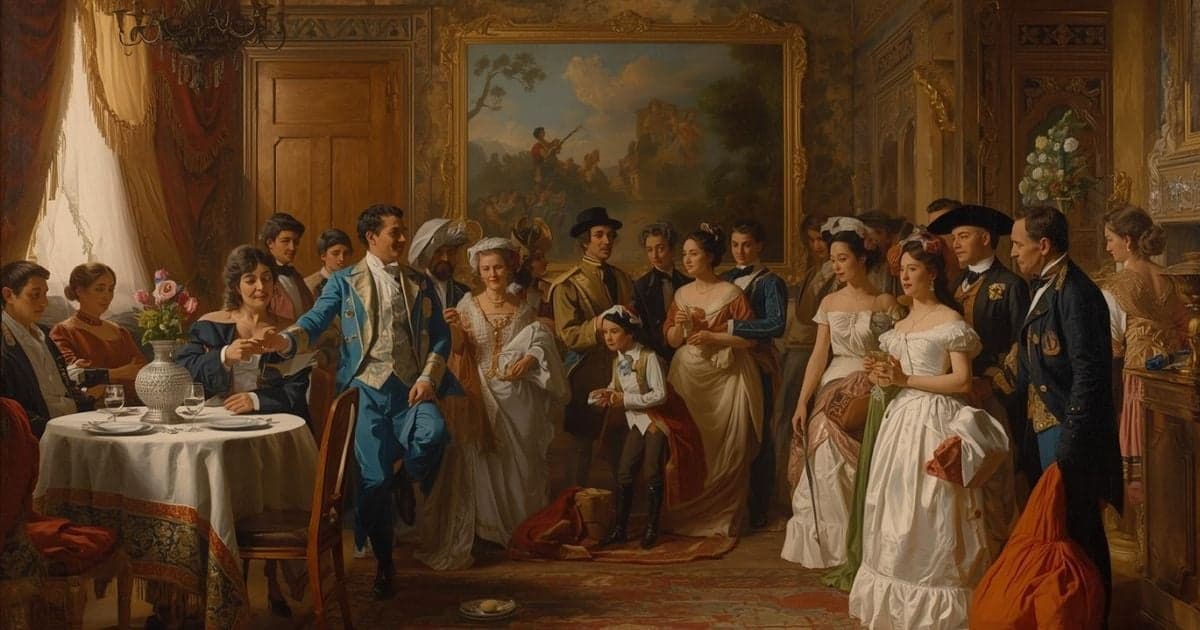
Capitan Tiago's table is still set for a homecoming. Padre Damaso jokes about a grave, and Crisostomo Ibarra learns that his father is already a heretic in the official story. The welcome home is a warning. Rizal published Noli Me Tángere in Berlin in 1887 so Europe would have to read it, then sent it home to be banned. Ibarra still believes a school can repair a country. The real danger was never a single cruel friar. It was a system that could bury a man outside the church and then invite his son to eat.
Ibarra is the returning son: young, rich, educated in Europe, and so sure a school can fix a country that he treats every warning as pessimism. María Clara is his fiancée, Capitan Tiago's daughter, and later the convent's prize once her usefulness as a bride is gone. Padre Damaso is the Franciscan who buried Don Rafael as a suicide and will not stop talking about it. Padre Salvi is the parish priest who wants María Clara and knows how to use a confession. Elias is the boatman with a hunted name who keeps saving the man who still believes in petitions. Tasio writes in a cipher because he has already been called a madman. Sisa's sons Crispin and Basilio vanish into the convent kitchen. Capitan Tiago buys peace with candles and dinners. The Governor-General's formal power looks larger than the cassock until a planted fuse proves it is not.
Lieutenant Guevara tells Ibarra how Don Rafael died in prison after a boy's skull was broken in the street. Elias kills a crocodile at the picnic and then tells Ibarra that reform inside this government is a courtesy the friars do not return. Sisa goes looking for Crispin and finds only the story the sacristan wants told. The school cornerstone is blessed, then it explodes, and Ibarra is the name already written on the crime. He strikes Damaso for insulting the dead. He is arrested on letters he did not write. María Clara trades her mother's letters, and her own future, to keep him from a public death. On the lake, Elias draws the soldiers off so Ibarra can live, and the water keeps the cheaper ending.
Rizal wrote the novel in Spanish so Europe would have to read it, then sent it home to be banned. He never treats the dinner as local colour, or the school as a civic project the lovers will open at the end. The school is the test, and it fails on purpose: the same men who bless the stone light the fuse. Love is leverage. A confession is a file. A burial fee is a tax that calls itself piety. What remains is not a hymn to revolution. It is a picture of what happens when a decent man tries to repair a machine that is already working exactly as designed.
The dinner already names Exposing Systemic Corruption: Damaso collecting rent in a cassock, burial fees that are voluntary until you refuse them, a courtroom that prices a verdict. Navigating Colonial Power is the same room plus the Governor-General's handshake and the planted letters, informal power in the convent outrunning formal power in the palace. Protecting Dignity Under Oppression is Sisa still looking for a son the convent has already spent, and María Clara choosing the veil over a life that would require her to smile at the men who used her. The school is the test. Recognizing Religious Hypocrisy is the sermon that blesses the cornerstone and the confession that stores her secrets, piety sold by the candle, then the same men light the fuse. Limits of Education as Reform is Ibarra's Europe, Tasio's books, and the schoolhouse meeting that fact. Strategic Resistance is Elias in the boat, warning that a school will not outvote a fuse, then spending his body so the other man can leave the lake.
Elias draws the soldiers off on the lake so Ibarra can live, and the water keeps the cheaper ending. The school stone is already blessed and already a crime. Wide Reads binds summaries, quotes, and audio through all sixty-three chapters, from that Manila dining room to the night Elias spends his body in the water.
On the last of October Capitan Tiago announces a dinner at his house on Calle Anloague, and Manila's...
The oil portrait of Capitan Tiago comes alive when he leads in Don Crisostomo Ibarra, returned from ...
Dinner begins with petty collisions of status. Doña Victorina rages when the lieutenant steps on her...
After leaving the table Ibarra walks through Binondo and marvels that the streets, vendors, and even...
Ibarra reaches his room overlooking the river, too stunned to notice the lighted house opposite wher...
While Ibarra sleeps, Rizal steps aside to profile Capitan Tiago, the host whose candles finance the ...
Maria Clara hurries home from mass too restless for prayer and waits on the azotea while Aunt Isabel...
Ibarra's carriage crosses Manila by daylight, and the city that depressed him at night now floods hi...
Padre Damaso mutters threats as Maria Clara leaves for the convent, then refuses Capitan Tiago's han...
From the church tower San Diego looks like a green nest around a lake, each roof identifiable by a t...
Rizal asks who truly rules San Diego and answers with a satirical tour of impostors. Don Rafael, tho...
On All Saints' Day Rizal contrasts global mourning customs with a Filipino cemetery where goats and ...
Ibarra reaches San Diego's cemetery to honour his father and finds the cross burned, the grave distu...
Don Anastasio, called Tasio the Sage or Tasio the Lunatic, wanders San Diego's stormy streets after ...
During the thunderstorm Basilio and Crispin ring bells from the church tower, hungry, fined, and afr...
Published 1887
José Rizal (1861-1896) was a Filipino polymath, nationalist, and the foremost advocate for reform in the Philippines during Spanish colonial rule. Born in Calamba, Laguna, the seventh of eleven children, he trained as a doctor and ophthalmologist, spoke over twenty languages, and worked as a novelist, poet, sculptor, and painter, all before the age most people finish a single degree.
His two novels, Noli Me Tángere (1887) and El Filibusterismo (1891), named the corruption and abuses of Spanish friars and colonial officials with enough precision that authorities banned both on sight. They still passed hand to hand across the islands, and Noli's portrait of a hopeful reformer meeting a rigged system helped turn private anger into an organised revolution. He wrote it in Spanish so the ruling class could not claim they had not understood him.
Rizal spent years in exile across Europe, practising medicine (he once operated on his own mother's eyes) and organising for peaceful reform, then was arrested when revolution broke out in 1896 despite his opposing armed revolt. He was executed by firing squad on 30 December, aged 35, after smuggling out a farewell poem hidden inside an alcohol lamp. The execution made him a martyr, and every Filipino schoolchild still learns how one life sentenced to end an argument only made it louder.
Rizal speaks to the moment when you can see exactly how a system extracts from people and still cannot say so directly, because the people who run it also write the official story. His answer was not a pamphlet or a petition. It was a novel precise enough to name every method (the burial fee, the planted letter, the blessed cornerstone that hides a fuse) without ever naming a real friar who could sue him for it.
Plot, characters, and themes — plus audio, source text, and patterns you can use after class
Two ways in
Chapter by chapter, with audio. The meaning arrives because you experienced it — not because someone listed bullet points.
Start with this.
The actual words the author wrote, alongside every summary. Use the guide, then step into the source.
Then step into the source.
Either way, the door opens inward.
— and most of all, Why does this matter?
Purchase the complete book to access all chapters and support classic literature
Available in paperback, hardcover, and e-book formats
Free to read • No account required

Weekly insights from the classics. Amplify Your Mind.
We focus on public domain classics because these timeless works belong to everyone. No paywalls, no restrictions—just wisdom that has stood the test of centuries, freely accessible to all readers.
Public domain books have shaped humanity's understanding of love, justice, ambition, and the human condition. By amplifying these works, we help preserve and share literature that truly belongs to the world.
© 2026 Wide Reads™. All Rights Reserved.
Intelligence Amplifier™ and Wide Reads™ are proprietary trademarks of Arvin Lioanag.
Copyright Protection: All original content, analyses, discussion questions, pedagogical frameworks, and methodology are protected by U.S. and international copyright law. Unauthorized reproduction, distribution, web scraping, or use for AI training is strictly prohibited. See our Copyright Notice for details.
Disclaimer: The information provided on this website is for general informational and educational purposes only and does not constitute professional, legal, financial, or technical advice. While we strive to ensure accuracy and relevance, we make no warranties regarding completeness, reliability, or suitability. Any reliance on such information is at your own risk. We are not liable for any losses or damages arising from use of this site. By using this site, you agree to these terms.
Deep dives
Stay with Sisa looking for a son the convent has already spent, and María Clara choosing the veil over a smile she cannot mean.
Truly, divine justice is not nearly so exacting as human.
Hear Elias warn that a school will not outvote a fuse, then watch him spend his body so Ibarra can leave the lake.
I owe my life to you,
Name the sermon that blesses the cornerstone, the confession that stores María Clara's secrets, and piety sold by the candle.
King or rook! What difference does that make?
See Ibarra's Europe, Tasio's books, and the schoolhouse meet the same fact: knowledge does not dismantle a hierarchy that profits from ignorance.
Welcome back to your country! And may you be happier in it than your father was!
Navigate colonial identity in Noli Me Tángere. Rizal chapters on returning home changed, performing belonging, and split loyalties under empire.
Returning changed can feel like betrayal to people who never left. Colonial identity fractures when love of country requires performing ignorance you…
Trending search questions mapped to the lessons in this treatise—what readers actually ask Google about colonial identity and belonging, lower your head or lose it, not writing for this generation, offer your neck in the street, and the dead man is only an indian.
Crisóstomo Ibarra comes home from studying in Europe to find his father already condemned as a heretic and buried outside consecrated ground. He still believes a schoolhouse can fix the town that did this, while Padre Dámaso keeps making grave jokes at the welcome dinner. José Rizal published the novel in 1887 to put that contradiction, reform offered to a system that profits from corruption, in front of readers who could not look away.
Explore Exposing Systemic CorruptionDámaso buried Don Rafael as a suicide and a heretic, then keeps joking about the grave in front of the son who does not yet know the story. The joke is not cruelty for its own sake. It is a warning dressed as small talk, telling Ibarra exactly how little his father's reputation is worth in a room the friar controls.
Explore Recognizing Religious HypocrisySisa's two sons work as sacristans under a sacristan mayor who accuses Crispin of theft and beats him inside the convent. Crispin disappears there and Basilio flees with the story the convent wants told instead of the truth. Sisa spends the rest of the novel searching for a son the church has already spent.
Explore Protecting Dignity Under OppressionElias has already told Ibarra that petitions cannot outvote a friar with a fuse, so when soldiers corner the two men on the lake he draws their fire instead of arguing the point again. His last act delivers the answer his warnings could not: resistance sometimes costs the resister, not the system he is resisting.
Explore Strategic ResistanceThe novel names the actual machinery of colonial rule closely enough that officials could recognise their own methods on the page: friars who outrank the Governor-General in practice, burial fees collected like sacraments, letters planted to convict an innocent man. Rizal published it in Berlin in 1887 precisely so it would exist before anyone in Manila could stop it.
Explore Navigating Colonial PowerSix lessons run through the novel: corruption survives by collecting small fees no one refuses; colonial power works through friars, not only governors; dignity means refusing to smile at the people who used you; hypocrisy hides inside a blessed cornerstone; education alone cannot dismantle a hierarchy that profits from ignorance; and resistance sometimes means spending your own body so someone else can leave the lake alive.
What makes him indispensable is that he had lived the research before he wrote it down. A doctor trained in Madrid who later operated on his own mother's eyes, Rizal spent years in Europe watching how colonial power actually moved, then came home and wrote it into a story about a hopeful young reformer so the criticism could travel further than an essay ever would. The colonial government banned Noli Me Tángere and it still passed from hand to hand, because a novel is harder to confiscate than an argument.
Rizal was executed by firing squad in 1896, four years after the book made him a marked man, and the revolution his novel helped provoke outlived him. What he left behind still works as a diagnostic: any institution that dresses up extraction as tradition, and calls the people who notice ungrateful, is running Ibarra's town under a different flag.