Master this chapter. Complete your experience
Purchase the complete book to access all chapters and support classic literature
As an Amazon Associate, we earn a small commission from qualifying purchases at no additional cost to you.
Available in paperback, hardcover, and e-book formats
Why This Matters
Connect literature to life
This chapter teaches how to recognize when people use noble language to justify harmful behavior and make themselves untouchable to criticism.
Practice This Today
This week, notice when someone claims they're acting 'for the greater good' or 'just trying to help' - then look at the actual results of their actions, not their stated intentions.
Now let's explore the literary elements.
Key Quotes & Analysis
"his house, like his country, shut its doors against nothing except commerce and all new or bold ideas"
Context: Describing Captain Tiago's hospitality and the Philippines under Spanish rule
This reveals how colonial rule stifled economic development and intellectual progress while maintaining superficial openness. The comparison between Tiago's house and the country shows how individual behavior reflects larger political systems.
In Today's Words:
He welcomed everyone except anyone who might actually challenge the system or bring real change
"The indio is so lazy!"
Context: Ranting about Filipino character during dinner conversation
This racist stereotype justified Spanish control by portraying Filipinos as naturally inferior and needing foreign guidance. It reveals how colonizers used prejudice to maintain power and excuse exploitation.
In Today's Words:
These people are just naturally lazy - that's why they need us to run things
"I know the country, sir, I've lived here for twenty years"
Context: Defending his authority when challenged about his knowledge of the Philippines
He confuses length of residence with understanding, showing the arrogance of colonizers who never truly learned about the culture they controlled. Time spent doesn't equal wisdom gained.
In Today's Words:
I've been here forever, so obviously I know what I'm talking about
Thematic Threads
Power
In This Chapter
Fray Damaso wields religious authority to justify racist views and grave desecration, while civil authorities struggle to check church power
Development
Introduced here
In Your Life:
You see this when supervisors, family members, or officials use their position to avoid consequences for harmful behavior.
Class
In This Chapter
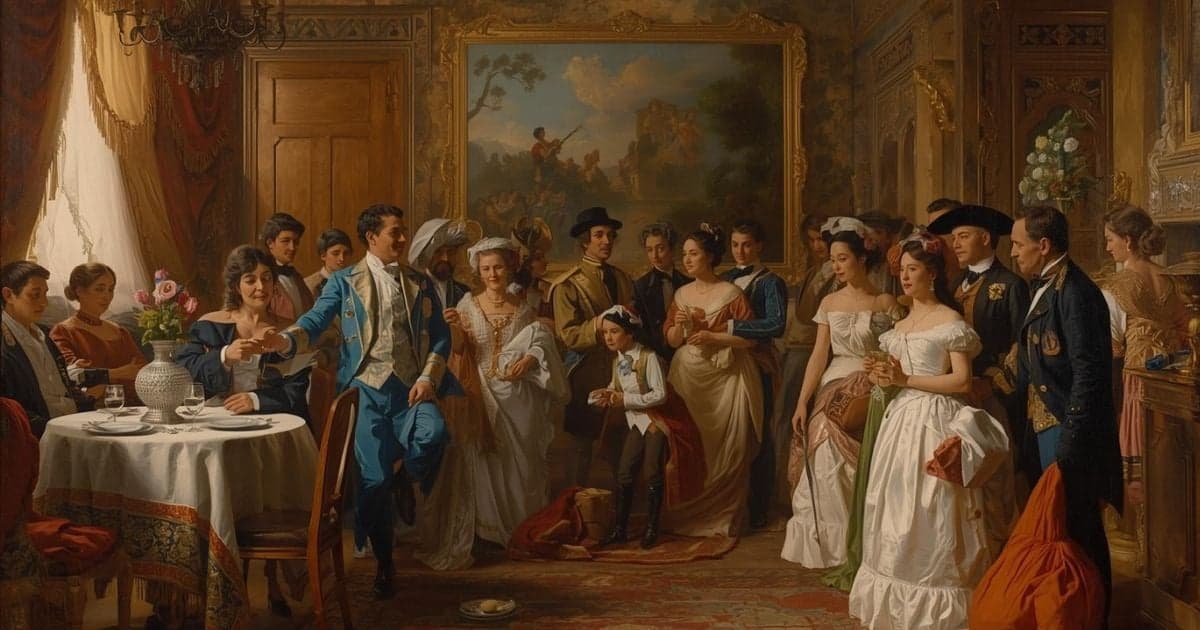
The dinner party itself segregates by status, with wealthy Captain Tiago hosting parasites and social climbers seeking favor
Development
Introduced here
In Your Life:
You encounter this in any social setting where people position themselves around those with money or influence.
Identity
In This Chapter
Captain Tiago's house reflects cultural confusion—Spanish colonial mixed with Chinese decorations and morbid religious art
Development
Introduced here
In Your Life:
You face this when trying to balance different cultural expectations or when your environment reflects conflicting values.
Social Expectations
In This Chapter
Guests maintain surface civility despite underlying tensions and fundamental disagreements about authority and race
Development
Introduced here
In Your Life:
You navigate this at family gatherings, workplace events, or community functions where you must be polite despite serious disagreements.
Corruption
In This Chapter
Religious authority corrupted into personal prejudice and abuse, with Damaso's transfer revealing scandal reaching the highest levels
Development
Introduced here
In Your Life:
You see this when institutions you're supposed to trust—healthcare, education, religion—prioritize self-interest over their stated mission.
You now have the context. Time to form your own thoughts.
Discussion Questions
- 1
What does Captain Tiago's house reveal about his position in colonial society, and why does he host these elaborate dinner parties?
analysis • surface - 2
Why does Fray Damaso become so angry when questioned about his transfer from San Diego, and what does his reaction reveal about his character?
analysis • medium - 3
Where do you see people today using noble language or higher purposes to justify questionable behavior in your workplace, family, or community?
application • medium - 4
When someone wraps bad behavior in righteous language, how can you respond effectively without directly challenging their claimed noble purpose?
application • deep - 5
What does this dinner party teach us about how power corrupts people, even those who genuinely believe they're doing good?
reflection • deep
Critical Thinking Exercise
Decode the Sacred Mask
Think of someone in your life who uses noble language to justify behavior that bothers you - a boss who claims everything is 'for the team,' a family member who controls others 'out of love,' or a leader who makes unpopular decisions 'for the greater good.' Write down their stated noble purpose, then list the actual results of their actions. What pattern emerges when you compare the mask to the reality?
Consider:
- •Focus on observable actions and outcomes, not intentions or motivations
- •Look for patterns over time rather than isolated incidents
- •Consider how the noble language makes it harder for others to object or resist
Journaling Prompt
Write about a time when you caught yourself using noble language to justify something you wanted to do anyway. What were you really protecting or pursuing beneath the righteous words?
Coming Up Next...
Chapter 2: The Return of the Prodigal Son
The mysterious young man referenced in the heated discussion - the son of the dishonored dead man - is about to make his entrance. Crisostomo Ibarra's arrival will transform this evening from mere social gossip into something far more dangerous.