
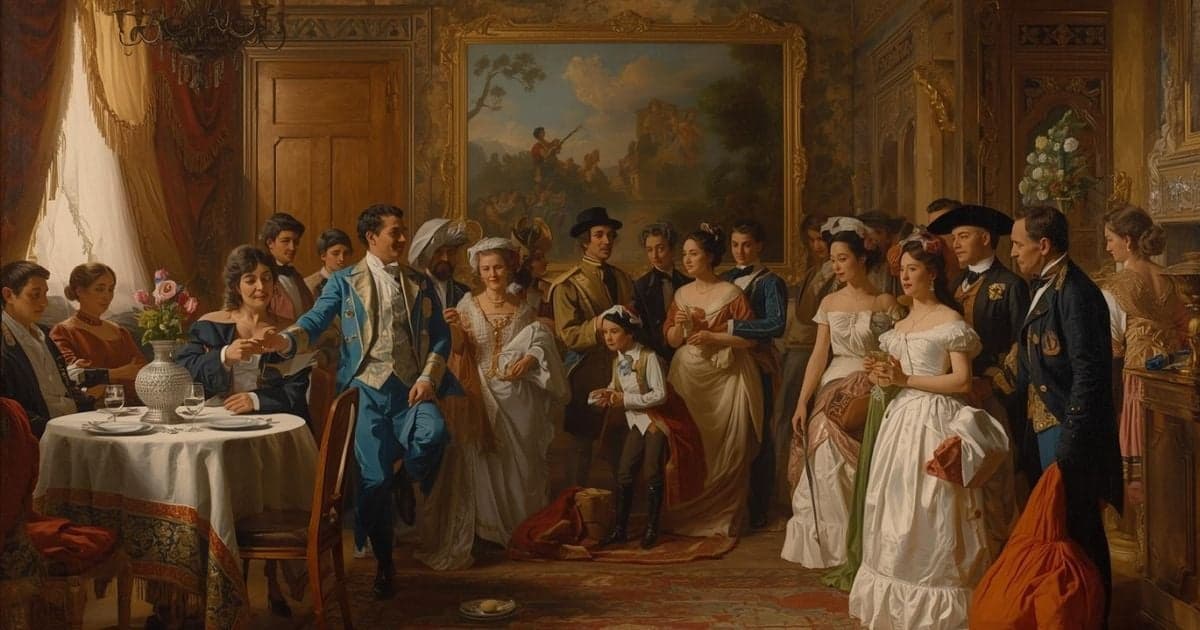
The derrick falls during a blessing, and the town's first arithmetic is not grief. The dead man is only an Indian. Praise God he is neither priest nor Spaniard. Rizal does not need a secret ledger after that sentence. The ranking was public. The timber was meant to impress a crowd. The worker underneath it was always going to be cheaper than the ceremony.
That same ranking runs the dinner, the cemetery, the convento kitchen, and the town hall. Damaso calls a people indolent while a lieutenant mentions a body taken from consecrated ground. Guevara tells the son to learn from a father who died in prison. Tiago's candles are bought with contracts that smell of blood. Two boys are fined for gold they never held. The gobernadorcillo does not decide the fiesta. He repeats that the curate must be obeyed. None of this is a malfunction. It is a machine that already knows which names can be crushed and which names require a telegram.
Ibarra keeps arriving as if Europe could revise the price list. The conspiracy Salvi 'discovers' is the last proof: the crime is authored before it occurs, then sold as vigilance. You do not expose a system like this by naming a villain. You expose it by watching who gets praised when the wrong body is under the stone, and who gets a plot written onto his letters. If the dead man had been a Spaniard, the town would have needed a different God for the afternoon. It did not. That is the whole book in one thanksgiving.
The Central Lesson
Systemic corruption is a ranking that does not need to hide. The worker under the derrick is cheaper than the blessing. The boys in the tower are cheaper than the gold they never stole. The father in prison is a lesson for the son, not a scandal for the town. Praise God it was not a priest. If you still think the problem is a few cruel men, you will keep sending petitions to the people who wrote the plot. Watch who is inexpensive when something breaks. That person was never an accident. He was the budget.
Applying This to Your Life
Notice Who Is Cheap When It Breaks
A collapse, a layoff, a 'process error' always has a first sentence about whose body it was. If the room is relieved that the casualty was not important, you have seen the ranking. Do not argue about the timber until you have named the thanksgiving.
Treat the Meeting as Costume
Town halls, boards, and all-hands can debate for an hour and still have one voter offstage. Ask who can end the discussion without a motion. If the answer is a person who does not sit in the chairs, you are not in a deliberation. You are in a parish with extra furniture.
Watch Crimes Filed in Advance
Salvi discovers a conspiracy on a clock. When an institution already has your name on a failure that has not happened, stop bringing better evidence. Bring a map of who authors the story, and get your papers out of their reach.
Other lessons in this book
More life-skill deep dives from the same classic.
Colonial Identity and Belonging
Navigate colonial identity in Noli Me Tángere. Rizal chapters on returning home changed, performing belonging, and split loyalties under empire.
8 chapters·Explore AnalysisNavigating Colonial Power
Read the dinner table, the Governor-General's handshake, and the planted letters as a map of who can actually ruin you.
7 chapters·Explore AnalysisLimits of Education as Reform
See Ibarra's Europe, Tasio's books, and the schoolhouse meet the same fact: knowledge does not dismantle a hierarchy that profits from ignorance.
7 chapters·Explore AnalysisRecognizing Religious Hypocrisy
Name the sermon that blesses the cornerstone, the confession that stores María Clara's secrets, and piety sold by the candle.
7 chapters·Explore AnalysisStrategic Resistance
Hear Elias warn that a school will not outvote a fuse, then watch him spend his body so Ibarra can leave the lake.
7 chapters·Explore AnalysisProtecting Dignity Under Oppression
Stay with Sisa looking for a son the convent has already spent, and María Clara choosing the veil over a smile she cannot mean.
7 chapters·Explore Analysis
Continue exploring
Explore this theme
The same lessons in other books
See how other books teach the same life skills.

North and South
Acting on Conscience When It Costs YouWatch Hale leave the church, Margaret lie at the station for Frederick, and Thornton refuse a speculation that would save him.North and South
Navigating Class and Economic PowerTrace Milton from imported Irish hands and Boucher's brook to the inheritance that buys a partnership, not a husband.
Paradise Lost
When Pride Sounds Like PrincipleHear Satan on the burning lake and at Eden's edge: wounded dignity reframed as liberty, and a no that is only a refusal to be second.
Where the lesson lives in the book
The House That Bars New Ideas
Capitan Tiago's sala fills with parasites who already know the jokes. Damaso calls the Indian indolent. A lieutenant mentions a corpse dug up and taken from the cemetery. The dinner is not colour. It is a briefing: who may be buried, who may be joked about, who still gets a plate.
Key Insight:
Corruption that needs a speech is amateur. This room works because everyone already agrees which lives are punchlines. If a gathering treats a grave as gossip, you are not a guest. You are being taught the local price list.
“The Indian is so indolent!”
Learn from Your Father
Ibarra leaves the table still thinking streets can stay the same while he has changed. Lieutenant Guevara stops him: be careful; learn from your father. The lesson is not a proverb. Don Rafael died in prison. The son's Europe is irrelevant to a cell that already closed.
Key Insight:
A system that can jail a generous man does not need a secret. It needs a story that will hold in court and at dinner. When the warning is 'learn from the dead,' the living are already inside the same ledger.
“He died in prison!”
Candles Bought with Blood of the Poor
While Ibarra sleeps, Rizal inventories the host. Tiago profits from opium, prison contracts, tax farming, and plantations, then advertises piety with wax. Enemies say the fortune is the blood of the poor. He does not need to believe them. The candles still burn.
Key Insight:
Respectable extraction wears a feast. If your access depends on a man who buys saints the way he buys contracts, you are already participating. The hypocrisy is not that he prays. It is that prayer is how the money is washed.
“his enemies averred was the blood of the poor”
Two Gold Pieces from Hungry Boys
Basilio and Crispin ring bells in a thunderstorm, already fined, already accused of stolen gold they could not have. Crispin begs not to be left. The convento does not need the coins. It needs a theft the poor cannot disprove.
Key Insight:
The smallest corruption is often the most honest: invent a debt, then collect it from people who cannot hire a lawyer. If the accused are children and the accuser holds the rope, the crime was designed before the gold was named.
“Don't leave me, they're going to kill me!”
The Curate Must Be Obeyed
The town hall pretends to debate a fiesta budget. Don Filipo distrusts the gobernadorcillo's delay. The old men want spectacle. The younger want something local. The sentence that ends the meeting is not a vote. The curate must be obeyed.
Key Insight:
A chamber can have speeches and still have only one voter. Watch who can adjourn the room without raising a hand. If every plan is a costume until the cassock nods, you are not in a municipality. You are in a parish with extra chairs.
“The curate must be obeyed.”
Praise God, Neither Priest nor Spaniard
The school cornerstone is theatre until the derrick collapses. Elias had warned Ibarra not to go near the stone. A yellowish worker dies crushed under timber meant to impress the crowd. The alcalde notes the dead man is only an Indian. Tiago praises God that the corpse is neither priest nor Spaniard.
Key Insight:
When a public work kills the wrong category of person, the town calls it a bad beginning and moves the chairs. The structure was never broken. It ranked the bodies in advance. If your project needs a blessing from the people who profit if it fails, the fuse is already in the plan.
“Praise God, the dead man is neither a priest nor a Spaniard!”
I Have Discovered a Big Conspiracy
At vespers Salvi rushes to the alferez with a plot timed for eight o'clock: barracks, convento, Spaniards. Two predators share a map drawn from whispers. Ibarra's name is already written on a crime that has not happened. Exposure is not the threat. Authorship is.
Key Insight:
A system this mature does not hide its worst acts. It files them in advance. If the man who hears confessions also discovers conspiracies, you are not watching justice fail. You are watching it work: produce an enemy, then collect the credit.
“I've discovered a big conspiracy!”