Master this chapter. Complete your experience
Purchase the complete book to access all chapters and support classic literature
As an Amazon Associate, we earn a small commission from qualifying purchases at no additional cost to you.
Available in paperback, hardcover, and e-book formats
Why This Matters
Connect literature to life
This chapter teaches how to recognize when someone creates fake injuries against themselves to justify attacking you.
Practice This Today
This week, notice when someone positions themselves as the victim right before they become aggressive—that's manufactured grievance in action.
Now let's explore the literary elements.
Key Quotes & Analysis
"I don't eat chicken - it might be that the chicken knew the priest who confessed it"
Context: Damaso refuses the good piece of chicken, taking the worst portion instead to manufacture a grievance
This seemingly joking comment reveals Damaso's strategy - he creates problems so he can be offended and attack Ibarra. The manufactured slight gives him an excuse to escalate conflict.
In Today's Words:
I'm going to find something to be offended about so I can start a fight
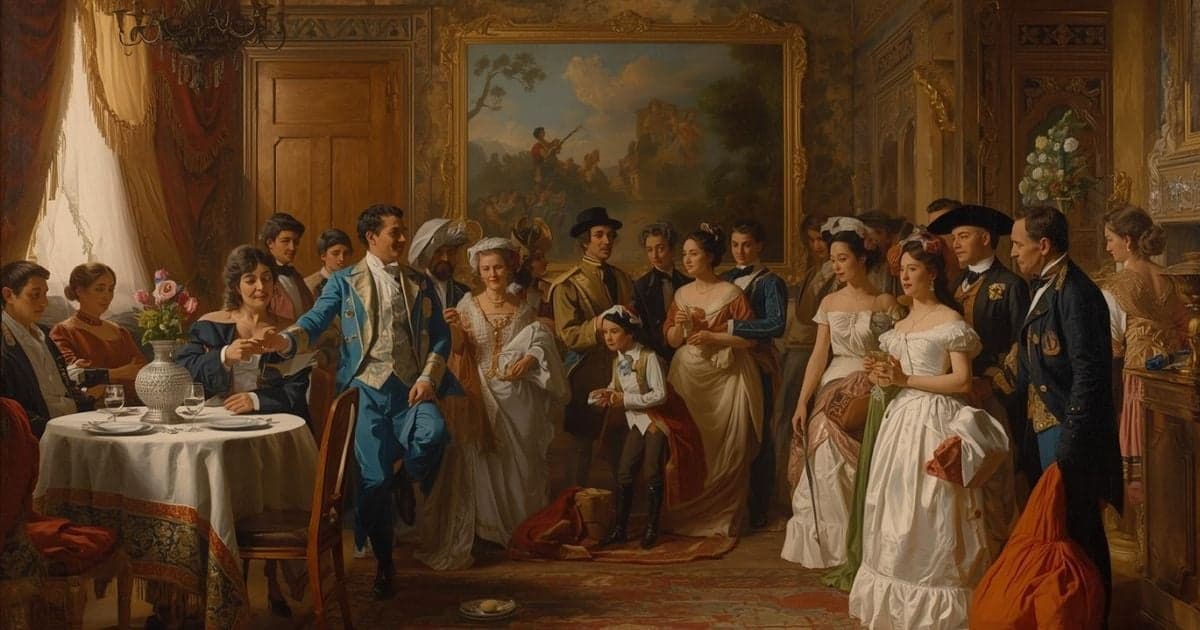
"The lieutenant was grave while the others talked vivaciously, praising the magnificence of the table"
Context: Describing the social dynamics as guests navigate the complex hierarchy at dinner
Shows how everyone must perform their assigned role in colonial society. Some can be cheerful, others must be serious, all based on their position in the hierarchy.
In Today's Words:
Everyone was playing their expected part in this social performance
"Haven't you any eyes?"
Context: Angry at the lieutenant for stepping on her dress
Reveals how colonial society creates constant friction as people compete for tiny scraps of respect and recognition. Her fury over a minor accident shows deeper frustrations.
In Today's Words:
Are you blind or just stupid?
Thematic Threads
Power
In This Chapter
Religious authority expects automatic deference, even from military officers and wealthy hosts
Development
Building from earlier establishment of colonial hierarchy
In Your Life:
You might see this when managers expect respect they haven't earned simply because of their title.
Class
In This Chapter
Capitan Tiago doesn't even get a seat at his own dinner table, showing internalized subordination
Development
Deepening the theme of how colonial subjects police themselves
In Your Life:
You might recognize this when you automatically defer to people who haven't actually proven their authority.
Education
In This Chapter
Ibarra's travels and learning make him dangerous because he can articulate alternatives to the current system
Development
Introduced here as a threat to established power
In Your Life:
You might experience this when your education or experience makes others feel threatened or defensive.
Social Performance
In This Chapter
The entire dinner becomes theater where everyone must play their assigned role in the hierarchy
Development
Expanding from earlier scenes of public positioning
In Your Life:
You might notice this in family gatherings or work events where everyone performs expected roles rather than being authentic.
Dignity
In This Chapter
Ibarra maintains his composure and exits gracefully rather than being provoked into a fight
Development
Introduced here as strategic self-preservation
In Your Life:
You might need this skill when someone tries to bait you into reacting in ways that would hurt your reputation or position.
You now have the context. Time to form your own thoughts.
Discussion Questions
- 1
Why does Padre Damaso deliberately choose the worst piece of chicken, and how does he use this choice to justify his attack on Ibarra?
analysis • surface - 2
What does Capitan Tiago's lack of a seat at his own dinner table reveal about how power works in this society?
analysis • medium - 3
Think about your workplace, family, or community. Where have you seen someone create a problem just so they could complain about it or use it against others?
application • medium - 4
How does Ibarra handle Damaso's provocation, and what can we learn from his response about dealing with manufactured conflict?
application • deep - 5
Why do people in positions of authority sometimes feel threatened by those who have seen different ways of living or working?
reflection • deep
Critical Thinking Exercise
Decode the Manufactured Grievance
Think of a recent conflict in your life where someone seemed to be looking for reasons to be upset with you. Write down what actually happened, then identify what the person claimed was wrong, and finally analyze what they might have really been protecting or afraid of losing. This exercise helps you separate manufactured drama from genuine problems.
Consider:
- •Look for patterns - does this person regularly find new reasons to be upset?
- •Consider timing - did the grievance appear when you gained independence or success?
- •Notice the mismatch between the stated problem and the emotional intensity of the response
Journaling Prompt
Write about a time when you realized someone's anger at you wasn't really about what they claimed it was about. How did recognizing the real issue change how you handled the situation?
Coming Up Next...
Chapter 4: Buried Truth Revealed
Ibarra's departure from the dinner doesn't end the controversy—it only makes his enemies bolder. The labels 'heretic' and 'filibuster' are about to be attached to him, setting in motion forces that will determine his fate in the colony.