
Reframe · No. 40
Noli Me Tángere is not a love story. José Rizal never wrote one.
Most readers arrive with the romance already arranged: the returning lover, the convent-trained girl, the school that will open. That is the cliché. It is not what José Rizal put on the page.
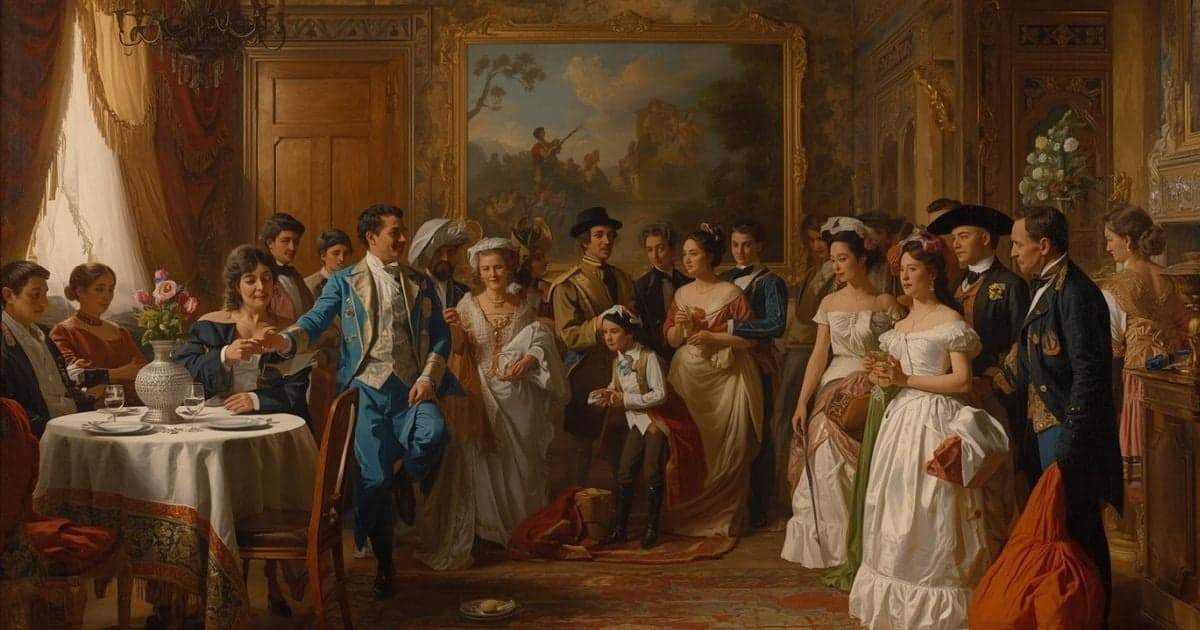
A dinner joke about a dug-up grave. A letter she kept in satin. A convent rather than a wedding smile.
What most readers assume
“A doomed romance: Ibarra returns from Europe to marry María Clara, the ideal Filipina, and a schoolhouse will save the country once the lovers reunite.”
What José Rizal actually stages
Most readers arrive with the romance already arranged: Ibarra comes home from Europe, María Clara is the ideal Filipina, and a schoolhouse will save the country once the lovers reunite. José Rizal wrote the novel in Spanish and printed it in Berlin in 1887. At Capitan Tiago's dinner Padre Damaso jokes about a corpse dug from sacred ground while the son is still at sea. The letter she keeps in a satin pouch becomes the proof the prosecutors needed. On the moonlit azotea she names Padre Damaso as her father. When a newspaper says Ibarra drowned, she chooses the convent or the tomb. The facts did not change. The popular summary did.
Noli Me Tángere · José Rizal
The popular summary sells a doomed romance and an ideal Filipina. The book sells a letter traded for her mother's papers, and a girl who will not smile at the men who used her.
Common Questions
Search questions this reframe installment answers about Noli Me Tángere.
Is Noli Me Tángere a love story?
Not in the romance most readers expect. Crisostomo Ibarra and María Clara do love each other. On the first azotea she keeps his farewell letter in a satin pouch. At the engagement fiesta Lieutenant Guevara tells her the prosecutors used that letter. She trades her mother's papers for his, names Padre Damaso as her father, and later chooses the convent or the tomb rather than smile at the men who used her. Love is on the page. It is not the plot.
What happens to María Clara in Noli Me Tángere?
At the engagement fiesta Guevara calls her prudent for giving up Ibarra's letter. On the moonlit azotea she shows him her mother's papers, traded for his, and names Padre Damaso as her father. She will marry Linares without love rather than let that secret hang him. When the newspaper says Ibarra drowned, she tells Damaso the nunnery or the tomb. He consents so she will not die.
Does Ibarra's school ever open?
No. Ibarra comes home from Europe to build it. The same men who bless the cornerstone plant the fuse. After the explosion his name is already written on the crime. Capitan Tiago later hears that the schoolhouse could pass for a fort. Rizal is not writing a civic romance that ends with a classroom. The school is the test, and it fails because the machine is already working as designed.
What does the title Noli Me Tángere mean?
Latin for "touch me not," the words Christ says to Mary Magdalene after the resurrection. Rizal points the phrase at a colonial wound the ruling room will not let anyone press. At Capitan Tiago's dinner Damaso can joke about a dug-up corpse because a plain account of Don Rafael's burial is the one sentence piety will not allow.
Who is Elias in Noli Me Tángere?
Elias is the boatman with a hunted name who keeps pulling Ibarra out of water the petitions cannot drain. He has already said a school will not outvote a fuse. When soldiers close on the lake he draws their fire and swims the other way so the reformer can live. Resistance here spends the resister, not the system he warned about.
Why was Noli Me Tángere banned?
Spanish authorities banned it because the pages named their methods too closely: friars who outrank the Governor-General in practice, burial fees collected like sacraments, letters planted to convict an innocent man. Rizal wrote it in Spanish and printed it in Berlin in 1887 so Manila could not claim misunderstanding, or stop the book before it existed. It still passed hand to hand.