
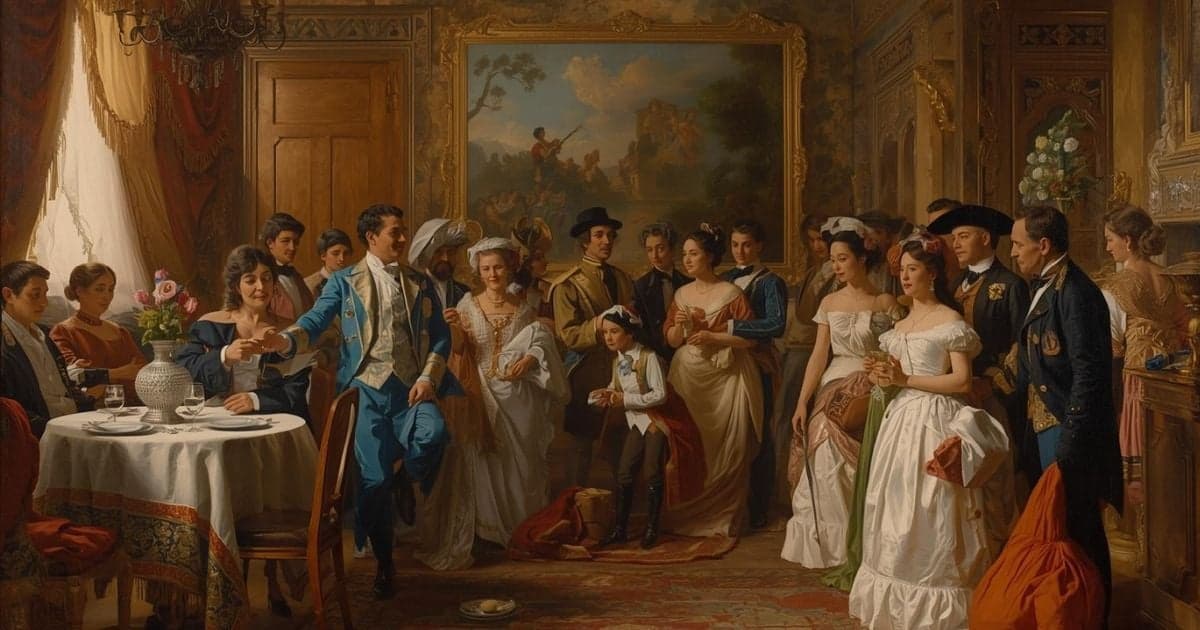
Tasio bends over manuscripts the present tense would burn. He is not writing for this generation, but for other ages. Nobody loves the naked truth. Ibarra, who has just spent seven years in Europe, still thinks a schoolhouse can persuade a town that already threw his father into the lake. The philosopher's garden is the novel's coldest classroom: learning without protection is not reform. It is evidence.
The schoolmaster already has the numbers. Two hundred on the roll, twenty-five in the room, torn shirts, downcast eyes, a curate's carriage parked against the lesson. Attendance is not laziness. It is shame priced correctly. The cornerstone makes the dream visible, which is why the derrick can be made to fall. Tasio says a bad beginning. Officials thank God the dead worker had the wrong rank. On the lake the graduate of Europe still calls the Civil Guard a necessary evil. His books have made him fluent in the alibi.
Dying, Tasio says the Philippines is in darkness and still believes the earth moves. That is the limit, stated without a manifesto. Knowledge can be true and still lose to the Warden and the Sisters. You can build a school, flatter the curate, hide the plan, write in cipher, wait for other ages. What you cannot do is treat a degree as a roof over a hierarchy that profits from the dark. If this generation would burn the page, do not hand them a ceremony. Hand the next century a copy they cannot easily find.
The Central Lesson
Education is not a roof. Tasio writes for other ages because this one would burn the naked truth. The schoolmaster has two hundred names and twenty-five bodies. The cornerstone invites a collapse the town can thank God for. Ibarra's Europe still needs the Civil Guard as a necessary evil. A philosopher can say the earth moves and still lose to the Warden. If you treat a degree as reform, you will schedule a blessing with the people who profit from darkness. Learn, yes. Then hide what this generation would punish, and do not call a ceremony a shelter. The page that survives is the one they cannot easily find.
Applying This to Your Life
Do Not Confuse Fluency with Leverage
Ibarra can explain liberties and still call the hunt a necessary evil. If your education makes you better at defending the machine, you have been finished, not freed. Ask what your reading still needs as infrastructure. If the answer is the people who can crush you, the syllabus failed.
Hide the Work This Generation Would Burn
Tasio's hieroglyphics are not eccentricity. They are a clock. If applause now would supply the match, write for other ages, or work in a channel that does not need a cornerstone and a priest. Visibility is not always a virtue. Sometimes it is a trench.
Fix the Hidden Tuition First
Twenty-five in the room is not an enrolment problem. It is torn camisas and downcast eyes. Before you found a school, a workshop, a program, name the shame that keeps people home. Architecture without that cost changed is a ceremony waiting for timber.
Other lessons in this book
More life-skill deep dives from the same classic.
Colonial Identity and Belonging
Navigate colonial identity in Noli Me Tángere. Rizal chapters on returning home changed, performing belonging, and split loyalties under empire.
8 chapters·Explore AnalysisNavigating Colonial Power
Read the dinner table, the Governor-General's handshake, and the planted letters as a map of who can actually ruin you.
7 chapters·Explore AnalysisRecognizing Religious Hypocrisy
Name the sermon that blesses the cornerstone, the confession that stores María Clara's secrets, and piety sold by the candle.
7 chapters·Explore AnalysisExposing Systemic Corruption
Watch Damaso collect rent in a cassock, burial fees that are voluntary until you refuse, and a courtroom that prices a verdict.
7 chapters·Explore AnalysisStrategic Resistance
Hear Elias warn that a school will not outvote a fuse, then watch him spend his body so Ibarra can leave the lake.
7 chapters·Explore AnalysisProtecting Dignity Under Oppression
Stay with Sisa looking for a son the convent has already spent, and María Clara choosing the veil over a smile she cannot mean.
7 chapters·Explore Analysis
Continue exploring
Explore this theme
The same lessons in other books
See how other books teach the same life skills.

North and South
Acting on Conscience When It Costs YouWatch Hale leave the church, Margaret lie at the station for Frederick, and Thornton refuse a speculation that would save him.North and South
Navigating Class and Economic PowerTrace Milton from imported Irish hands and Boucher's brook to the inheritance that buys a partnership, not a husband.
Paradise Lost
When Pride Sounds Like PrincipleHear Satan on the burning lake and at Eden's edge: wounded dignity reframed as liberty, and a no that is only a refusal to be second.
Where the lesson lives in the book
May You Be Happier Than Your Father
Ibarra returns in mourning after seven years in Europe. Damaso denies the old friendship. The lieutenant's welcome is already a warning: may you be happier in this country than your father was. Credentials enter the room. The room does not revise its dead.
Key Insight:
Education can change the traveler without changing the street. If the first blessing you receive is a comparison to a man who died in prison, your degree is not a key. It is a target with better manners.
“Welcome back to your country! And may you be happier in it than your father was!”
Don Anastasio, or Tasio the Lunatic
A philosophy student who quit to marry now wanders poor after searching for his wife's skull. Culture calls him sage. The town calls him mad. He does not believe in purgatory. His books did not protect his dead. They only made him illegible to the living who still buy masses.
Key Insight:
A society that needs ignorance will recode learning as insanity. If frank thought has already cost you a name, do not expect the next schoolhouse to be greeted as civic progress. It will be greeted as weather that might burn houses.
“I don't believe in purgatory!”
Two Hundred on the Roll, Twenty-Five in the Room
By the lake where Rafael's body was thrown, the schoolmaster tells Ibarra the arithmetic: enrolment as theatre, attendance as torn camisas and downcast eyes, class held beside a curate's carriage. He owed Don Rafael favours. He cannot owe the son a working school.
Key Insight:
Literacy projects fail on purpose when dignity is the hidden tuition. Children stay home because shame is cheaper than a torn shirt in front of power. Building a school without changing that cost is architecture, not reform.
“More than two hundred on the roll but only about twenty-five in actual attendance.”
Because I Am Not Writing for This Generation
Tasio's manuscripts are Tagalog hieroglyphics. He is not writing for this generation, but for other ages. Nobody loves the naked truth. He tells Ibarra to flatter curate and officials and pursue the school secretly. Open zeal is how a good idea becomes evidence.
Key Insight:
Knowledge that cannot survive the present tense has to go underground or wait. That is not despair. It is an accurate clock. If this generation would burn the book, the writer is already in another century. The reformer who insists on applause now will supply the match.
“Because I'm not writing for this generation, but for other ages.”
A Bad Beginning, Huh
The cornerstone ceremony is learning made visible, which is exactly why it is attacked. The derrick kills a worker. Tasio, watching, says a bad beginning. Officials are relieved the corpse has the wrong rank. A school that needed a public blessing needed enemies in the trench.
Key Insight:
Education as spectacle invites sabotage dressed as accident. If your reform requires a crowd and a priest's hand on the stone, you have scheduled the collapse. Private competence would have been slower and harder to crush on opening day.
“A bad beginning, huh!”
They Are a Necessary Evil
On the lake Ibarra still defends Civil Guard and friars as what Europe calls a necessary evil, the security of the towns. Elias brings the wishes of the hunted. Seven years of libraries have taught the scholar to argue for the machinery that threw his father in the water.
Key Insight:
The limit of education-as-reform is that it can make you eloquent on behalf of the system that trained you. If your reading list still needs the hunt as infrastructure, you have not been educated out of the colony. You have been finished by it.
“They are what is known as a necessary evil.”
The Philippines Is in Darkness
Dying, Tasio still quotes Galileo: e pur si muove. Townsmen ask if he pretends to know more than the Warden and the Sisters. He says the country is in darkness and asks that Crisostomo come tomorrow. The sage's last lesson is not a curriculum. It is that light and office are not the same.
Key Insight:
A philosopher can be right and still lose the morning. Truth that moves anyway, like Galileo's earth, does not automatically become a school board. If the Warden outranks the cosmos in conversation, your classroom was never going to outvote the convento.
“The Philippines is in darkness!”