Master this chapter. Complete your experience
Purchase the complete book to access all chapters and support classic literature
As an Amazon Associate, we earn a small commission from qualifying purchases at no additional cost to you.
Available in paperback, hardcover, and e-book formats
Why This Matters
Connect literature to life
This chapter teaches how to recognize when someone's cold response reveals deeper institutional conflicts rather than personal dislike.
Practice This Today
This week, notice when people's reactions to you seem disproportionate to the conversation - their real issue might be with what you represent, not who you are.
Now let's explore the literary elements.
Key Quotes & Analysis
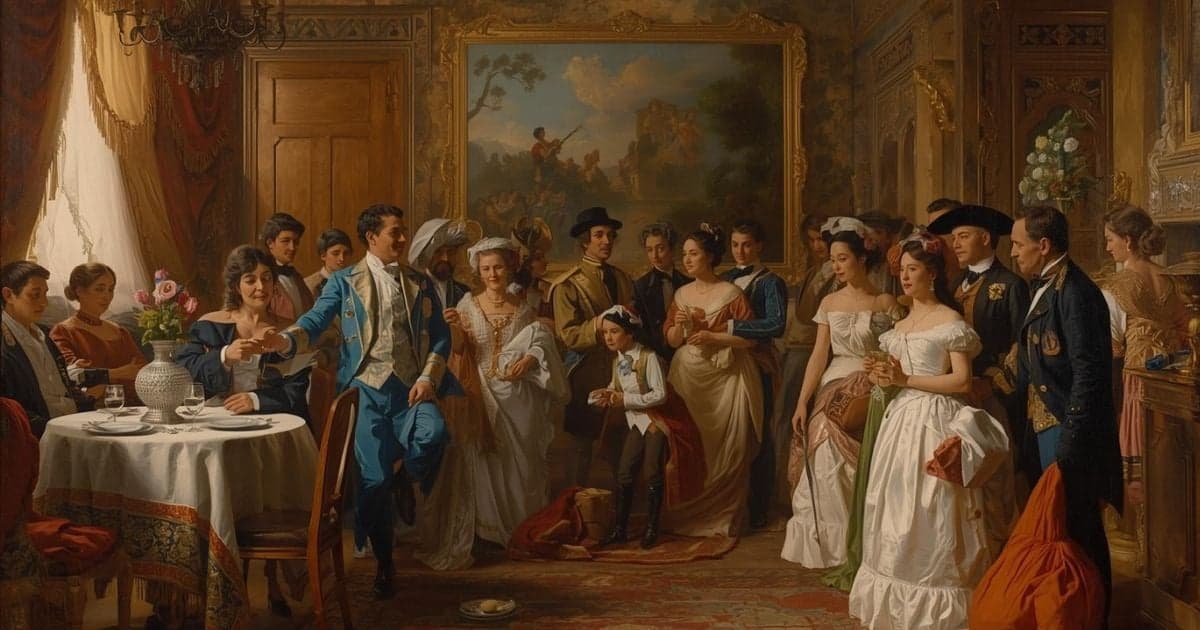
"I have the honor of presenting to you Don Crisostomo Ibarra, the son of my deceased friend"
Context: Introducing Ibarra to the dinner party guests
This formal introduction immediately creates tension because everyone recognizes the Ibarra name and its controversial history. Captain Tiago's nervous formality shows he's trying to rehabilitate Ibarra's reputation while protecting his own social standing.
In Today's Words:
Here's the kid whose family got into all that trouble - please be nice to him
"Your father was never an intimate friend of mine"
Context: Responding coldly to Ibarra's warm greeting
This brutal rejection reveals the depth of hostility toward Ibarra's family and shows how quickly former friends can disown you when it's politically convenient. Damaso's defensiveness suggests guilt about his role in Don Rafael's fate.
In Today's Words:
Don't act like we were close - I barely knew your dad
"At the mention of the name exclamations were heard"
Context: The crowd's reaction when Ibarra is introduced
This shows how the Ibarra name has become notorious in their absence. The shocked reactions reveal that whatever happened to Don Rafael was public, scandalous, and still fresh in everyone's memory.
In Today's Words:
Everyone started whispering the moment they heard that name
Thematic Threads
Identity
In This Chapter
Ibarra struggles with who he is now - too European for Filipino society, too Filipino for European customs
Development
Building on earlier class tensions, now focused on personal transformation
In Your Life:
You might feel this when education or life experience changes how you see the world, making old relationships feel strained.
Class
In This Chapter
Ibarra's European education creates invisible barriers between him and his childhood community
Development
Deepens from earlier social hierarchy observations to personal experience of class mobility
In Your Life:
You might experience this when moving between economic levels - feeling not quite accepted in either world.
Social Expectations
In This Chapter
The community expects Ibarra to remain the boy who left, not the educated man who returned
Development
Continues theme of rigid social roles, now showing consequences of breaking them
In Your Life:
You might face this when family expects you to play old roles even after you've grown and changed.
Hidden Truths
In This Chapter
Padre Damaso's cold rejection and the lieutenant's cryptic condolences hint at concealed information about Ibarra's father
Development
Introduced here as new thread about family secrets and their social consequences
In Your Life:
You might recognize this when people's reactions to your family name or background reveal secrets you weren't told.
Power Dynamics
In This Chapter
The priest's ability to publicly humiliate Ibarra shows how religious authority operates in this society
Development
Builds on earlier observations of institutional control, now showing personal impact
In Your Life:
You might see this in how authority figures can socially isolate people who challenge or threaten their position.
You now have the context. Time to form your own thoughts.
Discussion Questions
- 1
What specific reactions does Ibarra's arrival trigger in different people at the party, and what do these reactions tell us about his family's reputation?
analysis • surface - 2
Why does Padre Damaso so coldly reject Ibarra's friendly greeting, and what does this suggest about what happened to Ibarra's father?
analysis • medium - 3
How does Ibarra's awkward self-introduction using German customs reflect the challenge many people face when returning home after significant personal growth or life changes?
application • medium - 4
If you were advising Ibarra on how to reconnect with his community while honoring his growth, what strategies would you suggest?
application • deep - 5
What does this chapter reveal about how communities respond to members who return changed, and why might growth threaten existing social dynamics?
reflection • deep
Critical Thinking Exercise
Map Your Growth-Gap Moments
Think of a time when you returned to an old environment after significant personal change - maybe after college, military service, recovery, a new job, or major life experience. Write down who reacted differently to you and how. Then identify what specific changes in you might have triggered those reactions, even if the changes were positive.
Consider:
- •Consider both obvious changes (education, appearance, confidence) and subtle ones (vocabulary, body language, priorities)
- •Notice whether people's reactions reflected their own insecurities or genuine concern about losing connection with you
- •Think about times when you've been on the other side - feeling left behind by someone else's growth
Journaling Prompt
Write about a relationship that struggled because of your personal growth. What did you lose, what did you gain, and how might you handle similar situations differently in the future?
Coming Up Next...
Chapter 3: Power Plays at the Dinner Table
The dinner party continues with Ibarra learning more about what happened to his father during his absence. The social tensions that surfaced during introductions are about to explode over the dinner table, revealing the true cost of speaking truth in a colonial society.