Master this chapter. Complete your experience
Purchase the complete book to access all chapters and support classic literature

As an Amazon Associate, we earn a small commission from qualifying purchases at no additional cost to you.
Available in paperback, hardcover, and e-book formats
Why This Matters
Connect literature to life
This chapter teaches how to distinguish between individual problems and systemic issues that require different approaches.
Practice This Today
This week, notice when you see problems that others seem to ignore—ask yourself whether this is an individual issue or part of a larger pattern that needs strategic, not emotional, responses.
Now let's explore the literary elements.
Key Quotes & Analysis
"The courageous inherit knowledge"
Context: Advice given to young Ibarra before he left for Europe to study
This quote reveals that seeking education and truth requires bravery, especially in an oppressive system. The priest knows that knowledge comes with risks but believes it's worth pursuing.
In Today's Words:
You have to be brave to really learn and grow - it's not always safe to seek the truth
"All that glitters is not gold"
Context: Warning Ibarra about what he might encounter in Europe
The priest reminds Ibarra to think critically even about European 'progress' and 'civilization.' Not everything that looks advanced or beautiful is actually good.
In Today's Words:
Don't believe everything you see on social media - what looks perfect often isn't
"Those streets had not yet been paved, and two successive days of sunshine filled them with dust"
Context: Describing Manila's poor infrastructure during Ibarra's childhood
This shows how colonial authorities neglected basic public works that would benefit ordinary people. The contrast between European cities and Manila reveals colonial priorities.
In Today's Words:
The city was basically falling apart - dusty when dry, muddy when wet
Thematic Threads
Identity
In This Chapter
Ibarra struggles with his dual identity—European-educated but Filipino-hearted, able to see his homeland's flaws while still declaring his loyalty to it
Development
Building on his earlier discomfort with Manila's poverty, now showing the internal conflict of loving a place while seeing its problems clearly
In Your Life:
You might feel this tension when you outgrow your family's expectations but still love them, or when you see your workplace's problems but need the job.
Class
In This Chapter
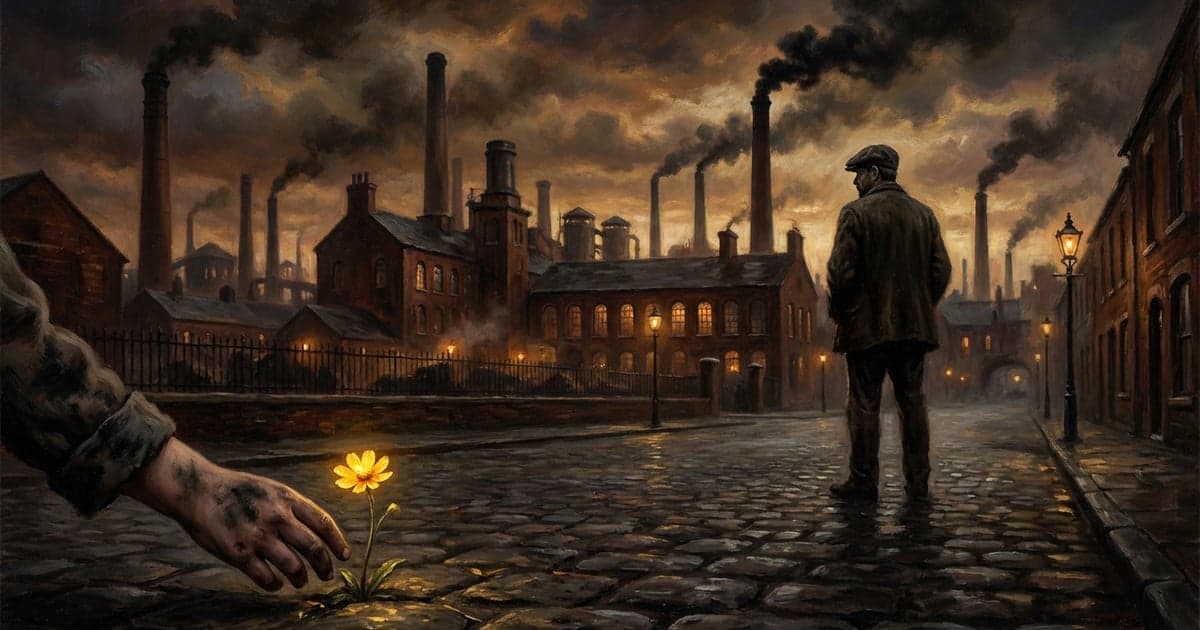
The stark contrast between the chain gang convicts and the indifferent passersby reveals how class differences create emotional distance and moral numbness
Development
Continues the exploration of social hierarchies, now focusing on how privilege shields people from seeing suffering
In Your Life:
You see this when people in comfortable positions dismiss others' struggles as 'just how things are' rather than recognizing systemic problems.
Memory
In This Chapter
Childhood memories flood back as Ibarra revisits familiar places, showing how physical spaces trigger emotional recollections and shape identity
Development
Introduced here as a key element in how the past influences present perspective
In Your Life:
You experience this when returning to your hometown or childhood neighborhood triggers memories that reshape how you see your current life.
Social Expectations
In This Chapter
Ibarra was marked as 'different' from childhood for feeling compassion where others showed indifference, highlighting how society pressures people to conform emotionally
Development
Expands on earlier themes of conformity, showing how emotional responses are policed from an early age
In Your Life:
You might recognize this when you're told you're 'too sensitive' for caring about issues others ignore, or when your empathy is seen as weakness.
Progress
In This Chapter
Ibarra observes physical improvements in Manila while recognizing deeper social problems remain unchanged, showing the complexity of genuine progress
Development
Introduced here as the tension between surface improvements and systemic issues
In Your Life:
You see this when your workplace gets new equipment but keeps toxic management, or when your community builds fancy developments while ignoring poverty.
You now have the context. Time to form your own thoughts.
Discussion Questions
- 1
What specific memories does Ibarra experience as he rides through Manila in daylight, and how do they differ from his nighttime impressions?
analysis • surface - 2
Why does the memory of the dead convict affect eleven-year-old Ibarra so differently than it affects the other people who simply walk past?
analysis • medium - 3
Where do you see this pattern of 'educated sight' today—people who gain new perspective and then can't ignore problems others accept as normal?
application • medium - 4
If you were in Ibarra's position, seeing problems clearly but feeling isolated by your perspective, how would you balance loyalty to home with the responsibility to push for change?
application • deep - 5
What does Ibarra's experience teach us about the relationship between knowledge and belonging—can you gain wisdom without losing your sense of home?
reflection • deep
Critical Thinking Exercise
Map Your Educated Sight
Think of a time when you gained new knowledge or experience that changed how you see a familiar situation—maybe through training, travel, a new job, or education. Write down what you noticed that you couldn't see before, and how this new perspective affected your relationships with people who hadn't had the same experience.
Consider:
- •Notice whether your new perspective made you feel superior, isolated, or responsible for change
- •Consider how you handled the gap between what you now knew and what others around you accepted
- •Reflect on whether you found ways to share your insights without alienating people you care about
Journaling Prompt
Write about a situation where you currently have 'educated sight'—you can see problems or possibilities that others around you don't recognize. How are you choosing to navigate this knowledge? What would courage look like in this situation?
Coming Up Next...
Chapter 9: Power Plays Behind Closed Doors
Ibarra's journey continues as he encounters the local affairs and personalities that will shape his attempts to bring progress to his hometown. The tension between his idealistic plans and the reality of local politics begins to emerge.