
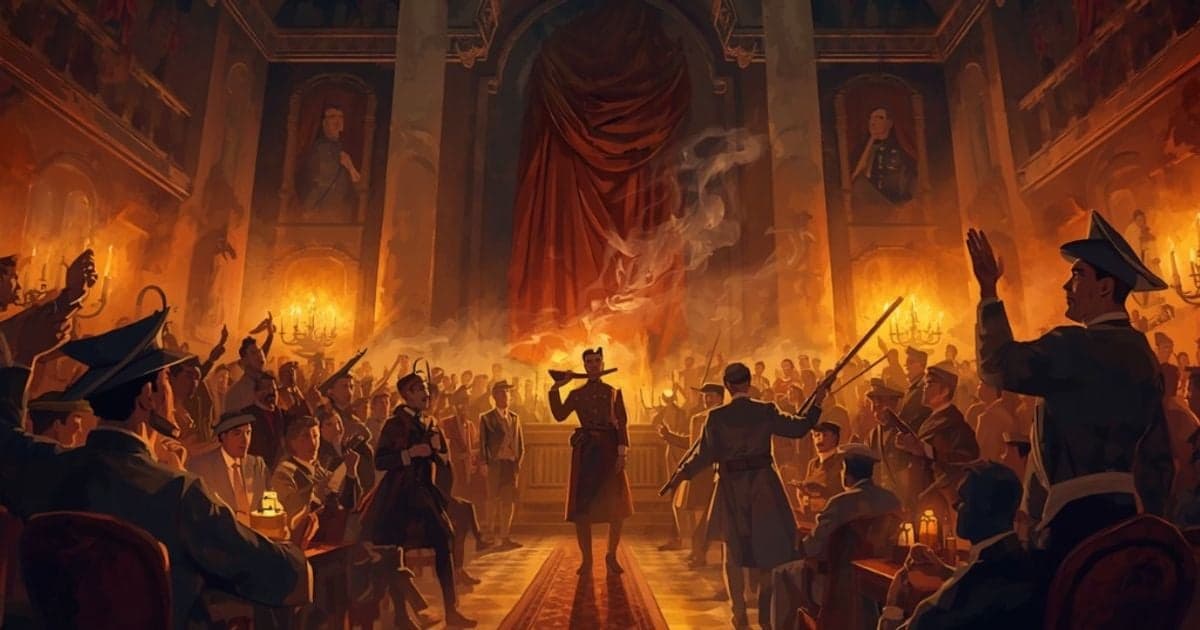
Noli Me Tángere tested whether a schoolhouse could repair a country. El Filibusterismo tests what happens when students ask for a school that teaches more than obedience and are answered with physics recitation, fixed card games at Los Baños, and cells that follow pasquinades.
Placido Penitente's walkout is small on the page and large in the argument: curiosity treated as crime is how empires keep their clerks. Padre Fernandez's cell debate with Isagani shows that even honest friars know the monopoly fails, yet prestige still beats permission when Padre Camorra says Indians must not learn Castilian or they will read the law.
When you read the student threads, ask who benefits from graduates who can repeat but not question, and who pays when one scapegoat stays in Bilibid so the rest can buy freedom with a gift.
The Central Lesson
Education becomes control when curiosity is punished and satire is answered with cells. Rizal links Ibarra's failed school in Noli to Basilio's university in Fili to show the same hierarchy wearing a new gown, and he asks you to hear deferral, scapegoating, and look-but-touch-not rules as one continuous lesson in obedience.
Applying This to Your Life
Spot faux inquiry
Name meetings or courses that reward repetition over challenge. If hands may look but not touch, if questions earn demerits, you are in Placido's classroom, not a lab.
Protect the questioner
Placido pays for leaving; Basilio pays for books on his shelf. Notice who pays in your institution when someone asks why, and whether silence is being sold as prudence.
Read the response
Pasquinades are answered with jail, posters with panic. The response tells you what the system fears more than ignorance: citizens who can name hypocrisy in public.
Other lessons in this book
More life-skill deep dives from the same classic.
Colonial Performance
The Ship of State Joke
Read Doña Victorina, Ben-Zayb, and the Ship of State joke as survival costumes that rent approval upstairs while the lower deck still poles the hull.
18 chapters·Explore AnalysisGrief That Hardens
Basilio, Juli, and the Empty House
Stay with Basilio, Juli, and Capitan Tiago when fiestas march past ransom, newspapers skip a fall, and unacknowledged loss is offered a fuse.
11 chapters·Explore AnalysisNaming Systemic Greed
Rent in a Cassock
Follow Tales's land, Quiroga's tribulations, and every Pilates bowl to see rent renamed as piety, law, or progress before Simoun schedules the room.
11 chapters·Explore AnalysisResistance Versus Revenge
The Fuse and the Priest Who Refused
Track the lamp, the wedding guest list, and Padre Florentino sinking the jewels so you can name real harm without calling a crowd explosion liberation.
9 chapters·Explore AnalysisWhen Reform Runs Out
The Jeweler Who Stopped Petitioning
Follow Simoun from the Tabo canal joke to the Los Baños card table and ask what patience costs once petitions are adjourned to dessert and fear replaces an answer.
12 chapters·Explore Analysis
Continue exploring
Explore this theme
The same lessons in other books
See how other books teach the same life skills.

North and South
Acting on Conscience When It Costs YouWatch Hale leave the church, Margaret lie at the station for Frederick, and Thornton refuse a speculation that would save him.North and South
Navigating Class and Economic PowerTrace Milton from imported Irish hands and Boucher's brook to the inheritance that buys a partnership, not a husband.
Paradise Lost
When Pride Sounds Like PrincipleHear Satan on the burning lake and at Eden's edge: wounded dignity reframed as liberty, and a no that is only a refusal to be second.
Where the lesson lives in the book
Permit on the Lower Deck
Below the Tabo's awning, students in white collect a real each for the Castilian academy, offer Makaraig's house, and wait from day to day for Padre Irene's permit while Capitan Basilio quotes Horace and walks off satisfied that youth will fail.
Key Insight:
When the poor fund the petition upstairs refuse to read, education becomes a lottery tied to friar favour. The lower deck learns patience before it learns grammar.
“from day to day we're expecting the permit”
Los Baños
At Los Baños the Captain-General wins fixed card hands while friars treat the Castilian academy petition as stamped-paper rebellion. Padre Camorra says Indians must not learn Castilian or they will argue with friars; Padre Fernandez alone urges granting schools and trading fear for gratitude.
Key Insight:
When schools are debated beside cockpits and coconut milk, the delay is the curriculum. Control keeps inquiry in a drawer until dessert, and the room learns that prestige matters more than permission.
“the Indians must not understand Castilian, you know”
Placido Penitente
Placido Penitente walks toward Santo Tomas already writing his mother to abandon his studies because the university treats questions as insolence and four years of books feel like four years of learning to stay silent.
Key Insight:
When inquiry is punished, the institution is training compliance, not citizens. A walkout that looks small on the page is a large refusal to confuse a diploma with an education.
“Placido Penitente”
Look, But Touch Not
The physics professor performs authority with a rod and a book students may look at but not touch, marking five demerits at a time while practical instruction in an experimental science is skipped entirely.
Key Insight:
A laboratory used as a courtroom teaches fear, not physics. When the book is sacred and the hand is forbidden, the lesson is obedience dressed as learning.
“look, but touch not!”
House of the Students
Makaraig's boarding house doubles as a school until cane fights, fencing, and love letters turn the stairs into a riot the colony will later call sedition, though the centavos collected still aim at a Castilian academy the friars can revoke.
Key Insight:
When young people organise themselves to learn, authorities read community as conspiracy. Watch who labels curiosity a crime and who benefits when students are too afraid to meet without a guard at the door.
“students”
Señor Pasta
Isagani waits in Pasta's bufete while the lawyer tells each side that losing quietly is the only safe career move and honesty is a luxury both factions refuse to pay for.
Key Insight:
Experts who serve every payer often counsel silence, not justice. That advice is how reform dies without a trial, and how students learn that the law room is another class in obedience.
“Pasta”
The Sleeping Arbiter
Don Custodio, the world's most active arbiter, dozes through the Castilian academy petition Ben-Zayb praised him for reading while students still collect centavos and wait on a signature that never comes.
Key Insight:
A process with an arbiter who never decides is education by exhaustion. The delay is the answer, and the petitioners learn to associate hope with fatigue.
“Custodio”
Queue as Classroom
Ticket queues for Les Cloches turn into scuffles while students and friars argue whether the theatre belongs to Spain or to Manila and every shove is read as politics instead of youth.
Key Insight:
Public culture becomes a classroom when every queue is also a test of who may speak and who must wait. The lesson is rank, not art.
“The friars are more powerful than the General, don't be a fool!”
Pasquinades
Anonymous posters name friars on cathedral walls; arrests follow instead of debate, and the city learns that satire is answered with cells while editors chase safer stories.
Key Insight:
Satire is public education. Censorship is education for the powerful: it teaches students that the wall is safer than the poster and the cell is the final syllabus.
“Seditious pasquinades have been found”
Cell and Street
Padre Fernandez pulls Isagani from a campus speech into a cell for a frank debate on hypocrisy, tyranny over speech, and friars who monopolise youth yet fail to nourish eight million subjects.
Key Insight:
Rare honest talk still has a guard at the door. Notice which questions the powerful allow when no crowd is listening, and which truths stay forbidden even in the cell.
“Castilian”
Fear After Satire
Pasquinades put Manila in tatakut; Basilio's arrest and a search of student books break Capitan Tiago while advisers whisper mass shootings and Irene claims moderation after urging violence in private.
Key Insight:
Answer a poster with cells and the lesson is obedience, not safety. Fear teaches what the syllabus cannot: that reading the wrong book is a crime and the example must be visible.
“pasquinades”
Scapegoat for Prestige
Most arrested students buy release through gifts while Basilio alone stays jailed on vague book charges so the General can show clemence to the rich and severity to the one prisoner left behind.
Key Insight:
When one prisoner carries everyone's risk, the system is teaching spectators, not punishing guilt. The lesson is prestige: authority needs a body in a cell more than it needs truth in a court.
“Basilio”