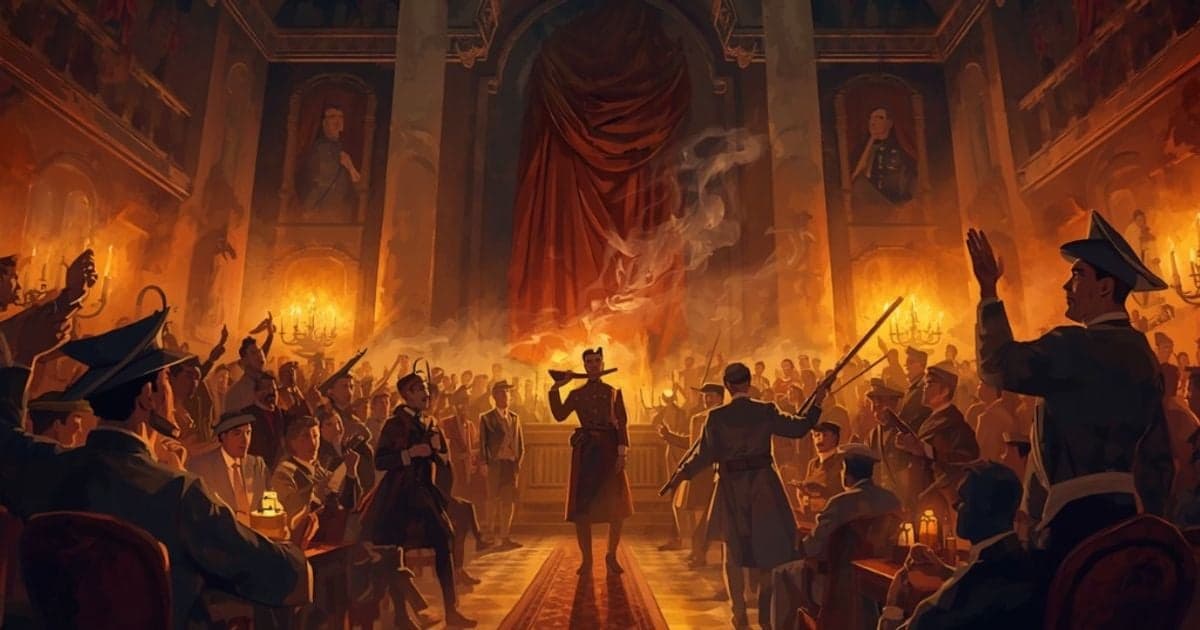
Rizal opens with Victor Hugo on Spain's virtue slipping away, then shows Manila journalism obsessed with a European murder, preacher puff pieces, and French operetta while Matanglawin's tulisanes raid provinces unnoticed unless a convento or Spaniard suffers, when editors suddenly demand martial law. Tiani's horror after Juli's death never reaches print; private whispers blur the victim's name, and only Padre Camorra knows enough to leave town. Ben-Zayb laments jolly Camorra with a generous heart, a colonial performance that erases a girl's fall from the record.
Most arrested students buy freedom through relatives' gifts; Makaraig exits first, Isagani last after Padre Florentine's delay, and Ben-Zayb crowns the General clement. Basilio alone stays jailed, blamed for prohibited books that may mean his legal medicine text, reform pamphlets, or both, while secret sales of banned literature become the pretext. Advisers tell the General authority needs a visible example: keep one prisoner, Irene's servant-student with no family to complain. The high official, already at odds with his Excellency, notes Basilio's good medical record and near graduation; the objection backfires, and the General decides innocence makes the lesson more terrifying.
The General invokes discretionary powers, satisfied conscience, and indifference to ministers while dismissing the country he never owed election. The high official rises pale, insisting Spain chose him and therefore owes Filipinos justice, honor above empire, and a warning that denied light and liberty justify rebellion with world sympathy. He rejects cloaking exploitation in institutions, compares Spain to a stepmother, and says he would stand with wronged Filipinos before triumphing with selfish national interest. His Excellency asks only when the mail-boat leaves; the official tells his carriage lackey that Spain had hearts that fought for Filipino rights, then resigns two hours later for the next steamer home.
Rizal stages reform's last polite voice against a ruler who treats one boy's year in jail as prestige maintenance. Basilio becomes the scapegoat so the pasquinade panic can be called meaningful rather than an empty roundup. The high official's resignation on the mail steamer closes the chapter; the cell door does not. When mercy releases the connected and keeps the orphan student, who still believes petitioning the palace works?
Coming Up in Chapter 32
After the pasquinade scare, mothers pull sons from university, suspensions scatter Pecson, Tadeo, and Juanito Pelaez, and Basilio's empty seat marks who the state kept as its example.