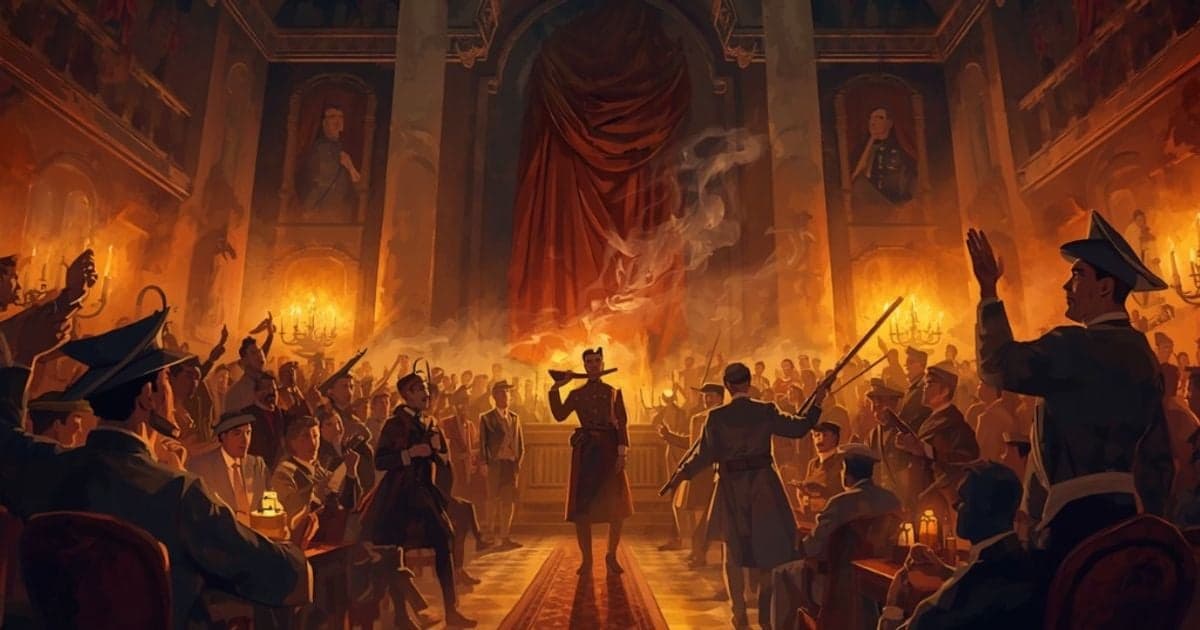
An usher pulls Isagani from his campus speech into Padre Fernandez's cell, the Dominican professor he always exempts when students attack friars. Fernandez admits he heard the harangue through the window, will not punish the pansitería talk, and wants a frank exchange with a man of conviction, not gratitude or vulgar threats.
Isagani refuses to excuse the supper; Fernandez praises that stance and sets aside accusations. They clash on hypocrisy: Fernandez laments students who slander friars in secret and flatter them in person, while Isagani answers that tyranny over speech breeds lies and filibusterism labels silence the honest. When Fernandez asks what Filipino students want, Isagani fires that you do your duty, then limits the charge to education: friars who monopolise youth must morally nourish eight million subjects, yet towns hinder learning and the University curbs knowledge, dignity, and progress.
His prison-food analogy compares the state hiring a purveyor who starves inmates while profiting on stale rations; liberty, he says, is to man what education is to the intelligence, and denying it breeds discontent. Fernandez counters that instruction belongs to the deserving, blames family defects, then hides behind the government that commands and must be obeyed, citing Tacitus on laws that corrupt while pleading defective social organisation. Isagani retorts that a bad sculptor who keeps working is a cheat, and that when there are professors, there will be students.
Isagani asks friars not to oppose the emancipation of education but to favor it; Fernandez calls that suicide yet negotiates smaller courtesies if professors treat pupils better. They clasp hands, each fearing his side will not believe the other exists; Fernandez murmurs poor boy and grudges him to the Jesuits who trained him. Isagani then tells a friend he is going to the Civil Government to see the pasquinades and join the others, and that afternoon Jesuits repudiate him when he is arrested, insisting those ideas did not come from their schools; Rizal closes by saying they come only from God through Nature.
Rizal stages the book's clearest friar-student argument as pasquinade arrests loom. When one Dominican listens and another order disowns the pupil, where can reform actually land?
Coming Up in Chapter 28
Ben-Zayb crows that education is disastrous as pasquinade panic empties Quiroga's shop of friars, rumours multiply, and Capitan Tiago dies terrified when Basilio's arrest reaches his house.