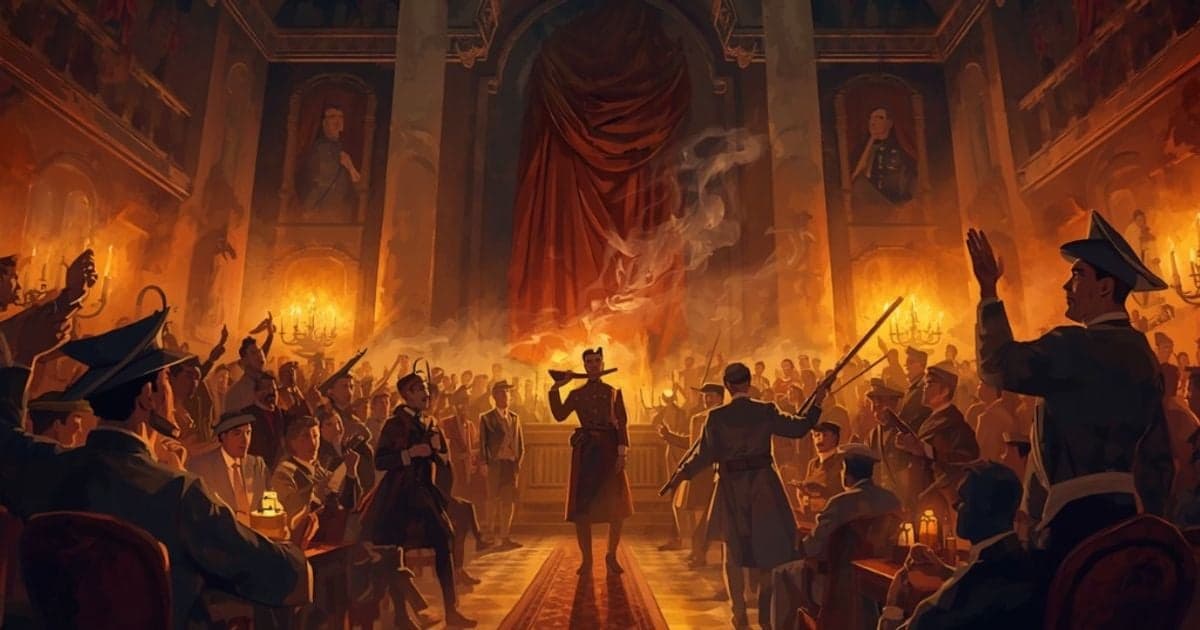
Les Cloches de Corneville opens at the Teatro de Variedades to a city already fighting for tickets: scuffles, filibuster talk, fabulous prices, and a queue Padre Salvi could not skip. Camaroncocido, the red-faced Spanish vagabond reporter, watches with mirthful pity beside Tio Quico, who boasts six pesos for posting bills. Camaroncocido shrugs that if Quico earned six, imagine the friars' cut, because the conventos secured much of the crowd while Salvi and Don Custodio preached morality, Irene execrated Parisian theater, and Ben-Zayb weakly defended Castilian double entendres against Custodio roaring that obscenities in French must never pass.
Scandalous lobbying still granted the permit; Salvi's pastoral was unread, offices practised oui monsieur instead of business, and Ben-Zayb trembled over French synonyms in the newspaper office after seventeen defensive articles and fifteen dictionaries failed to quiet rivals. Camaroncocido explains half the audience comes because friars forbade it, half because forbidden must mean instructive, then notices unfamiliar men in ill-fitting coats slipping through shadows instead of fighting for front rows. He asks detectives or thieves, shrugs, and moves on until carriage lamps reveal Simoun telling an officer the signal will be a gunshot, that the General orders it, promotion follows obedience. Moments later a rosaried man in Tagalog insists friars outlast governors, riches await, and the signal is again a gunshot; Camaroncocido mutters poor country and shrugs once more.
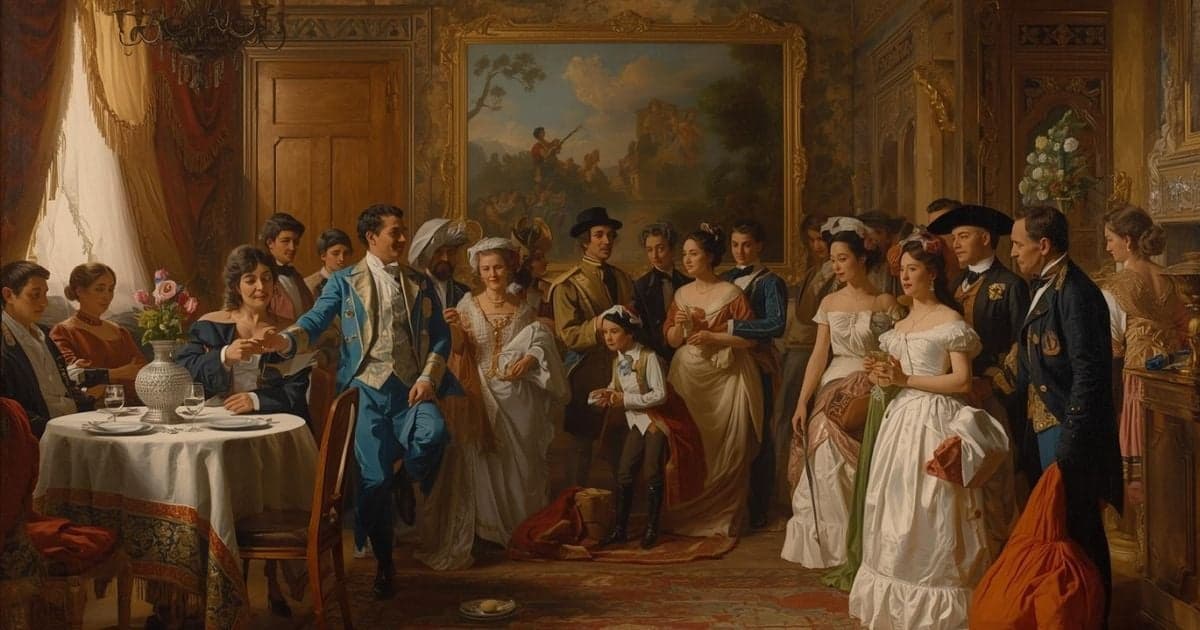
Meanwhile Tadeo entertains a provincial novice with invented titles for every carriage, claiming judges and governors as friends, spotting Pepay, Padre Irene in false mustache though Irene had opposed the show, and Don Custodio knitting brows over projects. Paulita passes with Juanito while Makaraig arrives with Pecson, Sandoval, and Isagani, inviting ticketless Tadeo into their box as carriages deposit shawled society at the flower-lit doors. The novice refuses, timid before grandeur that was mostly Tadeo's fiction, and Tadeo declares he never accepts favors yet leaps at the invitation.
Rizal paints Manila as operetta and conspiracy sharing a street: prestige, profit, and performance collide at the door. When the same gunshot signal serves General and friar schemes while Camaroncocido pockets stay empty, who is watching besides the man who says but what is it to me?