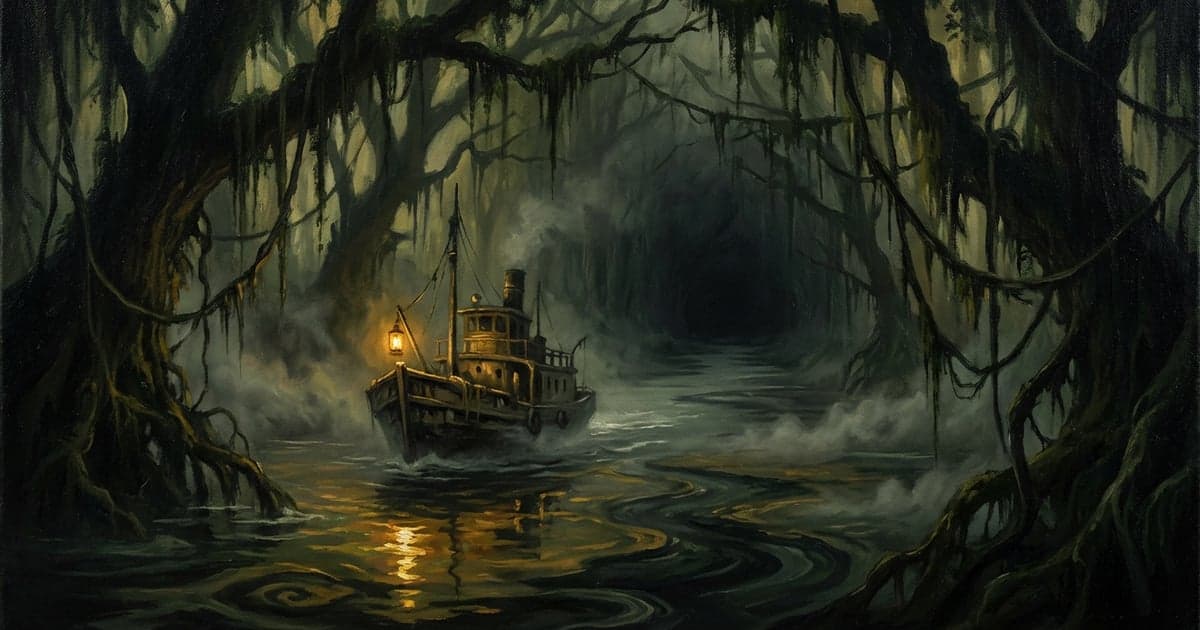
The whistle on the Tabo shrieks hoarse and commanding, like a tyrant who rules by shouting, until no one on the upper deck can hear his own thoughts. That is Rizal's opening joke about the Ship of State: a dirty steamer labouring up the same Pasig sandbars every December morning, smoking and majestic and forever stuck, while brown faces crowd the lower deck and friars, clerks, and Europeans lounge under an awning with cigars as if the river poled itself. The captain, an old sailor who once knew vaster seas, now tutors this capricious hulk through curves he could draw in sleep. Doña Victorina curses every banka in sight even though Indian helmsmen, engineers, and sailors keep her moving, and she herself would read as Indian if the rouge and borrowed gown came off.
The pillars of the country barely glance at her. She rides toward Laguna to hunt the husband who fled her crutch, Europeanized into a costume no classifier could place, while Ben-Zayb and Padre Camorra shout about fish-corrals until Padre Salvi cites a friar-built bridge that Manila's scientists called unsafe and floods never broke. The journalist who believes the country thinks because he publishes falls silent. Then Simoun, jeweller with white hair and blue goggles, offers the remedy everyone was waiting for: dig a canal through Manila, fill the old Pasig, and if towns stand in the way, destroy them. Don Custodio murmurs about cost. Simoun answers with prisoners, unpaid villages, pyramids, and the line that posterity praises might alone while the dead stay dead.
Nobody on the awning walks off. Simoun disappears below deck calling bosh on Latin and friars, and the whispering turns to slurs and rumours about loans to the Captain-General. Don Custodio, green with humiliation, recovers by forcing ducks on every town so snails on the bar will be eaten, and Ben-Zayb begs to write it up as genius. Doña Victorina would rather the bar close than invite balot eggs. The Tabo grinds onward, the same sandbar, the same performance, compulsion already normal whether it arrives as monument or punchline.
Rizal ends before Basilio speaks from the heat below. Who on this boat still believes progress and cruelty can be separated, and what will the passengers who never got an awning say once they hear what was decided above their heads?
Coming Up in Chapter 2
Below the awning the heat, engine smoke, and crowded benches tell a different story. Basilio and Isagani meet Capitan Basilio and then Simoun, who treats progress like a private joke while students still hope for a Castilian academy.