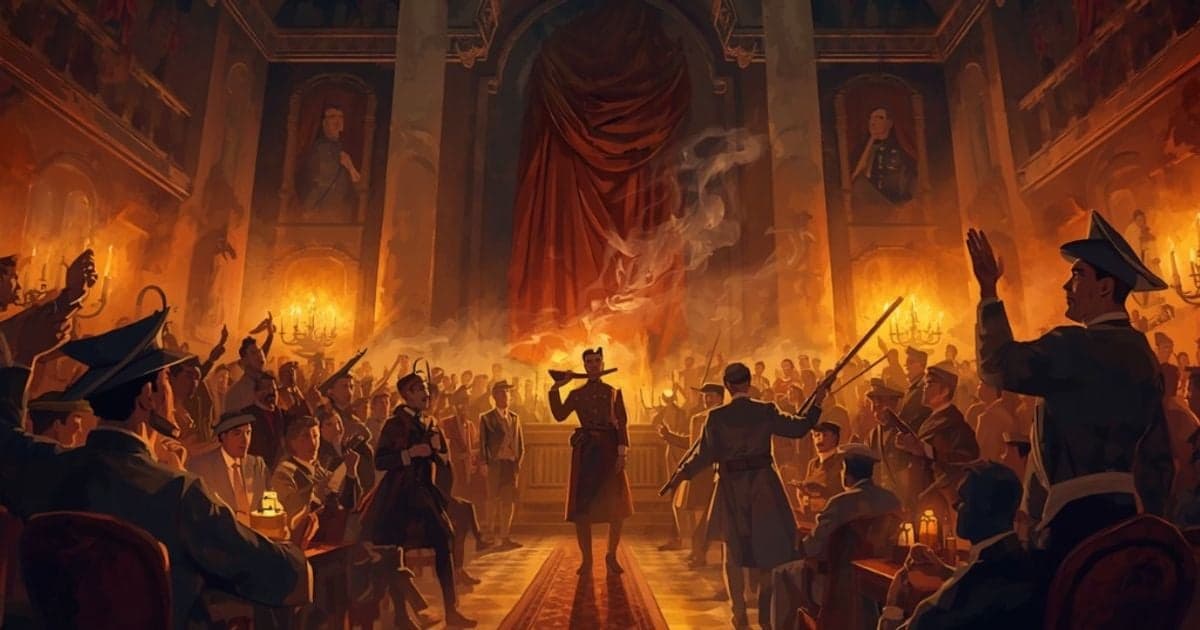
At Bosoboso the Captain-General hunts with a brass band and a tail of friars, soldiers, and clerks, because rank demands no less show than a wooden saint in a procession, yet the deer and wild boar never hear the music and he catches neither rat nor bird. Local officials still panic, remembering hunts that ended in dismissals or villagers impressed as porters, until he piously spares the forest and slips back to Los Baños playing the disappointed sportsman while glad to avoid a missed shot that might dent Spanish prestige among skilled marksmen in the provinces. He prefers baths, lake views, and cards to risking the fatherland on one trigger pull.
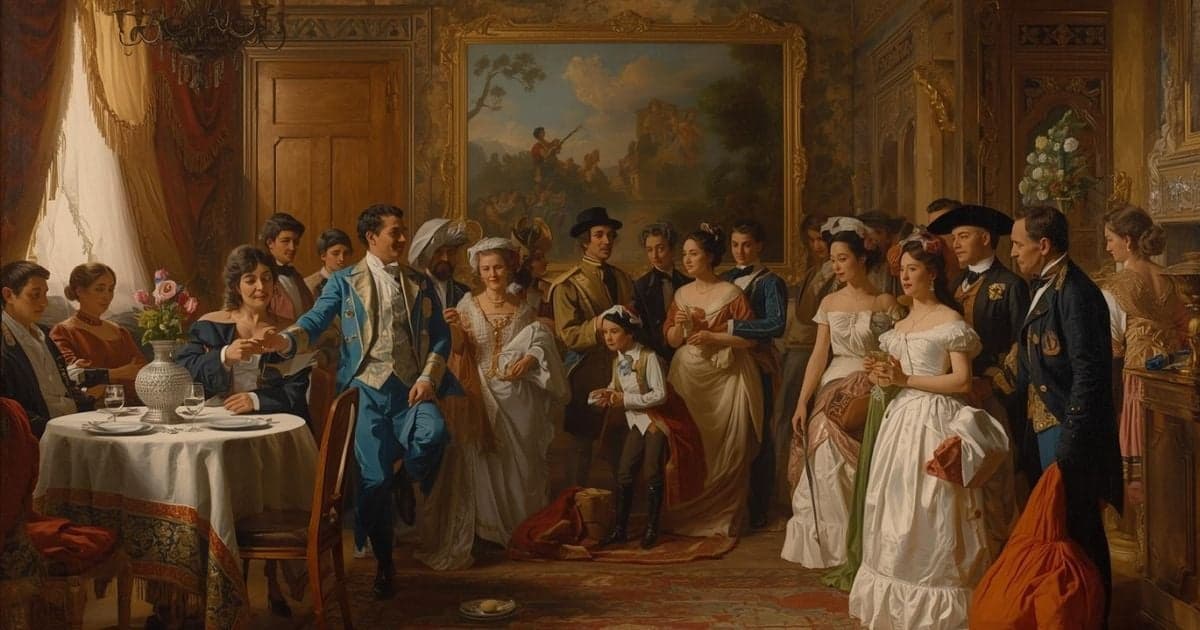
On a December morning in the sala he shuffles between state papers, fresh from the bath and coconut milk, winning hand after hand because Padre Sibyla and Padre Irene quietly throw the game for the Castilian academy stakes Camorra does not yet see. Camorra plays in earnest, reddens at their blunders, curses Padre Irene, and flees to billiards. Simoun fills his chair and turns betting into mockery: friars may stake promised virtues, he puts up diamonds, and he asks the General to pay in blank deportation orders or summary executions. A tulisán story nearly bans sporting arms until Simoun says the honest bandits live in the hills and the dangerous ones wear coats in town. The bored secretary works through suspensions and cockpits while the student petition waits untouched.
When the academy request finally surfaces after six months, the high official calls the delay a scandal on a just claim. Padre Sibyla, backed by Simoun, treats it as stamped-paper rebellion and a prestige duel with Santo Tomas; Padre Camorra says Indians must not learn Castilian or they will argue with friars and read the law. Padre Fernandez alone urges granting schools and trading fear for gratitude, which explodes when he mentions the Jesuits as a model. Shouting fills the sala until breakfast ends the session.
The General says weighty matters belong at dessert and leaves the academy for tomorrow, then grumbles when a whisper mentions Cabesang Tales' granddaughter pleading a third day for her grandfather, jailed in her father's place. Padre Camorra backs her; an order frees the old man so Spain may look merciful, and Ben-Zayb winks for the papers. Clemency arrives in a line after reform is postponed. If the card table is fixed and the petition adjourned, is waiting still policy or refusal wearing polite clothes?