Persuasion

Jane Austen
0:000:00
0:00 / 0:00

Prestige · $2.99/month
Chapter audio, theme analysis, and downloads
Jane Austen
0:00 / 0:00
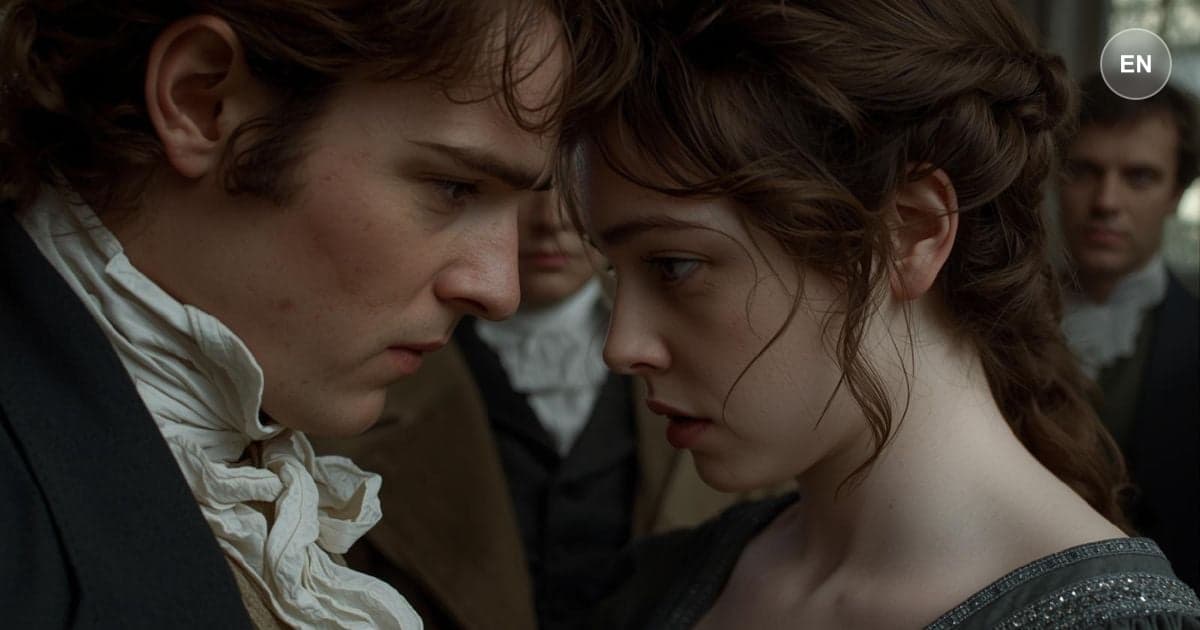
Wentworth tells Mary, in Anne's hearing, that she is so altered he should not have known her again. She absorbs the verdict in silence and keeps walking. Bloom is the only currency her family still counts, and she has spent it. Austen finished the book in 1817 and did not live to see it published. The woman everyone treated as furniture will be the only person who can think when a real crisis arrives.
Anne Elliot is twenty-seven, the overlooked middle daughter of a vain baronet, clever enough to see her family's folly and trained to yield when people she trusts speak with confidence. Captain Frederick Wentworth returns from the Napoleonic Wars wealthy, decorated, and polite in exactly the way that proves he has not forgiven her. Sir Walter Elliot reads the Baronetage the way some people refresh their own name, oblivious to the debt swallowing Kellynch Hall. Lady Russell, who stands in for Anne's dead mother, is the respectable caution that talked her out of the engagement and has never quite admitted the cost. William Elliot, heir to the baronetcy, arrives in Bath so agreeable that the whole room leans toward him. Louisa Musgrove wants to prove she is decisive and nearly kills herself doing it. Mrs. Smith, a poor widow Bath has written off, turns out to be the only person who actually knows what Mr. Elliot is.
Eight years earlier Anne broke the engagement because everyone she trusted called it imprudent. At Uppercross she manages Mary's household while Wentworth charms the Musgrove sisters and mentions the year six without his voice faltering. On the Cobb, Louisa jumps a half-second too early, and it is Anne, not the horrified onlookers, who gives every order that saves her. At the Bath concert she speaks to Wentworth first, then watches jealousy crack his composure while she talks to Mr. Elliot. In the White Hart, overhearing her argue that women love longest when hope is gone, he writes the letter that names eight years in one paragraph: You pierce my soul. I am half agony, half hope.
Austen never treats Lady Russell as a fool. Wentworth truly had no money and no guaranteed career at nineteen, and the Elliots truly would have struggled with the match. The novel is not a takedown of caution. It is an audit of who caution actually protects. Lady Russell's prudence guarded reputation and comfort, not Anne's happiness, and she never runs the numbers on eight years of delay. Most of us are not talked out of things by fools. We are talked out of them by people who love us and happen to be wrong.
The first pressure is already in that walk: eight years of silence, then a verdict she absorbs without answering. Second Chances and Constancy is the cold reunion, Louisa's bloom, and the White Hart letter that names eight years in one paragraph. Distinguishing Prudence from Persuasion is Lady Russell's counsel at Kellynch returning as Bath's approval of Mr. Elliot, and Anne at twenty-seven refusing the sensible match she does not want. Navigating Social Decline is Kellynch rented to the Crofts while Wentworth rises by merit, and Anne carrying worth without performing the rank she lost. Reading Past Performance to Character is Sir Walter's mirror, Mr. Elliot's polish, and Anne giving every order on the Cobb when bloom no longer matters. Holding Your Ground Under Family Pressure is being only Anne until the household needs a nurse, a fourth at dinner, or a yes to Mr. Elliot, then acting without asking Lady Russell first. Seeing Through Performed Charm is Camden Place leaning toward the heir until Mrs. Smith opens the ledger.
In the White Hart he writes the letter with the room still talking. You pierce my soul. I am half agony, half hope. On the Cobb she was already the one who could think. The heir's agreeableness has not yet been opened by Mrs. Smith. Sir Walter is still reading the Baronetage as if a name could pay the debt. Wide Reads keeps summaries, quotes, and audio on all twenty-four chapters, from that book of rank to a letter written in a crowded inn.
Austen opens with surgical precision, diagnosing Sir Walter Elliot in a single sentence: vanity is t...
Fate has a cruel sense of timing. The Elliots must rent Kellynch Hall to escape financial ruin, and ...
Admiral and Mrs. Croft arrive to finalize the rental of Kellynch Hall, and the contrast couldn't be ...
Austen finally reveals what happened eight years ago, and it's devastating in its ordinariness. In t...
The practical arrangements of dismantling Kellynch begin. The Crofts finalize the rental, with Admir...
Anne settles into life at Uppercross and learns an essential truth: move three miles, change your en...
The moment Anne has been dreading arrives: Captain Wentworth is at Kellynch, visiting the Crofts. He...
Now begins the exquisite torture of forced proximity. Anne and Wentworth are repeatedly in the same ...
Wentworth becomes a fixture at Uppercross, drawn by the Musgroves' warm hospitality and the admirati...
The romantic geometry shifts. Charles Hayter returns and finds himself displaced, Henrietta, who'd b...
The group impulsively decides to visit Lyme, a seaside town seventeen miles away, where Wentworth's ...
The morning begins with a moment of grace. A stranger on the steps, a gentleman in mourning, looks a...
The aftermath of the accident reshapes everything. Anne spends her last two days at Uppercross helpi...
Anne arrives in Bath with a "sinking heart," anticipating "an imprisonment of many months." Her fath...
Mr. Elliot calls late on Anne's first evening, his first meeting with her since Lyme, and he's delig...
While her father and sister chase aristocratic connections, Anne pursues a different kind of relatio...
Lady Russell continues promoting Mr. Elliot as Anne's ideal match, painting an irresistible picture:...
The Crofts arrive in Bath, and with them comes news: Admiral Croft reveals that Wentworth is free, t...
Anne visits Mrs. Smith the morning after the concert, deliberately avoiding Mr. Elliot. Mrs. Smith r...
Anne escapes seeing Mr. Elliot in the morning, but he's coming again in the evening. Now that she kn...
Anne returns to the White Hart the next morning. In the room: Mrs. Musgrove talking with Mrs. Croft,...
They're engaged. Sir Walter makes no objection, Wentworth, with twenty-five thousand pounds and high...
Published 1817
Jane Austen (1775-1817) was born in Steventon, Hampshire, the seventh of eight children in a clerical family that lived on the edge of genteel comfort. She never married, never had an independent income, and depended on male relatives for security while writing six novels that reshaped English fiction. Readers knew the books as by a Lady. Her name did not appear on a title page during her lifetime.
Persuasion was her last completed novel, finished in 1817 while her health was failing. She revised it through illness and died at forty-one before seeing it in print. The book is quieter than Pride and Prejudice: more interior, willing to let a heroine suffer in silence while the man she loves misreads her past. Anne Elliot is not witty like Elizabeth Bennet. Her power is perception, patience, and the slow reclaiming of a judgment she once surrendered.
Austen understood what it cost to be intelligent in a world that offered women little scope beyond marriage and family performance. Persuasion asks when you should listen to people who love you, when their caution is really fear, and whether a choice made at nineteen can be unmade at twenty-seven without destroying what dignity you have left. The novel has never stopped finding readers who recognize that the most expensive mistakes are often the prudent ones.
Jane Austen speaks to the moment prudent advice from people who love you costs more than the risk it was meant to prevent: the career move everyone called sensible, the relationship you ended because the room was confident, the reunion where politeness sounds like a verdict you are meant to absorb in silence. Persuasion names Anne Elliot at twenty-seven, trained to yield when respectable voices speak with certainty.
Plot, characters, and themes — plus audio, source text, and patterns you can use after class
Two ways in
Chapter by chapter, with audio. The meaning arrives because you experienced it — not because someone listed bullet points.
Start with this.
The actual words the author wrote, alongside every summary. Use the guide, then step into the source.
Then step into the source.
Either way, the door opens inward.
— and most of all, Why does this matter?
Purchase the complete book to access all chapters and support classic literature
Available in paperback, hardcover, and e-book formats
Free to read • No account required

Weekly insights from the classics. Amplify Your Mind.
We focus on public domain classics because these timeless works belong to everyone. No paywalls, no restrictions—just wisdom that has stood the test of centuries, freely accessible to all readers.
Public domain books have shaped humanity's understanding of love, justice, ambition, and the human condition. By amplifying these works, we help preserve and share literature that truly belongs to the world.
© 2026 Wide Reads™. All Rights Reserved.
Intelligence Amplifier™ and Wide Reads™ are proprietary trademarks of Arvin Lioanag.
Copyright Protection: All original content, analyses, discussion questions, pedagogical frameworks, and methodology are protected by U.S. and international copyright law. Unauthorized reproduction, distribution, web scraping, or use for AI training is strictly prohibited. See our Copyright Notice for details.
Disclaimer: The information provided on this website is for general informational and educational purposes only and does not constitute professional, legal, financial, or technical advice. While we strive to ensure accuracy and relevance, we make no warranties regarding completeness, reliability, or suitability. Any reliance on such information is at your own risk. We are not liable for any losses or damages arising from use of this site. By using this site, you agree to these terms.
Tell Lady Russell's caution from fear dressed as sense, then refuse the same music when it returns as Mr. Elliot.
She was persuaded to believe the engagement a wrong thing: indiscreet, improper, hardly capable of success, and not deserving it.
Deep dives
Watch Kellynch go to the Crofts while Wentworth rises, and carry worth without performing the rank you lost.
Vanity was the beginning and the end of Sir Walter Elliot's character;
See past Sir Walter's mirror and Mr. Elliot's polish to the woman who gives the orders on the Cobb.
Vanity was the beginning and the end of Sir Walter Elliot's character;
Trending search questions mapped to the lessons in this novel—what readers actually ask Google about Anne and Wentworth, the broken engagement, the White Hart letter, Lady Russell, and second chances.
Jane Austen's last completed novel: Anne Elliot, twenty-seven, broke her engagement to Captain Wentworth eight years ago because Lady Russell and her family called it imprudent. He returns from the Napoleonic Wars wealthy and wounded. Kellynch Hall goes to the Crofts, Uppercross tests reunion, Louisa falls on the Cobb, Bath brings Mr. Elliot's charm and Mrs. Smith's ledger, and the White Hart letter finally names eight years of silence.
Explore Second Chances and ConstancyAt nineteen she loved Wentworth, who had no fortune and no guaranteed career. Lady Russell, standing in for Anne's dead mother, called the match imprudent. Anne yielded to people she trusted. Austen never treats Lady Russell as a fool. The novel is an audit of who caution actually protects: reputation and comfort, not Anne's happiness, and eight years of delay Lady Russell never runs the numbers on.
Explore Distinguishing Prudence from PersuasionWentworth's letter at the White Hart, written while the room is still talking: You pierce my soul. I am half agony, half hope. He overheard Anne argue that women love longest when hope is gone, and jealousy finally cracked the composure he had worn since Kellynch. The line names eight years in one paragraph after a reunion that sounded like indifference.
Explore Second Chances and ConstancyNo cartoon villain. William Elliot is agreeable, polished, and secretly cruel: heir to the baronetcy who abandoned his first wife and courts Anne for advantage. Lady Russell is respectable caution that cost Anne eight years. Sir Walter is vanity reading the Baronetage while debt swallows Kellynch. Austen's test is whether you can see past performed charm and family pressure without pretending prudence was never real.
Explore Seeing Through Performed CharmYes. After the White Hart letter, Wentworth returns to Anne in Camden Place and they become engaged. The novel ends with their marriage and a quiet correction: constancy rewarded, but only after Anne reclaims the judgment she surrendered at nineteen and both have learned what eight years of silence cost.
Explore Second Chances and ConstancySix lessons run through the novel: hold constancy through silence and a cold reunion; distinguish prudence from persuasion when people who love you are wrong; navigate social decline without performing rank you lost; read past performance to character when bloom is the only currency counted; hold ground under family pressure without asking permission first; and see through performed charm until the ledger opens. Those skills, not a tidy reunion, are why the book still answers modern searches.
What makes her indispensable is that she finished this novel while dying and never saw it in print. It is quieter than Pride and Prejudice: less wit, more ledger. Wentworth tells Mary, in Anne's hearing, that she is so altered he should not have known her again. On the Cobb it is Anne who gives every order that saves Louisa. Mrs. Smith, the poor widow Bath wrote off, opens the ledger on Mr. Elliot while Camden Place leans toward his charm. Austen never mocks Lady Russell. She shows who caution actually protected.
Adaptations keep the letter and the reunion. The book keeps eight years of silence, Kellynch rented to the Crofts while Wentworth rises by merit, and a woman everyone treated as furniture becoming the only person who can think when crisis arrives. Readers still search Anne, Wentworth, and Lady Russell because the skills are modern: second chances, trusting your own judgment, navigating decline, reading past performance to character, holding ground under family pressure, and seeing through performed charm. Few writers do more to show that the most expensive mistakes are often the prudent ones.