Chapter 08
Wentworth's Coldness
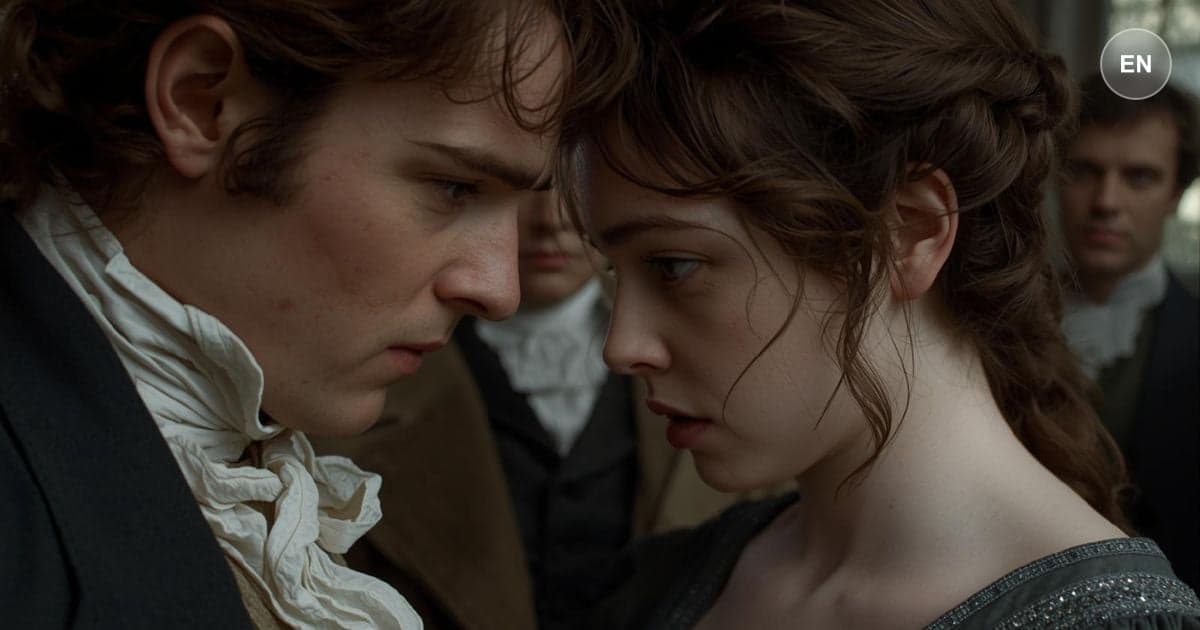
From this time Captain Wentworth and Anne Elliot were repeatedly in the same circle. They were soon dining in company together at Mr Musgrove’s, for the little boy’s state could no longer supply his aunt with a pretence for absenting herself; and this was but the beginning of other dinings and other meetings. Whether former feelings were to be renewed must be brought to the proof; former times must undoubtedly be brought to the recollection of each; they could not but be reverted to; the year of their engagement could not but be named by him, in the little narratives…
Public-domain chapter text, formatted for reading.
Master this chapter. Complete your experience
Purchase the complete book to access all chapters and support classic literature
Available in paperback, hardcover, and e-book formats
Now let's explore the literary elements.
Key Quotes & Analysis
"Once so much to each other! Now nothing!"
Context: Anne and Wentworth in the same party with only formal intercourse
Austen states the gulf in plain terms. Shared history makes present silence more painful than ordinary distance.
In Today's Words:
They were everything to each other once; now they are nothing. Shared history can make polite silence feel crueler than being strangers. When you still know someone's mind, minimum courtesy can feel like erasure Name the pattern when you notice it in your own relationships and daily choices.
"_That_ was in the year six;"
Context: Telling naval stories on the first evening together at Uppercross
He names their engagement year in public without faltering. Anne knows his mind must travel where his voice will not.
In Today's Words:
Wentworth mentions the year six while discussing his service. He can speak the shared past aloud to the room while withholding it from her. Notice when someone references your private history in public code you alone must decode Name the pattern when you notice it in your own relationships and daily choices.
"perpetual estrangement"
Context: Explaining why they are worse than strangers
They cannot begin again because they already know each other. Former intimacy forecloses the innocence strangers still possess.
In Today's Words:
Austen calls their state perpetual estrangement. Former lovers cannot reset to acquaintance because too much is already known. Some relationships have no clean restart, only managed proximity Name the pattern when you notice it in your own relationships and daily choices Name the pattern when you notice it in your own relationships and daily choices.
"I beg your pardon, madam, this is your seat;"
Context: Offering Anne the piano bench with studied politeness after dancing
One brief exchange becomes ceremony. His grace is performance, and performance from someone who once knew her intimately feels like rejection.
In Today's Words:
Wentworth rises and formally returns her seat at the piano. Politeness from someone who once knew you intimately can wound more than anger. Watch for courtesy so careful it is really distance Name the pattern when you notice it in your own relationships and daily choices.
Thematic Threads
Wentworth's Coldness
In This Chapter
Anne experiences reading someone's changed feelings
Development
This connects to the broader themes of constancy and second chances
In Your Life:
Consider how rejection, dignity, hidden emotion appear in your own relationships
You now have the context. Time to form your own thoughts.
Discussion Questions
This is not a test. Five prompts guide you through the chapter, from how it opens to how it closes, so you notice context and rhythm rather than facts to memorize. Sit with each question in your own words. When you see "One way to read it," treat it as a starting point, not the only answer.
- 1
Why does Anne believe Wentworth must remember the year six when he speaks of it?
analysis • surfaceOne way to read it
She knows his mind from former intimacy. The date belongs to both of them even if he addresses the whole room.
- 2
What does Austen mean by calling them worse than strangers?
analysis • mediumOne way to read it
Strangers might become acquainted. Former lovers cannot unknow each other, so silence feels permanent rather than provisional.
- 3
Why does Anne suppress a smile when Mrs Musgrove mourns Richard?
application • mediumOne way to read it
She sees Wentworth's flicker of amusement and shares his knowledge that Richard was not deeply mourned when alive. Her perception binds them privately.
- 4
Why is Wentworth's return of the piano seat worse than if he ignored her?
analysis • deepOne way to read it
Studied politeness proves he sees her and chooses formality. Hatred would at least be feeling; ceremony can feel like erasure.
- 5
When have you had to act normal near someone with whom silence felt loudest?
reflection • deepOne way to read it
Name the setting, what you could not say, and what small gesture carried the most weight. Forced proximity rarely offers closure, only management.
Critical Thinking Exercise
Understanding Wentworth's Coldness
Reflect on a situation in your life involving rejection, dignity, hidden emotion. How did you handle it, and what would you do differently now?
Consider:
- •How did rejection affect your decisions?
- •What did you learn from the experience?
Journaling Prompt
Write about how understanding rejection, dignity, hidden emotion has changed your approach to relationships.
Coming Up Next...
Chapter 9: The Walk to Winthrop
Wentworth becomes a daily visitor at Uppercross while Charles Hayter returns to find Henrietta's attention elsewhere. Mary calculates which sister might become Lady Wentworth. Then he walks into the Cottage expecting the Musgrove girls and finds Anne alone with the sick child until a toddler climbs her back and someone silently lifts him off.