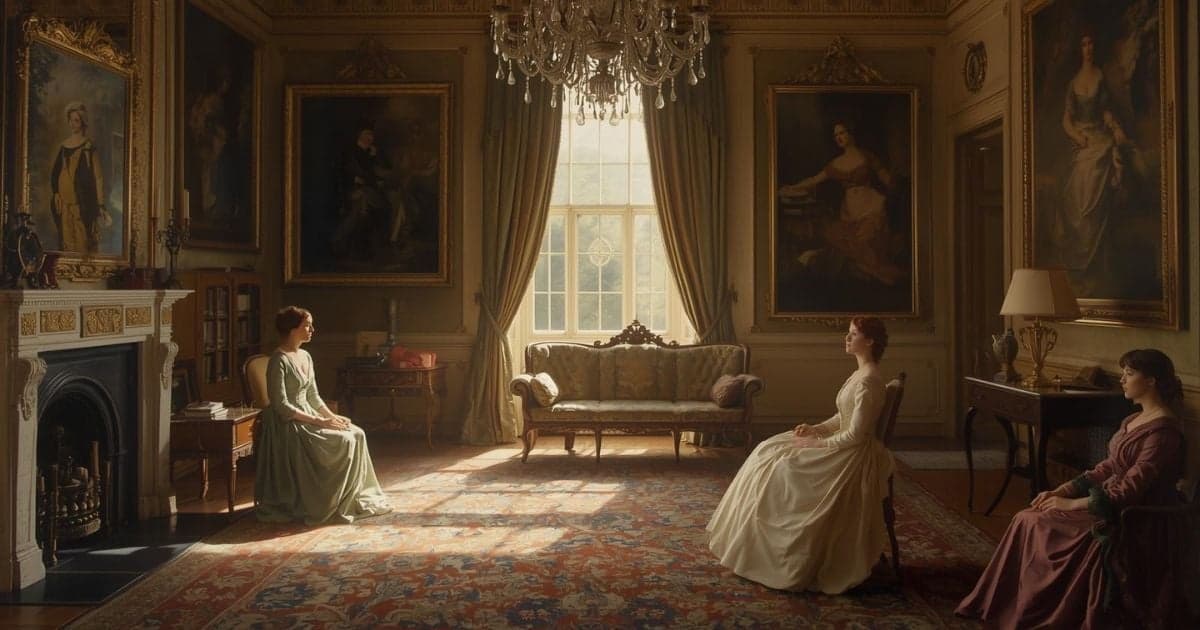
Chapter 03
The Meeting at Kellynch
“I must take leave to observe, Sir Walter,” said Mr Shepherd one morning at Kellynch Hall, as he laid down the newspaper, “that the present juncture is much in our favour. This peace will be turning all our rich naval officers ashore. They will be all wanting a home. Could not be a better time, Sir Walter, for having a choice of tenants, very responsible tenants. Many a noble fortune has been made during the war. If a rich admiral were to come in our way, Sir Walter—” “He would be a very lucky man, Shepherd,” replied Sir Walter; “that’s…
Public-domain chapter text, formatted for reading.
Master this chapter. Complete your experience
Purchase the complete book to access all chapters and support classic literature
Available in paperback, hardcover, and e-book formats
Now let's explore the literary elements.
Key Quotes & Analysis
"The navy, I think, who have done so much for us, have at least an equal claim with any other set of men, for all the comforts and all the privileges which any home can give."
Context: Anne interrupts Sir Walter's grudging terms for a hypothetical naval tenant
Anne publicly defends merit against her father's contempt. It is one of her few spoken interventions in the chapter.
In Today's Words:
Anne insists sailors deserve the comforts of home after risking their lives for the country. In modern terms, she defends earned standing against pedigree snobbery. When you are the only person in the room arguing that merit should count, speak plainly even if the powerful treat it as quaint.
"The profession has its utility, but I should be sorry to see any friend of mine belonging to it."
Context: Sir Walter answers Anne's defense with two objections to the navy
Sir Walter admits usefulness while rejecting intimacy. He fears self-made men who outrank him in energy and future consequence.
In Today's Words:
Sir Walter says the navy is useful but not for people like us. That is how elites often praise workers they would never let into the family. Utility gets applause; proximity gets blocked when newcomers threaten the old order of deference Name the pattern when you notice it in your own relationships and daily choices.
"You mean Mr Wentworth, I suppose?"
Context: Anne supplies the forgotten name linking Mrs Croft to Monkford
Anne's quiet memory outruns the room's social blindness. The name reopens the past while others still discuss rent and shrubberies.
In Today's Words:
Everyone forgets the tenant's brother until Anne quietly says Wentworth. One accurate memory can reopen a buried history while others still discuss lease terms. When you carry context others have discarded, expect the room to treat your knowledge as interruption until it becomes unavoidable Name the pattern when you notice it in your own relationships
"A few months more, and _he_, perhaps, may be walking here."
Context: Anne walks alone after the Croft connection is confirmed
The lease that secures the estate also threatens Anne's composure. Geography will force the past into present ground.
In Today's Words:
Anne realizes that in a few months Frederick may walk the grounds she is losing. A practical solution to family trouble can also reopen personal wounds. When logistics and memory collide, brace for the place itself to start speaking before the person arrives Name the pattern when you notice it in your own relationships and
Thematic Threads
True Worth vs. Social Status
In This Chapter
The Crofts outshine the Elliots in every meaningful way
Development
This contrast will sharpen throughout the novel
In Your Life:
Think of people you know who lack status but possess genuine worth. How are they treated?
You now have the context. Time to form your own thoughts.
Discussion Questions
This is not a test. Five prompts guide you through the chapter, from how it opens to how it closes, so you notice context and rhythm rather than facts to memorize. Sit with each question in your own words. When you see "One way to read it," treat it as a starting point, not the only answer.
- 1
Why does Mr Shepherd promote naval officers as tenants despite Sir Walter's prejudices?
analysis • surfaceOne way to read it
Peace sends wealthy officers ashore, and Shepherd knows they pay well and quickly. His business case outruns Sir Walter's aesthetic objections.
- 2
What are Sir Walter's two stated objections to the navy?
analysis • mediumOne way to read it
He resents obscure birth rising to honor and claims sea life ruins appearance. Both objections protect his sense of inherent precedence over merit.
- 3
Why does Anne's brief speech about sailors matter in this scene?
application • mediumOne way to read it
It is rare public dissent from Elliot vanity. Anne ties national debt to domestic comfort, framing merit as moral claim rather than social threat.
- 4
How does the revelation of Mrs Croft's brother change the chapter's stakes for Anne?
analysis • deepOne way to read it
Kellynch is no longer only a financial loss. The tenant's family links to Frederick, so the estate will hold a daily reminder of what persuasion cost her.
- 5
When have you seen someone accept help while insulting the helper's background?
reflection • deepOne way to read it
Strong answers describe hiring, funding, or family dependence paired with private contempt. The pattern protects ego at the price of honesty.
Critical Thinking Exercise
The Worth Inventory
Think of someone you initially dismissed because of their status (or lack of it). Did you later discover their real worth? What does this teach you about your own biases?
Consider:
- •What signals made you dismiss them initially?
- •What revealed their true character?
- •How has this changed how you evaluate people?
Journaling Prompt
Write about a time you judged someone by status and were proven wrong.
Coming Up Next...
Chapter 4: Mary's Complaints
Austen steps back to tell the whole story of Anne and Captain Wentworth: rapid love, Lady Russell's pressure, broken faith, and seven years of regret while his predicted success came true.