
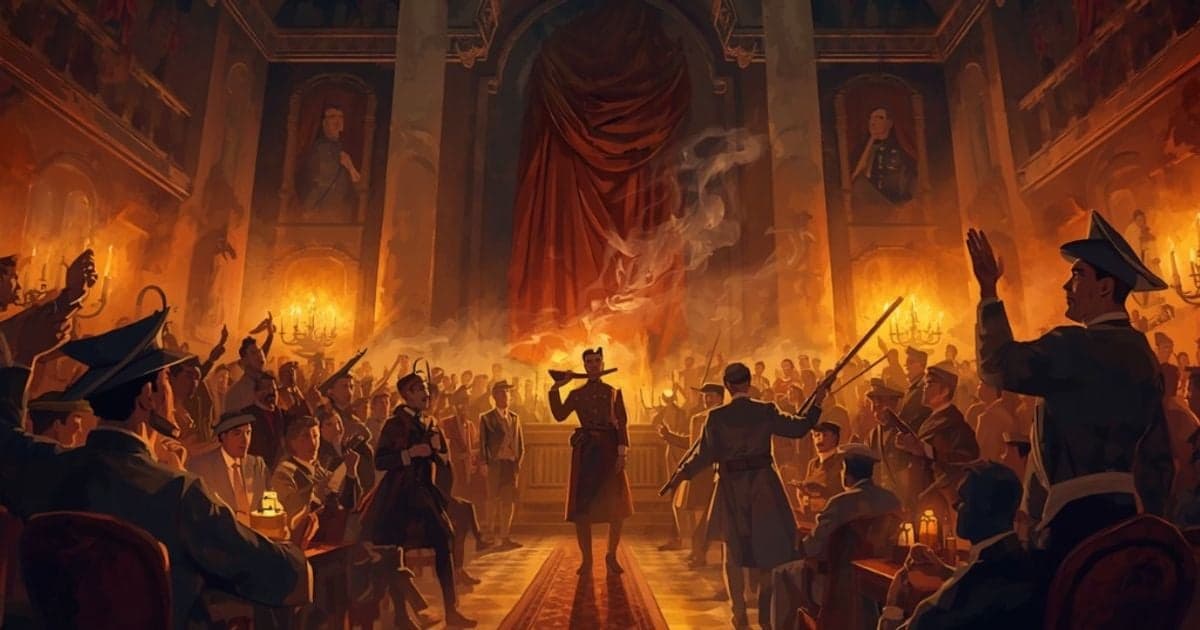
The Tabo steamer is Rizal's opening joke about the Philippine Ship of State: smoke, slowness, and an upper deck that calls itself modern while the lower deck carries the country without sharing the awning. Doña Victorina's dyed hair and Ben-Zayb's columns show how colonial subjects perform the master's language to survive, and how easily the performance becomes cruelty toward anyone who cannot afford the costume.
Performance is not vanity alone. It is a strategy for staying inside rooms where decrees are signed, academies are deferred, and fear is sold as news. From Quiapo fairs to operetta boxes, Rizal keeps asking who must wait for his Excellency, who must look merry on command, and who reads the plot while the rest of the city fights for tickets.
This lesson is satire with teeth. When you see borrowed Europe, borrowed progress, or borrowed patriotism, ask what the performance buys, who pays for the lower deck, and whose grief is still required to dance while the bells mark a funeral.
The Central Lesson
Colonial performance rents safety by mimicking the metropole while punishing those who cannot mimic fast enough. Rizal opens the sequel on the Tabo so the joke lands before the fuse does, and so you can read deferral, fear, and fairground joy as parts of the same script the powerful expect you to applaud.
Applying This to Your Life
Name the costume
Which words, clothes, credentials, or accents buy access in your workplace or city? List what you perform to stay inside the room, and who is punished for failing the act.
Find the lower deck
When leaders discuss progress or moderation, locate who poles the hull: interns, migrants, junior staff, the neighbourhood that catches the cost. Performance upstairs often hides labour downstairs.
Watch the columnist
Ben-Zayb shows how flattery and fear share an ink pot. When panic or praise arrives in the same voice, ask who keeps trading while everyone else is told to hide.
Other lessons in this book
More life-skill deep dives from the same classic.
Education as Control
The Class That Taught Obedience
Sit in Placido's walkout, the look-but-touch-not physics class, and Bilibid after pasquinades to see when schools train obedience and cells finish the lesson.
12 chapters·Explore AnalysisGrief That Hardens
Basilio, Juli, and the Empty House
Stay with Basilio, Juli, and Capitan Tiago when fiestas march past ransom, newspapers skip a fall, and unacknowledged loss is offered a fuse.
11 chapters·Explore AnalysisNaming Systemic Greed
Rent in a Cassock
Follow Tales's land, Quiroga's tribulations, and every Pilates bowl to see rent renamed as piety, law, or progress before Simoun schedules the room.
11 chapters·Explore AnalysisResistance Versus Revenge
The Fuse and the Priest Who Refused
Track the lamp, the wedding guest list, and Padre Florentino sinking the jewels so you can name real harm without calling a crowd explosion liberation.
9 chapters·Explore AnalysisWhen Reform Runs Out
The Jeweler Who Stopped Petitioning
Follow Simoun from the Tabo canal joke to the Los Baños card table and ask what patience costs once petitions are adjourned to dessert and fear replaces an answer.
12 chapters·Explore Analysis
Continue exploring
Explore this theme
The same lessons in other books
See how other books teach the same life skills.
North and South
Acting on Conscience When It Costs YouWatch Hale leave the church, Margaret lie at the station for Frederick, and Thornton refuse a speculation that would save him.North and South
Navigating Class and Economic PowerTrace Milton from imported Irish hands and Boucher's brook to the inheritance that buys a partnership, not a husband.
Paradise Lost
When Pride Sounds Like PrincipleHear Satan on the burning lake and at Eden's edge: wounded dignity reframed as liberty, and a no that is only a refusal to be second.
Where the lesson lives in the book
Ship of State
Doña Victorina rages at Indians while Ben-Zayb flatters power and Simoun jokes about digging a canal through Manila. The upper deck calls the steamer the Ship of State: noisy, stuck, and modern only in its awning while the lower deck poles the country through the same sandbars.
Key Insight:
Performing Europe does not grant safety; it rents approval by the dinner. The costume turns cruel toward anyone who cannot afford the dye, the accent, or the column that flatters the captain.
“if there were not a single Indian in the world”
Lower Deck
Below the awning, passengers breathe oil and sweat beside boilers while Chinese peddlers lie seasick, students collect a real each for the Castilian academy, and Basilio reports Capitan Tiago sent him away so Padre Irene could leave the old man to opium.
Key Insight:
Colonial modernity always has a downstairs. Isagani's permit hope and Capitan Basilio's Horace quote share the same heat as shovels scraping, while upstairs calls the boat the Ship of State.
“There, below, other scenes were being enacted.”
Legend as Cover Story
After Lorelei melancholy, friars trade Hong Kong rent jokes and river legends while Simoun asks only for stories that call up ghosts. He needles Padre Salvi about an abandoned lover not sent to St Clara; Salvi shudders while Camorra escapes with a petrified cayman.
Key Insight:
Folk tales become camouflage when a question names a living wound. Comparative religion on deck is performance until someone refuses the pretty version.
“I've seen so many rivers and landscapes that I'm only interested in those that call up legends.”
Wealth on Display
Simoun opens trays of Cleopatra necklaces and Marie Antoinette diamonds in Tales's house on the day Tales must abandon the home he built, while neighbours crowd the sala because prudence says stay on the jeweler's good side.
Key Insight:
Colonial performance turns wealth into spectacle that humiliates the host in his own sala. The show is also a test of who will bow for access to the Captain-General's friend.
“Such great riches were an insult to his misfortunes”
Sit Like Shopkeepers
At Quiroga's feast the General orders gobernadorcillos humiliated in church seating because the Chinese pay most taxes, cavalry outside while tight trousers make the lesson visible to the whole Escolta.
Key Insight:
Performance of rank can mean public humiliation for natives while taxpayers become the measure of dignity. The scene is comedy until you see who must laugh.
“there's nothing like humiliating them and humbling them in their own eyes.”
House of the Students
By ten Makaraig's boarding house is pandemonium: sipa on the stairs, cane duels, fencing, and love letters read aloud as if the colony were a school play. A pedler pays for the sport with bruised shoulders while centavos for the academy change hands.
Key Insight:
Youthful chaos on the page becomes sedition in the report. Performance and protest share a stage when authorities need an excuse, and the riot is easier to photograph than the petition.
“Rejoice, friends, rejoice! Victory!”
Quiapo Fair
January moonlight fills Quiapo with cosmorama music while friars stroll drunk through lanterns and crowds who come to see and be seen. The fair is leisure for rulers and surveillance for everyone who must look cheerful under the lights.
Key Insight:
Public fairs let rulers perform ease while policing who may look. The spectacle is also surveillance: every smile is read for what it signals to the powerful.
“the Indians had the aptitude, but that they should devote themselves exclusively to the manufacture of saints.”
Legerdemain
Mr. Leeds drapes a mortuary room, lets Ben-Zayb hunt mirrors that never appear, and raises a sphinx head that names Padre Salvi murderer until the friar collapses and groans that she still lives.
Key Insight:
Colonial sceptics demand a trick they can expose until fiction names a crime the powerful cannot explain away. Performance breaks when the audience stops applauding and starts listening.
“Thus, without purchasing the least trifle, they continued on their way to see the famous sphinx.”
World's Most Active Arbiter
Ben-Zayb flatters Don Custodio as the world's most active arbiter while the Castilian academy file gathers dust on his desk and students still wait for a signature that sleep keeps postponing.
Key Insight:
Titles like arbiter are performances too. The label buys time while nothing moves, and flattery becomes the ink that keeps the drawer closed.
“the world's most active arbiter”
Manila Types
Camaroncocido watches half the city fight for Les Cloches tickets while friars, journalists, and students perform their roles in the queue and Simoun's allies read the crowd for filibuster talk mixed with scalping.
Key Insight:
When everyone plays a type for the theatre, the poor spectator sees the plot before the curtain rises. Whispers of revolt sell tickets long before they become a plan.
“Obscenities in French, man, Ben-Zayb, for God's sake, in French! Never!”
Curtain for His Excellency
Packed boxes pound canes because the operetta cannot begin until his Excellency arrives and a smoking hero on stage refuses Spanish decorum while the audience learns to applaud delay.
Key Insight:
Imperial theatre trains audiences to applaud delay. The performance begins with who may keep everyone waiting, and ends with who must look grateful for being allowed inside.
“Excellency”
Dancing Over Grief
Les Cloches plays to a full house while Simoun paces outside and Basilio learns the knell was Maria Clara's funeral, not a stranger's. The colony keeps dancing while grief walks the street in plain clothes.
Key Insight:
Public joy can be a costume worn over private ruin. When the theatre is full, ask whose funeral the bells are marking and who is still required to perform applause.
“Variedades”
Promenade Dreams
Isagani meets Paulita at sunset on the promenade while Doña Victorina's household performs Europe badly in the background and every walk is watched for what it signals about money, friars, and marriage.
Key Insight:
Romance under colonial roofs is never private. Every stroll is a signal read by aunt, journalist, and guard, and love becomes another performance with an audience.
“Dreams, dreams!”
Victory Lanterns
Red lanterns and a wall verse turn a student supper into theatre of victory before anyone reads the fine print or sees the trap that pasquinades and arrests are already building.
Key Insight:
Victory parties staged too early flatter the winners who were never in the room. Watch who supplies the lanterns and who stays home to read the charge sheet.
“happy solution”
Fear That Serves Power
Ben-Zayb crows that education is disastrous while shopkeepers hide, friars skip Quiroga's bazaar, and whisperers invent outlaws at the Palace until Manila lives in tatakut and trade continues for those who sell the fear.
Key Insight:
Panic is also a costume. When journalists sell fear, watch who keeps trading while the street closes, and who claims moderation after urging shootings in private.
“tatakut”
Panic Then Pageantry
After the pasquinade scare, mothers pull sons from classes while newspapers declare Simoun recovered and hint at a farewell fiesta, as if terror and celebration were two acts in the same play.
Key Insight:
The colony can stage normal life hours after it terrorised students. Pageantry is how power says nothing has changed while the jail still fills.
“Come, Señor Sindbad, dazzle us with something Yankee!”
Ben-Zayb's Afflictions
The journalist suffers when his own flattering words turn on him and the performance of patriotism becomes a personal joke he cannot edit out of tomorrow's column.
Key Insight:
Satire written for power becomes a mirror power refuses to hold. When the columnist becomes the story, notice how quickly the room stops laughing and starts assigning blame.
“paid for an illumination and made a bonfire of his books.”
Todo se sabe
In Orenda's parlour, card games give way to Chichoy's tale of powder under the wedding kiosk while guesses name Simoun because the plot sounds absurd and credo quia absurdum passes for proof.
Key Insight:
Gossip travels faster than secrecy once the room is crowded. Performance of shock becomes the next day's column, and everyone pretends surprise at what the house already knew.
“Todo se sabe”