Teaching Crime and Punishment
by Fyodor Dostoevsky (1866)
Teaching Map
This guide is not only for literature teachers. Parents, tutors, book clubs, and anyone reading Crime and Punishment together can use it to open conversation — not just recap plot. Each Why it matters note is a question-starter: ask toward a Collision (two views meet and something shifts), a Reframe (the same facts suddenly mean something different), or a Recognition (what was always there finally becomes visible). The map shows how the book breaks into stages, which anchor scenes to lean on, and where each Lesson fits — whether you are planning a term or a single evening.
Part I
Chapters 1–7 · The theory, the pawnbroker, the murder
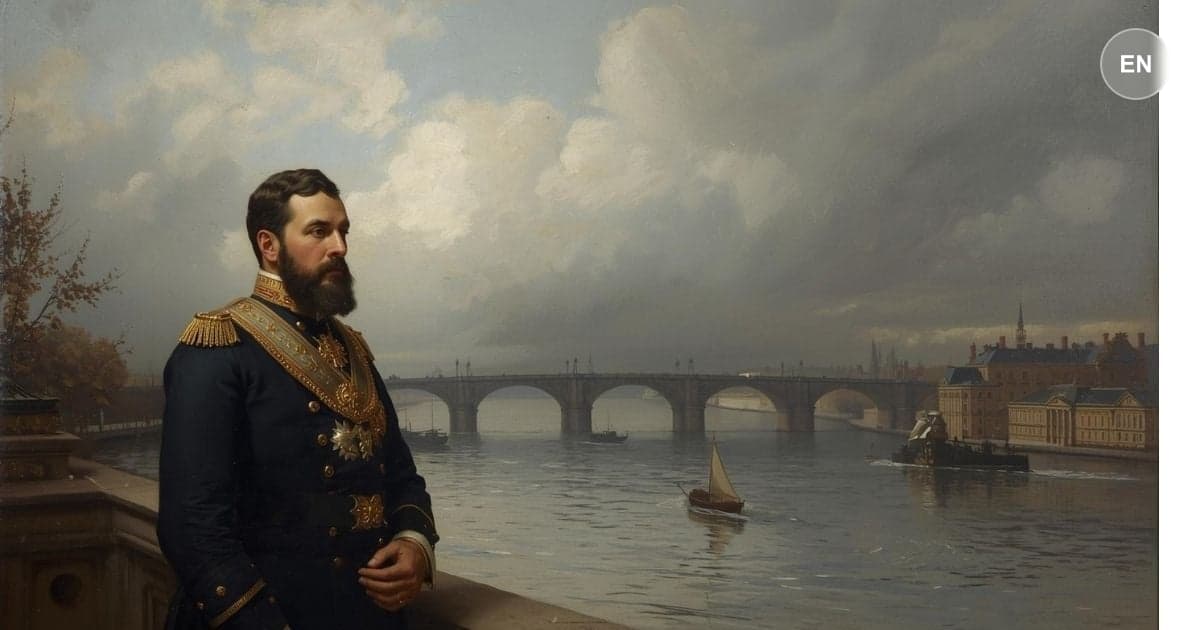
Counting the steps to the pawnbroker's door
“On an exceptionally hot evening early in July a young man came out of the garret in which he lodged…”
Why it matters
Ask a question — toward Collision, Reframe, or Recognition.
When you are broke and alone, your mind can start treating a catastrophic idea like a clever experiment. Raskolnikov pawns his father's watch at the pawnbroker's, maps her keys and strongbox, and asks when her sister Lizaveta will be away. Before you rehearse harm while telling yourself it is not serious yet, name what you are doing and tell one person you trust.
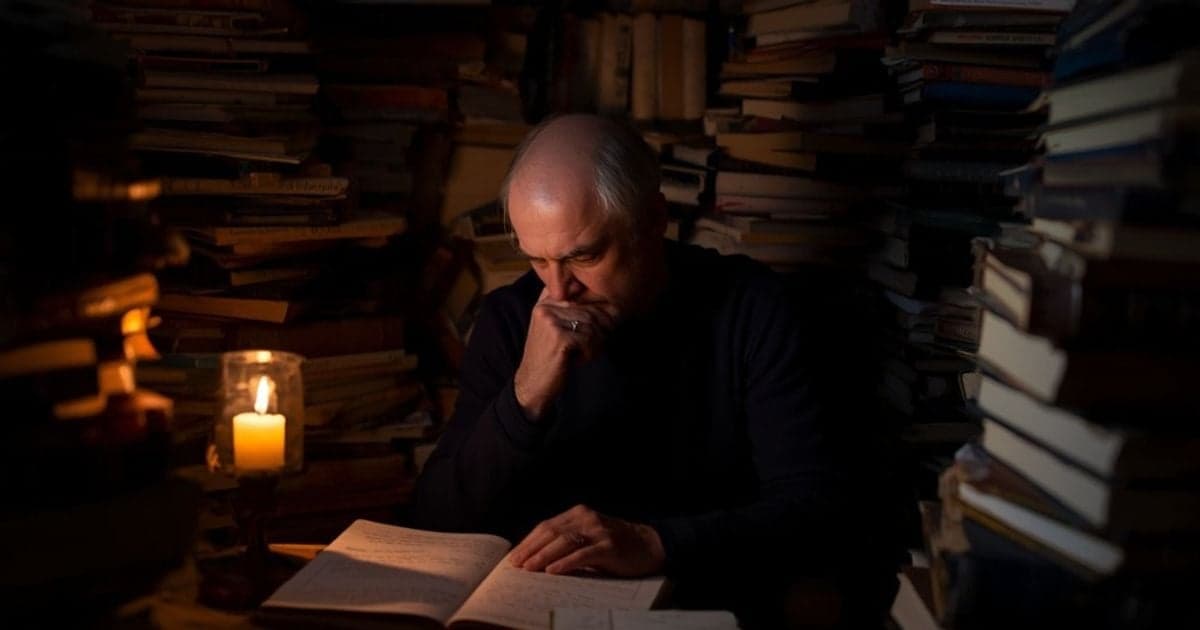
Reading the Warning Signs of Isolation
“On an exceptionally hot evening early in July a young man came out of the garret in which he lodged…”
Why it matters
Ask a question — toward Collision, Reframe, or Recognition.
When you are broke and alone, your mind can start treating a catastrophic idea like a clever experiment. Raskolnikov pawns his father's watch at the pawnbroker's, maps her keys and strongbox, and asks when her sister Lizaveta will be away. Before you rehearse harm while telling yourself it is not serious yet, name what you are doing and tell one person you trust.
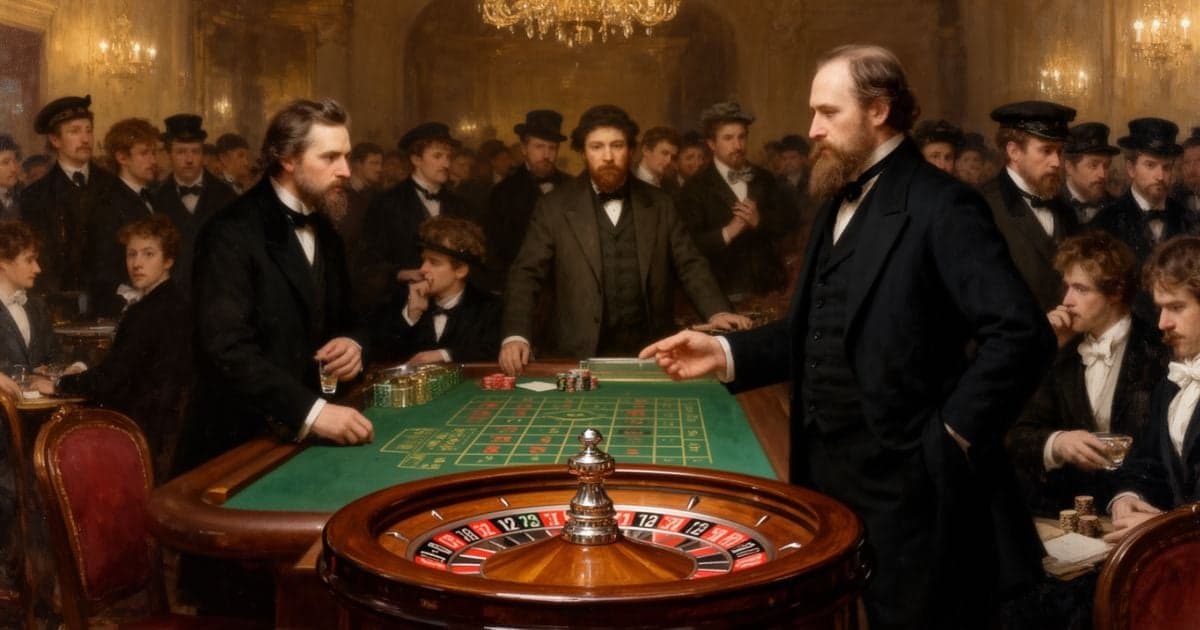
Recognizing Dangerous Rationalization
“On an exceptionally hot evening early in July a young man came out of the garret in which he lodged…”
Why it matters
Ask a question — toward Collision, Reframe, or Recognition.
When you are broke and alone, your mind can start treating a catastrophic idea like a clever experiment. Raskolnikov pawns his father's watch at the pawnbroker's, maps her keys and strongbox, and asks when her sister Lizaveta will be away. Before you rehearse harm while telling yourself it is not serious yet, name what you are doing and tell one person you trust.
Understanding the Psychology of Guilt
“Of course, I’ve been meaning lately to go to Razumihin’s to ask for work, to ask him to get me…”
Why it matters
Ask a question — toward Collision, Reframe, or Recognition.
A convenient coincidence can feel like fate when you already want permission to act. Raskolnikov renounces his plan, then overhears that the pawnbroker will be alone at seven tomorrow and treats that as final proof. Before you call timing destiny, ask what you wanted before the sign showed up.
Confronting Consequences vs. Theorizing Them
“Later on Raskolnikov happened to find out why the huckster and his wife had invited Lizaveta. It was a very…”
Why it matters
Ask a question — toward Collision, Reframe, or Recognition.
Notice when you are preparing for a choice you still refuse to admit. Dostoevsky shows how public arguments, lucky breaks, and dissociated busyness can feel like fate while conscience keeps insisting the act is still yours to stop. That distinction matters anywhere people defend harm in theory, convert coincidence into permission, or pack the bag while saying they will never leave.
The murder
“The door was as before opened a tiny crack, and again two sharp and suspicious eyes stared at him out…”
Why it matters
Ask a question — toward Collision, Reframe, or Recognition.
Track how plans change the moment real people bleed. Dostoevsky shows that theory rarely survives contact with a second victim, an open door, or a stranger who notices one wrong detail. That skill matters anywhere decisions look neat in advance and ugly in execution: workplaces, relationships, politics, or any moment where justification runs ahead of consequence.
Part II
Chapters 8–14 · Fever, guilt, and Marmeladov's death
Marmeladov dies under the wheels
“An elegant carriage stood in the middle of the road with a pair of spirited grey horses; there was no…”
Why it matters
Ask a question — toward Collision, Reframe, or Recognition.
Act humanely in a visible crisis even when you cannot tell the whole truth. Dostoevsky shows Raskolnikov's blood on his waistcoat from helping Marmeladov, then a faint before family joy. That matters for anyone carrying secrets who still meets suffering face to face.
Part III
Chapters 15–20 · Porfiry's first interrogations
Porfiry's first real interrogation
“Raskolnikov was already entering the room. He came in looking as though he had the utmost difficulty not to burst…”
Why it matters
Ask a question — toward Collision, Reframe, or Recognition.
A cordial visit can still file every word you say. Porfiry reads Raskolnikov's extraordinary-men article back to him, asks whether need could drive him to rob and murder, then closes with painters at the flat between seven and eight. Before you explain yourself to someone in authority, notice which writing they already quoted and which timeline question they save for the door.
Recognizing When Pride Prevents Confession
“Raskolnikov was already entering the room. He came in looking as though he had the utmost difficulty not to burst…”
Why it matters
Ask a question — toward Collision, Reframe, or Recognition.
A cordial visit can still file every word you say. Porfiry reads Raskolnikov's extraordinary-men article back to him, asks whether need could drive him to rob and murder, then closes with painters at the flat between seven and eight. Before you explain yourself to someone in authority, notice which writing they already quoted and which timeline question they save for the door.
Part IV
Chapters 21–26 · Svidrigailov's threat, Sonya and Lazarus
Sonya reads the raising of Lazarus
“Raskolnikov went straight to the house on the canal bank where Sonia lived. It was an old green house of…”
Why it matters
Ask a question — toward Collision, Reframe, or Recognition.
Pity without truth can wound the person you claim to honor. Rodya tells Sonia she is destroying herself for nothing, kisses her foot, invokes Lazarus, and circles a confession without naming the axe. Distinguish someone probing your guilt from someone who deserves honesty before you test them with cruelty.
Navigating Redemption Through Truth
“Raskolnikov went straight to the house on the canal bank where Sonia lived. It was an old green house of…”
Why it matters
Ask a question — toward Collision, Reframe, or Recognition.
Pity without truth can wound the person you claim to honor. Rodya tells Sonia she is destroying herself for nothing, kisses her foot, invokes Lazarus, and circles a confession without naming the axe. Distinguish someone probing your guilt from someone who deserves honesty before you test them with cruelty.
Part V
Chapters 27–31 · Marmeladov's funeral dinner, the private confession
Raskolnikov confesses to Sonya alone
“Raskolnikov had been a vigorous and active champion of Sonia against Luzhin, although he had such a load of horror…”
Why it matters
Ask a question — toward Collision, Reframe, or Recognition.
Telling one person the truth does not finish the work; it only changes who carries the weight with you. In Sonia's room Raskolnikov names the axe murders, she embraces him crying what have you done to yourself, and urges him to kiss the earth at the crossroads before the world. Choose a witness who will not flee, then decide separately what public act you still owe the people you harmed.
Part VI
Chapters 32–39 · Svidrigailov's end, the Hay Market, the confession
Svidrigailov's suicide
“He spent that evening till ten o’clock going from one low haunt to another. Katia too turned up and sang…”
Why it matters
Ask a question — toward Collision, Reframe, or Recognition.
Last-night money often pays off witnesses and dependents while buying silence. Svidrigailov tells Sonia about bullet or Siberia, leaves bonds, and forbids mention of his visit before shooting himself where Achilles must see. Take practical help, but refuse to carry a predator's secrets just because the cash is real.
Confession in the Hay Market
“When he went into Sonia’s room, it was already getting dark. All day Sonia had been waiting for him in…”
Why it matters
Ask a question — toward Collision, Reframe, or Recognition.
Symbols and public bows can carry you when pride still jokes, but the law needs clear facts. Raskolnikov takes Sonia's cross, kneels in the Hay Market, then tells Ilya Petrovitch he killed the pawnbroker and Lizaveta with an axe. Do the hard visible steps, then speak without theory when there is no dignified exit left.
Epilogue
Chapters 40–41 · Siberia and Easter on the riverbank
Epilogue: Easter on the riverbank
“He was ill a long time. But it was not the horrors of prison life, not the hard labour, the…”
Why it matters
Ask a question — toward Collision, Reframe, or Recognition.
One scene by the river does not finish the work of becoming human. Raskolnikov is renewed by love yet still faces seven years and a New Testament he has barely opened. Do not mistake a single surrender for full redemption; plan for gradual renewal after the moment pride finally breaks.
Why Teach Crime and Punishment?
Rodion Raskolnikov, a starving former law student, has turned isolation into a theory: extraordinary people may break moral law for a greater purpose. He murders a pawnbroker and her sister with an axe, then hides the money without ever opening it. Guilt and fever arrive faster than the police. Detective Porfiry Petrovich has already read his own article on extraordinary men and talks to conscience rather than clues, while Sonya Marmeladova offers him a road that requires truth, not a better excuse. Raskolnikov confesses in the Hay Market and goes to Siberia; only after Easter does he finally believe what she has been telling him.
Lessons from Crime and Punishment
Six named pressures the book tests, each tied to a chapter and a deeper lesson page. Send students to one when a theme hooks them, then back to the scene that proves it.
Confronting Consequences vs. Theorizing Them
Distinguish between imagining outcomes and experiencing their full weight
Navigating Redemption Through Truth
Learn that authentic transformation requires confronting reality, not constructing better excuses
Reading the Warning Signs of Isolation
Understand how disconnection from community amplifies dangerous thinking patterns
Recognizing Dangerous Rationalization
Identify when intellectual justifications are masking harmful behavior before thought becomes action
Recognizing When Pride Prevents Confession
Understand how ego keeps you trapped in lies that are destroying you from within
Understanding the Psychology of Guilt
See how conscience operates through lived experience, not abstract principles
Suggested Teaching Approach
1Before class: map the setup
Read the murder in Part I. You need the seven hundred thirty steps, the tavern arithmetic, and the axe before guilt is anything more than a word.
2Discussion starter: name the mechanism
Skip plot recall. Ask where students see this book's pressures play out in their own lives, from Counting the steps to the pawnbroker's door (Ch. 1) to Epilogue: Easter on the riverbank (Ch. 41). Tie every answer to a chapter number, not a theme label alone.
3Modern connections: use the six lessons
Six pressures Dostoevsky tests from the pawnbroker's stairs to the riverbank after Easter: a theory built to survive contact with what it costs, guilt the body reports before the mind admits it, redemption that needs a true sentence rather than a better excuse, isolation that lets a bad plan feel like proof, consequences a theory cannot absorb once they are real, and pride that would rather stay a failed exception than confess. Each spoke ties named chapters to the proof.
4Assessment: application, not recall
Essay prompts that work: compare Counting the steps to the pawnbroker's door (Ch. 1) to Sonya reads the raising of Lazarus (Ch. 24); trace how it pays off by the ending. Pair with a current-events angle, then require a scene from the book as counterweight. Assess application, not recall. AI cannot help with lived experience.
Chapter-by-Chapter Resources
The Garret
Why it matters: When you are broke and alone, your mind can start treating a catastrophic idea like a clever experiment. Raskolnikov pawns his father's…
Marmeladov's Confession
Why it matters: Some people narrate their harm with perfect clarity and repeat it anyway. Marmeladov tells Raskolnikov that his drink was bought with Sonia's…
The Letter
Why it matters: A loving letter can still smuggle in decisions already made on your behalf. Pulcheria calls Raskolnikov their one hope while revealing that…
Dunya's Sacrifice
Why it matters: Rage at injustice can flip into nihilism when you have no workable alternative. Raskolnikov spends twenty copecks to protect a drunk girl,…
The Dream of the Mare
Why it matters: A convenient coincidence can feel like fate when you already want permission to act. Raskolnikov renounces his plan, then overhears that the…
Overhearing Fate
Why it matters: Notice when you are preparing for a choice you still refuse to admit. Dostoevsky shows how public arguments, lucky breaks, and dissociated…
The Deed
Why it matters: Track how plans change the moment real people bleed. Dostoevsky shows that theory rarely survives contact with a second victim, an open…
Fever and Flight
Why it matters: Track how guilt shows up in the body before the mind catches up, and how ordinary errands can feel like exposure. Dostoevsky…
Under the Stone
Why it matters: Notice when someone hides evidence badly, rejects support, and starts hearing what is not there. Dostoevsky shows Raskolnikov mistake temporary relief for…
Razumihin Returns
Why it matters: Ask what caregivers heard while you were impaired, and what debts their kindness creates. Dostoevsky shows Raskolnikov receiving mother's money, Razumihin's full…
Behind the Door
Why it matters: Notice when people discuss your situation within earshot while you perform normalcy. Dostoevsky puts Razumihin's full reconstruction, Porfiry's invitation, and behind the…
Luzhin Visits
Why it matters: When someone preaches practicality and self-care economics while arranging your life, extend one logical step and watch them retreat. Dostoevsky shows Raskolnikov…
To-day, To-day
Why it matters: Notice when you steer talk toward whether others already know, rehearse the crime as a hypothetical, then say the real line and…
Marmeladov's Death
Why it matters: Act humanely in a visible crisis even when you cannot tell the whole truth. Dostoevsky shows Raskolnikov's blood on his waistcoat from…
Me or Luzhin
Why it matters: When you cannot tell the whole story, you can still forbid a concrete harm. Dostoevsky shows Raskolnikov ordering Dunya to refuse Luzhin…
Luzhin's Letter
Why it matters: Notice who a formal note excludes, what good deed it reframes, and what meeting it schedules on its terms. Dostoevsky puts Luzhin's…
Blood and the Letter
Why it matters: Notice when someone admits real details (blood, money) while withholding the central harm, and when a formal letter reframes their charity. Dostoevsky…
Sonia at the Door
Why it matters: When someone has been labeled in a letter or message, meeting them in person is the test of your honesty. Dostoevsky puts…
At Porfiry's
Why it matters: A cordial visit can still file every word you say. Porfiry reads Raskolnikov's extraordinary-men article back to him, asks whether need could…
Murderer in the Street
Why it matters: Relief after one narrow escape often makes you careless on the walk home. Leaving Porfiry's, Rodya tells Razumihin how the painter question…
Svidrigailov's Visit
Why it matters: Charm with money attached is usually access shopping, not friendship. Svidrigailov will not leave Rodya's room, talks of reaching Dunya and Marfa…
Breaking with Luzhin
Why it matters: Respectable suitors reveal themselves when the table forces a loyalty choice. At Bakaleyev's Luzhin smears Svidrigailov and demands reconciliation until Dunya reads…
Relief and Farewell
Why it matters: Money that arrives right after you escape a bad match can still carry strings. After Luzhin is gone, Dunya hears of Svidrigailov's…
Sonia and Lazarus
Why it matters: Pity without truth can wound the person you claim to honor. Rodya tells Sonia she is destroying herself for nothing, kisses her…
Porfiry's Trap
Why it matters: Investigators sometimes prefer watching you circle the flame to arresting you at once. Porfiry lectures on the butterfly round the candle, sketches…
Nikolay's Confession
Why it matters: A dramatic guilty plea can be theater for everyone except the person who actually did it. Nikolay bursts into Porfiry's office claiming…
Luzhin Regroups
Why it matters: Wounded vanity often rehearses charity before it rehearses revenge. Luzhin broods over lost furniture money, brings ten roubles to Katerina with witnesses…
The Memorial Dinner
Why it matters: Funeral money spent on vodka is grief turned into public performance. Katerina's memorial feast draws drunks and strangers while Rodya sits as…
Luzhin Frames Sonia
Why it matters: Public generosity can be a trap when the giver still controls the story of what you stole. At Katerina's dinner Luzhin claims…
Confession to Sonia
Why it matters: Telling one person the truth does not finish the work; it only changes who carries the weight with you. In Sonia's room…
Katerina's Death
Why it matters: Charity after confession can feel like mercy and still be leverage. After Raskolnikov tells Sonia the truth, Katerina dies in her room…
The Strange Period
Why it matters: Another person's guilty plea can feel like air returning when it actually tightens the case. In the fog after Katerina's death, Razumihin…
Porfiry Names the Murderer
Why it matters: A long explanation before the accusation is still an accusation. Porfiry recounts the pledges, the stone, and Nikolay, then whispers that Raskolnikov…
Svidrigailov at the Tavern
Why it matters: A meeting that feels fated is often a direction you were given twice while half listening. Svidrigailov sits in the tavern window…
Svidrigailov on Dunya
Why it matters: Compassion becomes a lever when someone narrates your urge to save them as a trap they prepared. Svidrigailov tells how Dunya pitied…
Dunya's Revolver
Why it matters: A private confession overheard through a door can become a trap for your family, not only your shame. Svidrigailov lures Dunya with…
Svidrigailov's Last Night
Why it matters: Last-night money often pays off witnesses and dependents while buying silence. Svidrigailov tells Sonia about bullet or Siberia, leaves bonds, and forbids…
Farewell to Mother
Why it matters: You can choose surrender and still hide the worst from the person who needs comfort most. Raskolnikov asks his mother to always…
Confession at the Police
Why it matters: Symbols and public bows can carry you when pride still jokes, but the law needs clear facts. Raskolnikov takes Sonia's cross, kneels…
Epilogue: Trial and Siberia
Why it matters: A truthful trial and a shorter sentence do not restore a family or a soul. Raskolnikov gets eight years while his mother…
Resurrection
Why it matters: One scene by the river does not finish the work of becoming human. Raskolnikov is renewed by love yet still faces seven…
Start with one chapter
Assign Chapter 1 with the summary and audio, then open discussion with a life-skill question instead of a plot question. Expand chapter by chapter from there.