Wide Reads
Literature MattersLife IndexEducators
Sign in
Where to Begin

To-day, To-day — Crime and Punishment

Crime and Punishment - To-day, To-day

Fyodor Dostoevsky

Crime and Punishment

To-day, To-day

Home›Books›Crime and Punishment›Chapter 13: To-day, To-day
Previous
13 of 41
Next

Analysis by the Wide Reads editorial team·Reviewed against the source text·Updated November 28, 2025

Summary

To-day, To-day

Crime and Punishment by Fyodor Dostoevsky

0:000:00
Listen to Next Chapter

As soon as Nastasya leaves, Raskolnikov dresses in Razumihin's new clothes, pockets the twenty-five roubles and copper change from his mother's money, and slips past the samovar unnoticed. A strange calm replaces delirium: precise movements, one thought only, that all this must end to-day, once for all, though he will not plan how. He breathes the stinking Hay Market air at sunset, gives a copeck to a street singer, chats oddly about organ music, and stops at the corner where Lizaveta once stood with the huckster. He pushes through peasant crowds, listens at a tavern door, and recalls the condemned man who would rather stand on a square yard of space for eternity than die: life, whatever it may be.

At the Palais de Cristal he orders tea and five days of newspapers until he finds the pawnbroker murder. Zametov sits beside him, champagne-flushed, amused that the invalid is out. Raskolnikov mocks his rings, recalls the sock search and Luise Ivanovna, then whispers that he was searching for news of the murder of the old pawnbroker woman. He performs changing false notes, ridicules careless criminals, and when Zametov asks seriously how a murderer would behave, describes lifting a hundredweight stone to hide jewels for years. His lips tremble like the latch on the door; then: what if it was I who murdered the old woman and Lizaveta? He taunts Zametov's belief, waves red and blue notes, cries assez causé, and leaves trembling with hysterical rapture and collapse.

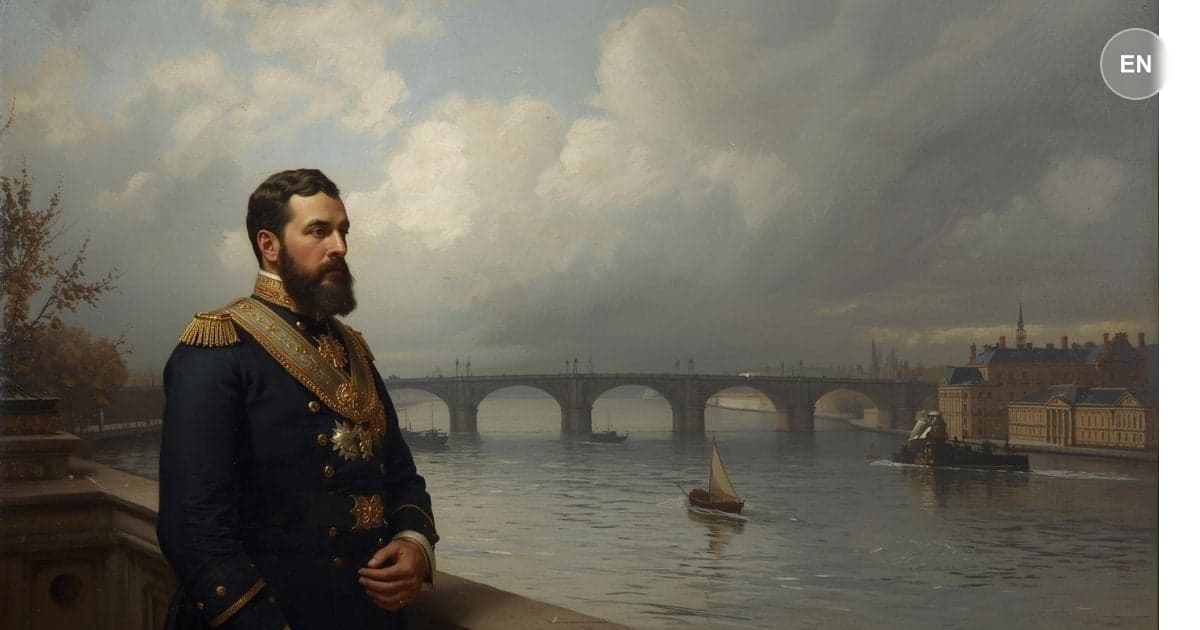
On the steps he runs into Razumihin hunting him under the sofa. Raskolnikov says he is sick of benevolence, repeats let me be with Luzhin-like frenzy, and refuses Potchinkov's house-warming. Razumihin lets him go, then panics and rushes back to question Zametov. Alone, Raskolnikov stands on X Bridge, watches a yellow-faced woman throw herself into the canal, and feels disgust when Afrosinya is pulled out alive: water is not good enough. Complete apathy replaces his morning drive to end everything at last.

He turns toward the police office, detours, and climbs the pawnbroker staircase to the fourth floor, startled to find workmen papering lilac flowers over the old yellow walls. He rings the cracked bell for satisfaction, asks the paperhangers if there is no blood, and says the old woman and her sister were murdered here, come to the police station. Porters, a peasant woman, and a man in a long coat argue; a huge porter flings him into the street as a rogue. At the crossroads, dead silent, he sees a carriage, talk, shouts, a light in the dusk, smiles coldly, and moves toward the crowd knowing the police station will come soon, but first Marmeladov's accident waits in the gathering dark.

In this chapter: Terms Characters Key Quotes Themes Modern Story

Why This Matters

Connect literature to life

Skill: Reading the Almost-Confession

Notice when you steer talk toward whether others already know, rehearse the crime as a hypothetical, then say the real line and retreat. Dostoevsky chains that pattern to a return to the murder flat. The skill matters after any secret that could end your freedom or your relationships.

Coming Up in Chapter 14

At the carriage in the street Raskolnikov will recognize Marmeladov, crushed and dying, and carry him home while someone runs for Sonia.

Share it with friends

PreviousPrevious ChapterNextNext Chapter
Original text
7,505 wordscomplete

Chapter 13

To-day, To-day

But as soon as she went out, he got up, latched the door, undid the parcel which Razumihin had brought in that evening and had tied up again and began dressing. Strange to say, he seemed immediately to have become perfectly calm; not a trace of his recent delirium nor of the panic fear that had haunted him of late. It was the first moment of a strange sudden calm. His movements were precise and definite; a firm purpose was evident in them. “To-day, to-day,” he muttered to himself. He understood that he was still weak, but his intense spiritual…

Public-domain chapter text, formatted for reading.

Master this chapter. Complete your experience

Purchase the complete book to access all chapters and support classic literature

Buy at Powell'sBuy on Amazon

Available in paperback, hardcover, and e-book formats

Now let's explore the literary elements.

Key Quotes & Analysis

"To-day, to-day,"

— Raskolnikov (muttered)

Context: Dressing to leave while Nastasya tends the samovar

Calm purpose compressed to a refrain. The day must end the unbearable life, method still unknown.

In Today's Words:

He whispers today, today while lacing on clothes bought with his mother's money. That is not a schedule. It is a deadline for ending a life he cannot live. People in crisis often fix on a single day: tell the truth, quit the job, die, confess. The word narrows the world to one door.

"for news of the murder of the old"

— Raskolnikov

Context: Whispering to Zametov at the Palais de Cristal

Half-truth as theater. He admits the search while hiding that he is the object of it.

In Today's Words:

He tells the clerk he came to read about the murder while sitting inches from the killer. That is bait, not honesty. People test authority figures by feeding them almost-truths and watching the face. The game is dangerous because sometimes you want to be caught.

"And what if it was I who murdered the old woman and Lizaveta?"

— Raskolnikov

Context: After rehearsing how the murderer would hide loot

The latch breaks. He realizes what he said only after the words leave.

In Today's Words:

He crosses from hypotheticals to I did it, then immediately feels the irreversible slip. That is the almost-confession many people make: say the worst thing, then laugh it off, then shake. The room believes you less, but you know what you wanted to happen in that second of honesty.

"Is there no blood?"

— Raskolnikov

Context: To workmen papering the pawnbroker flat

Return to the scene as provocation. Blood should stain memory; renovation erases it and he cannot bear the erase.

In Today's Words:

He walks into the repainted room and asks where the blood went. Trauma sites get remodeled, sold, re-lit. Survivors and guilty alike sometimes need the stain to still be visible. When it is gone, the mind screams a question everyone else thinks is madness or a performance for attention.

Thematic Threads

Compulsion

In This Chapter

To-day refrain, flat return, bell ringing

Development

Calm purpose masks uncontrollable drives

Investigation

In This Chapter

Newspapers, Zametov baiting, sock joke

Development

From overhearing case to staging confession

Self-exposure

In This Chapter

Murder line, blood question, mother's notes shown

Development

Escalated from sickroom panic to public provocation

Apathy vs. shock

In This Chapter

Bridge disgust after hysterical rapture

Development

Energy collapses after peaks

Life at any price

In This Chapter

Square yard of space memory

Development

Contradicts death wish; clings to living

You now have the context. Time to form your own thoughts.

Discussion Questions

This is not a test. Five prompts guide you through the chapter, from how it opens to how it closes, so you notice context and rhythm rather than facts to memorize. Sit with each question in your own words. When you see "One way to read it," treat it as a starting point, not the only answer.

  1. 1

    Why does Raskolnikov slip out in new clothes muttering to-day, and what does he mean by ending it all?

    ▶One way to read it

    Calm replaces delirium: he must finish something today without planning how. The phrase marks compulsion toward confrontation with police, conscience, or suicide, not ordinary errands.

    analysis • surface
  2. 2

    At the Palais de Cristal he describes hiding loot under a stone, then asks Zametov what if it was I who murdered them. How does the scene escalate?

    ▶One way to read it

    He performs the clever murderer, then blurts the truth as a joke, watches belief flicker in Zametov's face, and flees with mother's money in his hand. It is half confession, half gamble to see if he will be caught.

    analysis • medium
  3. 3

    He tells Razumihin that benevolence tortures him and begs to be left alone. Why reject the friend who is trying to save him?

    ▶One way to read it

    Kindness feels like surveillance after baiting Zametov. Rodya cannot bear gratitude or care because they slow the suicidal/apocalyptic momentum and might soften him before he completes his self-destructive circuit.

    application • medium
  4. 4

    On the bridge he watches a woman drown herself, feels disgust when she is saved, then drifts toward the pawnbroker house. What does that sequence reveal?

    ▶One way to read it

    He is drawn to death but rejects the canal as exit; apathy replaces morning purpose. Returning to the murder flat and ringing the bell for the blood question shows he needs punishment more than rescue.

    analysis • deep
  5. 5

    He asks workmen if there is blood, tells them to go to the police, and is thrown out as a rogue. Why provoke authorities instead of confessing cleanly?

    ▶One way to read it

    He wants the state to name him without his full surrender, testing reactions while still free. The porters' contempt mirrors his self-disgust; he moves toward Marmeladov's accident as if fate keeps pulling him through public scenes.

    reflection • deep

Critical Thinking Exercise

Trace the Almost-Confession

Recall a time you said more than you meant to someone in authority or someone close, then laughed it off or left. List the steps that led to the line (baiting, hypotheticals, showing money or evidence). Write what you wanted them to believe versus what you feared they already knew.

Consider:

  • •Separate joking from testing whether you will be caught
  • •Note physical places you returned to afterward and why
  • •Ask who you pushed away right before or after the moment

Coming Up Next...

Chapter 14: Marmeladov's Death

At the carriage in the street Raskolnikov will recognize Marmeladov, crushed and dying, and carry him home while someone runs for Sonia.

Continue to Chapter 14
Previous
Luzhin Visits
Contents
Next
Marmeladov's Death
Keep exploring

Continue Exploring

Study guides, teaching tools, themes, and the full library.More ways to read Crime and Punishment: study guides, teaching tools, and the wider library.

  • Crime and Punishment Study Guide
  • Teaching Resources
  • Essential Life Index
  • Browse by Theme
  • All Books

Life-skill deep dives in Crime and Punishment

  • Recognizing Dangerous RationalizationExplore recognizing dangerous rationalization through Crime and Punishment by Dostoevsky. Timeless wisdom for modern life.
  • The Path to Redemption Through TruthDiscover why authentic transformation requires confronting reality and confessing truth—not constructing better excuses in Crime and Punishment.
  • Understanding Guilt and ConscienceSee how conscience operates through lived experience, not intellectual principles—and why you can
Moral Dilemmas & EthicsIdentity & Self-Discovery

You Might Also Like

The Idiot cover

The Idiot

Fyodor Dostoevsky

Also by Fyodor Dostoevsky

The Brothers Karamazov cover

The Brothers Karamazov

Fyodor Dostoevsky

Also by Fyodor Dostoevsky

The Gambler cover

The Gambler

Fyodor Dostoevsky

Also by Fyodor Dostoevsky

The Picture of Dorian Gray cover

The Picture of Dorian Gray

Oscar Wilde

Explores morality & ethics

Browse all 106+ books

Share This Chapter

Know someone who'd enjoy this? Spread the wisdom!

TwitterFacebookLinkedInEmail

Go further with Prestige

Unlock study guides and downloads, early access, and exclusive content — and support free access for everyone.

Subscribe to PrestigeCreate free account
Intelligence Amplifier
Intelligence Amplifier™Powering Wide Reads

Exploring human-AI collaboration through books, essays, and philosophical dialogues. Classic literature transformed into navigational maps for modern life.

2025 Books

→ The Amplified Human Spirit→ The Alarming Rise of Stupidity Amplified→ San Francisco: The AI Capital of the World
Visit intelligenceamplifier.org
hello@widereads.com

WideReads Originals

→ You Are Not Lost→ The Last Chapter First→ The Lit of Love→ Wealth and Poverty→ Wisdom for the Wounded
Arvintech
arvintechAmplify your Mind
Visit at arvintech.com

Navigate

  • Home
  • Library
  • Essential Life Index
  • How It Works
  • Subscribe
  • Account
  • About
  • Contact
  • Authors
  • Suggest a Book
  • Landings

Made For You

  • Trending
  • Students
  • Educators
  • Families
  • Readers
  • Literary Analysis
  • Finding Purpose
  • Letting Go
  • Recovering from a Breakup
  • Corruption
  • Gaslighting in the Classics

Newsletter

Weekly insights from the classics. Amplify Your Mind.

Legal

  • Privacy Policy
  • Terms of Service
  • Editorial Standards
  • Cookie Policy
  • Accessibility

Why Public Domain?

We focus on public domain classics because these timeless works belong to everyone. No paywalls, no restrictions—just wisdom that has stood the test of centuries, freely accessible to all readers.

Public domain books have shaped humanity's understanding of love, justice, ambition, and the human condition. By amplifying these works, we help preserve and share literature that truly belongs to the world.

A Pilgrimage

Powell's City of Books

Portland, Oregon

If you ever find yourself in Portland, walk to the corner of Burnside and 10th. The building takes up an entire city block. Inside is over a million books, new and used on the same shelf, organized by color-coded rooms with names like the Rose Room and the Pearl Room. You can lose an afternoon. You can lose a weekend. You will find a book you have been looking for your whole life, and three you did not know existed.

It is a pilgrimage. We cannot find a bookstore like it anywhere on earth. If you read the classics, and you ever get the chance, go. It belongs on every reader's bucket list.

Visit powells.com

We are not in any way affiliated with Powell's. We are just a very big fan.

© 2026 Wide Reads™. All Rights Reserved.

Intelligence Amplifier™ and Wide Reads™ are proprietary trademarks of Arvin Lioanag.

Copyright Protection: All original content, analyses, discussion questions, pedagogical frameworks, and methodology are protected by U.S. and international copyright law. Unauthorized reproduction, distribution, web scraping, or use for AI training is strictly prohibited. See our Copyright Notice for details.

Disclaimer: The information provided on this website is for general informational and educational purposes only and does not constitute professional, legal, financial, or technical advice. While we strive to ensure accuracy and relevance, we make no warranties regarding completeness, reliability, or suitability. Any reliance on such information is at your own risk. We are not liable for any losses or damages arising from use of this site. By using this site, you agree to these terms.