Wide Reads
Literature MattersLife IndexEducators
Sign in
Where to Begin
Crime and Punishment - Dunya's Sacrifice

Fyodor Dostoevsky

Crime and Punishment

Dunya's Sacrifice

Home›Books›Crime and Punishment›Chapter 4
Previous
4 of 41
Next

Summary

Dunya's Sacrifice

Crime and Punishment by Fyodor Dostoevsky

0:000:00
Listen to Next Chapter

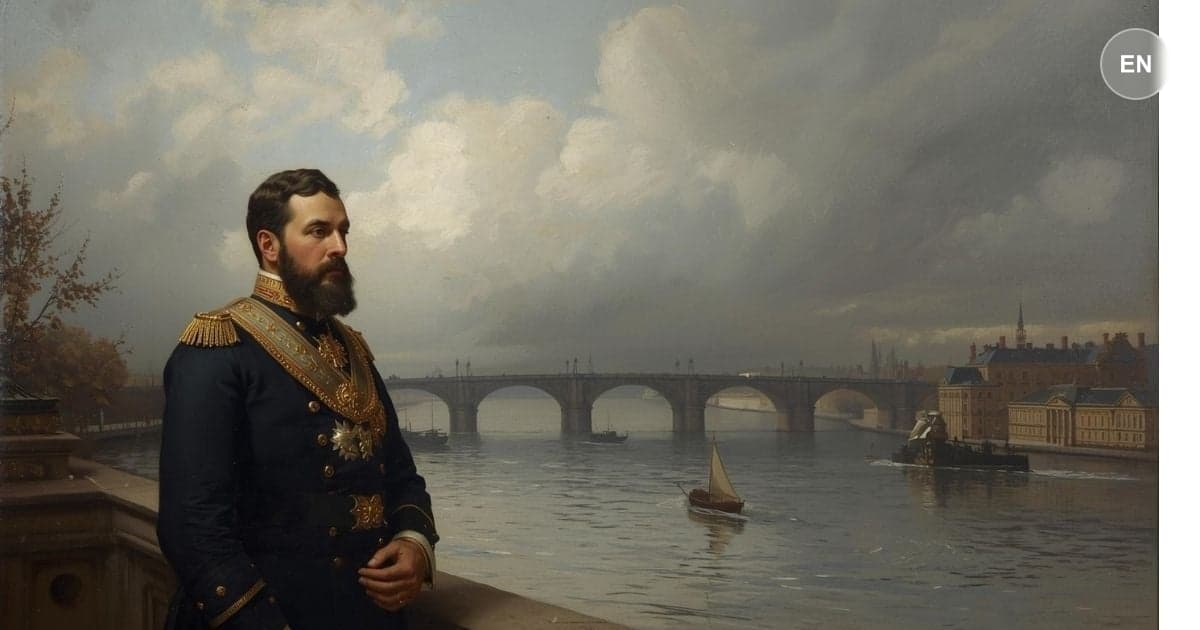
Raskolnikov reacts with fury to his mother's letter about his sister Dunya's engagement to the calculating businessman Luzhin. He immediately sees through the arrangement: Dunya is sacrificing herself, selling her future to a man she doesn't love or respect, all to save him and their mother from poverty. His brilliant mind dissects every detail of Luzhin's character - the stinginess disguised as practicality, the condescending attitude, the theory that wives should be grateful for being 'rescued' from destitution. Raskolnikov compares his sister's situation to Sonia Marmeladov's prostitution, arguing they're morally equivalent: both women selling themselves, one on the street and one in marriage. The realization torments him: 'Rodion Romanovitch Raskolnikov is the central figure in the business' - his family is destroying itself for him. His pride rebels against accepting this sacrifice, yet his poverty makes him powerless to stop it. The letter transforms his abstract 'terrible idea' into something urgent and necessary. If he's going to prevent this sacrifice, he must act now, not wait for some distant future. As he wanders the streets in mental anguish, he encounters a young drunk girl who's clearly been taken advantage of. At first he tries to protect her from a predatory man following her, even giving a policeman money to get her home safely. But then, in a disturbing moment of nihilistic despair, he suddenly changes his mind: 'Let them devour each other alive - what is it to me?' This shocking reversal reveals how his moral foundations are crumbling. The chapter ends with him thinking about going to his friend Razumihin, but realizing that ordinary solutions like finding work or borrowing money won't solve the magnitude of his family's crisis. The pressure is building toward an irreversible decision.

Coming Up in Chapter 5

Raskolnikov's paranoia deepens as he's summoned to the police station, where a routine matter about his unpaid rent becomes a psychological battlefield. Every question feels like an interrogation, and his guilty conscience turns innocent remarks into accusations.

Share it with friends

Previous ChapterNext Chapter
GO ADS FREE — JOIN US
Original text
complete·5,084 words
H

is mother’s letter had been a torture to him, but as regards the chief fact in it, he had felt not one moment’s hesitation, even whilst he was reading the letter. The essential question was settled, and irrevocably settled, in his mind: “Never such a marriage while I am alive and Mr. Luzhin be damned!” “The thing is perfectly clear,” he muttered to himself, with a malignant smile anticipating the triumph of his decision. “No, mother, no, Dounia, you won’t deceive me! and then they apologise for not asking my advice and for taking the decision without me! I dare say! They imagine it is arranged now and can’t be broken off; but we will see whether it can or not! A magnificent excuse: ‘Pyotr Petrovitch is such a busy man that even his wedding has to be in post-haste, almost by express.’ No, Dounia, I see it all and I know what you want to say to me; and I know too what you were thinking about, when you walked up and down all night, and what your prayers were like before the Holy Mother of Kazan who stands in mother’s bedroom. Bitter is the ascent to Golgotha.... Hm... so it is finally settled; you have determined to marry a sensible business man, Avdotya Romanovna, one who has a fortune (has already made his fortune, that is so much more solid and impressive), a man who holds two government posts and who shares the ideas of our most rising generation, as mother writes, and who seems to be kind, as Dounia herself observes. That seems beats everything! And that very Dounia for that very ‘seems’ is marrying him! Splendid! splendid!

1 / 20

Master this chapter. Complete your experience

Purchase the complete book to access all chapters and support classic literature

Read Free on GutenbergBuy at Powell'sBuy on Amazon

As an Amazon Associate, we earn a small commission from qualifying purchases at no additional cost to you.

Available in paperback, hardcover, and e-book formats

GO ADS FREE — JOIN US

Why This Matters

Connect literature to life

Skill: Spotting Control Disguised as Care

This chapter trains you to distinguish genuine support from 'rescue' that demands obedience, gratitude, or loss of dignity.

GO ADS FREE — JOIN US

Now let's explore the literary elements.

Key Quotes & Analysis

"Never such a marriage while I am alive and Mr. Luzhin be damned!"

— Raskolnikov

Context: Reading his mother's letter about Dunya's engagement

Captures his immediate moral rejection of any arrangement built on dependency and control, even before he can offer a practical alternative.

"For one she loves, for one she adores, she will sell herself! That's what it all amounts to."

— Raskolnikov

Context: Recognizing Dunya's sacrifice is for family survival

Names the chapter's central violence: devotion converted into transaction when poverty turns relationships into economic strategy.

"I won't have your sacrifice, Dounia, I won't have it, mother! It shall not be, so long as I am alive."

— Raskolnikov

Context: His internal vow after spiraling through the consequences

Shows the collision between moral refusal and material powerlessness that pushes him toward increasingly extreme thinking.

Thematic Threads

Sacrifice

In This Chapter

Dunya's proposed marriage reframes self-denial as family duty, raising the question of when sacrifice becomes self-betrayal.

Development

Moves from abstract loyalty to concrete economic coercion, showing the emotional cost of survival bargains.

Power

In This Chapter

Luzhin's offer appears generous but is structured to keep authority and gratitude flowing one way.

Development

Expands the novel's critique of social hierarchy from institutions into intimate relationships.

Poverty

In This Chapter

Financial precarity drives decisions that would otherwise be morally unacceptable.

Development

Reinforces that class pressure is not background scenery; it actively reshapes ethics and agency.

Moral Agency

In This Chapter

Raskolnikov rejects the sacrifice in principle but lacks legitimate means to stop it.

Development

Intensifies his crisis by exposing the gap between moral clarity and practical power.

GO ADS FREE — JOIN US

You now have the context. Time to form your own thoughts.

Discussion Questions

  1. 1

    Where is the line between necessary family sacrifice and unacceptable self-erasure in Dunya's decision?

  2. 2

    How does Luzhin frame control as generosity, and why is that framing persuasive when people are financially vulnerable?

  3. 3

    Why does Raskolnikov's moral clarity fail to produce practical solutions, and what does that reveal about poverty?

  4. 4

    What modern situations resemble this chapter's 'respectable coercion' pattern in work, school, or relationships?

  5. 5

    If you were advising Dunya, what alternatives would preserve both safety and dignity?

Critical Thinking Exercise

Evaluate a 'Rescue Offer'

Think of a time someone offered help that came with visible or hidden strings attached. Write down the offer, the cost, and the emotional pressure around saying yes. Then evaluate it with four checks: freedom to refuse, freedom to exit, decision-making power, and dignity preserved.

Consider:

  • •Distinguish immediate relief from long-term dependency
  • •Identify which constraints are economic and which are relational
  • •Name one alternative path that preserves more agency, even if slower
GO ADS FREE — JOIN US

Coming Up Next...

Chapter 5: The Dream of the Mare

Raskolnikov's paranoia deepens as he's summoned to the police station, where a routine matter about his unpaid rent becomes a psychological battlefield. Every question feels like an interrogation, and his guilty conscience turns innocent remarks into accusations.

Continue to Chapter 5
Previous
The Letter
Contents
Next
The Dream of the Mare

Continue Exploring

Crime and Punishment Study GuideTeaching ResourcesEssential Life IndexBrowse by ThemeAll Books
Moral Dilemmas & EthicsIdentity & Self-Discovery

You Might Also Like

The Idiot cover

The Idiot

Fyodor Dostoevsky

Also by Fyodor Dostoevsky

The Brothers Karamazov cover

The Brothers Karamazov

Fyodor Dostoevsky

Also by Fyodor Dostoevsky

The Book of Job cover

The Book of Job

Anonymous

Explores morality & ethics

Thus Spoke Zarathustra cover

Thus Spoke Zarathustra

Friedrich Nietzsche

Explores morality & ethics

Browse all 47+ books
GO ADS FREE — JOIN US

Share This Chapter

Know someone who'd enjoy this? Spread the wisdom!

TwitterFacebookLinkedInEmail

Read ad-free with Prestige

Get rid of ads, unlock study guides and downloads, and support free access for everyone.

Subscribe to PrestigeCreate free account
Intelligence Amplifier
Intelligence Amplifier™Powering Wide Reads

Exploring human-AI collaboration through books, essays, and philosophical dialogues. Classic literature transformed into navigational maps for modern life.

2025 Books

→ The Amplified Human Spirit→ The Alarming Rise of Stupidity Amplified→ San Francisco: The AI Capital of the World
Visit intelligenceamplifier.org
hello@widereads.com

WideReads Originals

→ You Are Not Lost→ The Last Chapter First→ The Lit of Love→ Wealth and Poverty→ 10 Paradoxes in the Classics · coming soon
Arvintech
arvintechAmplify your Mind
Visit at arvintech.com

Navigate

  • Home
  • Library
  • Essential Life Index
  • How It Works
  • Subscribe
  • Account
  • About
  • Contact
  • Authors
  • Suggest a Book
  • Landings

Made For You

  • Students
  • Educators
  • Families
  • Readers
  • Literary Analysis
  • Finding Purpose
  • Letting Go
  • Recovering from a Breakup
  • Corruption
  • Gaslighting in the Classics

Newsletter

Weekly insights from the classics. Amplify Your Mind.

Legal

  • Privacy Policy
  • Terms of Service
  • Cookie Policy
  • Accessibility

Why Public Domain?

We focus on public domain classics because these timeless works belong to everyone. No paywalls, no restrictions—just wisdom that has stood the test of centuries, freely accessible to all readers.

Public domain books have shaped humanity's understanding of love, justice, ambition, and the human condition. By amplifying these works, we help preserve and share literature that truly belongs to the world.

A Pilgrimage

Powell's City of Books

Portland, Oregon

If you ever find yourself in Portland, walk to the corner of Burnside and 10th. The building takes up an entire city block. Inside is over a million books, new and used on the same shelf, organized by color-coded rooms with names like the Rose Room and the Pearl Room. You can lose an afternoon. You can lose a weekend. You will find a book you have been looking for your whole life, and three you did not know existed.

It is a pilgrimage. We cannot find a bookstore like it anywhere on earth. If you read the classics, and you ever get the chance, go. It belongs on every reader's bucket list.

Visit powells.com

We are not in any way affiliated with Powell's. We are just a very big fan.

© 2026 Wide Reads™. All Rights Reserved.

Intelligence Amplifier™ and Wide Reads™ are proprietary trademarks of Arvin Lioanag.

Copyright Protection: All original content, analyses, discussion questions, pedagogical frameworks, and methodology are protected by U.S. and international copyright law. Unauthorized reproduction, distribution, web scraping, or use for AI training is strictly prohibited. See our Copyright Notice for details.

Disclaimer: The information provided on this website is for general informational and educational purposes only and does not constitute professional, legal, financial, or technical advice. While we strive to ensure accuracy and relevance, we make no warranties regarding completeness, reliability, or suitability. Any reliance on such information is at your own risk. We are not liable for any losses or damages arising from use of this site. By using this site, you agree to these terms.